
Vintage rosé Champagne: panel tasting results
Our judges relished the time to focus in on this selection of rosé styles, awarding consistent scores and praising the freshness and vitality on show.


Peter Liem, Alan Bednarski and Claire Thevenot MS tasted 28 wines, with 3 Outstanding and 20 Highly recommended.
Vintage rosé Champagne panel tasting scores
28 wines tasted
Exceptional 0
Outstanding 3
Highly recommended 20
Recommended 5
Commended 0
Fair 0
Poor 0
Entry criteria: producers and UK agents were invited to submit their current-release, single-vintage rosé Champagnes, allowing for any style from zéro dosage through brut to demi-sec
Rosé Champagne is a difficult category to generalise about, and vintage rosé perhaps even more so. Most in this tasting were of excellent quality, showing that there are multiple ways to achieve success. One conspicuous element was a relatively restrained dosage, even for those wines not labelled as extra brut or non-dosé.
Scroll down to see tasting notes and scores from the vintage rosé Champagne panel tasting
Historically there has been a tendency to dose rosés slightly higher than their blanc counterparts, often due to an archaic stereotype about rosé being sweeter to suit the female palate – but some winemakers also believe that the tannins of red wine need more sugar to balance.
Today, the trend is to reduce dosage in rosés. There is greater sophistication in production techniques, too. Many rosés that we tasted felt notably ripe in fruit flavour, whether from warmer weather or more conscientious viticulture, or likely a combination of both. ‘There are more vintages that are riper, so they need to adjust to that,’ said Claire Thevenot MS. ‘It’s a lot of work, and sometimes it’s difficult to hit the right notes.’ For the most part, though, that increased ripeness resulted in better and more interesting wines, and a balanced dosage helped to enliven the wines and allow them to express themselves fully.
Historically, there has also been a contrast of philosophies in making rosé Champagne, with some producers releasing wines young to maximise the freshness and flavour of primary fruit, and others building wines to develop complexity and character with long ageing. As vintage-dated rosé is required to age for a minimum of three years before release, most examples fall into the latter category, although we did taste a few that I felt were intended to showcase primary fruit, with much success. In general, though, even those that were aged for a decade or more appeared remarkably lively and youthful, promising to continue to gain with more time in the cellar. ‘I was amazed at how fresh some of these wines were with so much lees ageing,’ said Thevenot.
Overall, the tasting was impressive for the quality, expression and finesse of the wines, all of which seemed increased in comparison with their counterparts a decade or two ago. Alan Bednarski noted: ‘The average quality of vintage rosé is maybe higher than that of the whites, but possibly it’s more difficult to reach the top quality that you get with the whites. But they are getting better and better. Maybe it’s a result of global warming.’ In many cases, too, the wines felt highly indicative of place – whether as an overall articulation of Champagne chalk, as in the case of region-wide blends, or as a narrower focus on specific terroirs – doing so with clarity and poise.
‘The maceration feels better in greater [warmer] terroirs than colder ones, helping to lift the wine,’ said Thevenot. ‘It becomes really interesting with very refined terroirs.’ This is undoubtedly also a reflection of improved viticulture and more consistent ripening, and it provides a showcase for the nobility of Pinot Noir. ‘The rosé category of Champagne is growing,’ said Bednarski, ‘and because of the ripeness, it’s revealing more of the seriousness of Pinot Noir. Even in extreme styles, it’s showing the character of the grape variety.’
Vintage rosé Champagne panel tasting scores
The judges
Peter Liem is an awarded wine writer and author specialising in Champagne. Resident in Epernay, he publishes his website champagneguide.net and co-hosts the annual La Fête du Champagne event in the US. His book Champagne was published in 2017 (Mitchell Beazley).
Alan Bednarski is a sommelier, wine consultant and a DWWA judge. He is co-owner of a new ‘comfort European food’ restaurant due to open in Katowice, Poland in spring 2023, and is soon to launch his Cool Climate Wine Guide initially online.
Claire Thevenot MS is owner of UK-based importer Vins-Clairs. She moved from eastern France in 2002, rising to be head sommelier at Hotel du Vin in Winchester, then in 2006 she became the first French female Master Sommelier, winning the UK Sommelier of the Year competition in the same year.
Related articles
- Adriatic whites: panel tasting results
- Barbaresco: panel tasting results
- New Zealand Sauvignon Blanc: panel tasting results
Moët & Chandon, Grand Vintage Rosé Extra Brut, Champagne, France, 2013
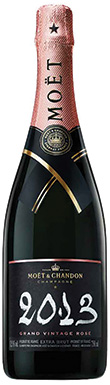

Blend of 44% Pinot Noir (14% red wine), 35% Chardonnay, 21% Meunier – 2013 was a difficult season, but after a later-than usual harvest, it...
2013
Moët & Chandon

Henriot, Rosé Millésimé Brut, Champagne, France, 2012
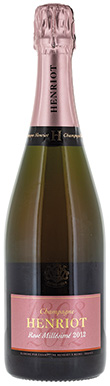
After a worrying start to the 2012 growing season, a warm summer resulted in good ripeness come harvest. The blend of 60% Pinot Noir and...
2012
Henriot
Billecart-Salmon, Elisabeth Salmon Rosé Brut, Champagne, France, 2009
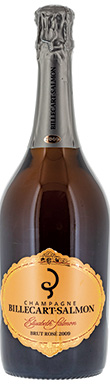
A slightly flinty and vibrant bouquet alongside complex aromas of red berries, herbs and lemon, with fresh menthol notes coming through with some air. The...
2009
Billecart-Salmon
Charles Heidsieck, Brut Millésimé Rosé, Champagne, France, 2008
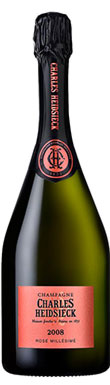
The red wine almost seems to tame this 2008 a little, injecting some warmth and roundness into an alluring, complex rosé that takes in some...
2008
Charles Heidsieck
Mailly, L'Intemporelle Grand Cru Rosé Millésimé Brut, Champagne, France, 2018
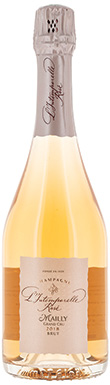
It is very floral and fruity on the nose with hints of savoury notes. The finish is long, nuanced and tense, supported by racy acidity...
2018
Mailly
Rare, Rosé Brut, Champagne, France, 2012
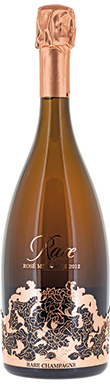
Delicate and coy, the 2012 concedes notes of rose, cherry blossom and orange blossom, and the fruit comes through much later. There's still an opulence...
2012
Rare
Mandois, Victor Rosé Brut, Champagne, France, 2012
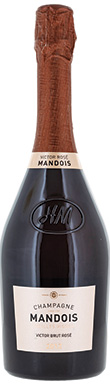
This wine has just started to be ready to drink with pleasure as a fresh and young vintage rose. The lees impart a finesse in...
2012
Mandois
Philipponnat, 1522 1er Cru Rosé Extra Brut, Champagne, France, 2014
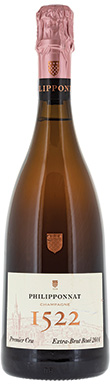
Delicate rose petal colour. The nose is restrained at first and opens up on red berries and herbal caracter. The fruit is more prominent on...
2014
Philipponnat
Veuve Clicquot, Vintage Rosé Brut, Champagne, France, 2012
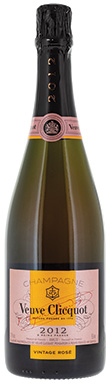
Restrained, focused, elegant. A fragrant depth of red fruit and a suave, slightly creamy texture that reflects its long lees ageing, and it's supported by...
2012
Veuve Clicquot
Bérêche & Fils, Campania Remensis Rosé Extra Brut, Champagne, France, 2018
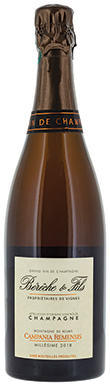
This unusual rosé shows all the charm and fragrance of the Petite Montagne: roasted plum, clementine and a gentle tobacco smokiness, presented with plenty of...
2018
Bérêche & Fils
De Venoge, Grand Vin des Princes Rosé Brut, Champagne, France, 2014
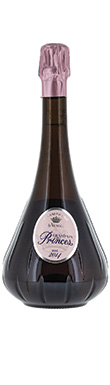
Multi layered, fresh, big mousse and quite tight freshness. There's some citrusy fruit on the nose, complemented by the richness and refinement of lees ageing....
2014
De Venoge
Perrier-Jouët, Belle Epoque Rosé Brut, Champagne, France, 2013
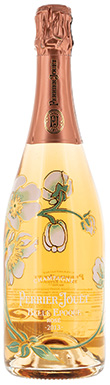
Wine is in the early stage of showing Vinous characteristics with fresh girottes, leaves and a touch of smoke. Focused and streamlined, buoyed by racy...
2013
Perrier-Jouët
Ruinart, Dom Ruinart Rosé Brut, Champagne, France, 2007
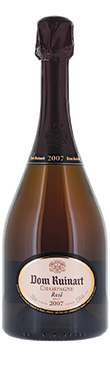
It's fragrant and forward on the nose, balancing secondary notes of maturity with aromas of dried fruit and fruit skins. The lower dosage is fitting...
2007
Ruinart
Tarlant, L'Aérienne Prestige Rosé, Champagne, France, 2004
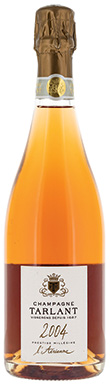
The nose is open, complex dried red berries and sweet spices with earthy tones revealing its age! While the wine is showing a round body,...
2004
Tarlant
De Venoge, Louis XV Rosé Brut, Champagne, France, 2012
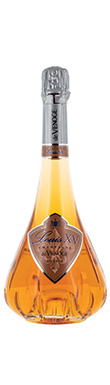
A full, fragrant depth on the nose, complemented by rice-like leesiness from long ageing. There's more primary fruit on the palate, both bright red cherry,...
2012
De Venoge
Deutz, Amour de Deutz Rosé Brut, Champagne, France, 2013
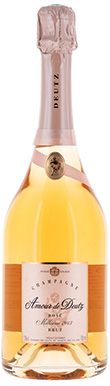
The nose is half on primary fruits and half on developing with layered pastry and light oxidation. It's full and fragrant on the palate as...
2013
Deutz
Gardet, Rosé de Saignée Millésimé Brut, Champagne, France, 2012
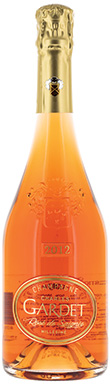
A very vinous and inviting nose, still on primary. It's similar on the palate, with a burst of red fruit underlined by citrusy notes of...
2012
Gardet
Drappier, Grande Sendrée Rosé Brut, Champagne, France, 2010
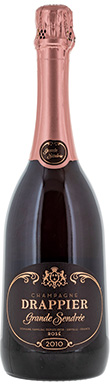
This shows an impressive ripeness and depth for the vintage, with a bold presence of plummy red fruit on both the nose and palate. Creamy...
2010
Drappier
Gosset, Celebris Rosé Brut, Champagne, France, 2008
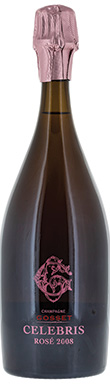
Fragrant and creamy on the nose, showing both a ripe depth of fruit and the richness of long lees ageing. Palate is reflecting the nose...
2008
Gosset
Vilmart, Cuvée Emotion Brut, Champagne, France, 2014
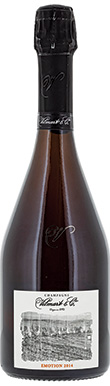
The aromas are predominantly in the citrus spectrum, citrus peel and even a distilled citrus tone. The texture is silky and refined, and it finishes...
2014
Vilmart
