
Weingut Markus Molitor Rieslings and Pinot Noirs
Anne Krebiehl MW heads to Germany to taste the myriad styles of Riesling and Pinot Noir from this famous Mosel producer.


When Markus Molitor took over his father’s Weingut in 1984, there were just three hectares of vines, today he owns 120 hectares across the most storied Mosel and Saar sites. But Molitor not only heads of one of the largest Mosel estates, he also is one of the best.
Few others work with such focus and dedication – if not to say obsession. But how else could he manage all this – since he still is the winemaker and mastermind, calling every decision in vineyard and cellar. ‘Each wine is individual, each wine gets its attention,’ he says and underlines artisanship: all fruit is hand-harvested and stringently selected. The juices settle naturally, and each barrel is allowed to ferment spontaneously, ensuring individual site expression. Wines then stay on their lees in large Fuder, the traditional, round 1,000L used oak barrel (even though some newer ones are also used) for nine to 10 months.
Weingut Markus Molitor at a glance:
Area under vine: 120ha, almost all on steep slopes across Mosel (100ha) and Saar (20ha)
Soils: Devonian and Carboniferous slate formations, Permian rhyolite
Varieties planted: Riesling 92%, Pinot Noir 4%, Pinot Blanc 4%
Meticulousness is key to the clear delineation of styles – which in this house is colour-coded by capsule: White stands for dry, green for off-dry and golden for sweet. Within these three categories you get a spectrum of Prädikate. For the dry wines, ripe grapes are Kabinett, riper grapes are Spätlese and even riper, possibly overripe grapes are Auslese. Auslese itself is graded into Auslese, Auslese two stars and three stars.
For the dry wines, there is absolutely no botrytis tolerance for anything below three-star-Auslese where there might be some botrytis. Off-dry wines go from Kabinett to Auslese while sweet wines go all the way to TBA. Next to seven ravishing Pinot Noirs and two Pinot Blancs, 30 dry Rieslings were presented, 16 off-dry Rieslings and 20 sweet Rieslings – up to Beerenauslese.
‘There are six further BAs and 16 different TBAs,’ Molitor said with a smile. Did the dryness of 2018 not prevent botrytis? ‘There was some very good botrytis,’ Molitor noted. ‘In early September we had rain. We were all worried because we remembered 2013 and 2014 when there were late rains [that caused non-noble rot] but after that we had dreamlike weather.’
He noted that unusually there simply were no hard harvest decisions where mitigating losses from non-noble rot becomes a huge logistical challenge. ‘So botrytis did come and on the first day of harvest we selected a Beerenauslese with perfect, fresh botrytis. In 2018 we had much less botrytis than in other years but since this was such a relaxed harvest, we were nonetheless able to select an abundance of nobly sweet wines.’
Scroll down to see the top 15 Markus Molitor recommendationsSee all wines tasted here
To me, the warm and dry 2018 vintage showed off the higher Prädikate in the dry wines to perfection. Kabinett which lives off inherent lightness and killer acidity was hard to pull off: acidity was rounder and there was more body. It was evident that the real, natural balance came from riper grapes: the Spätlesen and Auslesen – some reaching up to 13% – were at the perfect intersection of fruit, extract, body and freshness, i.e. ripe, harmonious acidity.
Molitor puts it well when he speaks of ‘fine, elegant Spätlesen’ and ‘Auslese which represents the perfection of the grapes.’ Both the ‘perfection’ and the meticulousness can be tasted in these astonishingly pure, expressive and site-specific wines. In the sweet range the Kabinetts worked better, here they could beguile with all their lusciousness and fruit – while the sweet Auslesen bring some wondrously glowing fruit and expression – but the dry Spätlesen and Auslesen were the absolute winners.
Riesling and Pinot Noir: Anne’s 15 top picks from Weingut Markus Molitor
See all wines tasted here
Markus Molitor, Graacher Domprobst Auslese ***, Mosel, Germany, 2018
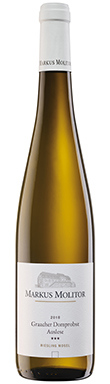

<p>Paradise, which is after all a garden, quite possibly smells like this. There is a hint of jasmine, a mellow backdrop of hazelnut and a...
2018
Markus Molitor

Markus Molitor, Ürziger Würzgarten Auslese**, Mosel, Germany, 2018
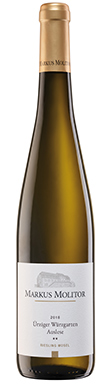
Candied peach and lemon lift announce heady, fruit-laden sweetness and the palate promptly delivers. There is candied Mirabelle, too, and vivid evocations of peach. An...
2018
Markus Molitor
Markus Molitor, Saarburger Rausch Auslese ***, Mosel, Germany, 2018
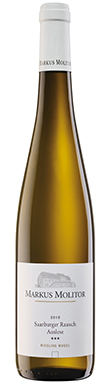
Just slight hints of Amalfi lemon play on the nose. It is on the palate that this becomes the most serene, harmonious, luminous vision of...
2018
Markus Molitor
Markus Molitor, Ürziger Würzgarten Spätlese, Mosel, Germany, 2018
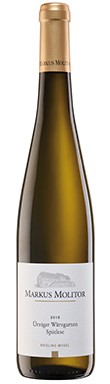
<p>A distinct note of saffron fills the nose alongside wet slate. That wonderfully subtle aromatic notions remains on the palate that is reminiscent of those...
2018
Markus Molitor
Markus Molitor, Zeltinger Sonnenuhr Auslese ***, Mosel, Germany, 2018
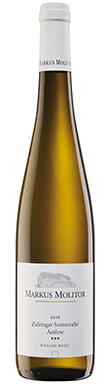
<p>Amalfi lemon pith and zest are joined by juicy mandarine on the nose. The palate redoubles on those swirling, ethereal citrus notes, beckoning with zesty...
2018
Markus Molitor
Markus Molitor, Ockfener Bockstein Auslese **, Mosel, Germany, 2018
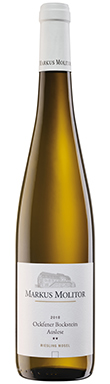
Zesty citrus headiness, laced with grapefruit spice, promises freshness. The palate delivers and adds ripe, juicy apple notes to those citrus aromas. There is a...
2018
Markus Molitor
Markus Molitor, Saarburger Rausch Auslese **, Mosel, Germany, 2018
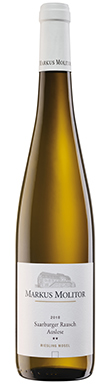
The marginal Saar moves centre stage: the Rausch with its steep slope of slate, greywacke and volcanic diabas is legendary. Mere hints of ripe Amalfi...
2018
Markus Molitor
Markus Molitor, Erdener Prälat Auslese ***, Mosel, Germany, 2018
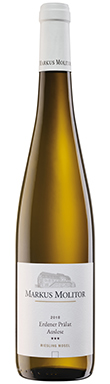
A note of hazelnut announces some new oak [some newer Fuders are used, too] but this helps to bring out a certain florality and underscores...
2018
Markus Molitor
Markus Molitor, Brauneberger Juffer-Sonnenuhr Auslese ***, Mosel, Germany, 2018
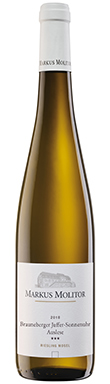
<p>The nose combines notions of very ripe, yellow apple and wet slate. The palate then proceeds with golden, bright but ripe fluidity, surrounded by waves...
2018
Markus Molitor
Markus Molitor, Bernkasteler Lay Spätlese, Mosel, Germany, 2018
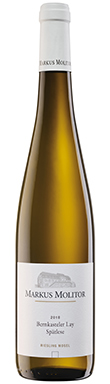
<p>Very finely decomposed slate and great water availability define the Lay while extremely old vines bring forth wondrous Riesling. Wet slate and summer blossom appear...
2018
Markus Molitor
Markus Molitor, Ürziger Würzgarten Kabinett, Mosel, Germany, 2018
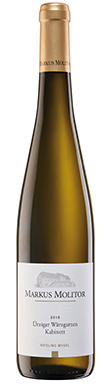
Candied tangerine peel rejoices with tangy freshness, exuberant aromatics of ripe and heady citrus. There is lovely lightness, inherent playfulness, like little putti twirling...
2018
Markus Molitor
Markus Molitor, Thörnicher Ritsch Auslese**, Mosel, Germany, 2018
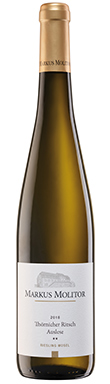
Some reduction still hovers on the nose but with a little air notions of crushed citrus foliage are revealed. The palate springs to life...
2018
Markus Molitor
Markus Molitor, Graacher Domprobst Spätlese, Mosel, Germany, 2018
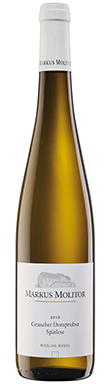
Here, the first notion is not of fruit but of slate. That lovely, reduced, stony precision that could not hail from anywhere else in the...
2018
Markus Molitor
Markus Molitor, Brauneberger Klostergarten ***, Mosel, Germany, 2016
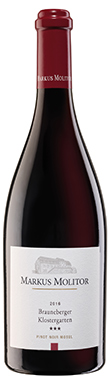
The nose is still closed and shy. Slight notions of peony and bitter Amarena cherry are evoked which become fully-fleshed on the concentrated palate. The...
2016
Markus Molitor
Markus Molitor, Bernkasteler Lay Auslese ***, Mosel, Germany, 2018
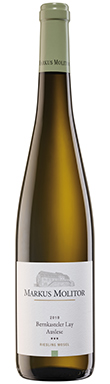
A hint of quince informs the ripe Amalfi lemon notes on the nose. The palate brims with aromatic fruit and a lovely, pithy, textural counterpoint...
2018
Markus Molitor
