
Welschriesling: Revealing its potential plus 10 wines to try
You say Welschriesling... I say Graševina... It may be unfamiliar to many outside its heartlands of Central & Eastern Europe, but this versatile white variety is quietly gaining traction, and has a firm foothold as far east as China.


If ever there were a viticultural equivalent of a caterpillar turning into a butterfly, it must be Welschriesling. This white variety, widely grown throughout the many countries of its regional domain, Central and Eastern Europe – and now even in volume in China – was for decades billed generally as a grape that made neutral, easy-drinking wine; rather simple and sour, even outright plonky; so much so that it was frequently spritzed with soda water for hot summer day gulping.
Scroll down to see Darrel Joseph’s selection of Welschriesling wines to try
At best, it was vinified mainly as a sparkling wine – or a component of; otherwise as a dry, still wine for immediate consumption, rarely lasting more than a year in bottle.
Now, though, Welschriesling is rapidly becoming a wine producer’s darling.
Ambitious wine-growers and winemakers have been digging deep to discover its true potential, and discovering that this late-ripening variety with moderate-to-generous acidity optimally reflects the terroir in which it grows – and this through nearly the entire wine style gamut, from sparkling, dry and semi-sweet, to botrytised, natural (or minimal intervention) and orange. Furthermore, it’s not just for young quaffing, and can show superbly with lengthy ageing.
As a young wine, Welschriesling tends to display notes of apple, citrus, pear and almond. As it ages, it can reveal tropical tones such as mango and pineapple, and perhaps melon, honey and a herb and spice character (such as thyme or bay leaf accents). When honed from Central Europe’s limestone or volcanic soils, there can be beautiful salinity.
Perhaps this diversity sounds unsurprising for a grape that contains ‘riesling’ as part of its name (it is referred to as Riesling Italico in parts of Italy). However, Welshriesling’s parentage is not definitive and the variety bears no relation to the noble Riesling – the Rhine Riesling – grape. While Welschriesling is the commonly used reference name, some international wine professionals prefer to document the variety by its Croatian name, Graševina (pronounced ‘Grah-zheh-vee-nah’), due to its likely origin.
‘From a historical and genetic point of view, this grape variety originates from Croatia,’ says Dr José Vouillamoz, the renowned grape geneticist. ‘That’s why I recommend using its local name, Graševina.’
Ultimately, though, it comes down to the language of the country in which the grape is planted: Austria uses the German name, Welschriesling; in Hungary, it’s Olaszrizling; in Slovenia, look for Laški Rizling; and in Serbia it’s Grašac. And the list continues.
Croatia

Government agency figures for the past two years show about 4,400ha of Graševina in Croatia – the country’s most widely planted variety – and there are excellent examples vinified here, especially in the inland eastern region (on Hungary’s southern border) of Slavonia, around the windy Kutjevo wine hills. Here, ancient volcanic soils and the continental climate aid in producing wines that display ageability and botrytised beauty.
For example, Kutjevo’s wine guru, 83-year-old Ivan Enjingi, has been crafting outstanding ageable Graševinas since the 1950s. Just open one of his dry, spontaneously fermented (yes, he’s long advocated this) barrel-aged kasna berba (‘late-harvest’) wines from vintages such as 2015, 2002 and 1994 – all from organic vineyards planted up to 400m high – and they still show brilliant freshness, depth, mineral extract and firm alcohol, usually at 13% and above.
On the sweet side, the area’s warm, humid autumn conditions can coax lush, botrytised izborna berba (‘selected-harvest’) dessert wines, some with a sweet, tropical expression, such as those from another Kutjevo maestro, Vlado Krauthaker. Other notable local producers include Adžić, Galić and the Kutjevo winery.
Further east, in the Croatian Danube region, are Vina Belje, and Iločki Podrumi, with vineyards on the western slopes of the Fruška Gora mountain that give birth to fruit-forward and mineral-structured Welschrieslings.
Serbia

The river Danube forms much of the border between eastern Croatia and the northwest of Serbia, where the vast part of the Fruška Gora lies. This is within the prominent wine region of Srem – most commonly referred to as Fruška Gora – where 106 producers comprise an official association dedicated to the revival of Grašac.
The region has a rich viticultural history; the ancient Romans planted vines here, and there is a 220-year-old regional ampelographic herbarium collection that contains the first official documentation of Grašac, complete with a dried leaf. Local producers are creating dry, citrussy and fresh, steel-aged wines. Some are using oak barrel maturation to support a deeper, more mineral expression as the wines age.

‘With Grašac, time is a friend,’ says Aleksandar Vinčić of Vinarija Vinčić in Srem, northwest Serbia. ‘With every year in the bottle, the varietal signature becomes stronger; the oak influence goes down and the Grašac character goes up.’
Other talented Grašac producers include Vinarija Vinum, Quet, Sijački, Kiš, Erdevik and Oszkar Maurer.
Hungary

Wines of Hungary gives a figure of 3,800ha of Olaszrizling planted, and indeed Hungary is a hotbed of producers working with the variety, particularly in the areas north of lake Balaton in the country’s west. Here, the terroir includes extinct volcanoes with basalt and loess soils around the Badacsony district.
On Badacsony’s Szent György-hegy (translated as St-George Hill), Olaszrizling wines can exude fine salinity that counterbalances their fresh fruitiness and even the typical subtropical fruit and almond tones that can be found. ‘The Szent György-hegy wines tend to have a distinctively salty finish,’ says Robert Gilvesy, owner of a 2.5ha organic wine estate on the hill. ‘This contributes definition not only to the single-varietal wines, but also to Olaszrizling blends.’
Adds Attila Jásdi from the 18ha Jásdi estate in the nearby Balatonfüred-Csopak district: ‘Olaszrizling is extremely adaptable and reliable here. During the region’s extremely hot summer periods, the variety is able to maintain its acidity.’
Other northern Balaton producers include Pálffy, Figula, Szeremley, Szászi, Káli Kövek, Villa Tolnay and Homola.
Austria
Producers in the country which is home to some 3,000ha of Welschriesling vines use the grape to produce stunning botrytised sweet wines (Beerenauslese, Trockenbeerenauslese and Ruster Ausbruch), especially around the Neusiedlersee, or lake Neusiedl, region of Burgenland. It’s also used as a key component in some traditional-method sparkling wines throughout Austria.
More recently, though, a number of winemakers have begun vinifying premium dry wines from their top crus. For example, Armin Tement of the Tement winery in Austria’s Südsteiermark (South Styria) – a renowned Sauvignon Blanc territory – creates pure, spontaneously fermented, barrel-aged Welschriesling from his organic Ried Zieregg and Ried Ottenberg vineyards, planted up to 350m above sea level. ‘The berries are small and concentrated with thick skins,’ he says. ‘What you get is purely concentrated, raw Welschriesling that has refreshing, salty tannins.’
Also gaining plenty of traction in Austria are Welschriesling wines produced as natural, organic, spontaneously fermented, unfiltered and even biodynamic wines, with producers including Wachter-Wiesler, Feiler-Artinger, Uwe Schiefer, Artisan Wines and Daniel Jaunegg.
There’s an array of stunning natural and orange wines being produced to the north of Austria, too – in Slovakia, where the Ryzling Vlašský and, in the Czech Republic the Ryzlink Vlašský, are commonly referred to by the nickname ‘Vlašák’. Vino Magula in Slovakia’s Malokarpatská region is one of several wineries to watch.
China
Welschriesling’s reach even extends to the other side of the world – to China, where it is referred to as ‘gui ren xiang’ (贵人香, literally ‘the noble fragrance’). The grape took root in China as long ago as the 1890s, when Baron Maximilian von Babo, the Austro-Hungarian empire’s consul to China, convinced industrialist Zhang Bishi to plant the grape in Bishi’s newly built winery Changyu, in the Yantai wine region of Shandong. Today, industry figures reveal that, after Chardonnay, Welschriesling is China’s second most widely planted white grape variety with some 4,000ha of vineyards, and wines are made in dry, off-dry and sweet styles.
‘The off-dry style is especially popular with Chinese consumers, who enjoy its fresh, fruity nose and light, crisp mouthfeel,’ says Professor Li Demei, director of Enology Engineering at Beijing Agricultural College. ‘It’s easy to understand, and friendly for typical Chinese dishes, whether salty or spicy.’
Production of Welschriesling in China centres on several regions in addition to Yantai in Shandong, including Xinjiang (Puchang Vineyard estate), Shanxi, Hebei and, especially, Ningxia with its Helan Mountain sub-region (Xixia King winery and the Xige Estate).
No matter the style, no matter the name, Welschriesling (Graševina, Olaszrizling, Grašac) is only just beginning to reveal its palate-pleasing complexities, even though it has been right under our noses for centuries. And it’s about time. In fact, it is only going to be a matter of time before Welschriesling becomes more widely poured beyond the borders of Central and Eastern Europe and China.
Joseph’s pick of 10 to discover: Top Welschrieslings of Central Europe
Related articles
- Wines of the Balkans – five things to know
- Adriatic whites: panel tasting results
- A perfect weekend in Dubrovnik
Marada, Frajer Vlašák, Slovácko, Moravia, Czech Republic, 2019
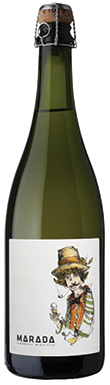

A beautiful organic Brut Nature traditional method sparkling wine from talented organic producer, Petr Marada, in the Czech Republic. Lovely mousse. On the palate, a...
2019
MaradaSlovácko

Artisan Wines, DAC Reserve Welschriesling Beerenauslese, Neusiedlersee, Neusiedlersee, Burgenland, Austria, 2019
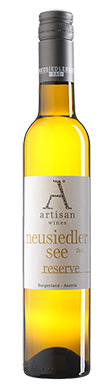
Acacia blossom and honeysuckle waft from the glass. Grapefruit pith meets acacia honey on the palate, and in between are notes of golden raisin, baked...
2019
Artisan WinesNeusiedlersee
Maurer, Fodor, Subotica, Vojvodina, Serbia, 2019
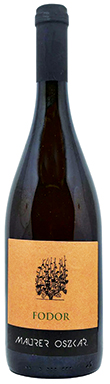
One of Serbia’s most talented natural winemakers, Oskar Maurer, created this amber-hued wine from 55-year-old untrained bush vines growing in clay and limestone soils. Wafting...
2019
MaurerSubotica
Jásdi, Siralomvágó, Balatonfüred-Csopak, Balaton, Hungary, 2020
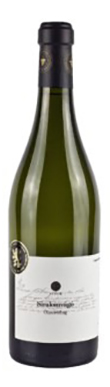
A sophisticated wine reflecting Olaszrizling at its Balaton best. Creamy herbal aromas lead to a palate with a fabulously textured mineral mouthfeel. Notes of pear,...
2020
JásdiBalatonfüred-Csopak
Krauthaker, Graševina Selected Harvest of Dried Berries, Kutjevo, Slavonia, Continental, Croatia, 2017
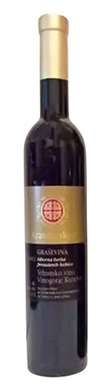
Vlado Krauthaker’s luscious dessert wine made of dried grapes from his Mitrovac vineyard is lush and complex with aromas of ripe peach, dried apricot and...
2017
KrauthakerKutjevo
Vinarija Vinčić, Grašac, Fruška Gora, Srem, Serbia, 2020
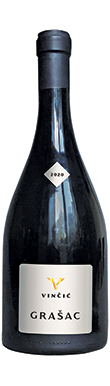
This steel-aged Grašac was vinified from three different pickings over a three week period so the grapes could give variations of concentration and expression. An...
2020
Vinarija VinčićFruška Gora
Gilvesy Cellars, St. George, Badacsony, Balaton, Hungary, 2019
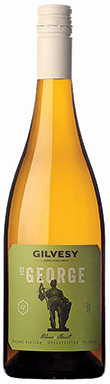
A beautiful blend of Olaszrizling with Furmint and Riesling, the nose yields light aromas of tropical fruit and a whiff of petrol from the Riesling....
2019
Gilvesy CellarsBadacsony
Enjingi, Graševina, Kutjevo, Slavonia, Continental, Croatia, 2015
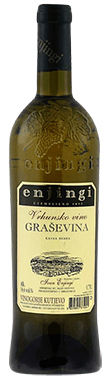
This eight year-old Kasna Berbe, or late harvest, organic wine was produced by Croatia’s Graševina master, Ivan Enjingi, from the volcanic soils of his Venje...
2015
EnjingiKutjevo
Tement, Ottenberg Veitlhansl, Südsteiermark, Südsteiermark, Steiermark, Austria, 2020
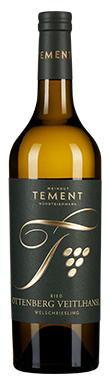
From vines at 20 to 40 years old, this wine wafts with scents of citrus, apple blossom, honeysuckle and a touch of beeswax. The palate...
2020
TementSüdsteiermark
Iločki Podrumi, Graševina Select, Ilok, Slavonia, Continental, Croatia, 2021
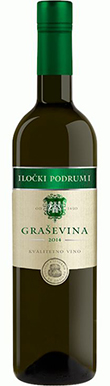
A youthfully fresh nose with citrus blossom, lemon-lime, a bit of pear and peach, and a hint of beeswax and even propolis. The palate is...
2021
Iločki PodrumiIlok
