
Women of Champagne
A woman, in charge of production at a Champagne house? Not so long ago, the idea would have raised many an eyebrow in this traditional region. Happily the wine world has moved on and female chefs de cave and consultants are firmly in place at some of the most prestigious producers. Anne Krebiehl MW highlights the work and philosophies of eight of them, and tastes the wines...


Something has shifted in Champagne. A raft of recent announcements has put female talent in the spotlight, to an extent never seen before. High-profile appointments at Krug and Taittinger made headlines, but women are now at the helm elsewhere, too: at independent growers, at houses small and large, family- and corporate-owned.
With female figureheads of past legend such as Widow Clicquot, Madame Pommery and Lily Bollinger, it would be all too easy to spin a tale of continuous emancipation; but it would also be wrong. These women were the exceptions that proved the rule. Even if we feel that we should finally be able to move beyond this discussion in 2020, the stats prove that there is still a need to highlight the issue. Across the wine industry, there remains a gender pay gap and a career progression gap: numerous glass ceilings still glisten in the same sunshine that ripens the grapes.
But by the looks of it, things are changing in Champagne. The portraits below say as much about Champagne as a region as they do about these individual women. They have not cut themselves any slack, expecting those same high standards from all of their colleagues, and they place the emphasis on ‘sensibility’ rather than prowess. That in itself creates a more level playing field. Champagne’s future is thus as effervescent as ever.
Julie Cavil
Krug, chef de cave
‘Mine is a rather unusual background,’ Cavil says. ‘I had a previous life in advertising, working in Paris. It wasn’t until 2002 that I went back to school to study oenology.’ She joined Krug in 2006 and was made chef de cave in 2020. Neither was she born into wine: ‘I am the daughter of a doctor in a region of France without viticulture. While working in Paris I met my husband. Both of us are wine lovers, and it became my dream to pursue a career in this field. When I arrived in Champagne, I was something of an anomaly: I was not from the region, I was older than the other students and I was already a mother. It did not matter because I was determined. If you have courage and conviction, then you can take on any challenge.’
This approach informs everything Cavil does. To her, being female is of ‘no relevance – gender has no bearing on one’s ability to be a winemaker’, though she adds: ‘That said, different people perceive flavours in their own unique ways, so we deliberately have diversity on the winemaking team, with a balance of gender and generations.’
Cavil’s path defies expectations and is an advertisement for career change. She gets excited about small parcels of vines, and relishes the challenge of blending. When asked what Champagne means to her, she says: ‘I will quote Joseph Krug, who said it best: “The true essence of Champagne is pleasure itself.”’ Probably that pleasure inspired her advice to other women: ‘Believe in yourself and your ability to achieve your goals.’
Séverine Frerson
Perrier-Jouët, chef de cave
Born in the Champagne village of Sillery, not of a wine family, Frerson (pictured top) credits a winemaker from Verzenay, a family friend, with revealing to her the universe that is Champagne. ‘Not only do I owe him the discovery, but also the passion that I have today,’ Frerson says. She graduated from Reims university and joined Maisons Piper-Heidsieck and Charles Heidsieck right away, working her way up the ladder to become cellar master in 2016.
In 2018, she was snapped up by Perrier-Jouët as only the eighth chef de cave in the house’s 200-year history. ‘I feel a very strong connection with Rose-Adelaïde Jouët,’ Frerson explains. ‘She was co-founder of the house in 1811 with her husband Pierre-Nicolas Perrier. Not only did she give her name [to the house], she also did what we refer to today as public relations and hospitality. Our archives demonstrate that she was very involved in the winemaking and tastings.’
Today, Frerson says, being a woman is not ‘particularly relevant’, explaining: ‘There are no male or female cellar masters, just cellar masters. We do a job where emotions and senses are very important. The richness is what makes the individual, what he or she has lived and experienced, how he or she can share those emotions.’
Frerson achieves this by working ‘as if every day is my first day, listening to my instinct’. She also follows that well-honed and informed instinct when she says: ‘In my team, I do not choose genders, I choose skilled people.’
Caroline Latrive
Ayala, chef de cave
Latrive, who says she is ‘Champenoise through and through’, became chef de cave at Ayala in 2011. Choosing wine as her career, Latrive says, was ‘obvious’. She remembers the ‘smells of the cuverie’ when she would accompany her consultant father on client visits as a child. Born in Reims, with her qualifications from the university there, she gained experience at Piper Heidsieck, Roederer, Palmer and Bollinger, and in oenological consultancy.
She rejoined Bollinger when the family-owned company had just bought Ayala, working alongside Ayala’s cellar master for five years before taking the reins upon his retirement. Getting the top job was a challenge ‘for a woman in this environment’, she says, remembering ‘several pitfalls along the way, especially early on in my career’. She notes that these trials were ‘constructive and have only reinforced my determination’. She also says: ‘I was lucky to work for a house run by open-minded people who recognise your capabilities, qualities and competence rather than your gender.’
Since then, Latrive has made it her mission to ‘enhance the expression of Chardonnay – my favourite grape variety – across our cuvées with the greatest respect for the house style’. The completion of a new cellar in 2017 facilitates this. Doing a good job ‘demands someone who is passionate and who has a certain sensitivity’, she says, regardless of gender. Still, she offers these words of guidance to women: ‘Never let anyone discourage you, be passionate and invested, and most importantly be yourself.’

Nathalie Falmet
Independent grower and winemaker
From just 3.4ha of vineyard in the Côte des Bar that she inherited from her parents, Falmet started crafting exceptionally expressive Champagne cuvées in 2008. Born into a Champenois winemaking family, she studied chemistry first, followed by oenology, and founded her own oenology lab in 1994. ‘This allowed me to vinify a lot of Champagnes for wine-growers and to taste extensively,’ she says.
From her ‘most tender years of childhood’ Falmet was in the vineyards and realised that ‘making wine requires biochemistry as well as a touch of whimsy, so that suited [me] very well’. With such a small business, Falmet works in among the vines – which she says ‘means being physically alive’ – in the cellar and on the sales side. ‘I think that being a woman is more difficult when it comes to the work of the vineyard,’ she says. ‘But for the work in the cellar and in sales it is better to be a woman – because there are so few women who really make their own wine, and that’s an advantage.’
Her aim is to make her female-made Champagnes from this southerly sub-region ‘renowned and sold around the world’. Falmet says she wants to make wines in the healthiest way possible ‘for the respect of nature, of course, but also for a pure and unparalleled quality of wine’.
Her advice to fellow women winemakers is heartfelt: ‘Never get discouraged, because making Champagne or wine takes a lot of time. It is a profession of passion and patience.’
Sandrine Logette
Duval-Leroy, chef de cave
For Logette, Champagne is ‘always a vector of conviviality’. She is Champenoise but not born into a wine family. Nonetheless, the love for her home region, its history and ‘the pleasure that a good Champagne brings’ set her on her path. After graduating from Reims university with stints at Palmer and Bruno Paillard, Logette joined Duval-Leroy in 1991.
In 2005, Logette says, ‘Carol Duval-Leroy asked me and trusted me to become chef de cave. It was like climbing a mountain. I already knew the technical basis of the winemaking process, had knowledge of the different cuvées of the house, of the grape supplies – be it of our own vineyard or of others. I also already knew how the house was working; I knew the staff, the clients and the specific requirements they had. But putting all of this knowledge together was like a jigsaw puzzle. I then had to create a consistency, a dynamic, and prove that I was able to assume this position.’
Her observations on gender are acute. ‘Our male chefs de cave should tell us whether they find their job easy or difficult and why. But their male pride keeps them from revealing themselves truly and fully. Some days are more difficult than others; life is not a quiet river.’ She also hits on another interesting trait with her advice to other women: ‘Be rigorous and demanding in your job, and be attentive to your personal and professional entourage. Maybe this is what makes the difference: our visible and displayed humanity.’
Vitalie Taittinger
Taittinger, president
Contrary to all expectations, Taittinger firmly says: ‘I was not born into wine. When I was a child, of course my father worked at Taittinger, but it was separate from his private life. I was in a more cultural world. My mother was a musician and organised concerts, paintings and literature.
‘My introduction to Champagne was the wine itself, smelling it in the glass when my parents left a little bit… I never thought it could be my life.’
Taittinger thus became an independent illustrator – it was not until 2016 that she asked her father, ‘who had recently bought back Champagne Taittinger, to join him and learn’. She notes that it was challenging to change careers, but her love for ‘the magic life that bubbles bring to the glass, the mouth and the heart’ is evident.
Taittinger says she has not wasted time focusing on gender: ‘I never think about that. I have always concentrated on my missions and how to do my best to reach my goals. I’m determined and maybe a little bit headstrong. I never took the fact that I am a woman as an excuse and am convinced that in certain cases, it can be an asset. Of course, I have to work hard and combine work and family life. This can be heavy, but if you take care of your own balance, it is feasible.
‘What would I tell women in wine? I know we are the same, continue to work for love!’

Alice Tétienne
Henriot, chef de cave
As a Champenoise girl, Tétienne had summer jobs in the vineyard, which is what got her into this career: ‘It was an eye-opener,’ she says. ‘To work in the vineyard, to observe the vine’s development was amazing.’ Via jobs in Burgundy, Provence and Bordeaux, she returned to Champagne. ‘Today I’m in charge of the vineyard and winemaking for Maison Henriot. It makes me really happy to work with both the vines and the resulting wines,’ she says, relishing the viticultural aspect of her job and her work with the house’s contracted growers.
Tétienne feels strongly that what she does is a continuation of the work and legacy of Apolline Henriot, who co-founded the house in 1808: ‘She allowed her land to speak to the world through her Champagne. This notion of sharing and transmission opened an emotional door in me and fuelled my desire to be part of Maison Henriot.’
For Tétienne, gender is irrelevant: ‘I think that one of the keys to success in Champagne, and wine, lies in the diversity of people who work on a daily basis to bring out quality and highlight savoir-faire,’ she notes. ‘I don’t think it’s either an opportunity or a constraint to be a woman in Champagne. Today, the wine industry offers an incredible diversity of positions due to the versatility of its scope. For me, it’s necessary to have a heterogeneity of gender, ages and personalities to address all the challenges. Everyone has a place, and diversity of personality is much more important than gender.’
Gabrielle Bouby-Malagu
Gosset, assistant chef de cave
‘Like a vine, I have my roots in the ground close to Chinon where my family owns a farm,’ Bouby-Malagu says. She studied oenology in Dijon, and it was in Chablis that the wine magic struck: ‘I can remember the moment very well. I knew that I would not do anything else,’ she recalls.
Cutting her teeth on sparkling Crémant de Bourgogne, she came to Champagne 16 years ago and became assistant chef de cave at Gosset in 2017. Bouby-Malagu says the move meant ‘feeding myself with 450 years of history in the oldest maison in Champagne.’ This history holds a great example: Suzanne Gosset, who ran the house from 1914-1918 and again from 1955-1965. She introduced a rosé Champagne to Gosset’s range in the 1960s when this was still a minority sport. Bouby-Malagu evokes her with much spirit: ‘I hope to live, to elaborate and create new experiences in winemaking. In fact, thanks to the work done upstream with our artisan- vignerons, we select terroirs, grapes and cultural practice to create new cuvées.’
While Bouby-Malagu is careful in expressing her view, she nonetheless has a firm opinion about Champagne’s present and future: ‘The history of Champagne has been punctuated by women with exceptional destinies. Thanks to their capacity for adaptation, modernity and independence, these pioneers paved the way. We now have to work together without questioning gender. Female or male, a cellar master is a cellar master.’ Her advice to wine women is brief but heartfelt: ‘Be yourself, keep on the move.’
Eight Champagnes to try
Krug, Grande Cuvée 167ème Édition, Champagne, France
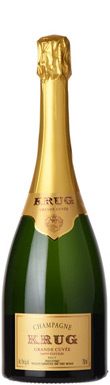

Showing complex notes of seaweed and dried mushroom on the nose, savoury and iodine. It's a soft and silky rendition of Grande Cuvée, drinking beautifully...
Krug

Taittinger, Prélude Grands Crus, Champagne, France
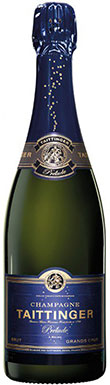
The nose is shy and subtle, though notions of red apple, peppery rye crumb, stone and lemon emerge with more air. Tightly coiled, the palate...
Taittinger
Ayala, Blanc de Blancs, Champagne, France, 2013
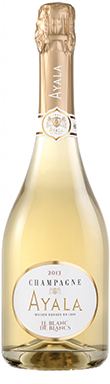
A first whiff of lemon zest immediately sets the tone. More air and swirling then reveals a backdrop of chalk but also the enticing, cloudlike...
2013
Ayala
Gosset, Grand Blanc de Blancs, Champagne, France
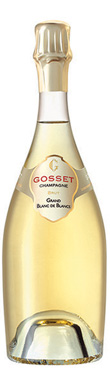
95
The most subtle lemony cloud hovers above a certain chalkiness on the nose. Utter subtlety also characterises the super-svelte palate that is as light as a feather, yet conveys great depth and creamy softness. The freshness seems buffered by chalk, the mousse serves to remind you that this is actually Champagne, so breezy, so light, so elegant is this. A wonderful combination of depth and weightlessness.
Gosset
Perrier-Jouët, Belle Epoque, Champagne, France, 2012
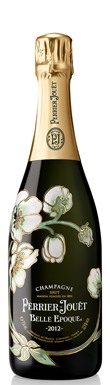
Creamy lemon notes have a distant whiff of vanilla, but more air also reveals chalky, stony depth. The body is slender but comes with well-rounded...
2012
Perrier-Jouët
Duval-Leroy, Premier Cru Extra Brut Prestige, Champagne, France
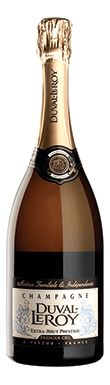
A lovely nose suggests wheatmeal and lemon in a creamy embrace. The palate then sets a bright, ripe lemon top-note and backs this with a...
Duval-Leroy
Nathalie Falmet, Terra Extra Brut, Champagne, France, 2012
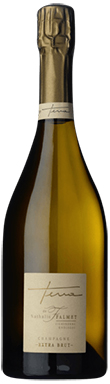
With its base wine fermented in a terracotta jar, a pure note of freshly cut Mirabelle plum intersects with an equally pure note of ripe...
2012
Nathalie Falmet
Henriot, Blanc de Blancs, Champagne, France
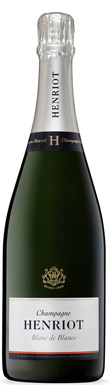
93
Subtle notions of toast have a lovely tinge of lemon and roasted hazelnut on the nose. Lively mousse on a tender palate bubbles with toasty, nutty autolysis. As it warms up, the mousse softens and shows a sunny roundness of yellow stone fruit that sits well with the toasty yeast notes.
Henriot
