
Younger generations: Emidio Pepe and Occidental
In wine, it’s never a given that the younger generation will take the reins from their parents. Or that it will run smoothly if they do. In this second part, Alessandra Piubello and Ana Carolina Quintela present new faces at wineries in Abruzzo and Sonoma Coast.

Chiara de Iulis Pepe
Emidio Pepe, Abruzzo, central Italy

Chiara de Iulis Pepe welcomes us smiling and resolute, feet rooted to the ground and a clear gaze beyond the horizon. Now 32 years old, since childhood she has absorbed the Pepe values. Wine and family are one in the Pepe household in Torano Nuovo, in the Teramo hills of Abruzzo where, 60 years ago, a revolution began.
Third-generation Chiara took over from her aunt Sofia in 2020, who in turn had succeeded her father – Chiara’s grandfather – Emidio Pepe in 2000. At 27 years old, Chiara decided to take the bull by the horns. ‘Drinking, selling and talking about wine was no longer enough for me,’ she says in a firm and confident voice.
‘The time had come to actually make it.’ Chiara was ready; her grandfather and aunt’s teachings were deeply rooted within her, and the oenology and viticulture course in Dijon plus work at a French biodynamic company gave her the final push.
‘My intention,’ she explains, ‘is to carry forward the vision of those who came before me, trying to perfect a few details wherever possible.’
Subtle renewal
The generational transition has been fluid in this female-run company; so much so that, even now, the three generations co-exist in harmony. When she took over, Chiara slowly replaced the existing team.
‘Those who work in the vineyards, besides being updated on pruning and biodynamic agriculture introduced by aunt Sofia in 2005, also perform cellar duties, so that the two teams communicate with each other.’
The work follows the established Emidio Pepe path, with no change of direction: no filtration or clarification, only vitrified concrete containers, spontaneous fermentation, manual destemming for the reds, grape treading for the whites, and lengthy ageing.
A quarter of a million bottles are currently ageing in the cellar. Every year, approximately 43% of the 80,000 bottles produced are set aside, but this will rise to 60% when the new cellar is completed in 2027. Chiara has introduced steel tanks with refrigerated double bottoms suitable for treading the white grapes, and which also permit gravity filling into the tanks for manual destalking of the reds.
But her focus is on the vineyard. She reacts to the unpredictable climatic conditions with determination, intelligence and heart. With the same experimental nature as her grandfather, she has introduced vineyard treatments using cow’s milk (in solution, it has been found to have fungicidal properties that act against powdery mildew), covering the soil with green manure without digging it in, and in the new 2ha (strictly pergola) system, she uses agroforestry and widely spaced planting layouts.
‘Our wine,’ Chiara states, ‘must continue to be genuine, digestible, and to express the location and its vitality.’
Catherine Kistler
Occidental, West Sonoma Coast, California
By Ana Carolina Quintela

Catherine Kistler has been making the decisions at Occidental for years now: determining the critical picking times, leading the crew through long harvest days and guiding fermentations in the cellar.
Yet until very recently, she would have hesitated to call herself the head winemaker. ‘Imposter syndrome is real,’ she admitted – a sentiment hardly unusual for women in the working world, particularly in the wine industry.
Perhaps the title also felt too heavy, too bound up with her father’s legacy, even as she carried it forward in practice. Only in the past year, when the vineyard and cellar crews – men and women who had worked alongside her father Steve Kistler for decades – began turning to her for answers instead of him, did she allow herself the title.
‘The respect from the crew, more than anything, helped me feel comfortable in that role,’ she says.
‘2024 is the year where I feel most confident that I can say it’s my vintage. My first full, no-training-wheels sort of thing,’ she adds, letting the words settle.
Direct line
Ocidental was founded in 2011, though Steve continued working at Kistler Vineyards – the winery he founded in 1978 with the late Mark Bixler – until he stepped away from it in 2017. And if Kistler Vineyards became synonymous with California Chardonnay, Occidental has been, from the beginning, devoted entirely to Pinot Noir.
Planted from selections Steve gathered in Vosne-Romanée and propagated over the course of decades, 34ha of vines stretch across a ridge in the FreestoneOccidental area of the West Sonoma Coast.
Catherine joined him full-time at Occidental in 2016, under his direct mentorship after testing herself far from Sonoma. First on the ski slopes, racing at national level from age 13; later in the lecture halls of Harvard, where she studied Classics and History.
Yet, a life in wine felt inevitable. ‘Watching my father, I knew that the insane hours, the nights he wasn’t home, the time he put into making wines – all of that was what gave meaning to the name,’ she reflects.
Still, she never considered another path. ‘It was always my plan to come back.’ The intimacy of their relationship meant she could argue, push back, even make mistakes, while absorbing his 50 years of experience without filter. That closeness gave her both the freedom and the confidence to grow into her own authority.
‘I feel uniquely blessed to be his daughter in this position,’ she says. ‘The fact that I get all the idiosyncrasies that make him amazing at this job landing with me untempered – and for me to accept him as he is, and vice versa – is incredibly fulfilling.’
Under Catherine’s watch, Occidental is writing its next chapter as a family business. The back label now reads Kistler Family instead of her father’s name, a small change with a larger echo.
She also discovered a new parcel, 4km from Bodega Bay, closer to the ocean than any site they’ve farmed before. Rootstocks are in, and she is grafting them slowly to Occidental’s field selections, with fruit expected in 2028.
The gesture is less about growth than about anchoring – on land and legacy, attuned to her.
‘You just vibrate at that frequency of being here. I love the people around, I love my family, and I love the wines I make,’ she says. The words carry the same focus and effortless grace that define her presence and her wines.
Next instalment: Thomas Herbert & Leo and Roc Gramona
Wines from a new generation:
Related content
Meet the next generation at four legacy Napa wineries
From Pauillac to Stellenbosch: Celebrating May-Eliane de Lencquesaing at 100
Champagne Dhondt-Grellet: The young grower at the top of his game
Emidio Pepe, Selezione Vecchie Vigne, Trebbiano d’Abruzzo, Abruzzo, Italy, 2022
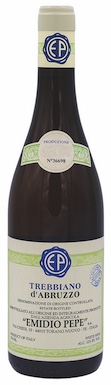

The aroma evokes white tea, camomile, white pepper and yellow fruits. Complex, voluminous and deep, the sip reveals a luminous, vivid story with considerable personality....
2022
Emidio PepeTrebbiano d’Abruzzo

Occidental, Running Fence Vineyard Cuvée Catherine Pinot Noir, Sonoma County, West Sonoma Coast, California, USA, 2022
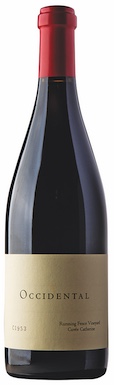
The Cuvée Catherine is consistently the most savoury and earth-driven of the Occidental wines. Sourced from the northern section of the estate vineyard, where the...
2022
OccidentalSonoma County
