Get our daily fine wine reviews, latest wine ratings, news and travel guides delivered straight to your inbox.
You are now subscribed
Your newsletter sign-up was successful
An account already exists for this email address, please log in.
Younger generations: Herbert & Co and Gramona
In wine, it’s never a given that the younger generation will take the reins from their parents. Or that it will run smoothly if they do. For part three, Tom Hewson and Ines Salpico meet the next-in-line at domaines in Champagne and Catalonia.
Thomas Herbert and his partner Marie-Charlotte Mignucci.
(Image credit: Credit Unknown)
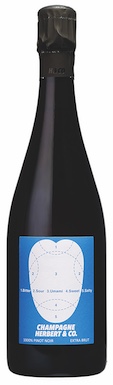
In the quiet village of Rilly-la-Montagne on the Montagne de Reims, a transition is underway that is emblematic of Champagne’s rapid influx of new ideas. Two brands – Didier Herbert and Herbert & Co – currently live under the same roof, made by the same man: Thomas Herbert.
Didier Herbert is Thomas’ family brand, founded in 1920 and run by his father since 1982. With its traditional livery and customer base formed around the (now struggling) French market and longstanding visitors to the winery (many of whom apparently come to collect his father’s novelty wire caps), this is what Thomas calls a ‘classical’ brand.
Next to the remaining bottles of Didier Herbert on the shelves lie signs of something utterly different: neon lights, striking monochrome graphics, unusual bottle closures. Giant blue tongues saying things like ‘1,000% Meunier’ sit framed on the floor, awaiting hooks. This is Herbert & Co.
Not all plain sailing
‘These two brands, Didier Herbert and Herbert & Co, are completely opposite,’ says Thomas, making it clear that the transition has not been a straightforward case of the keys being handed down the family line.
Thomas, who trained as an interior architect, returned to work with his family in 2016 without an understanding that he would take over, but after his father’s attempted sale outside the family fell through, Thomas and his partner managed to buy it.
‘We don’t do anything for Didier Herbert any more,’ he says. ‘In four or five years, the brand will be gone.’ It’s not only family negotiations that sometimes prove obstacles as generations switch over: the costs of making a wholesale change in the cellar is enormous.
Decanter newsletter
Get our daily fine wine reviews, latest wine ratings, news and travel guides delivered straight to your inbox.
‘We can’t buy the barrels – it would be crazy, €80,000 – so we lease them.’ The vineyards, too, have been modernised, in a process which started with Thomas stopping herbicide usage before he took over ownership. ‘I had to fight for this – before, the vineyards were like the moon,’ he says.
He’s no idealist, though: ‘I don’t do it to save the planet, it’s just part of our work.’
Although he has lost access to some of the vineyards his father used, he seems happy with the 30,000 bottles per year Herbert & Co is now producing. After all, having a giant tongue on your label might not be for everyone:
‘If I was selling a million bottles it might be a problem!’ he admits.
Leo & Roc Gramona
Gramona, Catalonia, Spain
By Ines Salpico
(L-R) Leo and Roc Gramona. Picture
(Image credit: Óbal Estudi / Jaume Vilaseca)
Resilience, tragedy and responsibility: three words that largely explain why and how Leo (Leonard) and Roc Gramona found themselves at the helm of their family’s eponymous traditional-method, longageing sparkling powerhouse in 2023.
The cousins – sons, respectively, of Xavier and Jaume Gramona (cousins themselves) – are the sixth generation to take the reins of the storied Penedès winery, whose origins go back to the 1850s.
A path, however, from which they veered at first, sceptical of being able to define their identity within the microuniverse of the family business.
Roc studied oenology and worked a series of harvests across the world, eventually settling at Cellers de Scala Dei, in Priorat; Leo went off to study engineering and work at corporate consulting. It would be another consultant working for Gramona who, in 2018, highlighted that continuity and lineage are the essence of the company.
The cousins were therefore challenged to join Gramona and become acquainted with its operations and ethos in the hope of one day taking up the batons from their respective fathers. Leo and Roc agreed, though not without reservations. In parallel, the cousins wanted to test – and prove – their abilities and stylistic leanings, in some ways defiantly different to their family’s.
Their personal project, L’Enclòs de Peralba (‘the white stone clos’), was thus born. The pair partner with small growers to produce a range of low-intervention yet technically exact wines that give centre stage to the terroirs and indigenous varieties of Penedès.
The project’s success gave the pair confidence while also consolidating their own stance at Gramona.
Transition & evolution
The years that followed were an intense if at times trying school: Covid-19 dried up the company’s main sales channel overnight and demanded quick and dramatic adaptation.
‘Then came the magical years of 2022 and 2023, with great sales and people really eager to go out and share a good bottle of wine,’ says Leo. Unfortunately, the sense of optimism and reprieve was fleeting.
Xavier Gramona’s untimely death, in August 2023, as the result of a fall, shook the family’s emotional foundations and precipitated leadership transition. The cousins were asked to step up and take over their fathers’ responsibilities, with Jaume Gramona moving to a strategic oversight position as the company’s president.
The transition was a period of intense emotions. ‘We really had to put our egos aside and understand where we come from and where we’re heading to collectively,’ Leo says.
‘It’s about surrendering to something bigger than ourselves.’ Roc agrees: ‘We all want to say something through the wines we make. But it’s important to overcome the “wanting to replace the father” stage and acknowledge the contribution of previous generations.
That’s when real transition and evolution happen.’ There are clear echoes of their fathers’ own journey: from a conventional, French-influenced winemaking approach to biodynamic pioneers and champions of a quality-first, terroir-driven philosophy that led them to leave the Cava DO and establish the Corpinnat group of like-minded producers in 2017.
They too found a mission that transcended their personal goals. As a result of the long ageing cycles of Gramona’s wines, the two cousins are still selling the wines produced under their fathers’ leadership.
‘It’s very humbling,’ says Leo. At the same time ‘there’s a curious – serendipitous or not – convergence between the work we’ve done at L’Enclòs de Peralba and the [future] direction of Gramona’.
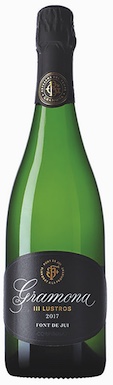
Gramona, III Lustros Corpinnat Brut Nature, Corpinnat, Catalonia, Spain, 2017
My wines
A seminal cuvée for Gramona, III Lustros (created in 1951 and first released 10 years later) started the producer's traditional for long-aged sparkling. Its symbolism...