Jefford on Monday: “Wind, stone …”


Andrew Jefford feels the blast in Catalonia’s Empordà.
Through travel comes understanding. An open mind, of course, is essential, as is the readiness to tear up preconceptions. I had a little tearing up to do recently.
It was one of those visits which (like the journey from Italy’s Collio to Slovenia’s Brda) makes you realise how pointless national borders can be. The wine region in question was Empordà. I had previously always thought of it as classic Catalan hill country with a distinctive Mediterranean beauty and identity, like Alella or Penedès.
That’s not right. It is, perhaps, best seen as a part of Greater Roussillon: a sister vineyard to Maury and the Agly Valley, to Collioure and Banyuls. These French appellations are just 20 minutes’ drive away from Empordà’s northernmost vineyards. In terroir terms, the French-Spanish border here is an irrelevance: the five belong together.
Taste the best wines of Empordà, and you’ll see a drama, a stoniness and an austere, almost aching bittersweet beauty which is common to this northern Catalonian cluster of vineyard zones.
The eastern Pyrenees comes clattering down into the Mediterranean at this point via a fistful of ranges and valleys. What divides the Empordà plain from the Perpignan plain is the chain of the Albères (Serra de l’Albera), with Collioure and Banyuls sewn on one side of it and the Northern Empordà vineyards stitched on to the other, sharing the same acidic brown schist soils (there are granites further inland). The Albères push on to the sea via the exposed Cap de Creus and its own hill chain, the Serra de Rodes. Roussillon’s 2,784m-peak of Canigou is visible throughout, clouds allowing.
It’s tough country, not least because of the flagellation of the Tramontane, the northwesterly wind which hurtles southwards here with unbridled force. What I discovered about the Mistral in Châteauneuf is every bit as true for the Tramontane in Empordà: it’s hard on humans, but all the signs are that the vines thrive on it.
Organic and biodynamic cultivation is relatively easy here, and old vines common (most Empordà vineyards are older than 30 years); it mitigates the fierce summer heat; and it helps bring the drama and concentration that are a feature of the wines (as well as a saline character on the exposed Cap de Creus). It’s even said to have been responsible for the creative madness of Salvador Dalí, who was born, lived and died in Empordà.
The Tramontane was blowing icily during my visit in early February – though somehow the almonds managed to flower in its teeth, leaving pink smudges in the wide perspectives and the crystal air.
Empordà’s vineyards today occupy about 2,000 ha. As in Priorat much further south, that’s just a fragment of the pre-phylloxera total, thought to have exceeded 25,000 ha here: the abandoned terraces are everywhere visible. There are two vineyard zones: a very windy northern part (Alt Empordà) close to Figueres and the Albères, and a distant southern zone (Baix Empordà) of more clay-rich vineyards loosely clustered around Palafrugell, where conditions are less windy. Some 90 per cent of production is from Alt Empordà.
After phylloxera, by the way, many of the hill farmers replanted their old vineyards with cork oaks, and some 15 per cent of global cork production now comes from the Costa Brava, with a particular emphasis on sparkling wine and Champagne corks. Empordà cork is said to be high in quality thanks to the slow growing conditions here.
As elsewhere in Catalonia, French varieties like Cabernet, Merlot and Syrah were planted in Empordà during the last decades of the twentieth century, but it wasn’t always a good idea. ‘We have some Cabernet vines,’ says Oriel Guevara from the steep, exposed vineyards of Hugas de Batlle, ‘which have never produced a berry in fifteen years. It’s just too tough. Wind, stone …’ he shrugged, and smiled.
The great varieties for red wines here (and red wines occupy 60% of plantings) are Carignan and Grenache; indeed the finest Empordà Carignan strikes me as some of the greatest I have ever tasted. Whites (based on Grenache Blanc and Gris, Carignan Blanc and Maccabeu) can be superb, too. There are, though, nomenclature problems.
Not so much with Grenache, generally known either as Lledoner here and on labels in its Catalan form Garnatxa, but certainly with Carignan. This is usually labelled Samsò here, despite this being more properly a Catalan form of the name Cinsaut.
Mazuelo (the name under which this variety is listed in Robinson, Harding and Vouillamoz’s Wine Grapes) is not used here, nor is the Catalan form Carinyena. Cariñena, meanwhile, is unavailable due to disagreements with the DO of the same name. (For simplicity’s sake, I have used the French versions of grape variety names in the notes which follow.)
The problems with Carignan Blanc are worse. “We’re in the land of surrealism,” said Gemma Roig of Mas Llunes, “and the surreal fact is that no one ever entered Carignan Blanc on the list of official varieties for Spain. So it doesn’t officially exist, and we can’t officially refer to it on labels.”
As in the rest of Greater Roussillon, there is also a tradition of fortified-wine production here, including rancio wines. These fascinating, complex, cultural wines are locally much treasured, though on my own scoresheet they struggle to compete with the unfortified wines, which are often clearly outstanding.
The Empordà renaissance is a relatively recent phenomenon; many older growers remember the difficulty of selling wines even to local consumers, most of whom were once unthinking Rioja-drinkers. All of that has now changed utterly, not least because of the extraordinarily high standard of local cuisine (ElBulli, remember, was a restaurant in Alt Empordà).
The sense of pride in Catalan identity has a gastronomic as well as a political dimension, and great food is usually predicated on a substrate of fine local ingredients, wine included.
The dynamic Josep Serra and his wife Marta Pedra of La Vinyeta, for example, were showing a group of local chefs around the property on the day I called; in addition to fine wines, they also produce olive oil, free-range eggs and are about to open a small cheese factory. ‘Girona has more than 20 Michelin stars,’ Josep pointed out, ‘and most of our sales are to restaurants.’
In the end, though, it’s the terroir that counts: the potential which ambition and effort can uncover. On the basis of this short initial visit, my view is that Empordà has a great future. Two months ago, I didn’t know that.
Tasting Empordà
In addition to the thirteen wines for which notes are given below, look out for others from Celler Martin Faixo, Celler Hugas de Batlle, AV Bodeguers, Cellers d’En Guilla, Celler Gerisena, Celler Terra Remota, Clos d’Agon and Mas Soller.
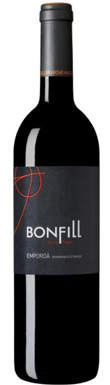
Arché Pagès, Bonfill, Empordà, Spain, 2014
94
An outstanding granite-grown Grenache and Carignan blend from the Arché-Pagès’s Capmany cellar. This is blackish-red in colour, with stony, savoury aromas. On the palate it's vivid, fresh, pure and elemental. A total terroir wine in which the relatively subdued fruit is not the point at all; it is stone and plants which you sense in the tension between tannins and acidity. A perfect wine to compare with the best of the Agly valley.
2014
Arché Pagès
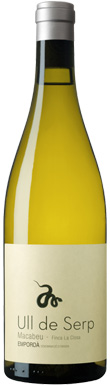
Arché Pagès, Ull de Serp Finca la Closa Macabeu, Empordà, Spain, 2016
93
From one of the greatest cellars in the region, this Macabeu is grown on granite. Its name, ‘Ull de Serp’, means ‘snake eye’ – a local descriptor for the granite found here. It's gold in colour, with provocative scents of beaten cream, quince paste and freshly sliced apples. It’s a big, chewy white wine with magnificent stony purity and finesse to it — more stone than fruit, for sure. There’s just a little apricot warmth evident on the finish. Look out, too, for the magnificent ‘Carinyana’ version of the Ull de Serp.
2016
Arché Pagès
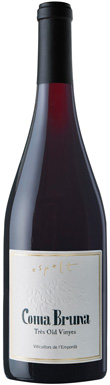
Espelt, Coma Bruna Très Old Vinyes, Empordà, Spain, 2015
93
Espelt is the second biggest producer in Empordà, and the company is run with great verve by Anna Espelt. Many of its older, lower-lying holdings don’t have the quality potential that the family is looking for, so their wines are sold off in bulk. The summits of the range, meanwhile, are sourced from ever-higher vineyard sites. This wine (whose label really does read ‘Très Old Vinyes’) is based on Carignan planted in 1901 on slate soils. It’s a saturated dark red colour with fresh, lively and graceful red fruit perfumes at this stage. A typically explosive acidity greets the drinker on the palate, but behind it you’ll find a true peacock’s tail of bright fruit, plant and scrub flavours, with fragrant tobacco charm. A chance to look at two older vintages (2013 and 2012) suggests that the wine will begin to acquire a little smoky, pruney note after a year or two, though its true ageing potential is much longer than that.
2015
Espelt
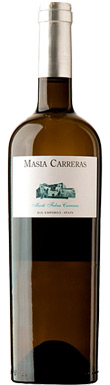
Martí Fabra, Masia Carreras, Empordà, Spain, 2015
93
This 30ha domain has vineyards on both schist and granite soils. This is a blend of Grenache Blanc and Gris with Carignan Blanc and Gris, grown on granite soils. It’s a remarkable southern white of great finesse and poise, with quiet, faintly creamy aromas (the wine finishes its fermentation in barrel and has a year on lees) and notes of plant, citrus and seeds. It has dense, fresh, vinous yet cascading flavours, lit by fruit-saturated acidity, and a stony undertow.
2015
Martí Fabra
Roig Parals, Camí de Cormes, Empordà, Spain, 2016
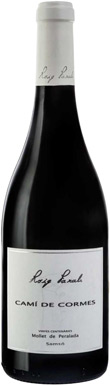
92
A partly barrel-fermented blend of 100 year old Macabeu with 20% Grenache Blanc, grown on sand and alluvial soils. This haunting white wine has typically Catalan aromas and flavours of straw, dry grass and wildflowers. Pure, fine-grained and elegant, with impressive old vine depth and tenacity.
2016
Roig Parals
Vinyes d’Olivardots, Vd'O 2.11, Empordà, Spain, 2011
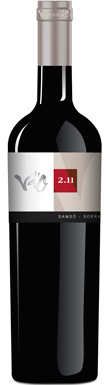
92
The name looks like a date, but within this Capmany winery’s range 2.11 signifies a single vineyard of old vine Carignan, planted in 1909 and grown in sand soils (which Carignan relishes — you’ll find the same combination in Sardinia’s Carignano del Sulcis). This remains a dark and perfumed wine, with just a hint of menthol among the scents of leaf and underbrush. The palate is vivid, full and fine-textured. There are deep, bitter-sweet raspberry and dry leaf flavours, plus a saline edge. Another good example of the refinement, penetration and poise that Carignan is capable of in Empordà. Note that this is the current vintage on sale — the wine is given ample bottle age.
2011
Vinyes d’Olivardots
La Vinyeta, Microvins Garnatxa Negrar, Empordà, Spain, 2014
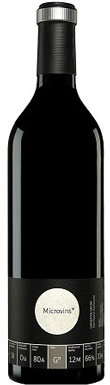
92
Josep Serra and Marta Pedra use the ‘Microvins’ name for small parcels of single variety wines from indigenous varieties — just a small part of a wide range from this innovative winery. This Grenache, grown on alluvial soils, is a showcase for the zesty, darting and vivacious plum fruit the variety can display in Empordà. The palate is perfumed, voluptuous and long, but without ever sacrificing its diagnostic energy and force. Look out for a fine tannic structure, along with some herbal complexity on the finish.
2014
La Vinyeta
Castillo Perelada, Aires de Garbet, Empordà, Spain, 2015
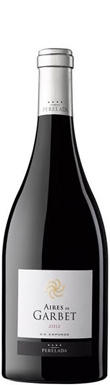
91
Castillo Perelada, based in the village of Peralada (note the slight difference in spelling), is the region’s biggest producer. Its technical director, Delfi Sanahuja Font, produces a fascinating range of clearly differentiated and consistently high-quality wines from its own 150ha of vines, as well as a further 150ha of purchased grapes. This pure Grenache, from a spectacular sea-facing terraced vineyard of brown schist, is a clear deep red colour. There are warm, layered aromas of vivid plum fruit, pine groves in summer and warm broken stone. On the palate it’s deep, expressive and spicy; its innate richness is lent a finely judged balance by bright tannins and acids (20% whole-bunch fruit is used).
2015
Castillo Perelada
Gelama, Finca Descorbes, Empordà, Spain, 2016
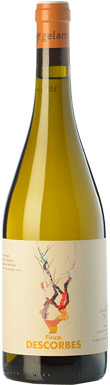
91
For owner Roger Rius Pedret this 70 year old Macabeu, fermented in new French 300 litre casks, is ‘a white wine with the soul of a red’. Pale gold in colour with light, crushed anise, fennel and dry grass scents. It is creamy and classy on the palate, its soft white fruits given a haunting tang by the hillside perfumes. Look out, too, for the fine Finca Arbre Blanc red blend from the same source.
2016
Gelama
Mas Estela, Quindals, Empordà, Spain, 2014
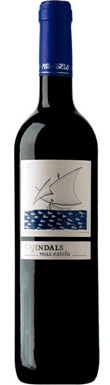
91
This amphora-aged Grenache (75%) and Syrah (25%) blend is grown on mountain vineyards on the Cap de Creus. It’s earthy, warm, savoury and just a little gruff on the nose. On the palate it’s deep, dense and dramatic, with fine-grained tannins, bright acidity and a dark chocolate austerity to its flavours. The sweetness gradually subsides towards something more bitter and herbal on the finish.
2014
Mas Estela
Vinyes dels Aspres, Negre dels Aspres, Empordà, Spain, 2012
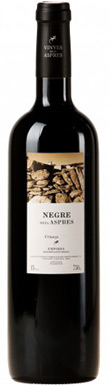
91
This well-run co-operative at Cantallops (the village name means ‘the wolf’s call’ in Catalan) is sited close to the Col de Perthus, the mountain pass through the Albères which leads to France. This aged blend of Grenache (33%), Carignan (27%) and Cabernet Sauvignon (37%), with a dash of Syrah, is hugely impressive for its price. It has earthy, warm and resonant aromas, with a palate that combines succulence of fruit, lingering, chewy tannins and a wealth of dense flavour.
2012
Vinyes dels Aspres
Masia Serra, Aroa, Empordà, Spain, 2016
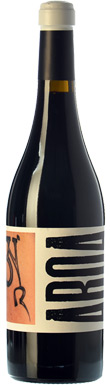
90
Jaume Serra and Silvia Vilà’s Masia Serra Aroa is a meditative and pure Grenache red wine, made from vines planted in 1961 in dry, refined, haunting and sustained style. It’s grippy, stony and long.
2016
Masia Serra
Mas Llunes, Butaros, Empordà, Spain, 2013
90
This single vineyard blend of Grenache and 120 year old Carignan was grown on slate by father and daughter team Antoni and Gemma Roig. It’s another fine example of the drama and intensity Empordà is capable of. Black-red in colour, it has subdued, earthy plum fruit character that holds a smouldering complexity. On the palate it is intense, deep, searching and pure, a drivingly acidic style that’s almost tart, as well as a cool, wind-groomed austerity: haunting and unforgettable.
2013
Mas Llunes
