Jefford on Monday: Downhill all the way


Andrew Jefford celebrates the Jacquère-based wines of Savoie....
Limestone and marl (limey clay) tend to be regarded with warm affection by wine lovers; as soil types, they bring us some of the world’s finest wines, from Montrachet to Barolo. On a wet winter’s night almost 770 years ago, though, the combination proved a deadly one, bringing about what is thought to have been the biggest landslide in recorded European history.
Here’s the geologists’ reconstruction. Mont Granier, a 1933-m peak in the French département of Savoie, is a limestone summit surrounded by extensive marl deposits, lying at the northern end of the Massif de Chartreuse. Thanks to its limestone, the mountain is riddled with water-eaten caverns, channels and faults: there are 341 sink-holes and caves in it today, and 66 km of galleries.
Scroll down for Jefford’s choice of wines
November 1248 had been a month of intense rain. During the night of the 24th to the 25th of November, vast slabs, blocks and sections of limestone high up on the mountain gave way, thundering down onto the sodden marls below. In rockslides, water (which has no strength) gets trapped between rock particles, rendering the entire mass of material ultra-weak (this liquefaction is also common during earthquakes). A tsunami of rock and clay then surged for seven kilometers out into the valley, burying five villages without trace, including their 1000 or more inhabitants and ‘innumerable livestock’. The collapse left a cliff face almost 900 m high, and entirely remodelled the valley lands beneath. For decades, little grew there.
The mountain was already known, back then, as Apremont, ‘bitter mountain’, so perhaps there had been previous incidents of this sort. Indeed it is still quietly haemorrhaging today: there were three further small landslides in January, April and May 2016, and its fissures are constantly surveyed. After the 1248 tragedy, the ‘bitter mountain’ was rebaptised with the name of one of its lost villages, Granier, but the original lives on as one of the two white-wine appellations sited on the debris. Abymes, no less descriptive, is the other.
I stood in these vineyards this January, and looked about. Even 770 years later, the landscape is chaotically rumpled; giant blocks of limestone sprawl here and there, and the vineyards are stitched onto the marl like a quilt made of left-over scraps of cloth, broken by woods in the tougher spots, and by ponds and marshes in the dips. What would that night have been like? A deafening roar, a sudden awakening in terror for the victims, then in all likelihood nothing more.
Mountain wine regions are complex for a reason: their topographical challenges have meant, through most of history, that they were a series of little kingdoms and fiefdoms, clinging on to specialities and traditions which reflect, with some fidelity, precise and highly contrastive local conditions. Savoie is no exception, and I’ll attempt to decode some of its nuances in a week or two. This week, though, let’s take a look not only at Abymes and Apremont, but also some of the other wines made from the variety which most relishes growing on this gigantic graveyard: Jacquère.
Few take Jacquère very seriously, at least from a critical perspective. This early budding, generously yielding variety, one of the many Gouais progeny, occupies half of the 2,077 ha of the region, so is by far the most widely planted of Savoie’s 23 grape varieties. There has, though, been a history of commercial insouciance with it, making white wines of ‘petit degré’ (11% or even less) which are bundled off up to the ski stations to be tossed back with mouthfuls of gluey cheese. Wine fans may rhapsodise about Altesse, Bergeron (Roussanne) or the rare Persan, but they tend to skim over Jacquère.
Please don’t. Even if you didn’t know its compelling backstory, a great Abymes or Apremont can represent the essence of the mountain wine ideal more memorably than any other in Savoie, and perhaps in Europe more generally. It is indeed always light in alcohol. Even when produced from older vines and October-harvested, it rarely exceeds 11.5%; its natural state, if you like, is one of aerial lightness. Its flavours are sculpted by fresh, sappy acidity, but at the same time it is not burdened by excessive or overt fruit flavours. It whispers stone rather than singing fruit. Lees contact can add a little descreet creaminess of texture — though a spritz, contrariwise, can give it even more lift and pungency. You’ll find both styles.
Above all, it’s mouthwatering; its natural balance tends to and trends towards that. Even if (like me) you’re not a skier, we can all shut our eyes and imagine what it must be like to blitz downhill in a crisp, twisting swirl of brilliance and powder and chill. Now imagine your tongue doing that, and you’ll have some idea about how a good glass of Jacquère tastes. No Roussanne or Altesse can match it for sheer downhill glee.
I asked several growers whether there was any notable differences between Apremont and Abymes. Apremont is the slightly larger of the two (400 ha compared to Abyme’s 300 ha), and is a little higher (290m to 500m) and more undulating, but in general the differences aren’t marked, and both produce good wines. The appellation regulations require a minimum of 80% Jacquère, but most are true varietals.
They aren’t the only Jacquères in Savoie, though. You’ll see the variety names used on bottles of white which have only the Savoie or Vin de Savoie AOP, and Jacquère is also the main white variety for the crus of Cruet, Chautagne, Chignin (when that name is used on its own) and Jongieux. In some of these cases, the style is a little more slalom-like and less of a downhill sprint.
Abymes and Apremont, for example, both have gently sloping cool clay-rich marls and look east in general. Chignin, facing the pair across the Cluse de Chambéry, is a very different sort of vineyard. Its steep west- or southwest-facing slopes of limestone rubble and scree make for a much warmer situation, and the wines accordingly have more breadth and wealth. (Malo is often blocked for Jacquère to maximise freshness, though wines from Altesse and Roussanne are allowed to go through malo.)
For the record, finally, Jacquère is also one of the lead varieties in the new Crémant de Savoie appellation, introduced in 2015. Jacquère on its own must account for at least 40% of the blend, or for 60% of the blend if it contains no Altesse; another six complementary varieties are allowed, with a maximum of 20% red varieties. It’s early days, but the best of the pioneer wines suggest that this may prove to be the most choice and delicate of France’s Crémants.
A taste of Jacquère
Read more Andrew Jefford columns on Decanter.com
Philippe & Sylvain Ravier, Les Abymes, Abymes, Savoie, France, 2017
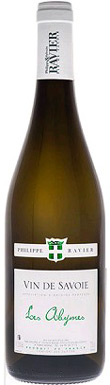
90
A glinting green-silver in colour, with fresh, yeasty apple skin and nettle sap scents. The palate is vivid, crunchy, bright and high-focus, with a cascade of lemon and apple, like a supercharged koshu - is it any wonder Apremont and Abymes sell so well in Japan? The finish is faintly bitter and saline, and the touch of spritz puts wax on its skis.
2017
Philippe & Sylvain RavierAbymes
Domaine Dupraz, Terres Blanches, Apremont, Savoie, France, 2016
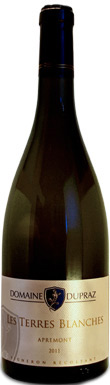
90
The hallmark of Jacquère,' says Jérémy Dupraz, 'is its balance. It takes well to later harvesting without ever ramping up its alcohol. You get lovely freshness of fruit and a clean, bitter end, but without the wine ever being too hot, too opulent or too overweight.' This concrete-aged wine is made from fruit grown on limey clay soils with a little scree material, picked on 8th October. It has lots of sappy, aromatic green fruit and a floral touch on the nose, the palate echoing those notes with ample lift from the ringing, bell-clear acidity.
2016
Domaine DuprazApremont
Philippe & Sylvain Ravier, Le Clos St André, Apremont, Savoie, France, 2014
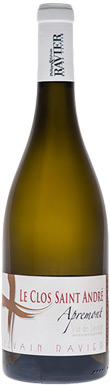
91
This single vineyard old vine cuvée now has three years’ age, giving Jacquère fans a chance to test the variety’s stamina. I compared it with its peachy sibling from the warm 2015 vintage: the 2014 has a much cooler and more classical expression. Vinous, leafy scents are followed by an almost Riesling-esque palate of mute lemon and shy apple, configured and structured by notes of stone and plant sap. Sinuous, reverberative acidity continues to hiss and curl around the wine’s core.
2014
Philippe & Sylvain RavierApremont
Domaine du Cellier des Cray, La Cuvée des Gueux, Chignin, Savoie, France, 2016
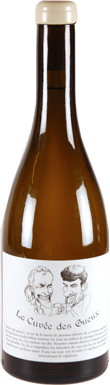
90
This wine is made from an 87 year old parcel of Jacquère whose twisted, misshapen vines mean that it has to be worked by horse. It’s pale gold, and has less zesty and appley scents than Apremont and Abymes wines, but with fresh herbal, wildflower notes. The palate is lithe and athletic, its cascade of fruit has spring freshness and a little white almond richness.
2016
Domaine du Cellier des CrayChignin
André & Michel Quenard, Vieilles Vignes, Chignin, Savoie, France, 2016
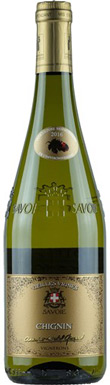
89
Quince, pear and fresh leaf scents mark this pale, fine grained wine. On the palate, it is soft, round and mouthfilling, with supple, limpid flavours and a gratifying freshening finish.
2016
André & Michel QuenardChignin
Pascale & Annick Quenard, 1903 Vieille Vigne, Chignin, Savoie, France, 2016
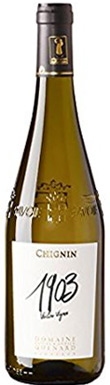
90
Pale gold in colour, with scents of lemon verbena and forest moss. On the palate it's a much juicier and mellower wine than its Apremont and Abymes counterparts, though unlike the Chignin Bergeron (Roussanne) wines there is no honeyed note. It turns sappy and fresh towards the finish, with a quietly leafy greenness; the old vine fruit makes for a long finish.
2016
Pascale & Annick QuenardChignin
