Jefford on Monday: All change at Capion


Andrew Jefford salutes a Russian renaissance in the Gassac valley...
Jefford on Monday: All change at Capion
I won’t often have the chance to write a sentence like that. As an unconditional fan of Gogol, Chekhov, Pushkin, Tolstoy, Turgenev, Prokofiev, Stravinsky, Shostakovich and Tarkovsky, this email (on January 23rd) was a treat. The former governor of Perm wasn’t, however, contacting me to discuss the setting of ‘Three Sisters’, Pasternak’s years in the chemical factory near Perm, or even Murchison’s naming of the fateful and ultimately catastrophic period between the Carboniferous and the Triassic – but Ch Capion, the Languedoc property he had bought a year and a half earlier.
Scroll down for Jefford’s tasting of Capion wines
Oleg Chirkunov, let me point out, is not an oligarch investor. It wasn’t a PR who got in touch with me. He did. When I visited Capion in April, the former governor of Perm and his wife were waiting outside at the appointed hour. We walked the vineyards, together with estate director Rodolphe Travel; their plans came tumbling out. The Chirkunovs are thoroughly, personally involved; they care. The wines were impressive, especially considering the short time the new team has been in place. Nothing is certain any more (and it never was anyway), but my guess is that this tenure will be greatly to Languedoc’s benefit. The neighbouring Guibert family has been helpful and welcoming.

Chirkunov is the third Russian to buy a major Languedoc estate after Dmitry Pumpyansky purchased Prieuré de St Jean de Bébian in 2008, and Boris Pakhunov of the Russian wine and spirits group Praskoveyskoe bought St Martin de La Garrigue in 2011 and then the Corbières property Ch de St Louis in 2012. Capion, though, may be the most significant property in Russian stewardship: it shares the Gassac valley with Mas de Daumas Gassac, and its vines lie not far from those of Grange des Pères, too. Gratifyingly, at least one of the Capion wines is going to market under the Terrasses du Larzac appellation – Aniane’s true AOP identity. Since 1996, Capion had been owned by the Swiss Bührer family, owners of Saxenburg in South Africa but, despite initial ambitions, the wines failed to make much impression in recent years, and the necessary vineyard investments had not been forthcoming. Chirkunov is changing that.
Perm is a city of just under a million people 1,400 km to the northeast of Moscow, lying close to the Urals. Having been governor between 2004 and 2012, Chirkunov now runs a chain of 82 supermarkets in the region – and imports wine to Russia, too (laboriously, via Lithuania, in order to meet challenging Russian labeling requirements). He’s an art lover who struggled to give Perm an artistic and cultural identity during his governorship – and he now has similar plans for Capion. It already hosts summer concerts; there is a gallery project.
His first purchase in France, in 2014, was the Domaine de Montplaisir, a cloth magnate’s mansion up in Lodève with just a few small parcels of vines; he now has plans to expand plantings in that much higher and cooler location. Bureaucratic difficulties in obtaining residence rights mean that the Chirkunovs divide their time between Perm, London, Switzerland (where their sons are based) and France – but Oleg insisted we spoke French together, not English, and he has faced so many obstacles down the years that he is philosophical about the frustrations which all those who chose France become familiar with.
Claude Bourgignon has surveyed the vineyards, and Rodolphe Travel — now full-time at Capion — and consultant Claude Gros complete the team with full-time winemaker Nikola Zebic. (Gros and Travel formerly worked together to make Rob Dougan’s La Pèira the outstanding Languedoc reference it is; another celebrated Gros consultancy is Ch La Négly in La Clape.)
Capion has 45 ha planted at present, and Chirkunov plans to bring this total up to 56 ha. The soils are mixed, with limestones as well as alluvial soils and gravels, sited between 100m and 250m, sometimes with cool northern expositions. Yields have come down; the vineyards are being run organically, and biodynamics are a possibility; harvesting (by machine in the Bühler era) is now by hand, with fastidious fruit sorting. Gros, who says this is one of the coolest sites he has worked in, is looking for a delicate touch in the winery: “this is the spirit of how we want to go forward at Capion”. The 2017 frosts were a setback, slicing production in half, and 2018 has begun with a very rainy spring, but hopes remain high for the third vintage later this year. As you might expect from an art collector, the labels are beautiful – and that’s still rare in Languedoc.
A taste of Capion wines:
Postscript
Added on 3 July 2018
After writing this article, I was contacted by Fiona Bührer of Saxenburg; we spoke by phone about her family’s involvement in Capion, which began in 1996 and not 1994.
The property was entirely derelict when the Bührers took over. They restored all of the buildings and replanted most of the vineyards; the wines won a number of awards (including from Decanter World Wine Awards) in the years preceding the transition of ownership. Viticulture throughout most of the growing season for the Chirkunov team’s debut vintage in 2016 (for which tasting notes are given below) was undertaken by the Bührer team, and Fiona assures me that there had been no lack of investment.
Only two of five Bührer successors wished to pursue viticulture, though, and the commitment to Saxenburg and to Vincent Bührer’s retail wine business Port2Port in South Africa meant that no family member was available to live at Capion – so the family sold Ch Capion, which Fiona says they loved dearly, with great reluctance.
Read more Andrew Jefford columns on Decanter.com here
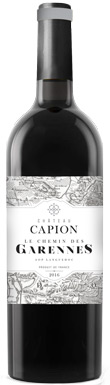
Château Capion, Le Chemin des Garennes Blanc, Languedoc-Roussillon, France, 2016
90
Capion, says Claude Gros, is 'an extraordinary white-wine terroir'. This, the second white of the estate, is 90% young vine Roussanne blended with 10% Bourboulenc and a tiny seasoning of Viognier, whole-bunch pressed and given 10-15% barrel fermentation. Aniseed, fennel and strawberry aromas combine to make a distinctively southern, aromatic scent. On the palate the wine is fresh and lively, with a vigorous salty-acid balance which gives it a crunchy force. There are intriguing peach and quince fruits too. This vintage had a blocked malo, which adds to its intensity and impact; the team are considering putting subsequent vintages through malo to ease that edgy balance back a bit and give the wine more vinous depth: surely a good idea.
2016
Château Capion
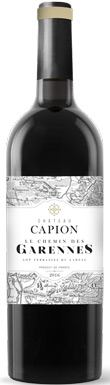
Château Capion, Le Chemin des Garennes Rouge, Terrasses du Larzac, Languedoc-Roussillon, France, 2016
93
Complex and confident yet reined-in, with loganberry and summer pudding aromas.The palate is agreeably ripe, round and lush, with fine balancing acidity. Long and poised, with ageing potential.
2016
Château CapionTerrasses du Larzac
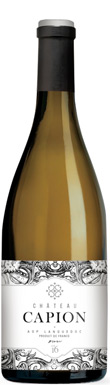
Château Capion, Blanc, Languedoc-Roussillon, France, 2016
93
This wine brings Roussanne grown on cool limestone soils together with around 30% Viognier and 10% Bourboulenc, entirely fermented in 500 litre Stockinger demi-muids. Hawthorne flowers, cream and quince fruits come together in a subtle, enticing scent. There’s peach, nectarine and more quince articulated with poise and restraint on the palate, combined with a velvet texture and an energetic, long finish. This is a concentrated, lean yet rich white with nothing obvious or overdrawn about it, as can so often be the case with Roussanne-based wines grown in the south. It has a stony cut to the finish, perhaps derived in some way from its limestone soils. Capion Blanc looks set to join the select band of fine Languedoc whites.
2016
Château Capion
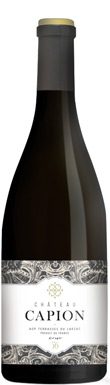
Château Capion, Rouge, Languedoc-Roussillon, France, 2016
94
I tasted this impressive blend of 70% Syrah with 20% Grenache and 10% Mourvèdre some two months before bottling. It’s an impressive achievement for the new Capion team’s first full vintage, proving just how much potential these vineyards have. It's a saturated dark black-red in colour, with tender, pure scents of super-fine plum, blackcurrant and blackberry, and not a splinter of wood too much. After this fresh yet delicate aroma, the palate is deep, refined, structured and resonant. The tannins are supple yet supportive, lending a little amplitude to that magnificent plunge of pure fruit. 93-95 points.
2016
Château Capion
Château Capion, Le Songe d’Éocène Blanc, Languedoc-Roussillon, France, 2016
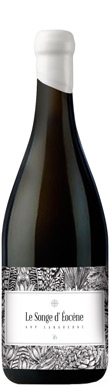
92
This wine is an almost pure Viognier grown in the high-sited Les Juges parcel of Eocene-epoch limestones, blended with a tiny quantity of Roussanne. It has been bottled, but not released yet. Mid-gold in colour, the wine has elegant aromatic whispers of apricot, cream, wild grasses and hay. On the palate the fruits suggest pear and quince more than apricot, and it has surprisingly intense acidity, delicate aromatic restraint, and a clean, precise profile. Claude Gros finds a saline edge and feels that it's very typical of its limestone soils; that’s certainly a feature of Capion’s other wines. Its delicacy and freshness are impressive, but I found myself wishing that this wine - August-picked after a warm season - had just a little more richness, textured wealth and aromatic expression.
2016
Château Capion
Château Capion, Le Songe d’Éocène Rouge, Languedoc-Roussillon, France, 2016
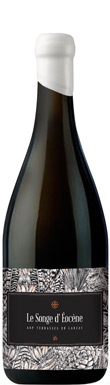
95
The red wine DNA of Capion,' says Claude Gros, 'is Syrah', and for this special cuvée the estate’s most expressive, high-grown Syrah, from the Les Juges parcel on Eocene-epoch limestones, has been blended with less than 10% of Mourvèdre and Grenache. This cask sample is super-showy in aroma: a purée of hedgerow blackberries swirled together with black plum and sweet blackcurrant. The palate is dense, deep and profound, intensely fruited yet very pure and refined in style, with fine-grained tannic wealth, finishing sweetly but uncloyingly. This wine is destined to turn heads, and it may yet merit a higher score still in time. 94-96 points.
2016
Château Capion
