Jefford on Monday: Tracking terroir


Could microbes be the key? Andrew Jefford talks to McLaren Vale winemaker Drew Noon MW.
Not every vineyard is a little corner of paradise (chemicals render some infernal; topography makes others purgatorial) – yet I know one that is. It’s Drew and Rae Noon’s 5.6 ha of vines tucked away on Rifle Range Road in South Australia’s McLaren Vale. The vineyard is a large garden, with the vines tended “like grandmother’s plum tree” – and there’s a beautiful kitchen garden, too, with a chicken run, and tables under trees, and dappled sunlight. The cellar is quiet, open, peaceful, clean, simple and unhurried; the house full of books and maps. This is winemaking, you feel, as Horatian retirement: cultured, creative, secluded, thoughtful. (Drew Noon was one of Australia’s earliest MWs, and ‘retired’ back to Rifle Range Road after running vineyards in the Hunter, and consulting in Victoria.)
The Reserve Cabernet and Reserve Shiraz are both crafted from fruit which Drew Noon buys from the Borrett family in Langhorne Creek, but the family’s celebrated Grenache-based Eclipse as well as the fortified VP and the High Noon Rosé all come (since 2011) from the McLaren Vale vines alone. Drew and I have corresponded since 2010, on and off, about terroir; he and Rae follow the academic and general literature; and they allow that there are sound reasons for reserve about some of the wilder claims and looser language of unthinking terroiriste winemakers, geologically intoxicated wine writers and dithyrambic sommeliers.
The point is this, though: they have studied their own vines, individually, and their own soils for over 20 years now. They’ve tested terroir. They’ve observed differences in plant behaviour on different soils, then smelled and tasted differences in the resulting wines. Indeed even back in his Hunter Valley days, “I became convinced terroir was real because I could taste it. With Semillon at Tyrrell’s in the Hunter Valley, the wines from the sandy soils were quite different to those from the clay soils.”
Drew Noon currently accepts “that all aspects of climate play a big, probably a predominant, role in determining the character of a wine. By this I mean the weight, acid balance and mouth feel of a wine. But the nuances of flavour (what you could call the personality of the wine) that give rise to the differences between sites, I suspect, are the results of the complex interactions between the vine and the microbes in the soil and on the above-ground parts of the vine. The smaller the vineyard area under consideration, the more important is the role of the soil.” This is a key distinction; I’m sure he’s right.

Soil microbes and their interactions with vine roots are rightly the focus of much study at present; Noon is convinced that vines, as it were, ‘school’ their own microbial populations over the years, and that this is one reason why old, less vigorous vines counter-intuitively produce higher quality wine than young, more vigorous vines are able to. (Elaine Ingham of Australia’s Soil Foodweb Institute, Rae Noon told me, has shown how plants not only release food to nourish their own microbial populations, but can actually change the food mix in order to favour certain microbial populations.)
Drew Noon’s emphasis on above-ground microbes is less widely shared, but is not illogical. We know how much yeast populations on grape skins can differ from place to place. The aerial medium of a vine, he points out, is no less dependent on site factors than the soil medium, and every surface of a plant hosts microbes. Concern for this medium is one reason why he uses biodynamic preparations on his vines (though Noon is not a biodynamically certified vineyard).
In particular, the Noons have been able to study their Winery Block Grenache vineyard (planted in 1934) very closely. “The soil changes a little way down the rows from a gravel fan to the heavy clay which most of the vines are growing in. The soil change is quite sudden so vines only a few metres apart are growing in two different soils.” The fruit growing on the gravel never makes it into Eclipse, but is used for the rosé and the second label (Twelve Bells); whereas the fruit grown on the clays accounts for 30 to 50 per cent of the Eclipse. The two sectors naturally carry different weed populations in summer – and Drew and Rae have marked the point of difference with a line of metal sculptures.
“The vines on the gravel,” Drew explains, “look different; they appear older and more frail than the vines on the clay, many are falling slowly apart. The fruit looks different, with more tightly packed bunches and larger berries. This is the result of the soil physical properties which allows the roots on the gravel to explore a larger volume of soil (the roots are deeper and spread wider) because of the lighter texture, accessing more water. But the wine tastes different in flavour, apart from being softer and less dense. I think this is largely due to the different microbe population. Microbes,” he concludes, “are not the primary driver of wine flavour in the larger context, but I do think they could be vital to understanding the important, subtle and exciting differences that exist between sites.”
A Taste of Noon McLaren Vale wines
Read more Andrew Jefford columns on Decanter.com
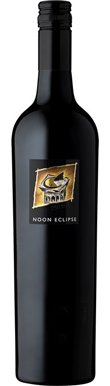
Noon, Eclipse, McLaren Vale, South Australia, Australia, 2016
94
This vintage of Eclipse blends Grenache together with 8% Graciano and 5% Shiraz. It’s a translucent red in colour, with pastel-shaded black fruits in a softly savoury frame; lifted and refined. There’s impressive purity and poise on the palate, too, with earthy, deep flavours in a cleanly hewn, frank, savoury style. Ample tannins provide balance and texture. It's a beautifully measured, drinkable and soft-fingered wine of resonance and natural articulation.
2016
NoonMcLaren Vale
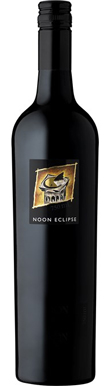
Noon, Eclipse, McLaren Vale, South Australia, Australia, 2015
92
There are complex, sweet-scented plum, raspberry and pomegranate scents layered over dried-flower and plant notes in this pale, translucent red blend of Grenache with 7% Graciano and 3% Shiraz. Below the fruits, you’ll find a quiet earthy presence, and a little well-oiled leather. On the palate, the wine is light-bodied though richly flavoured, smooth, refined, long and harmonious, with gentle acidity and fine-milled tannins. It grows more savoury with time in the mouth, leaving it clean. You can see those same raspberry and pomegranate fruits on the palate, soft and sweetly defined, lent dignity by the tannins and the wine’s savoury finesse; the very opposite of the '16% Aussie' cliché.
2015
NoonMcLaren Vale
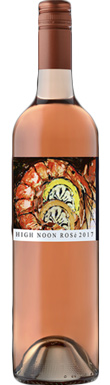
Noon, High Noon, McLaren Vale, South Australia, Australia, 2017
90
Few rosé wines actually contrive to smell both of fruit and earth, but this delicate, pale russet-pink one does, with sweet peach scents and the scent of dusty soil after rain, too. On the palate it’s full, rich, mellow and saline, with ample soft fruit richness and creamy depths. The peaches are uninsistent, almost submissive, and the salty notes give the wine fine gastronomic aptitude. Heady, long, original, naturally articulated – and a true terroir rosé.
2017
NoonMcLaren Vale
Noon, Eclipse, McLaren Vale, South Australia, Australia, 2016
94
This vintage of Eclipse blends Grenache together with 8% Graciano and 5% Shiraz. It’s a translucent red in colour, with pastel-shaded black fruits in a softly savoury frame; lifted and refined. There’s impressive purity and poise on the palate, too, with earthy, deep flavours in a cleanly hewn, frank, savoury style. Ample tannins provide balance and texture. It's a beautifully measured, drinkable and soft-fingered wine of resonance and natural articulation.
2016
NoonMcLaren Vale
Noon, Eclipse, McLaren Vale, South Australia, Australia, 2015
92
There are complex, sweet-scented plum, raspberry and pomegranate scents layered over dried-flower and plant notes in this pale, translucent red blend of Grenache with 7% Graciano and 3% Shiraz. Below the fruits, you’ll find a quiet earthy presence, and a little well-oiled leather. On the palate, the wine is light-bodied though richly flavoured, smooth, refined, long and harmonious, with gentle acidity and fine-milled tannins. It grows more savoury with time in the mouth, leaving it clean. You can see those same raspberry and pomegranate fruits on the palate, soft and sweetly defined, lent dignity by the tannins and the wine’s savoury finesse; the very opposite of the '16% Aussie' cliché.
2015
NoonMcLaren Vale
Noon, High Noon, McLaren Vale, South Australia, Australia, 2017
90
Few rosé wines actually contrive to smell both of fruit and earth, but this delicate, pale russet-pink one does, with sweet peach scents and the scent of dusty soil after rain, too. On the palate it’s full, rich, mellow and saline, with ample soft fruit richness and creamy depths. The peaches are uninsistent, almost submissive, and the salty notes give the wine fine gastronomic aptitude. Heady, long, original, naturally articulated – and a true terroir rosé.
2017
NoonMcLaren Vale
