Jefford on Monday: Torres and the existential struggle


Andrew Jefford finds a company in constant reinvention...
A rare moment: Miguel Torres, his son Miguel Junior and his daughter Mireia Torres, sitting together around the lunch table. The schedules of the three seldom coincide. We were discussing identity: a hot topic at present for Catalonia. The Catalunya DO, for example, is at present subject to informal boycott elsewhere in Spain since the secession crisis of October 2017.
‘We are not very political,’ says Miguel Junior, with the calm affability which rarely seems to leave him. ‘This is something we keep very private. We have people on both sides of the Catalan independence debate in our company, but we just concentrate on working hard together.’
‘What’s paramount,’ adds his father, ‘is our European identity. We couldn’t live without Europe. We have to stay in Europe; we need Europe. Now we have a more flexible government in Spain, maybe all this can be resolved.’
There’s a picture of Barack Obama meeting Raúl Castro on the wall nearby. ‘I like to show this picture of Obama and Castro, because it illustrates that you can sit at a table and resolve problems. We are here to solve things, and to bring people together rather than separate them.’
It must have helped, of course, that the US and Cuban leaders were drinking Milmanda – and there is a historical twist, too: it was Jaime Torres’ Cuba-made fortune which initially built Bodega Torres back in 1870. Arguments for reason, compromise and joint action are welcome in this summer of unreason and unilateralism.
I cannot think of a major wine company whose identity has changed more over the past three decades than Torres. Branded wines made at scale from purchased grapes formed the foundation laid by the previous generation: Viña Sol, Sangre de Toro, Coronas and Torres brandies. Miguel Torres added a Chilean dimension, and began the creation of fine single-vineyard wines such as Milmanda and Mas La Plana.
And now? You don’t shift the fundamentals overnight, of course, and Viña Sol and Sangre de Toro remain vital (and surprisingly subtle) brands. But Torres is now well on the way to transforming itself into a cluster of individual and clearly differentiated wine estates, aimed squarely at the restaurant trade – as well as turning itself into the wine world’s most environmentally committed large-scale producer.
Climate change is viewed by the Torres family as an existential struggle. ‘We would like the next generation to continue producing wines,’ says Miguel Junior. ‘If we cannot do that, we will have failed.’
The company has already invested 12 million euros in ‘photovoltaic panels, electric cars, biomass: anything that can reduce emissions.’ The target is a 30% reduction by 2020.
Company thinking, though, goes much further than remedies. Torres is intensively researching the carbon capture of the vast tonnages of CO2 produced in fermentation every year around the world. ‘Nobody has done this yet,’ exclaims Miguel with some animation. ‘We had a presentation about this last October. It can be done, and it will be fantastic for the wine industry.’
More than that, though, is the growing realisation that the fundamentals of wine production are changing, and in this respect, too, Torres is in mid-metamorphosis.
Back in the 1980s, advertisements in Catalan appeared in local newspapers. ‘Bodegas Miguel Torres is undertaking a project of research and recuperation of ancestral Catalan varieties,’ it read. ‘If you know of any type of vine not coming from a customary variety and know where it can be found or someone who is growing it, please let us know.’
Ancestral varieties
This began as a cultural project – but has now become a key part of the life-or-death struggle. ‘The next wines in which I have all my hopes,’ says Miguel Junior, ‘are the ancestral varieties. Some of these came into being in the Medieval warm period; they ripen three weeks later than the varieties we are usually working with, and they retain their acidity.’
‘There are more than 150 varieties that are approved for winemaking in Spain,’ adds Mireia, ‘but 85% of the vineyards are planted with less than 10 varieties. Some of the minority varieties are really interesting for the fight against climate change.’
Getting these varieties officially accepted is a long and painstaking process. ‘It takes four years to convince the Spanish Ministry of Agriculture,’ reports Miguel Junior, ‘then you need to show it to the Catalan government. That takes another two years. The Penedès Denominación needs convincing: another two years. And of course if you plant in the wrong place, then you lose seven years.’ Even Miguel Junior says that it’s a project ‘for our children.’
Penedès has now approved two of these varieties, Forcada and Moneu, and Torres has now bottled the first production run of those as well as three other varieties: Pirene, Gonfaus and Querol (see notes below).
Another Torres climate-change initiative is the planting of vineyards at altitude – up to 1,000m in Penedès and Ribera del Duero, and in Priorat (where Torres is now, with Álvaro Palacios, one of the two largest quality producers) up to 750m.
Nothing at Torres is going un-thought or unexamined, and the company is large enough to contain multitudes. The Jean Leon estate and its wines are still predicated on international varieties, since that was what made its original reputation, and that’s what its customers enjoy.
My notes on the Torres range are given below. The two current generations have created wines of diversity, subtlety and finesse: fine-wine values, rather than the kind of ponderous and pretentious interpretation of terroir which can sometimes result when a producer becomes obsessed with its ‘icons’. Maybe they can help save humanity, too.
Tasting Torres wines past and future:
Starting with the four unreleased wines followed by the regional wines…
Read more Andrew Jefford columns on Decanter.com here
Torres, Gonfaus, Catalonia, Spain, 2016
92
This red variety may in fact be female rather than hermaphroditic like most; further studies are underway. It grows at 460m in Osona in northern Catalonia, where winters are very cold and summers hot, and harvest is at the end of September or early October. It’s the darkest of the three red wines, with black fruits infused with menthol, eucalyptus and pine. On the palate this is a serious, earthy and dense - though not markedly tannic - red wine with high acidity and black woodland fruits including damson and sloe. Torres are contemplating using this as a blending grape for Purgatori once it has been accepted as a Penedès variety. Scored 91-94.
2016
Torres
Torres, Forcada, Catalonia, Spain, 2015
91
The white Forcada is grown in clay soils at around 550m in the high Penedès. It ripens in October and retains around 8g/l of acidity as well as rarely exceeding 13%. Pale gold in colour, it has scents of wild grass meadows and gentle apricot fruit. On the palate it's vivid, tangy and bright, almost nutty: a true southerner but with ample aromatic presence. It's more articulate than a variety like Bourboulenc, yet more structured than Garnacha Blanca. The Torres family are considering the release of 100 cases or so at the end of 2018. Scored 90-92.
2015
Torres
Torres, Pirene, Catalonia, Spain, 2016
91
This red variety which ripens in mid-October is planted at around 950m near the Ermita San Miguel on the Tremp estate, close to Pillars Jussà in Costers des Segre. This barrel sample is a deep but not opaque black-red in colour, with wild cherry and sloe fruit aromas and a smooth, intense, vivacious flavour. The prominent acidity gives incision and poise, while the fruits are qualified by a ripe leafiness or undergrowth-like freshness. Scored 90-92.
2016
Torres
Torres, Moneu de la Bleda, Penedès, Spain, 2017
90
From the first harvest for which this variety is approved in Penedès, and grown near the town of Querol itself, Moneu is redder and lighter in colour than Pirene, with sweeter, more fragrant scents. On the palate it’s a pungent, fresh, crunchy red wine, seemingly very ‘northern’ in style, with blackcurrant or redcurrant fruits. Scored 89-91.
2017
Torres
Torres, Reserva Real, Penedès, Spain, 2012
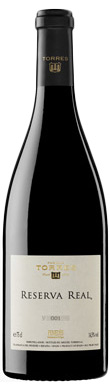

This wine comes from a more recently planted estate, Les Arnes at Mediona, around 25km north from Pacs, on slatey soils. The Cabernet is blended...
2012
Torres

Torres, Grans Muralles, Conca de Barberà, Catalonia, Spain, 2014
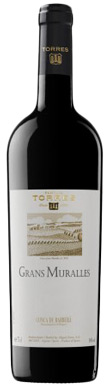
This is the Torres wine with maximum indigenous-grape penetration so far. The blend in 2014 combines 44% Carinyena (for structure) with 31% Garnatxa (perfume) and...
2014
TorresConca de Barberà
Torres, Santuari de la Rosa, Priorat, Catalonia, Spain, 2016
This as-yet-unreleased wine comes from a 2.3ha plot of very old Carinyena and Garnacha bush vines in Porrera. There will be just 170 cases. The...
2016
TorresPriorat
Torres, Perpetual, Priorat, Catalonia, Spain, 2015
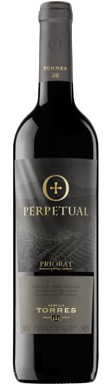
There are no more than 1,200 cases of this dramatic Priorat, produced exclusively from vineyards planted prior to 1945. Until recently it was made from...
2015
TorresPriorat
Torres, Mas La Plana, Penedès, Spain, 2013
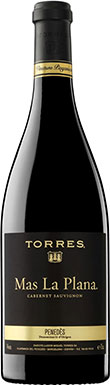
Torres’ famous single vineyard wine, Mas La Plana Cabernet Sauvignon, needs little introduction to wine lovers. But just for the record, it dates back to...
2013
Torres
Torres, Salmos, Priorat, Catalonia, Spain, 2015
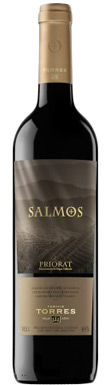
The first of the three Torres Priorat wines is made from 60% Torres-grown fruit and 40% bought fruit (this purchased percentage will drop). It’s a...
2015
TorresPriorat
Vardon Kennett, Esplendor, Spain, 2013
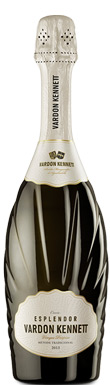
There’s nothing on the label of this sparkling wine to say that it's either Cava or from Torres. For all that, it’s crafted from Catalan...
2013
Vardon Kennett
Torres, Milmanda, Conca de Barberà, Catalonia, Spain, 2015
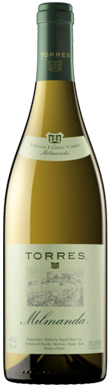
Milmanda is grown in calcareous clay soils at 500m, close to the Castle of Milmanda. The 15ha of vines were planted in 1980, and the...
2015
TorresConca de Barberà
Torres, Purgatori, Costers del Segre, Catalonia, Spain, 2014
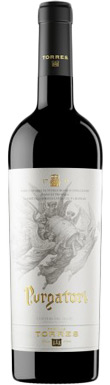
At present this is a blend of Carinyena, Garnatxa and Syrah grown in the olive country of Les Garrigues, producing tiny yields from deep, silty-clay...
2014
TorresCosters del Segre
Torres, Celeste Crianza, Ribera del Duero, Castilla y Léon, Spain, 2015
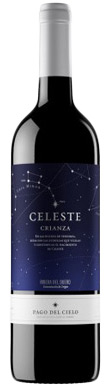
This beautifully labelled wine draws on Torres’s own 35ha of Ribera del Duero vineyards, sited at 895m, complemented by further grape purchases. The aim is...
2015
TorresRibera del Duero
Miguel Torres, Manso de Velasco Viñas Viejas, Chile, 2012
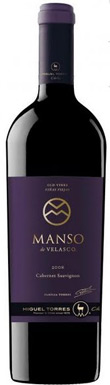
This wine comes from ungrafted 120-year-old vines, and is at present bottled in very heavy glass, though the family are aware that such a bottle...
2012
Miguel Torres
