Shaking things up at Château Palmer


How Thomas Duroux and his team set about changing the philosophy of this Margaux estate and why he believes biodynamics is making a difference to the wines. A report from the Decanter Fine Wine Encounter 2016 in London.
Shaking things up at Château Palmer
Château Palmer is going to be an interesting estate to watch for fans of Bordeaux classified growth wines in the next few years.
Thomas Duroux, Palmer’s CEO, took masterclass guests at the Decanter Fine Wine Encounter in London through a vertical of Palmer from 2004 to 2014 inclusive and a whistlestop tour of the many changes he’s implemented at the estate since taking over around 12 years ago.
Duroux is part of a new generation of winemakers around the world who have tapped into available funds and resources to forensically examine their vineyards; harnessing science and technology to flesh out knowledge previously acquired via experience and hunches.
It’s essentially a quest for ever-greater precision. And Duroux believes that this engenders a more respectful attitude towards the environment, drawing on descriptions of the farm as a living organism.
‘When I arrived [in 2004], we had just one way of working the vineyard,’ said Duroux, who previously made wine at Ornellaia in Tuscany.
Things didn’t change immediately, partly because of the ‘rocking chair’ 2005 vintage that is almost assured of its place in Bordeaux’s hall of fame.
But 2006 brought everyone back to earth and a tough vintage convinced Duroux that he must look more closely the vineyard, he told the packed masterclass audience.
‘After 2006 we worked on a plan to know the diversity of the vineyards much better. The first thing was to understand the soil. [We now know that] there are 18 different types of soil on our 66 hectares.
‘Then you have the vines. Each vine, each block will be in a different situation. By photographing the vineyard with infra-red cameras, we could see the difference in vigour in all of the vineyard.’
‘That was fabulous, but then we had to understand why. There are two main factors: water stress and nitrogen. So we did sampling, to design maps of water stress and nitrogen.’

It was at this point, Duroux said, that he was able to begin the process of managing the Palmer vineyard as a series of separate plots.
‘We can adapt a lot of things to try to regulate the vineyard depending on water and nitrogen.’
He added, ‘One block could have 10,000 vines of same age, same grape and same rootstock, but if the soil and water is different then the quality of the fruit won’t be the same.’
Alongside this, Palmer began to vinify certain parcels of vines separately depending on their needs. ‘Instead of harvesting block one altogether, we could harvest a little piece of one and a bit of block seven and put it in the same vat.
‘It was extremely important work.’
Duroux also spoke of how developments in the understanding of ripeness helped to change harvest strategy.
He argued that Bordeaux relied too strongly on ‘technological ripeness’ in the past – assessing sugars and acidity above all. But, aromatic ripeness of the fruit and phenolic ripeness of tannins are now much more present in Bordeaux winemakers’ minds than in the late 20th Century, he suggested.
Alongside an examination of Palmer’s vineyards, Duroux said he also became interested in the use of pesticides.
He said that he was relaxed about lowering the average yield at Palmer and came to the conclusion that forcing vines to rely on pesticides to beat disease was a road to nowhere.
‘In summer 2011, we said that we had to move forwards and we have slowly but surely gone through a biodynamic approach for the whole vineyard. We have to make sure our farm is a living organism.’
It’s early days, and the extent to which biodynamic principles should be followed is a divisive issue among winemakers. But, Duroux is a convert.
‘Do we do better wines? I think we do. The vines express themselves better. We pay more attention to every aspect in the vineyard.’
John Stimpfig’s top wines of the tasting:
Château Palmer, Margaux, 3ème Cru Classé, Bordeaux, France, 2010
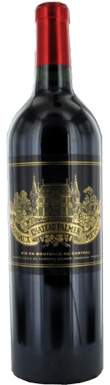

One of the great years of Bordeaux now at 10 years old and showing why this is such an unusual vintage in terms of the...
2010
Château PalmerMargaux

Château Palmer, Margaux, 3ème Cru Classé, Bordeaux, France, 2009
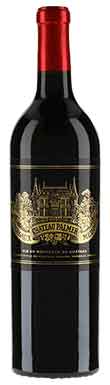
Bursting with potential for decades of enjoyment as it just hovers around its drinking window at 11 years old. Still extremely young, with fleshy black...
2009
Château PalmerMargaux
Château Palmer, Margaux, 3ème Cru Classé, Bordeaux, France, 2005
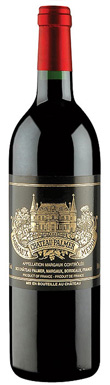
A heady, exuberant wine. Very expressive and chockablock full of violets and swathes of flowers. Shows great Margaux typicity. The elegance gives way to an...
2005
Château PalmerMargaux
Château Palmer, Margaux, 3ème Cru Classé, Bordeaux, France, 2006
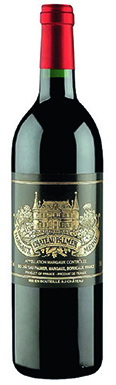
44% Cabernet Sauvignon, 56% Merlot. A clear step up from the 2004, even though the vintages were not dissimilar in style. A more delicate grain...
2006
Château PalmerMargaux
Château Palmer, Margaux, 3ème Cru Classé, Bordeaux, France, 2014
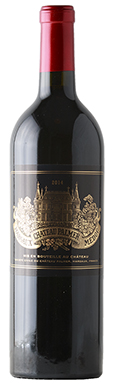
<p>Robust fruit from low yields but no less elegant. Wonderful richness, texture and structure, this will become a superbly balanced wine of great beauty.</p>
2014
Château PalmerMargaux
