Pinotage to change your mind


Not a fan of Pinotage? Tim Atkin MW explains why you should give it another chance, and picks several wines to change your mind...
Amy Wislocki, managing editor, says: I just don’t understand the attraction to this awkward variety. How on earth did Pinotage become South Africa’s signature red? For me, it lacks elegance, freshness and usually a sense of terroir – and too often has unattractive varnishy, synthetic aromas. I’ll take straight Pinot Noir over this any day.
Tim Atkin MW, an awarded wine writer and leading commentator on South African wines, replies:
Professor Abraham Perold, the man who invented Pinotage, never got to taste a wine made from his own creation. The plants, grown from four seeds in his garden, were saved from oblivion by Dr Charles Niehaus, a young lecturer at the University of Stellenbosch, when Perold left to join the KWV co-operative in 1927. It wasn’t until 1941, the year of Perold’s death, that the first Pinotage was vinified at Elsenburg Agricultural College. By such small margins did the grape survive.
I know what you’re thinking. If Perold had tried a Pinotage, he’d have pulled the whole lot up and saved the world from this much-maligned crossing of Cinsault and Pinot Noir. The fact that Pinotage is barely grown outside the Cape confirms what a lot of people think: the variety isn’t up to snuff. Even in South Africa it divides opinion. For every winemaker who considers it a USP, there are just as many who think that it’s a seconddivision variety at best.
What Pinotage tastes like
The main charge levelled against Pinotage is that it smells of amyl or isoamyl acetate, otherwise known as nail polish remover – or banana if you’re being more polite. It’s certainly true that Pinotage is distinctive: just 10% can have a marked impact on a Cape red blend – but the chemical note tends to fade with age. Indeed, talk to a Pinotage specialist like Beyers Truter of Beyerskloof and he’ll tell you that it’s a sign of bad winemaking, rather than an inherent characteristic.
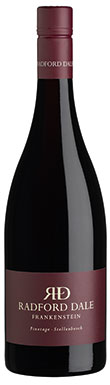
I think Pinotage is capable of making very tasty wines, especially if the vines are old and it’s handled with care. Never forget that one of its parents is the temperamental, thin skinned Pinot Noir. What’s more, it’s able to be made in of a range of styles, from light and juicy to concentrated, ageworthy and profound. Just taste, say, Radford Dale’s Frankenstein Pinotage alongside one from Fram, Scali, Spioenkop, Kaapzicht, Beyerskloof or Delheim. Who says this is a predictable grape?
There’s a good reason that Pinotage is the third most planted red variety in South Africa after Cabernet Sauvignon and Syrah, with 7.4% of the country’s 99,463 hectares: it’s well adapted to the Cape’s range of climates, and produces very good reds in regions as diverse as Franschooek, Elgin, Citrusdal Mountain, Paarl, Voor Paardeberg, Swartland and Stellenbosch.
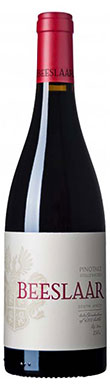
Can it make great wines? I think it can, although such a claim would be largely based on the achievements of one man, Abrie Beeslaar, who makes the wines at Kanonkop and under his own eponymous label. Kanonkop’s Black Label Pinotage is one of the best wines in South Africa – not just the best Pinotage – with a price-tag to prove it. Beeslaar, on the other hand, first made as recently as 2012, is still ludicrously cheap for what it is.
I like to imagine Professor Perold’s face, suffused with pride and pleasure, as he tastes a bottle of this wine in the afterlife. Nearly a century after he planted those four seeds, Pinotage is flourishing.
See the wines:
Kanonkop, Black Label Pinotage, Stellenbosch, South Africa, 2012
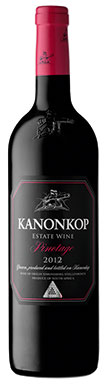

A decade on and this is just showing the first real hints of a savoury character. Again, slow to reveal its perfumed charms, but then...
2012
Kanonkop

Beeslaar, Pinotage, Stellenbosch, South Africa, 2012
96
The maiden release under Abrie Beeslaar’s own label is floral, enticing and beautifully framed, with masses of sweet, brambly fruit, hints of Asian spices, supple tannins and a core of minerality.
2012
Beeslaar
Radford Dale, Frankenstein Pinotage, Stellenbosch, South Africa, 2014
93
<p>Made like a Pinot Noir, with whole-bunch fermentation, this is a perfumed, delicate, refreshing style with bright acidity and a core of red fruit sweetness. A monster it is not.</p>
2014
Radford Dale
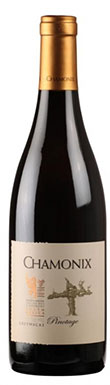
Chamonix, Greywacke Pinotage, Franschhoek, South Africa, 2013
94
An unusual red that combines carbonic maceration with dried-on-the-vine grapes to produce something that tastes like a Pinotage crossed with a Valpolicella Ripasso. Juicy, yet grippy.
2013
Chamonix
