Wine in can, bag and box: overview and 15 to try
Producers and importers are increasingly thinking ‘outside the bottle’ and offering wines in cans, pouches and bag-in-box. Sustainability, convenience and moderation are the three main factors at play.


Organic and biodynamic badges can be seen on bottles lining even the most modest of supermarket shelves. These offer shallow reassurance of the sustainability accolades of the wines being bought; to most consumers it might come as a surprise that the biggest environmental impact of the wine production chain comes from packaging and shipping rather than the production of the wine itself (i.e. the viticultural and winemaking practices).
In 2018 Jackson Family Wines led and eye-opening audit among the members of the International Wineries for Climate Action, to plot the ‘Carbon emission hotspot’ across the companies’ operations, from grape to shelf. The study concluded (see graph below) that bottles, labels, closures, cases and case transport alone accounted for a combined 37% of total emissions.

These findings justify the growing scrutiny and questioning of the nature of packaging. Can the use of bottles, namely those of bicep-challenging weight, be justified when the wine is not meant to age in the vessel?
While a lot has been said about bottle weight and of the environmental benefits of shifting to lightweight bottles, glass itself remains an issue: inevitably heavy, even in its lightweight iterations, when compared to other materials, and energy and water demanding when processed for recycling. The truly sustainable alternatives are not lighter bottles but different kinds of packaging altogether. And from a technical point of view, there is no reason why a wine should be in bottle if meant to be drunk young. Cans, pouches and boxes offer an equally suitable vessel, if medium to long term development is not a factor.
Nostalgia, innovation and sustainability
Bag-in-boxed wines could once be seen across Europe in the 1960s and 70s – an infamous synonym with cheap wine of questionable quality, that would get families through their camping holidays. This generalisation was no doubt unfair as many producers, namely local cooperatives in Southern Europe, bottled the very same wines in both bottle and bag-in-box, the latter being the perfect choice for local customers, both private and trade.
The negative connotations lead the format to virtually disappear from shelves in the past 20 years only to be rediscovered in Scandinavia, in the early 2000s, by a new generation of environmentally aware consumers, prone to 70s nostalgia and untainted by any previous tasting experiences. Demographics played an important role: smaller households with lean budgets – but unmatched eagerness to discover new wines and discover interesting wine and food pairings – looked for ways to drink less and explore easy possibilities to taste more and different wines.
Sustainability credentials but also, and crucially, convenience, allowed the format to gain a double-digit market share across Northern European markets, where it became a cost-effective and waste-free solution for households-of-one to enjoy a single glass of wine with their dinner.
Scroll down for our selection of wines in alternative formats
In the UK, penetration happened later but quickly. Oliver Lea, MD and co-founder of BIB and one of the driving forces behind the Wine Traders for Alternative Formats (WTAF) association confirms that British consumers are ‘very receptive to new formats’, especially following the changes brought by Covid to buying and consumption patterns.
Oli Purnell, co-founder of canned wine venture The Copper Crew confirms: ‘When I started the business in early 2020 there was always an initial hesitation. People had very little experience [with alternative formats].’ In 2021 this changed dramatically with ‘consistent inbound interest in what we are doing’.
As members of the WTAF, Lea and Purnell are two of the six traders championing canned, pouched and canned wine as an obvious, sustainable alternative to glass bottles. A total of 1.66 billion bottles of wine are drunk in the UK every year. By switching to alternative packaging formats almost half a kilo of CO2 per bottle (0.45375kg according to a study commission by Finnish alcoholic beverage retailing monopoly Alko) could be saved, coming to a total 750 million kilograms of CO2 emissions potentially saved per year, in the UK alone.
‘To put the potential savings into context, saving 750m kgs of CO2 a year would be the equivalent of taking 350,000 cars off the road’, says Lea, quoting an impact assessment by the Department of Transport.
Convenience and moderation; choice and quality
While the entrepreneurs in the WTPF might have sustainability concerns at the core of their founding ethos, the motivations of customers might be quite different.
‘Sustainability might come as a secondary, even tertiary, concern’ says Purnell. ‘Convenience is, no doubt, why people first buy these formats. Followed by a search for ways to drink less.’
Convenience, moderation, wellness: three concepts that have conspired to allow wine in alternative formats to flourish and establish itself as a genuine option to regular wine drinkers.
Lea, however, thinks ‘it is our job to then raise awareness about the ultimate goal’ – allowing people to drink more sustainably. But he agrees that ‘we can only get there if we provide more value than sustainability’. Purnell also stresses the need to offer value, especially against the backdrop of increasing inflation: ‘With less disposable income people will not be simply buying a product because it’s more environmentally friendly’.
Quality and diversity are the main challenges ahead. Ben Franks, of the Canned Wine Co, another WTPF member, says after the first hurdle – making consumers taste the wines – has been overcome, the key difficulty is to maintain a perception of quality and faith in the product. ‘All of us at the WTPF are working to offer wines of great quality, and with a point of difference. But some of our larger competitors are not doing a good job… this makes both consumers and producers sceptical.’
Purnell agrees that this is the greatest market risk for the sector, as ‘major players use the trend to offer wines of lesser quality and not properly conditioned’.
Which is why, they say, working closely with winemakers has been instrumental. Were producers also reluctant to see their wines offered in cans and boxes? ‘We didn’t have much convincing to do actually,’ says Lea. ‘Producers realise that we are helping them do their bit. And they see how well presented their wines are.’
The fifteen wines below show that there’s much quality and diversity to be found. And much carbon – and money – to be saved, by producers and consumers alike. ‘If there’s one thing we don’t have it is time.’ Lea concludes.
15 canned and boxed wines to try:
Related articles
Climate change: rethinking your drinking
Wine lover: The climate needs you!
Quello, Semi-sparkling white wine, Emilia Romagna, Italy

90
Unpretentious and enjoyable, this frizzante, a blend of Trebbiano and Bombino Bianco, is the perfect wine for a spring picnic. Zesty, lightly floral and with a pleasant spritz, it delivers all the promised fun and pleasure without the clumsy simplicity of some of its counterparts. An ode to afternoons in the park.
Quello
Le Grappin, Du Grappin Blanc, Mâconnais, Mâcon-Villages, Burgundy, France, 2020

92
Working from his humble Beaune cellar, Andrew Nielsen makes wines of great expressiveness and precision that have become absolute hipster favourites. His Du Grappin line, available in pouches only, is a great introduction to his style and philosophy. While his core range is a single-vineyard age worthy affair, for Du Grappin he sources fruit across the Macôn to make a wine designed to be enjoyed young. Not a simple wine though; this is a serious and complex Chardonnay with lovely texture and grip.
2020
Le GrappinMâconnais
The Copper Crew, Sauvignon Blanc, Stellenbosch, South Africa, 2020
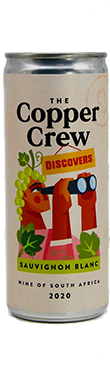
89
Quite exotic tropical nose. Fresh and appealing with lime and gooseberry notes in the mouth. Nicely rounded, well-balanced wine with some complexity.
2020
The Copper Crew
Quinta da Pedra Alta, Encostas da Pedra Alta Branco, Douro, Douro Valley, Portugal, 2019

91
A beautiful, textural dry Douro white that confirms the increasinging quality of the wine offered in larger formats. An elegant blend of Rabigato, Viosinho and Gouveio, with balanced fruit, acidity and minerality. Partly aged in barrel, which gives it added complexity and length.
2019
Quinta da Pedra AltaDouro
Domaine Reverdy-Ducroux, Sancerre, Loire, France, 2020

92
Freshly squeezed lemon, lime and just-ripe pineapple aromas unfold onto a long and complex palate with great weight to the juicy fruit. There’s a certain richness but undeniable elegance here, it’s real proof of quality bag in box wine! Textural and chalky, with a mineral nip to the finish.
2020
Domaine Reverdy-DucrouxSancerre
Vinnaturo, Tank #10, Castilla-La Mancha, Spain, 2020

92
A modest pouch containing an altogether delicious skin-fermented wine, expressive and very well crafted. The texture is firm, with phenolic richness but also a lovely roundness. Ten months ageing on the skins in tinajas (clay amphoare) have given it complexity, intensity but also a great integration of aromas and structure. Fleshy blood orange and red apple are topped by a refreshing balsamic edge. Delicious.
2020
Vinnaturo
The Copper Crew, Rosé, Stellenbosch, South Africa, 2019
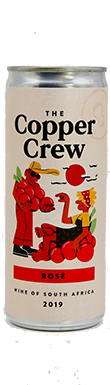
90
A juicy pink, with fleshy red fruit but also a delicious spiciness that makes it deliciously crunchy - no doubt a product of the intriguing blend of Grenache, Pinotage, Mourvedre, Syrah, Grenache Blanc, Roussanne, Viognier and Durif (!!). It delivers all the pleasure of an uplifting fresh pink, with simple yet enjoyable flavours of pink grapefruit, cranberries and ripe strawberries.
2019
The Copper Crew
Canned Wine Co, Grenache Rosé No. 3, Pays d'Oc, Languedoc-Roussillon, France, 2020
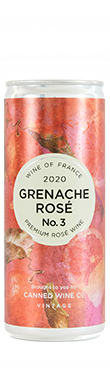
88
Juicy pink with great structure. Full of energy, driven by zesty acidity. A whiff of rose petals hovers over fleshy grapefruit and wild strawberry. Nice texture and decent persistence.
2020
Canned Wine CoPays d'Oc
Vignerons Ardéchois, Orélie Rouge, Ardèche, Rhône, France, 2020

91
This cooperative from Ardèche produces seriously delicious wines at great value, all the more when offered in convenient bag-in-box. This Merlot-Gamay blend deserves a place in any kitchen counter as a go-to pour. Truly delicious, with fine tannins, juicy blackberry, blackcurrant and red plum, all lined by a pleasant savoury edge.
2020
Vignerons ArdéchoisArdèche
Estezargues, Les Galets Rouge, Coteaux du Pont du Gard, Rhône, France, 2020

91
There is more than one reason why this wine is now ubiquitous in London wine bars and shops: great value, energetic drinkability, purity of flavour and lingering freshness. Finding it in a five-litre box is a joy - the perfect choice for the kitchen counter and your garden parties. One glass a day to keep the doctor away.
2020
EstezarguesCoteaux du Pont du Gard
Château de Minière, Carrément Rouge, Loire, France, 2020

91
Look no further for the perfect everyday red. Intense red fruit with a herbal hint and a touch of mineral freshness - a simple, enjoyable, classic Cabernet Franc from the Loire.
2020
Château de Minière
Château Peybonhomme-Les-Tours, La Cox, Blaye Côtes de Bordeaux, Bordeaux, France, 2019

90
Characterful red from biodynamic Château Peybonhomme-Les-Tours. A touch of Cabernet Franc brings a herbal, earthy edge to Merlot's soft fruit. Juicy cherry and plum lined by balsamic notes. Tannins are robust but round. Great length.
2019
Château Peybonhomme-Les-ToursBlaye Côtes de Bordeaux
Canned Wine Co, St Laurent No. 4, Carnuntum, Niederösterreich, Austria, 2018
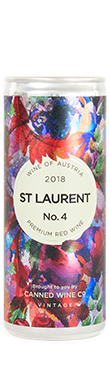
89
Certainly not a variety often seen in cans, which usually remain in the safe territory of flagship international varieties. This Saint Laurent, from Carnuntum, has great varietal expression, with intense fruit on the attack (trademark blackberry and bramble) followed by a uplifting acidity.
2018
Canned Wine CoCarnuntum
Casimirri, When In Rome, Montepulciano d’Abruzzo, Abruzzo, Italy, 2020

89
Soft yet fresh Montepulciano, with great varietal character and a pleasant rusticity that will transport you to Italy on the first sip. With vibrant black fruit - blackberry, plum, cherry - supported by firm tannins and gentle acidity. Good, broad mouthfeel.
2020
CasimirriMontepulciano d’Abruzzo
