Alternative wine packaging: thinking inside the box
Or the can, the pouch, the carton... a heavy glass bottle is no longer the only option for your wine, and if you care about the environment you’ll be delighted to know that the choice and quality of wines in alternative packaging is getting better all the time.


Wine has been presented in glass bottles for so long now that the association between the product and its packaging is umbilical. We have come to think of wine as belonging in bottles. It is an association that has served wine lovers well: glass is inert, robust and attractive; and no one has yet invented a viable alternative for ageing wine. Over the years, other formats have been launched for ‘drink now’ wine, from bag-in-box (BIB) to aluminium cans and plastic bottles. But they have had a chequered history. Until fairly recently the wine inside was often cheap, not always cheerful, and sometimes prone to oxidation or other faults.
That is starting to change. A quiet revolution is underway, driven by the climate crisis, better packaging technology, lifestyle changes and young entrepreneurs who are determined to prove that presenting high-quality wine in non-glass formats is not only viable, but more convenient and better for the planet. For wine lovers concerned about the environmental impact of glass or just ready to try something different, a growing range of delicious and increasingly classy wines are available in smart, more sustainable packaging.
Scroll down to see Rupert Joy’s selection of alternative format wines to try
Raising the bar

Jessica Julmy, Château Galoupet, Provence
After conducting a carbon self-audit in 2021, Jason Haas of Tablas Creek in California was ‘blown away’ by how much of his winery’s footprint came from glass bottles alone. He had dismissed moving to BIB because of its low-cost image in the US, but, he says: ‘A friend said to me, there has to be a high-end winery that goes first. I spent a lot of time thinking about that and decided he was right.’ Haas cautiously launched his Patelin de Tablas Rosé 2021 in 3-litre BIBs this year at US$95 (tablascreek.com). They sold out in less than four hours. ‘The feedback was unbelievably positive. People are excited to confound their friends’ expectations. It’s the cutting edge of sustainability.’
Jessica Julmy was similarly surprised to discover, while developing the LVMH flagship sustainability project at Château Galoupet in Provence, that 40% of its carbon footprint came from packaging. ‘I realised it was no use planting trees and fostering an ecosystem without tackling that.’ After comparing non-glass formats, she decided to package her second wine Nomade in a flat polyethylene terephthalate (PET) bottle made of recycled plastic salvaged from coasts at risk of ocean pollution. Julmy admits that bottling a £20-plus classed growth rosé in PET was not an easy decision. ‘There are so many preconceived ideas about plastic,’ she says.
In the UK, a group of innovative, like-minded wine companies launched the Wine Traders for Alternative Formats in 2021, aimed at reducing reliance on single-use glass bottles. ‘Sustainability is a huge motivator, but quality is the key,’ says WTAF founding member Ollie Lea of the The BIB Wine Co. ‘The more quality wine is put into alternative packaging, the more it is showing its potential. Our aim is to push the boundaries upwards.’ Lea, whose 2019 red Sancerre 2.25L BIB sells at £55 (£18.33 per 75cl equivalent), believes more and more high-quality wine sellers will move into alternative formats.
Laylo is another young company trying to challenge the perception that BIBs are about cheap wine. Co-founder Laura Riches says of her elegantly designed wine boxes: ‘We wanted to overcome the stigma associated with BIBs, so we decided to make ours look nothing like the others. We choose the best wine we can find in each price bracket and our packaging is inspired by where it comes from.’ As Jamie Wynne-Griffiths of UK distributor Propeller puts it: ‘BIBs are no longer like what your mum had in the fridge 20 years ago.’
For Rich Hamblin of More Wine, who sells wine in BIBs, pouches and cans, ‘the challenge is getting across to people that you can buy quality wine in alternative formats’.
Scale of the problem
Rob Malin of When in Rome whose Italian wines come in several formats, feels each has its specific appeal. ‘BIBs are great, but it’s a lot of wine to buy if you haven’t tried it,’ he says. ‘That’s where cans come in – they’re in small servings, perfect for picnics or festivals.’ In Beaujolais, Anne-Victoire Monrozier produces small batches of her Fleurie in cans. ‘Perceptions are changing,’ she says. ‘Our customers like the idea of wine in a can they can crack open like a beer but pour like a wine.’
The latest format to emerge is the ‘paper bottle’, with a recycled paperboard shell and inner plastic pouch. Malcolm Waugh of sustainable packaging company Frugalpac believes it offers a ‘revolutionary alternative to glass’ that can be produced more locally, at lower cost, and with a smaller carbon footprint. Malin believes that ‘it can go head-to-head with glass in a way other new forms of packaging can’t, because it looks like a classic bottle and is in the same price bracket’.
Non-glass formats are relatively common in Europe and America, but still hard to find in the UK, where supermarkets remain cautious. ‘We see it as our job to drive this agenda,’ says Barry Dick MW of Waitrose. ‘Customers are very interested in both quality and the environment, but wine is an indulgent emotional purchase and consumers still feel wedded to glass.’ At Marks & Spencer, winemaker Sue Daniels feels ‘we should all be more open-minded about how we drink wine, but we have to bring customers with us’.
Oli Purnell of Copper Crew, which sells a range of canned South African wines, believes that ‘independent merchants are doing a lot of the work of getting new formats out, which is unfair because supermarkets have much bigger budgets’. When in Rome’s Malin is frustrated by the pace of change, too: ‘The CO2 level in the atmosphere is increasing and threatening to render our planet uninhabitable. Meanwhile, retailers ask us if we seriously expect consumers to bother separating plastic from cardboard, and I’m saying: yes, that’s exactly what I expect.’
Glass ceiling

In 2018-2019, the alcohol monopolies of Sweden, Finland and Norway jointly calculated the average CO2 per litre emitted in the manufacture of different forms of wine packaging. The results (see chart, above) are striking. Glass bottles have by far the highest carbon impact. The footprint of cans and PET bottles is substantially lower, but it is BIBs, pouches and cartons that have the lowest emissions. The difference is bigger still if you include transportation. Sara Norell of the Swedish monopoly Systembolaget says: ‘BIB was seen as low-quality to begin with. Now it’s 50% of the Swedish market. It’s difficult for us as consumers to change our habits, but we have to consume differently if we want our children to have a liveable planet.’
To be clear, glass bottles currently remain the only viable format for cellaring wines. Wine in BIB, pouch, PET bottle and aluminium can has a limited shelf life (though wines in PET bottles reportedly keep for up to 18 months, and I have tasted canned wines that were still fresh after two years). But most people buy wine for immediate drinking: almost all the wine consumed around the world (some 90%) is drunk within a few weeks of purchase. There is no need for such wines to be packaged in glass bottles. With the energy crisis driving up the cost of manufacturing glass, the economic – as well as environmental – arguments for packaging ‘drink now’ wines in alternative formats are compelling.
Marc Laventure of Canvino, whose canned Italian sparkling wine recently launched in Tesco, feels that ‘wine, unlike spirits, has suffered from a lack of packaging innovation’. Dr Armando Corsi, Associate Professor in Wine Business at the University of Adelaide in South Australia, thinks that ‘things are starting to change, but glass is still king’, and ‘if you ask consumers to choose between glass bottles and other formats, glass largely wins’. Research by Wine Intelligence in the UK suggests far more people (59%) believe glass is a sustainable form of packaging than BIB (37%). ‘For all the excited talk, the glass bottle still rules the wine world by a huge distance,’ says the research company’s co-founder Richard Halstead. ‘Consumers think it’s an environmentally friendly container that’s easy to recycle, even though that’s not true.’
That is partly because, as Jancis Robinson MW has put it, most of us are ‘shockingly ignorant’ about what happens to the packaging we leave out for recycling. Glass and aluminium are both in theory ‘circular’ materials – meaning they can be repeatedly recycled and reused. But recycling rates for glass vary hugely (the UK overall glass recycling rate stood at 72% for 2019, according to industry body FEVE) and glass recycling is carbon-intensive. PET is more carbon-efficient to recycle, but – presumably because the plastic is visible – is a harder sell for wine than formats with plastic interiors.
Just do it
While BIBs and pouches have a much lower carbon footprint, the plastic aluminium laminates (layers sandwiched together) in the bag that holds the liquid cannot be recycled conventionally and must be broken down by a form of chemical recycling called pyrolysis. Several BIB companies, including The BIB Wine Co, Laylo and More Wine, encourage customers to send back the inner bags using pre-paid envelopes for recycling by specialist recyclers such as Enval. ‘At the moment, most flexible packaging in the UK goes into landfill or is incinerated,’ says the company’s CEO Carlos Ludlow-Palafox. ‘In a few years, everyone will be using chemical recycling.’
‘There’s no perfect sustainable wine packaging,’ says Galoupet’s Julmy. ‘But if you get paralysed trying to find the perfect solution, you’re doing nothing. Our recycled PET bottle is much lighter and much easier to recycle than glass. So I think it’s a pretty good solution for the time being.’
Copper Crew’s Purnell agrees: ‘Every approach to sustainability has its upsides and downsides. It’s no use throwing up our hands and saying we can’t do anything. What matters is to start a process.’ As for Haas at Tablas Creek, he is delighted that the success of his BIB rosé has prompted interest from other California producers: ‘I think we can be the pebble that starts the avalanche.’

Joy’s 30 to try: quality wine in alternative packaging
Related articles
- Rethinking the wine bottle for the future
- Wine in can, bag and box: overview and 15 to try
- Canned wine
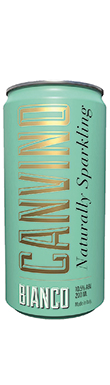
Canvino, Naturally Sparkling Bianco, Lombardy, Italy
86
Easy-drinking Italian semi-sparkling wine from Lombardy, made by the Charmat method used for Prosecco. Decent off-dry fizz in a can, with gentle citric flavours.
Canvino
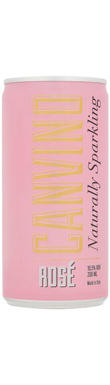
Canvino, Naturally Sparkling Rosé, Lombardy, Italy
86
Italian semi-sparkling, medium dry rosé from Lombardy, made by the Charmat method. Floral nose. Light, fresh, fruity and uncomplicated quaffing pink sparkler.
Canvino
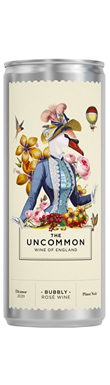
The Uncommon, Eleanor Bubbly Rosé, England, United Kingdom, 2020
88
Semi-sparkling, pale pink and quirkily labelled off-dry English Pinot Noir from vineyards in Kent and Hampshire. Tangy and fresh, with hints of rhubarb and strawberries. Delicious for any picnic.
2020
The Uncommon
Mitja Herga, Lot #5 Pinot Blanc, Slovenia, Slovenia, 2020

91
Slovenian Pinot Blanc blended with a little Furmint. The box design is inspired by Slovenian folk embroidery. Fine lemon sherbet and honeysuckle nose. Rich, rounded, mouthfilling and full of lively citrus notes, with good structure and saline grip. This is lovely.
2020
Mitja Herga
La Marina, Cuvée Océane, Côtes de Gascogne, Southwest France, France, 2021

90
Blend of Colombard, Sauvignon Blanc and Gros Manseng from southwest France. Engaging gooseberry and tangerine nose. Round and rich in the mouth, with a nice limey grip. Tangy, salty and refreshing. Great value.
2021
La MarinaCôtes de Gascogne
Cantina Goccia, Celi, Umbria, Italy, 2020
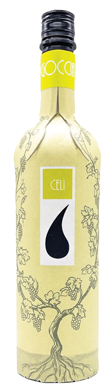

Mostly Grechetto with Vermentino and Chardonnay. This has a smoky-minerally, grapefruit nose and full, melony fruit in the mouth. Good body, with a salty-savoury quality...
2020
Cantina Goccia

The Copper Crew, Chenin Blanc, Stellenbosch, South Africa, 2021
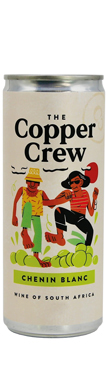
89
Citrus nose, rich and chalky in the mouth, with good grip and a little sweetness. A hedonistic mouthful of petrolly, pineapple fruit.
2021
The Copper Crew
The Copper Crew, Sauvignon Blanc, Stellenbosch, South Africa, 2020
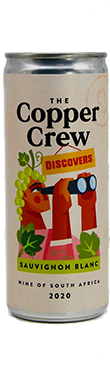
Quite exotic tropical nose. Fresh and appealing with lime and gooseberry notes in the mouth. Nicely rounded, well-balanced wine with some complexity.
2020
The Copper Crew
Domaine Martin, Ocean Muscadet, Loire, France
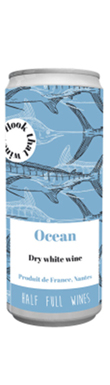
88
Crisp, dry, tangy Muscadet with notes of lime cordial and grapefruit zest. Refreshing and mineral on the palate, with plenty of bright fruit.
Domaine Martin
Vignerons Ardéchois, Orélie Blanc, Rhône, France

88
A blend of 80% Sauvignon Blanc and 20% Chardonnay from a cooperative in the Ardèche. Citric, slightly caramel nose. Grassy, vegetal notes on the palate, with good freshness and zest. Attractive everyday white.
Vignerons Ardéchois
When In Rome, Pecorino Terra di Chieti, Terre di Chieti, Abruzzo, Italy
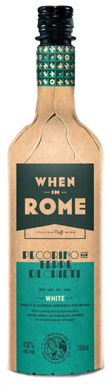
88
From the Azienda Agricola Casimirri in Abruzzo. Made from the region’s distinctive Pecorino grape. Strong nose of pear drops. Quite blowsy, but fresh and drinkable.
When In RomeTerre di Chieti
Domaine of the Bee, Bee Pink, Côtes Catalanes, Languedoc-Roussillon, France, 2021

92
Crushed strawberry, peach and almond skin aromas. Tart cranberry and ground almond on the palate, with a grapefruit pith texture, juicy and direct. I really like this Grenache-based blend: it’s got the delicacy of a fine white, but a little more texture and red cranberry profile. White peach, citrus and a little mineral bite. Chewy and toothsome.
2021
Domaine of the BeeCôtes Catalanes
The Copper Crew, Rosé, Stellenbosch, South Africa, 2020
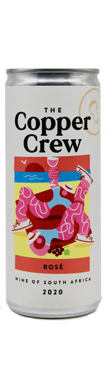
89
Quite a full-bodied rosé, a little reductive on the nose when tasted. Well made and full of red, strawberry-dominated fruits, with a little spice. The 2019 is still drinking well.
2020
The Copper Crew
Defy, Organic Rosé Wine, Abruzzo, Italy
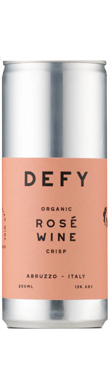
89
An engaging Montepulciano d’Abruzzo rosé, bright garnet in colour with a nose of stewed fruit and boiled sweets. Interesting, juicy fruit mouthful of rhubarb and cloves.
Defy
Le Grappin, Rosé Du Grappin Cinsault, Côtes du Rhône, Rhône, France
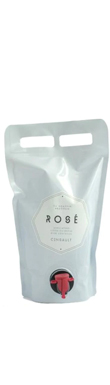
89
A bright and tangy rosé that’s easy to enjoy, its grapefruit and tart cherry flavours complemented by a soft creaminess and red apple skin bite.
Le GrappinCôtes du Rhône
When In Rome, Rosato, Abruzzo, Italy
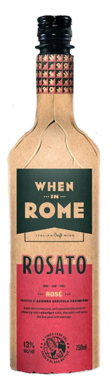
89
Made by Azienda Agricola Casimirri from a blend of local grapes. Fullish pink in colour with a fresh, rose-petal nose. Tangy, attractive rosé with good acidity and crunchy red fruits.
When In Rome
Marks & Spencer, Cuvée Rosée, Coteaux Varois en Provence, Provence, France

88
Cheerful, refreshing dry rosé blend from Provence. Nose of nectarines and fruit drops. Fresh and tangy, with a salty lick. Nice texture with grippy red fruits and fruit pastille notes in the mouth. Good value.
Marks & SpencerCoteaux Varois en Provence
Domaine Reverdy-Ducroux, Sancerre Rouge, Sancerre, Loire, France, 2019

93
Intense, complex aromas that cover the whole gamut of red and black fruit. Bright red berries and crushed raspberries, through to black cherries and blackberries. This 100% Pinot Noir impresses with its svelte, tart cherry fruit, rich dark chocolate and crushed hazelnuts. With its meaty, animal profile, it’s not all about primary fruit. This is a great wine, regardless of its bag in box status, and comes in at under £20 per 75cl bottle.
2019
Domaine Reverdy-DucrouxSancerre
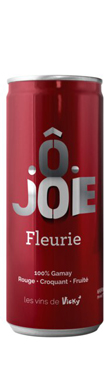
Miss Vicky, Ô Joie, Fleurie, Beaujolais, France, 2020
92
Joyful canned Beaujolais cru made at Château des Moriers by Anne-Victoire Monrozier, who has a background in wine innovation. Appealing, Pinot-like cherry scents, followed by a mouthful of bright, crunchy red fruits. Delicious and moreish – a seductive Fleurie in a can.
2020
Miss VickyFleurie
Valerio Marconi, Lot #7 Toscana, Tuscany, Italy, 2019

91
Sangiovese-Merlot blend from Tuscany, so in effect a ‘SuperTuscan’ in a box. The box packaging is taken from a fresco of the Last Judgement on the dome of Florence cathedral. Lovely bright colour and engaging nose. Fresh and full of berry fruit, but quite tannic and serious, with good structure and bite. Excellent food wine.
2019
Valerio Marconi
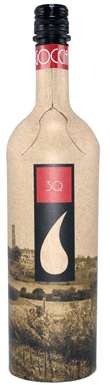
Cantina Goccia, 3Q, Umbria, Italy, 2018
90
An unwooded blend of Sangiovese, Cabernet and Merlot from this central region north of Rome. Seductive, suave and quite elegant, full of fruit with good grip in the mouth. Attractive wine with plenty of substance.
2018
Cantina Goccia
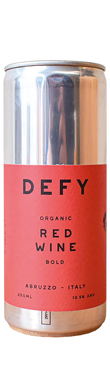
Defy, Organic Red Wine, Abruzzo, Italy
90
Full-bodied, spicy, herby red made from Montepulciano d’Abruzzo. A rich and seductive wine with rounded tannins and plenty of dark, plummy fruits.
Defy
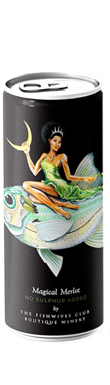
The Fishwives Club Boutique Winery, Magical Merlot, Stellenbosch, South Africa, 2019
90
With a quirky design on the can, this is a plump, appealing Merlot. The honeybush plant has been used as a natural antioxidant instead of sulphites. Deep red with a fresh, enticing oaky nose. Lots of dusty, plummy fruit in the mouth.
2019
The Fishwives Club Boutique Winery
The Copper Crew, Merlot, Western Cape, South Africa, 2020
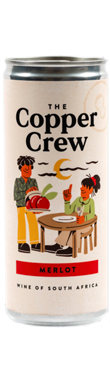
89
Attractive, full-bodied Merlot from the Western Cape, with bright blackcurrants in the mouth. Lovely and fruity with good length. It clearly keeps well: Copper Crew’s 2018 Merlot in a can is still fresh and delicious.
2020
The Copper Crew
Waitrose, Terre di Faiano Organic Rosso, Puglia, Italy
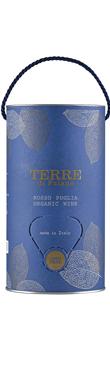
89
Waitrose’s wine ‘tube’ – essentially a BIB in tube format, but with an additional metal lid that makes it more complicated to recycle. A blend of Negroamaro, Cabernet Sauvignon and Primitivo. Spicy, vanilla-oaky nose. Soft, attractive mouthful of red fruits. A bit heavy on the oak, but good value.
Waitrose
The Copper Crew, Pinotage, Stellenbosch, South Africa, 2019

88
Tasty Pinotage from South Africa’s Stellenbosch region. Bright red fruit on the nose. A little one dimensional but full of juicy fruit and not too jammy. Good picnic wine.
2019
The Copper Crew
Marks & Spencer, Dog on the Tuckerbox 'Jammy' Shiraz, South Eastern Australia, Australia, 2021

88
Deep red southeast Australian Shiraz. Jammy nose. A rich, full-on blackcurrant mouthful. Not subtle, but well-made and does the job. Classic BBQ wine.
2021
Marks & Spencer
Torres, Río Claro Reserva Carmenère, Maule Valley, Chile, 2021
88
Produced by Torres in the Maule region of Chile for the Swedish and Australian markets. Handsome deep green flat PET bottle. Smoky, brooding wine, full of attractive dark leafy blackcurrant fruit.
2021
Torres
When In Rome, Nero d'Avola, Sicily, Italy, 2021

88
When in Rome works with CarbonCloud to calculate the impact of each of its wines and claims to be the first UK wine brand to declare its climate footprint on the packaging. This cheerful, full-bodied red is from the Cantina Sociale S. Antonio cooperative in Sicily. Fresh, with plenty of juicy, slightly bitter dark fruit. Very drinkable and a great accompaniment for a bowl of pasta.
2021
When In Rome
