Get our daily fine wine reviews, latest wine ratings, news and travel guides delivered straight to your inbox.
You are now subscribed
Your newsletter sign-up was successful
An account already exists for this email address, please log in.
‘We never wanted to make wine’: 20 years of a family's journey to restore Château Biac, one of Bordeaux's best-kept secrets
When Youmna and Tony Asseily bought a rundown Bordeaux château the plan wasn't to make wine. Two decades later, with the estate returned to its former glory it's one of the region's insider recommendations.
‘We never wanted to make wine’, says Youmna Asseily, and she means it literally.
When she and her husband Tony went looking for a property outside Bordeaux in the early 2000s, a vineyard was not the point.
They were looking for peace and privacy, but this year marks 20 years since the Asseilys bought Château Biac and ended up restoring it to its former winemaking glory.
The long way to Langoiran
(Image credit: Château Biac)
Both originally from Lebanon, Tony had spent his career in finance in London. Youmna had lived in Switzerland and then in Lebanon before the two settled in London together to raise their children.
For the next 25 years the family lived between Beirut and London, never quite able to go home for good.
In 1990, with flights repeatedly delayed, the family chose to holiday in Entre-deux-Mers, as it turned out, just four kilometres from Château Biac.
They kept coming back to Entre-deux-Mers each summer for a decade and, in 2000, they rented the guesthouse in Biac and fell in love with the place.
Decanter newsletter
Get our daily fine wine reviews, latest wine ratings, news and travel guides delivered straight to your inbox.
The same year, Tony dissolved his wealth management company and began looking for something new to do. Youmna wanted to paint, and Tony wanted to write. Wine was not on the list at all.
What was on the list, when they sat down and made one, was oddly specific: half an hour from Bordeaux, 35 minutes from the airport, close to a motorway, near a town with everything they needed close by, a view over the Garonne, and, above all, somewhere private, not visible from the road.
Château Biac answered every point on it. The previous owners wanted to sell the main house but keep the vineyards and holiday homes.
Talks stalled over the split, and it took until 2006 for a contract to finally be signed.
A renaissance
Image 1 of 2
Renovation of the Château Biac cellars
(Image credit: Château Biac)
The barrel room today
(Image credit: Château Biac)
Despite once carrying a serious reputation – Cocks & Féret's second edition guide to Bordeaux in 1868 rated Biac among the finest in the region – the property had been neglected for years.
The famous Bordeaux enologist Denis Dubourdieu, nicknamed the pope of white wine, who had once consulted there, told the Asseilys the terroir itself was exceptional regardless of its state.
The Asseilys soon gathered a top team around them.
Patrick Léon, a Château Mouton Rothschild retiree who had tried and failed to buy Biac himself years earlier, waited five or six months to be sure the couple were serious before agreeing to take the vineyard on.
Christine Sourdès, a consultant to Château Guiraud and Château de Myrat, and the first woman to open her own laboratory in the Sauternes-Graves area, came the following year to oversee the sweet wine.
Gilles Rey, an agronomist for Mouton Rothschild and, by his own account, familiar with practically every corner of Bordeaux, joined in 2006 to rebuild the vineyard itself.
Cellar master Sébastien Dupouy has been with the estate since 2008 – the year of Biac's first vintage under the new team.
The winery, meanwhile, was emptied of all the old stock and restored in six months flat.
The vineyard garden
(Image credit: Château Biac)
Château Biac runs to 9.5ha split across 14 separate plots. The parcels are vinified separately in 13 small vats. Harvest dates are set plot by plot.
Rey has helped push the estate toward extreme precision, but it's Youmna who sums up the philosophy behind it.
‘We see it more as a garden than a vineyard,’ she says.
The blend changes every vintage – no formula, no house style to defend. As Youmna puts it, no two vintages, like no two children, are quite the same.
What stays constant is the combination of freshness and real ripeness, and the fact that Biac picks later than almost anyone else in the area. Harvest is done entirely by hand and sorted across four stations by a team of local workers.
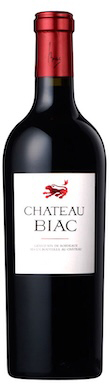
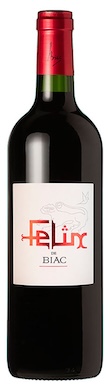
The range itself has settled, too. There were once three reds, but in 2018 the Asseilys pared the line-up back to two – Château Biac and Félix de Biac.
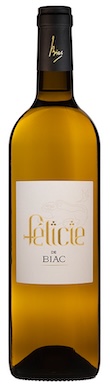
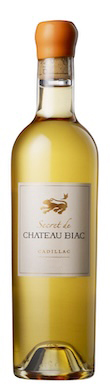
Alongside them sit a dry white – Félicie de Biac – and a sweet white Cadillac – Secret de Biac.
There's a whisky too, born out of a necessity rather than a grand plan: new barrels are bought every year for the dry white and the sweet wine, which left the estate with a growing stock of good, used oak and not much to do with it.
A joint project with a distillery on the Isle of Harris followed almost as a matter of course, and the resulting single malt, aged in those ex-sweet-wine barrels, goes out under the name Haerach of Biac.
A name and a family behind
Gabriel and Yasmina Asseily
(Image credit: Château Biac)
For a long time almost nobody outside the estate knew any of this.
Bottles were never sent out to critics or journalists. Biac was never sold en primeur – the Asseilys wanted to offer clients a wine that was ready to drink.
That changed by chance rather than design.
Daniel Boulud tasted the wine on a two-day visit, loved it, and began pouring it in his restaurants.
Jean Moueix director of leading négociant Duclot came separately and reached the same conclusion, and Biac has worked exclusively with Duclot ever since.
In 2013, eldest daughter Yasmina, who worked in finance in New York, took over the mission of building the American market.
Son Gabriel, previously in IT and trained in chemistry, joined as winemaker in January 2019, a few weeks after Patrick Léon's death.
Léon's son Bertrand has stayed on to work alongside him, as has Christine Sourdès.
The names on the labels trace back further still, to Youmna's own family – the Shihab (or Chehab) dynasty, which ruled Lebanon between the 16th and 18th centuries.
Félix de Biac takes its name from the family's coat of arms, a mountain cat representing strength and the protection of life, and the label itself features a stylised Kufic script.
Ask Youmna what the estate has taught her after 20 years of ownership, and she does not talk about wine scores.
‘You do something that will outlive you,’ she says. ‘It gives you the possibility to learn, to stretch yourself, to do something for the future. Agriculture gives you a lot of humility.’
Biac, in the end, seems to have given the family less a wine estate than a place to simply be together. The wine, it turns out, was what happened along the way.
Château Biac, Félicie de Biac, Vin de France, 2024
My wines
Intense nose of peach and pineapple with a delicate hint of pungent spice and Mirabelle plums. Creamy and textured on the palate with zesty, citrusy...
Château Biac, Felix de Biac, Cadillac Côtes de Bordeaux, France 2019
My wines
Seductive nose of dark plums, blackberries with a touch of cassis and black cherries. All very ripe and well developed. Delicate notes of tobacco and...
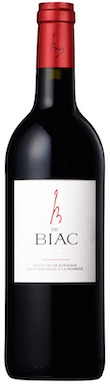
Château Biac, B de Biac, Cadillac Côtes de Bordeaux, France 2017
My wines
Opulent and enveloping nose of cocoa, dark chocolate and sweet and pulpy blackberries and black plums, reminiscent of Pomerol. The palate, though, shows a lot...
Château Biac, Secret de Biac, Cadillac, Bordeaux, France 2016
My wines
Fragrant nose of dried apricots, dried mango and juicy, ripe pineapple with a pungent, balsamic note in the background. Round, creamy texture on the palate,...
Widely experienced as a manager of and sommelier in hotels and restaurants from Russia to the Maldives, Valeria is now based in a village near St-Emilion. She writes for publications including VertdeVin in Bordeaux, and runs her own boutique export company, A la Volée Int