Petit Verdot
Known for its ability to pack a serious punch, Petit Verdot has long been synonymous with adding tannin, colour, and flavour to Bordeaux-inspired blends across the globe.
Quick link: Left and Right Bank Bordeaux: What is the difference?
Don’t let the name fool you. Although frequently used in petit quantities, Petit Verdot is a force to be reckoned with. This robust red wine grape is known its bold flavour profile, powerful tannins, and inky black hue – in short, a little goes a long way, which is why the grape is most commonly used in blends over varietal wines (although the latter is becoming more common in certain New World regions).
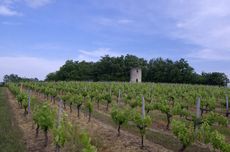
Petit Verdot finds its origins in South West France, where it is still popularly cultivated – including in Bordeaux – today. Beyond France, the variety is finding solid roots in Australia and California, as well as a handful of other American states. In Italy, the grape can be found in the Maremma region of Tuscany, where it is sometimes added to the region’s eponymous Super Tuscan blends; in South America, plantings are on the rise in Chile and Peru.
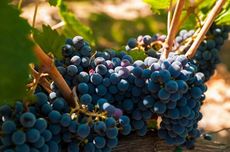
On the vine, Petit Verdot (whose name translates to ‘small green’), is very late ripening, which is a big reason why Bordelais winemakers favoured other varieties. Should weather conditions not be ideal, Petit Verdot vines will often struggle to develop properly. When ripe, Petit Verdot grape bunches form cylindrical shapes and are composed of small, dark black berries.
The flavours of Petit Verdot wines can fall across a broad profile spectrum. Most commonly, the grape is associated with adding notes of ripe black fruits, plums, cassis, graphite, and dried herbs to the blends in which it’s used. As Petit Verdot wines mature, stronger flavors of violets, dried flowers, and used leather are common.
Quick link: What does Petit Verdot add to a wine?
-

Left and Right Bank Bordeaux: What is the difference?
Is it just geography that separates Bordeaux's two famous vineyard regions?
By Georgie Hindle Last updated
-

The great potential of South American Bordeaux blends: 22 essential wines
The 22 wines worth seeking out...
By Alejandro Iglesias Published
-

Red Graves 2016: panel tasting results
See which wines scored the highest in our panel tasting...
By Andy Howard MW Published
-

Tasting Quinta do Noval’s single-varietal wines
Bringing a bit of France to the Douro Valley...
By Sarah Ahmed Last updated
-

What is a Bordeaux blend? Ask Decanter
What does it mean when a wine is called a 'Bordeaux blend'?
By Chris Mercer Last updated
-

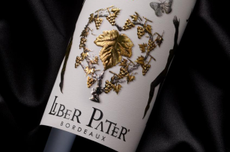
Anson: Liber Pater wine and the rush for rare grapes in Bordeaux
Jane Anson visits the estate behind the 'most expensive wine in Bordeaux'...
By Jane Anson Last updated
-

Anson: What to look for in Bordeaux 2016
The key wine trends ahead of en primeur...
By Jane Anson Last updated
-

Bordeaux 2016: 30 top-scoring and best-value wines
A selection of top-scoring and best-value bottles...
By Andy Howard MW Last updated
-

Liber Pater to release world’s most expensive wine
The Graves-based estate's owner tells , why its 2015 vintage is being released at €30,000-a-bottle, making it among the most expensive in the world.
By Georgie Hindle Last updated
-

Rediscovering the value of Bordeaux’s second grapes
A look at these 'salt and pepper' grapes...
By James Lawther MW Last updated
-

What does Petit Verdot add to a wine? – ask Decanter
'It's the pepper on the steak...'
By Chris Mercer Last updated
-

How to taste en primeur wines
Jane Anson explains how to taste a barrel sample...
By Decanter Staff Last updated