The Kofu basin opens wide below, ringed by towering mountains that seem to hold the landscape in an embrace, while Mount Fuji watches quietly from beyond.
Above my head, intertwined vines stretch across pergolas, offering much-needed shade on one of the hottest days of 2025.
Below them, low-hanging grape bunches are each crowned with a paper hat, poised for the sudden arrival of rain and typhoons – this is certainly unlike any wine region I’ve visited before.
In the past, I had travelled to Japan for its temples and gardens, the food, sake and pop culture, but this time I’m here for the wine.
With global palates leaning towards lighter wine styles and Japanese fine dining enjoying a wider spotlight, it feels like the perfect moment to uncover the stories behind the delicate yet versatile Koshu grape and Yamanashi – the landscape it calls home.
The fruit kingdom
(Image credit: Robert Gilhooly / Alamy Stock Photo)
At the heart of Yamanashi prefecture, the Kofu basin is a west-east stretching river valley, surrounded by mountains on three sides – with Mt Fuji towering further south.
The inland basin is one of the sunniest areas in Japan, enjoying an annual average of more than 2,200 hours of sunshine (Japan Meteorological Agency, 1991-2020).
Decanter newsletter
Get our daily fine wine reviews, latest wine ratings, news and travel guides delivered straight to your inbox.
Local produce such as peaches and Shine Muscat, a popular table grape, commands eyewatering premiums.
Meanwhile, Yamanashi receives around 1,000mm of rain each year – the equivalent in Bordeaux is 944mm, according to Current Results data citing Météo France annual averages 1981-2010 (published by Futura, November 2024) – yet it’s among the driest regions in Japan; and much of it falls during early summer (‘tsuyu’).
Those tiny ‘hats’ on grape bunches – individually hand-fashioned from wax paper or plastic – and arching rain-covers over the trellises are crucial in countering ripe rot, a fungal disease common during ripening.
More than 1,000 years ago, a pinkish, thick-skinned Vitis vinifera, later named Koshu after Yamanashi’s ancient name, is believed to have travelled along the Silk Road via China and settled here, according to DNA research by Japan’s National Research Institute of Brewing.
One of the most famous stories of the grape’s discovery dates to the Nara era (710-784 CE), when monk Gyoki is said to have dreamed of the Buddha of healing, holding a bunch of grapes – and he soon found a vine near Daizenji temple, and promoted it as a divine medicine to the locals.
Yamanashi at a glance
(Image credit: JP Graphics Maps)
Annual grape harvest for winemaking*: About 4,460 tonnes (3.2-3.5 million bottles of wine)
Key grape varieties*: Koshu (67% of total wine harvest), Muscat Bailey A (28%), Cabernet Sauvignon, Chardonnay, Merlot, Petit Verdot, Semillon, Kai Noir
Source: *MAFF, Japan, Ministry of Agriculture, Forestry & Fisheries, 2022 & Government of Yamanashi Prefecture, 2023 ; **MAFF, via Koshu of Japan
Dawn of modern winemaking
For centuries, Koshu was planted as a table grape across Yamanashi, much of it concentrated around Katsunuma, on the southwest-facing alluvial fan shaped by the flood-prone Hikawa river on the northeastern edge of the Kofu basin, as farmers filled steep or marginal plots unsuited to rice paddies with vines.
As fresh grapes don’t last as long as rice, farmers started making wine with converted soybean presses and sake barrels, storing the home-brew in Isshobin (1.8-litre sake bottles) and enjoying it from tea cups.
In 1877, Japan’s first modern winery – Dai-Nihon Yamanashi Budoshu Gaisha (Japan Yamanashi Wine Company) – was established in Katsunuma.
Two young men, Masanari Takano and Ryuken Tsuchiya, were sent to France to study viticulture and oenology. They came back with detailed notes on winemaking techniques, which became an invaluable reference for the region.
A subtle grape
Grace Wine CEO Ayana Misawa
(Image credit: Grace Wine)
In 2010, Koshu was officially registered by OIV (International Organisation of Vine and Wine) and it now accounts for 67% of Yamanashi’s total wine grape production.
The disease-resilient grape is traditionally trained on a complicated X-shaped pergola – and more recently in a simpler tall cordon system – to limit vigour and encourage air circulation.
Chaptalisation (the addition of sugar to unfermented grape must to raise the potential alcohol level) is widely adopted – although producers such as Fujiclair insist on avoiding it, producing gentle, ethereal bottlings such as its Kyoutou and Ginka Koshu, at just 9% alcohol.
Grace Wine tackles the issue from the vineyard – fourth-generation owner Shigekazu Misawa pioneered the vertical shoot positioning (VSP) system for Koshu in the 1990s, with a growing number of producers now trialling the method.
The producer showed me a paper published in scientific journal Fermentation, which states that the approach results in ‘elevated sugar content and a favourable malic/tartaric acid ratio’, facilitating malolactic fermentation – not always achievable with Koshu – and delivering greater flavour complexity and improved texture.
Still, it’s not a variety beaming with personality. Delicate citrus and white fruits with a gentle line of acidity form its baseline, yet this is also where the versatility lies.
Four Koshu producers to know
(Image credit: A Brooks/AFP via Getty Images)
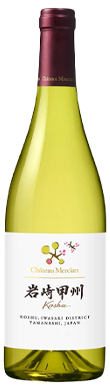
Château Mercian
Owned by the Kirin group, Mercian traces its heritage to Japan’s first modern winery, founded in 1877.
Now the owner of vineyards in Yamanashi and Nagano, its Kiiroka range reflects its leading role in the early 2000s promoting fresh-style Koshu. Its elegant Yamanashi Syrahs are also worth seeking out. chateaumercian.com
Grace Wine
The first in Japan to win a Decanter award Gold medal (for its Gris de Koshu 2012 in the Decanter Asia Wine Awards 2013), this century-old family estate (established 1923) is now led by its first female CEO Ayana Misawa.
Grace was among the region’s earliest to trial vertical shoot positioning on Koshu and to plant in high-elevation Akeno, in the Kofu basin’s northwest. Known for its nuanced, site-specific and ageable Koshus. grace-wine.com
L’Orient Shirayuri Winery
Founded in 1938, first as a cooperative of neighbouring farmers. Third-generation owner Takao Uchida (pictured, above) now works with his son Keiya, a Burgundy-trained oenologist, focusing mainly on Koshu and Muscat Bailey A.
Its Decanter World Wine Awards 2025 Gold-winning Vigne de Shirayuri Koshu 2023 and Vigne de Nakagawa Koshu 2024 impressed judges with their elevated aromas and vitality. shirayuriwine.com
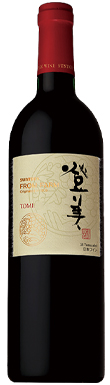
Suntory Tomi no Oka
Perched on a hilltop in the northwest of the Kofu basin, with sweeping views, Tomi no Oka cultivates 25ha of vineyards within its 150ha estate, guided by detailed block analysis.
Its premium range includes the From Farm Tomi Koshu (the 2022 vintage won a Decanter World Wine Awards 2024 Best in Show award) and the Bordeaux blend Tomi Red (see recommendations). suntory.com
The many faces of Koshu
Koshu pergolas at Lumière (and traditional houses with upper floors for rearing silk worms) backed by the Minami Alps range.
(Image credit: Sylvia Wu)
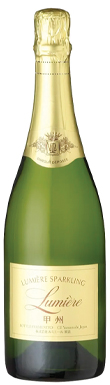
Lumière, founded in 1885, was among the earliest producers of traditional-method sparkling Koshu and today offers a broad range that includes orange and barrel-aged editions.
For everyday drinking, Manns of the Kikkoman group makes a popular Charmat Koshu range, Kobo-no-awa (‘bubbles of the yeast’).
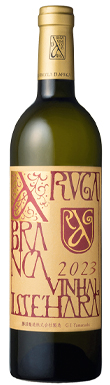
Among the still wines, Château Mercian’s Kiiroka (‘yellow fragrance’) focuses on the grape’s pristine citrus character, while Katsunuma Jyozo’s single-vineyard Issehara Koshu (see recommendations) delivers a surprisingly aromatic nose, a character the producer attributes to its sandy floodplain site.
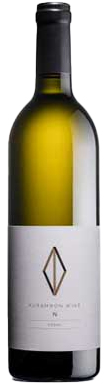
Barrel-fermented and aged examples such as Lumière’s Hikari Koshu and Kurambon’s N Koshu offer richer, sensual interpretations.
Many producers also explore skin contact to build texture – one highlight is cooperative Iwasaki Jyozo’s Tokiwa ni Moyuru (‘eternally aflame’), a satisfying orange wine with chewy yellow fruits and a long finish.
But can Koshu express terroir? Grace Wine’s site-specific bottlings from Akeno, Kayagatake, Toriibira and Hishiyama offer some early answers.
So, too, does ageability.
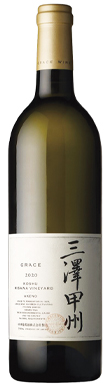
At a vertical tasting of the estate’s signature Misawa Vineyard Koshu (see recommendations) with Ayana Misawa – the century-old family winery’s first-ever female CEO (pictured, above) and Shigekazu’s daughter – I was immediately struck by the grape’s vintage variation.
Grown on volcanic clay soils of Akeno at 700m, the 11 vintages tasted range from shy and linear to generous and tropical – while the 2013 remains vividly alive 12 years on, marked by acacia honey, yellow fruit and dried camomile.
Beyond Koshu, 28% of the region’s harvest is Muscat Bailey A, an indigenous red hybrid of Muscat Hamburg and Vitis labrusca Bailey bred by Zenbei Kawakami in 1920.
Often seen as a cherry candy-scented food companion, it can also take on a more serious guise, revealing fine-boned tannins and elegant fruit.
International varieties, especially grapes of French origin, are found sporadically, while experimental bottlings are also made using hybrids such as Delaware, Kai Noir and Black Queen.
The warming basin
The view from Suntory Tomi no Oka, near Hokuto
(Image credit: Sylivia Wu)
The ‘fruit kingdom’ is one of the rare agricultural regions where growing table fruit can be more profitable than making wine.
The meticulous vineyard work required, coupled with an ageing population, means local wineries face an ongoing challenge in securing supplies and persuading their grower partners to retain their vineyard plantings: a concern echoed widely across the region.
Adding to the challenge is the warming climate, says Kentaro Shinoda, chief winemaker at Suntory Tomi no Oka Winery.
Average night temperatures in late August have risen by around 2°C over the past decade, he explains, posing a serious concern for veraison (the point when berries on the vine change colour as they begin to ripen) and acidity retention during the ripening period.
The producer has been trialling a new pruning method that involves cutting the tips of early shoots and encouraging fruit set on secondary shoots, pushing the ripening season back by a month – when night temperatures drop.
Meanwhile, Suntory is increasing the proportion of late-ripening Petit Verdot in its flagship Bordeaux blend Tomi Red.
Heat-resistant varieties such as Tannat, Syrah and Tempranillo and higher elevation are also key to coping with the warming summers, says Dr Hironori Kobayashi, general manager of Château Mercian, citing the producer’s Tengusawa Vineyard (at 800m-850m), in the northeast of the Kofu basin.
Grace Wine set its sights on the sun-drenched, breezy foothills of Hokuto, in the northwest of the Kofu basin, as early as 2002 – and more producers are arriving.
Fujiclair, for instance, crafts its Momochi range in Akeno while developing an ambitious 40ha sparkling-wine project in Mukawa.
Terroir talk
Cooperative producer Iwasaki Jyozo’s CEO and winemaker, Soma Shiraishi
(Image credit: Sylvia Wu)
Although more producers, such as Grace, are producing area-specific bottlings, tapping into the region’s rich variation in soil types, orientation and elevation, ‘it’s too early for us to speak about terroir, as quality winemaking only began around 20 years ago in Yamanashi’, says Shigekazu Misawa.
But the groundwork is already there – the pioneer showed me rolls of maps created in the 1960s by the Japanese government, meticulously charting the topography of this landlocked prefecture in preparation for earthquakes.
‘Matching these maps with the region’s winemaking activities will be my life’s work,’ he says.
The younger generation is in favour of a dedicated Katsunuma GI (geographical indication) beyond the existing Yamanashi GI, according to Burgundy-trained winemaker Takahiko Nozawa of Kurambon Wine, who is leading the initiative.
He points to Katsunuma’s unique position on an alluvial fan within the Shimanto accretionary belt, with granite carried down by the Hikawa river and underlying sandstone soils.
Wines made for ‘washoku’
‘We believe in making wines to pair with traditional Japanese food,’ I was told repeatedly by producers – a tradition in which washoku encapsulates concepts such as seasonality, freshness, harmony and presentation.
They are clearly on the right path: from local speciality hoto (miso-seasoned noodles) to sushi, tempura and Japanese curry, Koshu’s subtle fruit and gentle freshness pair seamlessly with the savoury, umami depth found in dashi (seafood and seaweed stock), soy sauce and miso – the backbones of Japanese cuisine.
The reds, with their ethereal tannins and elevated red fruits, make discreet companions to iron-rich maguro (tuna), while spicier orange wines sit comfortably alongside pickled ginger and uni (sea urchin).
The price tags, driven by the heavy manual labour involved, remain an obstacle for Koshu wines to reach wider shores, but as the global appeal of washoku grows, so too will that of these wines
How to get there
Starting from Tokyo’s Shinjuku station, Katsunumabudokyo is just 90 minutes away by JR train. Enjoy a day visiting cellar doors and the Daizenji temple, either return the same day or hop on a local train to Kofu (30 minutes) for a hot-spring stay.
The subtle flavours of Japan’s top wine: a taste of Koshu, and more...
A gentle hint of toast overlays white peach and yuzu fruits. Zesty and bone dry on the attack, fresh with white pepper-seasoned lemon sorbet, grapefruit...
Grace, Misawa Vineyard Koshu, Yamanashi, Japan 2023
My wines
Pear blossom and smoky jasmine, yellow plum and thyme with hints of rose. Whole-bunch pressed and fermented with indigenous yeasts, the 2023 vintage went through...
The N Koshu (N refers to the Nozawa family) opens with a spiced nose of golden apple, citrus, nutmeg and sweet potato. With ginger tingling on the tongue, the palate unpacks vanilla, osmanthus blossom, quince and citrus zest, with a lift of freshness to the long, acacia-honeyed finish. Wild-yeast fermented and aged in barrel, then bottled unfiltered. Also to be tried is the N Blanc, a field blend of Chardonnay, Viognier and Albariño from the Shichihyo Chibatake vineyard, for its masterfully orchestrated complexity and balance.
Katsunuma Jyozo, Aruga Branca Issehara Koshu, Yamanashi, Japan 2023
My wines
91
The 2023 was picked in mid-September from the sandy, riverside Issehara vineyard, where vines are trained in the traditional X-shape pergola. Water-white in colour, it boasts thyme, asparagus and rosemary on the nose, underpinned by passion fruit. Green fruits with polished salinity on the palate lead to a gentle touch of white spice on the crisp finish. A distinctively aromatic take on the Koshu grape. Drink it while it's fresh.
Suntory From Farm, Tomi Red, Yamanashi, Japan 2023
My wines
The producer's signature Bordeaux blend, driven by Petit Verdot, shines with beautiful aromatic charm of violet, red roses and cherry compote. Elegance is the first...
Editor, Decanter China & Regional Editor - Asia and Northern & Eastern Europe
Sylvia Wu is Decanter's Regional Editor for Asia and Northern & Eastern Europe. She also works as the Editor of Decanter China platforms, overseeing Decanter’s China-focused editorial operation.