Get to know South Africa’s old vines in six wines
Find out more about the incredible resource that is the Cape’s old vineyards, the work being done to protect them and why old vines are so important.

Get our daily fine wine reviews, latest wine ratings, news and travel guides delivered straight to your inbox.
You are now subscribed
Your newsletter sign-up was successful
At the end of March the Old Vine Registry hit a major milestone with 10,000 vineyards registered globally.
Launched in 2023, this public database documents living vineyards older than 35 years and now represents over 40,900ha of historic plantings and 1,144 grape varieties in 42 countries.
But it’s particularly fitting that the 10,000th vineyard to be registered is in South Africa. That site is Beaumont Family Wine’s Hope Vineyard in Bot River, planted to Chenin Blanc in 1974.
It’s just one of many old vineyards in the Cape that are now being recognised as a unique resource for its winemakers – and a source of characterful quality bottles for wine lovers.
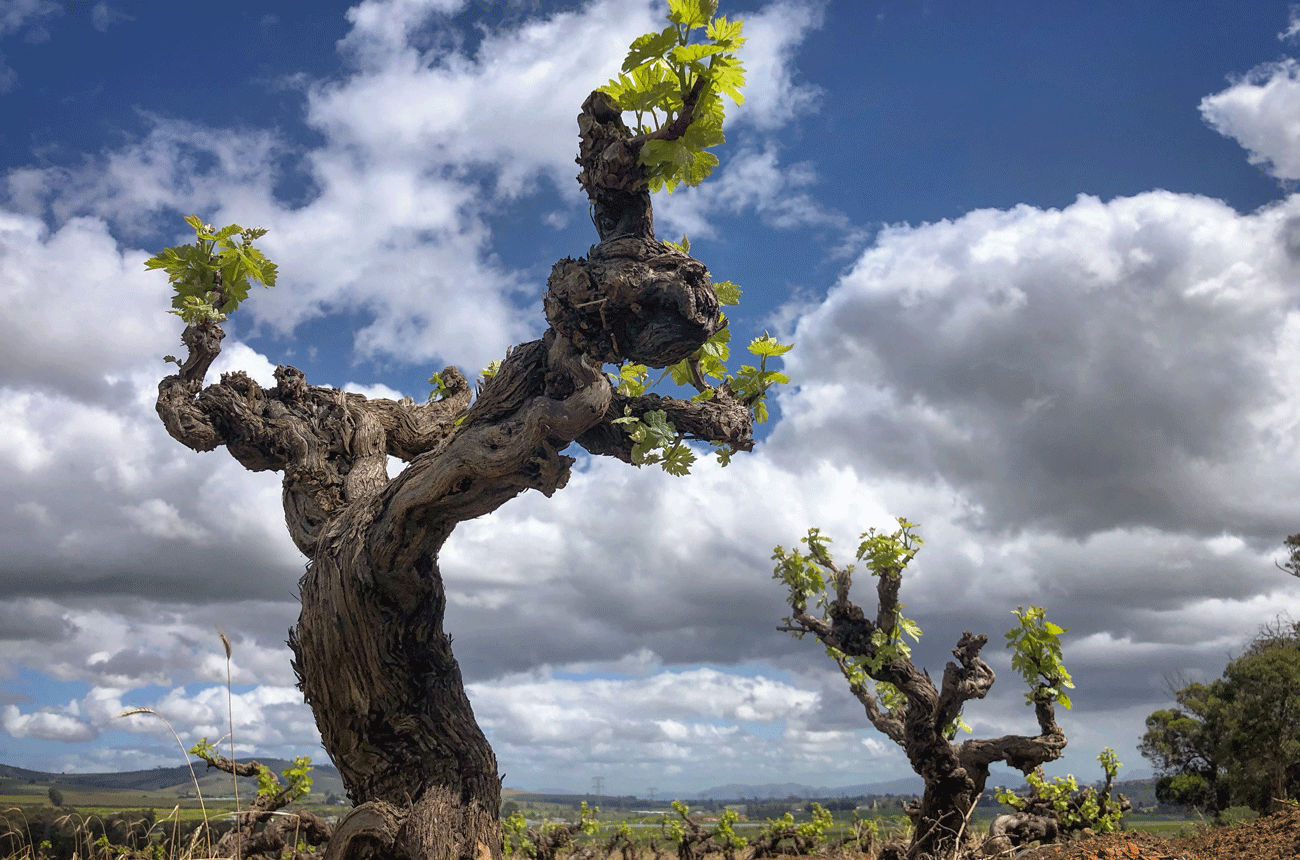
They range from Chenin and Semillon vines to plantings of Pinotage, Cinsault, Grenache and Palomino, often planted as dry-farmed bush vines.
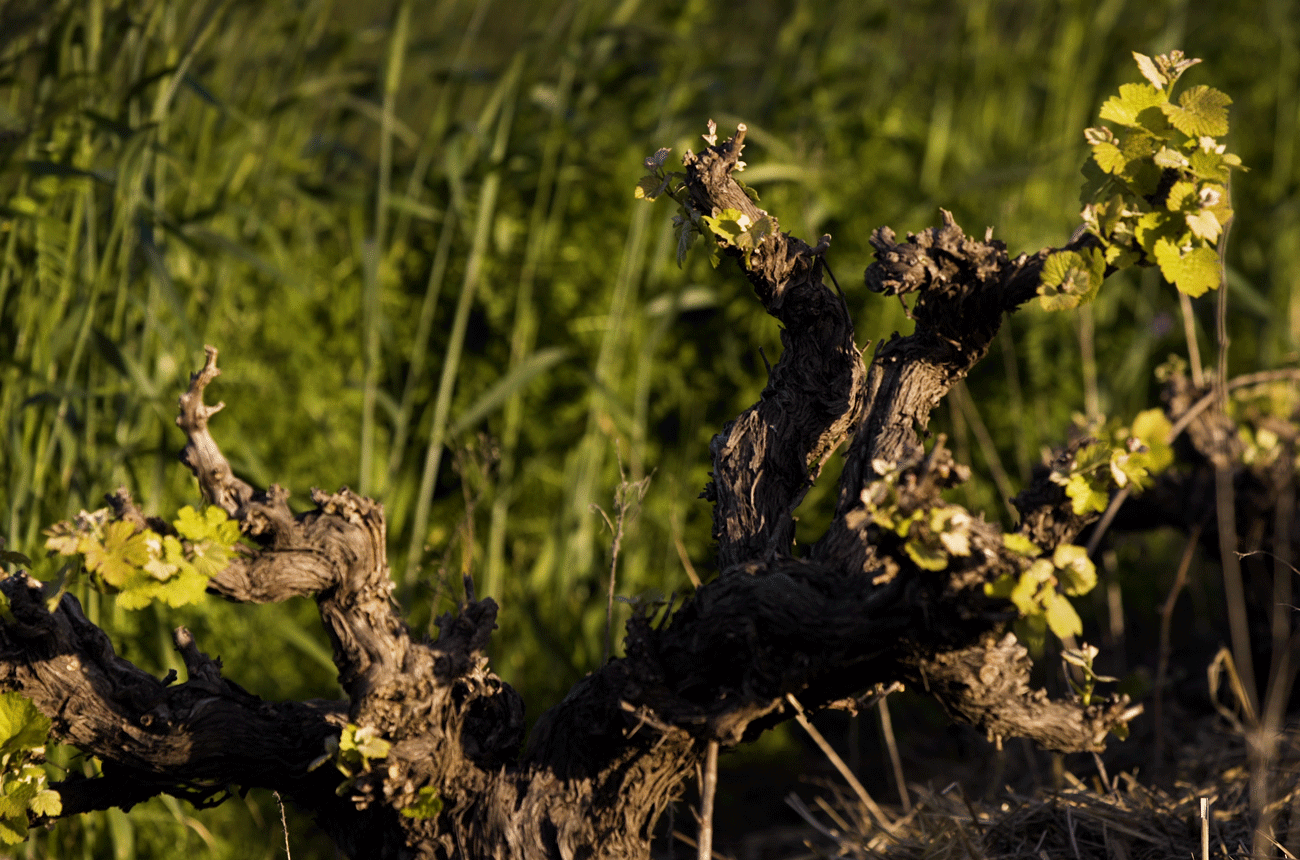
Old vine Palomino vineyards in Piekenierskloof, South Africa
Old vine heroes
The preservation of these vineyards has been spearheaded by the Old Vine Project, created by viticulturist Rosa Kruger in 2016.
Kruger’s pioneering efforts to track down old vineyards and help growers preserve them made her the first-ever South African to be honoured in the Decanter Hall of Fame in 2022.
Get our daily fine wine reviews, latest wine ratings, news and travel guides delivered straight to your inbox.
Today the association she founded is one of the most dynamic in the wine world and has over 130 members.
Together they protect 5,159ha of vines aged 35 years and above – the formal definition of an ‘old vine’ according to the OIV (International Organisation of Vine and Wine) – and produce more than 350 Certified Heritage Vineyard wines per vintage.
Rosa Kruger
Spreading the word
‘The South African Old Vine Project has played a major role in the preservation of some very special old vineyards,’ says Wilhelm Kritzinger, cellar master at Bellevue Stellenbosch.
‘They achieved this by creating an international platform, drawing attention to the unique character, high quality wines, that get crafted from the fruit of these old vines,’ he explains.
‘This generated the awareness, recognition, respect and demand for these wines, at international price points, that allows the sustainability of farming these mostly low-yielding old vines.
'This helps the “good fight”, against the ripping out and loss of these precious old vines, purely due to the “economics of it”. ’

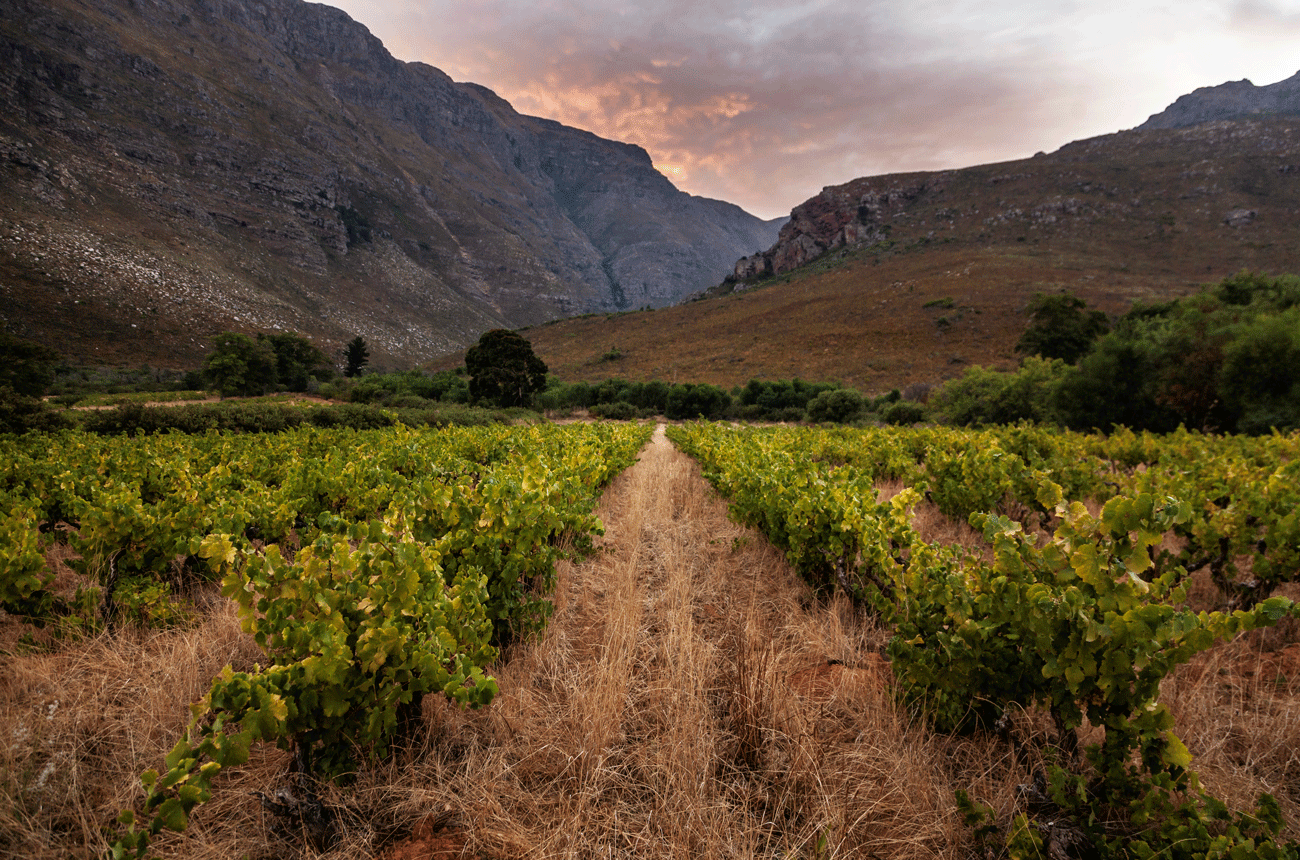
Kaapzicht's Kliprug dry-farmed Chenin bush vines planted in 1982
Seal of approval
In 2018 the Old Vine Project introduced the Certified Heritage Vineyard seal – a world first – which provides a guarantee that the wine in the bottle is from old vineyards.
The planting date on the label offers drinkers traceability from vineyard to glass.
‘From a market perspective the old vine certification adds value and helps command a higher price and hopefully attract consumers seeking authenticity,’ says Carol Maggs, sales and marketing manager at Welgegund Heritage Wines.
‘South Africa has a rich wine history and old vines are the living records. By protecting our older vines we help tell the story of the dedication of the generations of wine growers and our rich culture of winemaking.’
The Certified Heritage Vineyard seal shows date of planting
Back to the future
Why is preserving and promoting these old vines so important? ‘For me, protecting our old vine heritage is about honouring the past, but also investing in the future of South African wine,’ says Duran Cornhill, winemaker for Donkiesbaai in Stellenbosch.
‘From a winemaking point of view, old vines are incredibly resilient against climate change and the more frequent dry seasons we’ve been experiencing in South Africa. The wines have an added layer of intensity, flavour, and structure, which means we get exceptional quality wines with unique terroir expression.’
Marius Burger Jnr, co-owner of boutique producer Roodekrantz Wines, a specialist in old-vine Chenin Blanc, agrees.
‘Old vines naturally regulate their yields and ripen fruit with remarkable balance, often delivering better acid retention, phenolic depth, and site expression,' he says.
'In South Africa, where conditions can be challenging, these vineyards have adapted over decades, making them incredibly valuable. Protecting them is essential, not only for quality, but for long-term sustainability and identity.’

The 40-year-old Donkermaan Chenin Blanc vineyard owned by Roodekrantz
A sense of place
While these old vines have adapted perfectly to their surroundings over time, they can also offer something unique in the glass.
‘Vineyards share many similarities with people, explains Danie Morkel, owner and winemaker at Fuselage Wines in Wellington.
‘Young vineyards, like young people, bring energy and enthusiasm – both essential and invigorating. Older vineyards, however, have weathered seasons and storms. They carry a quiet depth, a sense of place, and a character shaped over time. There is a distinction, a poise, that youthful exuberance cannot yet offer,’ he says.
‘There is room for both. But there is something profoundly meaningful about slowing down and engaging with old vines – where the conversation runs deeper, and the wines reveal a rarer, more nuanced character.’
Look out for the Certified Heritage Vineyard seal on bottles of South African wine if you want to taste that character for yourself.
Here are six bottles to get you started…
A taste of South Africa’s Old Vines
Related articles
South Africa gets serious about great Grenache
Back in form: The return of South Africa's Bordeaux blends
Swartland in a bottle: The stellar wines of David & Nadia Sadie
Donkiesbaai, Steen, Piekenierskloof, Citrusdal Mountain, South Africa, 2025

Donkiesbaai is the personal project of Rust en Vrede owner Jean Engelbrecht, featuring dry-farmed vineyards planted in the late 1980s in the rugged, sandy soils...
2025
Citrusdal MountainSouth Africa
DonkiesbaaiPiekenierskloof
Kaapzicht, Kliprug Chenin Blanc, Stellenbosch, South Africa, 2024

Meaning 'Cape View', the Kaapzicht vineyards in the Bottelary Hills look out towards Table Mountain and the Cape Peninsula. These dry-farmed Chenin bush vines were...
2024
StellenboschSouth Africa
Kaapzicht
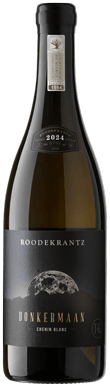
Roodekrantz, Donkermaan Chenin Blanc, Stellenbosch, South Africa, 2024

From 40-year-old dry-farmed bush vines in the Helderberg, this is a fresh and textured Chenin with aromas of fruit salad, citrus, blossom and sweet apple....
2024
StellenboschSouth Africa
Roodekrantz
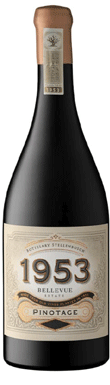
Bellevue Stellenbosch, 1953 Heritage Pinotage, Stellenbosch, South Africa, 2021

As the name suggests, this Pinotage hails from a vineyard planted in 1953; a small 1.85ha block of low-yielding bush vines. There's a notable sense...
2021
StellenboschSouth Africa
Bellevue Stellenbosch
Fuselage, Cinsault, Paarl, South Africa, 2021
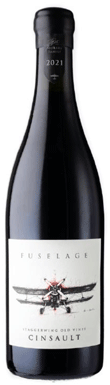
This boutique winery is located near Diemerskraal Airfield; hence the biplane on the label. Produced from two Old Vine Project vineyards near Paarl, with bush...
2021
PaarlSouth Africa
Fuselage
Welgegund, Cinsault, Wellington, South Africa, 2024
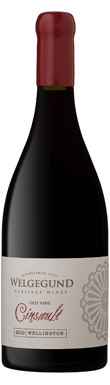
From a Certified Heritage Vineyard planted in 1974 on decomposed granite; whole-cluster fermentation and aged in French oak for 12 months. Aromatic and spicy nose...
2024
WellingtonSouth Africa
Welgegund
Donkiesbaai, Steen, Piekenierskloof, Citrusdal Mountain, South Africa, 2025

Donkiesbaai is the personal project of Rust en Vrede owner Jean Engelbrecht, featuring dry-farmed vineyards planted in the late 1980s in the rugged, sandy soils...
2025
Citrusdal MountainSouth Africa
DonkiesbaaiPiekenierskloof
Kaapzicht, Kliprug Chenin Blanc, Stellenbosch, South Africa, 2024

Meaning 'Cape View', the Kaapzicht vineyards in the Bottelary Hills look out towards Table Mountain and the Cape Peninsula. These dry-farmed Chenin bush vines were...
2024
StellenboschSouth Africa
Kaapzicht
Roodekrantz, Donkermaan Chenin Blanc, Stellenbosch, South Africa, 2024

From 40-year-old dry-farmed bush vines in the Helderberg, this is a fresh and textured Chenin with aromas of fruit salad, citrus, blossom and sweet apple....
2024
StellenboschSouth Africa
Roodekrantz
Bellevue Stellenbosch, 1953 Heritage Pinotage, Stellenbosch, South Africa, 2021

As the name suggests, this Pinotage hails from a vineyard planted in 1953; a small 1.85ha block of low-yielding bush vines. There's a notable sense...
2021
StellenboschSouth Africa
Bellevue Stellenbosch
Fuselage, Cinsault, Paarl, South Africa, 2021

This boutique winery is located near Diemerskraal Airfield; hence the biplane on the label. Produced from two Old Vine Project vineyards near Paarl, with bush...
2021
PaarlSouth Africa
Fuselage
Welgegund, Cinsault, Wellington, South Africa, 2024

From a Certified Heritage Vineyard planted in 1974 on decomposed granite; whole-cluster fermentation and aged in French oak for 12 months. Aromatic and spicy nose...
2024
WellingtonSouth Africa
Welgegund

Julie Sheppard joined the Decanter team in 2018 and is Regional Editor for Australia, New Zealand and South Africa & Spirits Editor.
Before Decanter, she worked for a range of drinks and food titles, including as managing editor of both Imbibe and Square Meal, associate publisher of The Drinks Business, senior editor of the Octopus Publishing Group and Supplements editor of Harpers Wine & Spirit. As a contributor, she has over 20 years’ experience writing about food, drink and travel for a wide range of publications, including Condé Nast Traveller, Delicious, Waitrose Kitchen, Waitrose Drinks, Time Out and national newspapers including The Telegraph and The Sunday Times.
.