South Africa gets serious about great Grenache
Ideally suited to hot dry conditions, Grenache is finding a home in the Cape winelands, where it is being championed by leading producers. Malu Lambert discovers why the variety is becoming increasingly popular and recommends 15 great Grenaches to try.
Get our daily fine wine reviews, latest wine ratings, news and travel guides delivered straight to your inbox.
You are now subscribed
Your newsletter sign-up was successful
‘Anything that moves goes for the Grenache,’ laughs Anthony de Jager of Fairview.
He’s referring to Klein Amoskuil, an organic bush vine block in the Swartland. ‘There’s no water in the area, and Grenache produces big berries, basically sacks of hydration for the birds and the bokke.’
The latter is the Afrikaans term for the duiker antelope. ‘They often chew the border vines right down to nubs; but the buck must have its share,’ says De Jager. In tribute he named the resulting wine Bok Amok.
Scroll down for Malu’s pick of South African Grenache
Now chief winemaker, De Jager has been at Fairview since 1996. The Paarl estate, owned by Charles Back, can largely be credited for reigniting interest in Grenache, with its tongue-in-cheek ‘Goats Do Roam’, a Southern Rhône-inspired blend.
When the 1998 maiden vintage was released, there wasn’t anything like it. The blends of the time were generally Cabernet Sauvignon-based blockbusters.
It was Paarl’s hot conditions that got the team thinking ‘Rhône’ – so they headed into the then unfashionable Swartland to prospect fruit for the early renditions.
The journey took them all the way into the altitudinous Piekenierskloof (ascents go up to 700m above sea level), where they found a bush vine block of Grenache planted in 1973. This made its way into the original Goats Do Roam.
Get our daily fine wine reviews, latest wine ratings, news and travel guides delivered straight to your inbox.
The fruit now goes into Fairview’s Bloemcool Berg-en-Dal Oupa se Wingerd. Goats Do Roam is still going strong however, now a blend of Shiraz, Mourvèdre, Grenache and Cinsault.
Grenache takes centre stage
Back in the late 1990s, Grenache was mostly used for bulk, lower-quality dry reds destined for the big wholesalers. That was until Johan Delport produced the first single-varietal Grenache bottling in 2001 for Citrusdal Cellars, previously Goue Vallei; and now called Piekenierskloof Wines.
Bizarrely, Goue Vallei was allowed to produce a wine called ‘Chianti’, a blend of Grenache and Cinsault. ‘I still remember the yellow label,’ recalls Delport. ‘Apparently, the cellar had official permission from the Italian Embassy to use the name.’
He says the blend became so popular they used to plant vineyards with alternating rows of the two grapes.
The shift to quality production came when the winery began selling juice to producers such as Fairview, as well as to Boekenhoutskloof for Chocolate Block. ‘Then everyone wanted in.’
Former rugby player for South Africa’s national team the Springboks, and the force behind Stellenbosch’s Vriesenhof, Jan Boland Coetzee believes Grenache was planted in the region as far back as the 1700s, citing a family legend that Napoleon favoured sweet wines made from it.
The story has been passed down through generations of Coetzees, whose roots in the Cape date back to 1679, with early settlements in both Stellenbosch and Piekenierskloof, where they are said to have introduced the cultivar.
Site-driven wines
‘It shows terroir more than any other grape,’ says Rudiger Gretschel. Production director for Vinimark and cellarmaster at Reyneke, Gretschel also has his own holding in the region, Swartberg Wingerde. ‘The secret is the altitude, which tempers the harsh, dryland conditions,’ he explains.
‘The older vineyards are mostly planted on alluvial, sandy soils – they can be quite light, in colour as well as in expression. Whereas the newer vineyards are on more structured, rocky soils and are correspondingly producing wines with more depth.’
Currently the Piekenierskloof is planted to 92.21ha of the grape. According to South Africa’s regulatory body SAWIS (South Africa Wine Industry Information and Systems) the total hectarage of the national vineyard lies at 579.01ha.
Hendrik Le Roux, a viticulturist at SAWIS says: ‘Over the last five years we can track that Grenache hectares are increasing and are outweighing uprootings.’
Paarl plantings are significant at 172.67ha, extending to the Swartland, where they total 150.17ha.
Grenache on the rise
The numbers are encouraging. Some of South Africa’s most exciting producers are realising the enormous potential of this climate-resilient grape variety, especially with the increasingly drier conditions.
While there is no official Grenache association (yet), a group regularly meets to benchmark top international versions, taste each other’s wines and swap ideas.
Among them are David Trafford and Charla Bosman (of Sijnn Wines); Tyrrel Myburgh of Joostenburg who produces an organic, small-batch Grenache; Elizma Visser of Olifantsberg; and Marelise Niemann of Momento Wines, arguably the grape’s most devoted champion.
Niemann makes the whole rainbow of Grenache: Blanc, Gris and Noir. Added to this she works across a variety of sites, namely the Swartland, Bot River, the Piekenierskloof and, for the 2025 vintage, the Breedekloof, bottling the soil types separately.
A harvest in Spain’s Priorat propelled her to start Momento. She explains that her aim was: ‘To create awareness of the potential that Grenache has in South Africa, and to get people to drink, and plant, more of it!’
Grenache may have once only played a supporting role in South African wine, but that’s no longer the case.
From old plots in the Piekenierskloof to new plantings across the Cape, this bush vine-suited, drought-resistant grape is stepping into the spotlight backed by a growing contingent of highly respected producers.
‘Hairy’ Grenache
Instigated by top vineyard consultant and Decanter Hall of Fame recipient, Rosa Kruger, in 2018 Garnacha Peluda was planted at Kloovenburg in the Swartland. Known colloquially as ‘Hairy Grenache’ it is a mutation of the cultivar that sports hairy leaves on the underside, which helps the vine cope with hot, dry conditions.
It is said to ripen a week earlier as well as have a fruitier profile and higher acidity than Grenache. In 2024, Kloovenburg produced the first blend of the two: 72% Grenache matured in old foudre, with 28% Garnacha Peluda aged in cement tank.
South African Grenache: 15 to try
Related articles:
South Africa’s winemakers seek out new signature varieties
Cape Town: Best restaurants and bars for wine lovers
Malu Lambert: My top 10 wines of 2024
Fairview, Bloemcool Berg-en-Dal Oupa Se Wingerd, Piekenierskloof, Citrusdal Mountain, South Africa, 2023
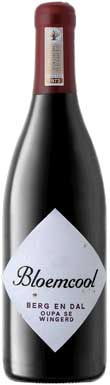
The 2023 vintage marks the 50th birthday of this heritage block – and is all the more resplendent for it. Flushed with pomegranate, forest berries...
2023
Citrusdal MountainSouth Africa
FairviewPiekenierskloof
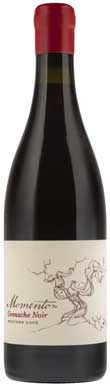
Momento Wines, Grenache Noir, Piekenierskloof, Citrusdal Mountain, South Africa, 2022

Among the rooibos and citrus in the high-altitude Piekenierskloof you can find South Africa’s oldest, dryland Grenache vines, so muscled they are sometimes called 'booms',...
2022
Citrusdal MountainSouth Africa
Momento WinesPiekenierskloof
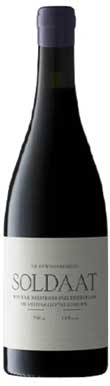
Sadie Family Wines, Soldaat, Piekenierskloof, Citrusdal Mountain, South Africa, 2023

We love this wine during fermentation; strawberry, cherry and pomegranate perfume the entire cellar,' says winemaker Eben Sadie. An enticing translucent bright red hue, all...
2023
Citrusdal MountainSouth Africa
Sadie Family WinesPiekenierskloof
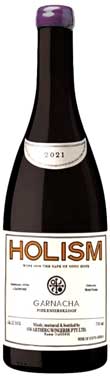
Swartberg Wingerde, Holism Garnacha, Piekenierskloof, Citrusdal Mountain, South Africa, 2023

Such wonderful clarity of red, savoury fruit – rhubarb, pomegranate, plum – underpinned by a thread of fynbos and white pepper spice. Hand-harvested grapes from...
2023
Citrusdal MountainSouth Africa
Swartberg WingerdePiekenierskloof
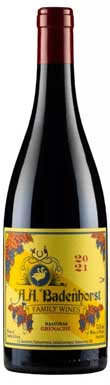
AA Badenhorst Family Wines, Raaigras, Swartland, South Africa, 2023

At the top of Adi Badenhorst’s Swartland farm you’ll find South Africa’s oldest surviving block of Grenache, planted in 1952. The 12 rows of gnarly...
2023
SwartlandSouth Africa
AA Badenhorst Family Wines
David & Nadia, Grenache Noir, Swartland, South Africa, 2023
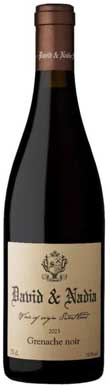
Grapes from four vineyards with divergent soils, from granite to schist. The result is a beautifully pure, limpid expression, magnified by 60% whole bunch. On...
2023
SwartlandSouth Africa
David & Nadia
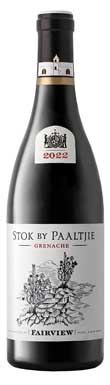
Fairview, Stok by Paaltjie Grenache, Paarl, South Africa, 2023

From a single vineyard interplanted with fynbos on a high, rocky slope ‘in the teeth of the southeaster’. 'Stok by Paaltjie' is the Afrikaans term...
2023
PaarlSouth Africa
Fairview
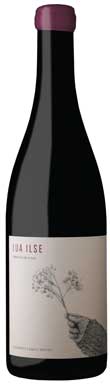
Lourens Family Wines, Lua Ilse, Piekenierskloof, Citrusdal Mountain, South Africa, 2023

Winemaker Franco Lourens says his aim is to create a wine with both ‘power and finesse’ and this, he feels, is what the combination of...
2023
Citrusdal MountainSouth Africa
Lourens Family WinesPiekenierskloof
Savage Wines, Thief in the Night, Piekenierskloof, Citrusdal Mountain, South Africa, 2023

Hewn from sandstone-planted bush vines at 704m above sea level, the character of the soils and the significant diurnal shifts create a light-filled ripeness. Sweet...
2023
Citrusdal MountainSouth Africa
Savage WinesPiekenierskloof
Blackwater, Daniel Grenache, Breedekloof, South Africa, 2023
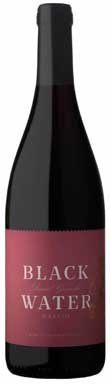
Grapes from Olifantsberg in the Breedekloof saw 60% whole-cluster ferment with approximately 25 days on skins. Intriguing aromatics of citrus-spice, raspberry and flowering, summer fynbos....
2023
BreedekloofSouth Africa
Blackwater
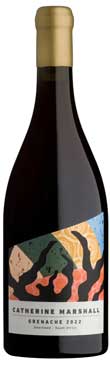
Catherine Marshall, Fine Art Collection Lithica Grenache, Western Cape, South Africa, 2023

Glorious depth of fruit from near equal Stellenbosch and Voor Paardeberg parcels. Scented with rose petals, black cherries, savoury green herbs and a cool note...
2023
Western CapeSouth Africa
Catherine Marshall
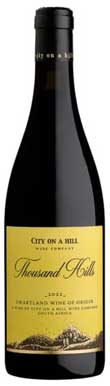
City on a Hill, Thousand Hills, Swartland, South Africa, 2023

Attractive translucent plum in colour. High-toned cherry-mint aromas, savoury spice and bursting with red fruit (pomegranates, cherries). Dainty yet still substantial, the tannins are fruit-coated...
2023
SwartlandSouth Africa
City on a Hill
Kleine Zalze, Project Z Grenache, Darling, South Africa, 2022

Forming part of the Stellenbosch estate’s experimental range, the wines intentionally push the boundaries of what is considered more 'traditional'. Top notes of flowers, fynbos...
2022
DarlingSouth Africa
Kleine Zalze
Olifantsberg, Grenache Noir, Breedekloof, South Africa, 2023
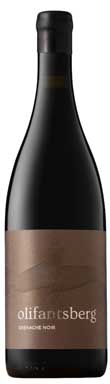
Growing on shale, schist and sandstone-based soils, the Grenache here is trained to echalas, so windy and steep is the site. Due to the various...
2023
BreedekloofSouth Africa
Olifantsberg
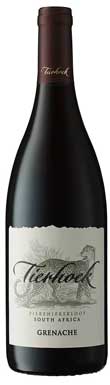
Tierhoek, Heritage OVP Grenache, Piekenierskloof, Citrusdal Mountain, South Africa, 2021

A wine with a real sense of place from vines rooted at a lofty 760m above sea level. Grenache planted in 1977 delivers complex and...
2021
Citrusdal MountainSouth Africa
TierhoekPiekenierskloof

Malu Lambert DipWSET is a multi-award winning wine writer and critic, based in South Africa.