
Building an identity for Alta Langa – Piedmont's revitalised sparkling wines
Richard Baudains visits producers of Alta Langa metodo classico sparkling wines to better understand the people and the wines.


We are standing on the panoramic terrace of the tasting room of the Borgo Maragliano winery in Loazzolo, in the Alta Langa.
The Galliano family have produced Moscato here for three generations. They began to plant Chardonnay and Pinot Noir in the early 1980s, and were among the first of the new generation of ground-breaking metodo classico producers in the Langhe area of Piedmont.
The cellars are at 450 metres above sea level, while the average elevation of the vineyards spread out below us in a patchwork of vines, pastures and woodland is around 400m.
Carlo Galliano points to a plot which has been cleared on a hillside high above us, on the opposite side of the valley.
‘It’s at 600m,’ he explains. ‘The soils are perfect for Pinot Noir, but my father would never have planted a vineyard at that height. It would never have ripened. But today with the climate we have, it’s different. I’m going to be planting there in the spring.’
Taking advantage
When the production norms for the Alta Langa DOC (later DOCG) were drawn up in 2002, they stipulated that the wine had to be sourced from vineyards at above 250m.
Today the producers’ consorzio estimates that the average elevation is between 400 and 550m, although many growers are exploiting the opportunity offered by a changing climate to plant much higher – on sites where the grapes tick all the boxes for sparkling wine production; intense aroma, high acidity and low sugar.
When the Rivetti family acquired the historic house of Contratto in 2011, they planted Chardonnay and Pinot Noir dedicated to Alta Langa sparkling wine at between 700m and 820m.
And when Sara Vezza from the Josetta Saffirio winery at Monforte embarked on a production of her metodo classico, she planted on virgin soils at 700m at Murazzano, in an area of high pastures renowned for its cheeses and certainly not in the past for its wines.
It will be interesting to see how the arrival of viticulture will impact these often isolated rural sites in the future.
Italian metodo classico: A brief history
When it comes to metodo classico wines, Alta Langa is very much the new player on the block.
The three other major Italian DOCs for bottle re-fermented wines all arrived much earlier: Trento DOC dates from 1993, Oltre Po from 1970, and Franciacorta from 1967.
Yet production of metodo classico is not new to Piedmont – in 1850, following studies in Reims, Carlo Gancia founded the house of Gancia at Canelli.
Adapting the French system of bottle re-fermention using the local grape Moscato, he produced what is documented as Italy’s first traditional method sparkling wine.
Other historic houses including Calissano, Contratto and Cora followed suit, adding sparkling wines to the flourishing production of Vermouth of the period, emulating Champagne not only in the production method but also in the flamboyant liberty-style advertising posters which have become collectors’ items.
But then it all died away.
Fast forward to 1990, and a group of seven major Piedmontese houses launched a project to recreate the production of prestige metodo classico, which had been lost in the region.
In what would make an interesting case study in entrepreneurial initiative, the project started from zero, with experimental plantings of Chardonnay and Pinot Noir, and by 1996, there were 48 hectares under vine.
The name Alta Langa was registered in 1998, and the following year the first wines were released.
The producers’ consorzio was founded in 2001, and in record time, DOC recognition arrived in 2002 for the new sparkling wine.
Building an identity
To create a distinctive identity for the new Alta Langa denomination, the production regulations drawn up in 2002 set the bar high.
To begin with, the base must be Chardonnay and/or Pinot Noir, used individually or in combination.
There is no non-vintage version – Alta Langa is exclusively ‘millesimato’ – and it must age on its lees for a minimum of 30 months (36 months for the Riserva; this will increase to 60 months when the latest modifications to the regulations come into effect).
The potential area of production for Alta Langa is vast, taking in 149 villages in the three wine growing provinces of Alessandria, Asti and Cuneo.
But currently, only 600ha are registered. To put that in perspective, Barbaresco has around 750ha registered.
Calcareous marl soils predominate, with varying textures depending on the percentage of clay to sand.
Production is limited but growing, with projections for the 2025 total of two million bottles to increase to five million by 2030.
Two great Piedmontese traditions are reflected in the cross-section of Alta Langa producers.
On one hand, there are the long-established sparkling wine and Vermouth houses like Cocchi, Coppi, Contratto and Gancia; on the other hand, small- to medium-scale family-run estates.
Many famous names from the red wine denominations of the Langhe have added Alta Langa to their lists, as have Moscato producers from Asti.
The Alta Langa style
If Trento DOC is all about crisp elegance, and Franciacorta round complexity, Alta Langa offers structure and depth.
The absence of an entry level non-vintage label, combined with extended ageing, are distinguishing features accentuated by the orientation of many producers towards the driest pas dosé (equivalent to brut nature) and extra brut styles.
These styles are not always the most accessible, however, and blanc de noir bottlings in particular can feel very dry indeed, and undeniably Piedmontese: austere, long-lived, and great with food.
10 top Alta Langa for your glass
Related articles

Cult Italian winemakers: New chapters, new directions

Barolo 2022: Our top value finds

Italian cooperation: A blueprint for wine's future
Saffirio, Alta Langa, Piedmont, Italy, Piedmont 2021
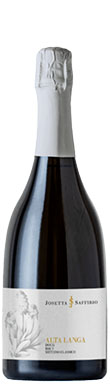

A persistent, very fine perlage with an equally persistent soft white mousse. Great complexity on the tapestry-like nose: spring blossom, candied cherry and citrus peel...
2021
SaffirioAlta Langa

Contratto, For England Blanc de Noir Pas Dosé, Alta Langa, Piedmont 2021
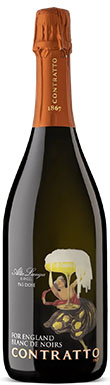
A pale blush shade, with delicate but very precise definition on the nose of sour cherry and raspberry fruit, and a distinct note of flintiness....
2021
ContrattoAlta Langa
Borgo Maragliano, Francesco Galliano, Alta Langa, Piedmont 2022
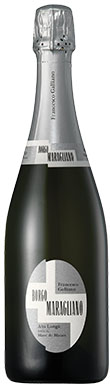
This blanc de blanc from the province of Asti is lively and immediate on the nose, with fresh citrus and a slight saline nuance. The...
2022
Borgo MaraglianoAlta Langa
Contratto, Blanc de Blanc Pas Dosé, Alta Langa, Piedmont 2021
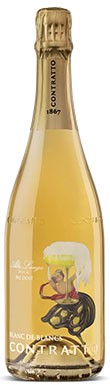
Subtle and a little understated, but there is a lot of detail on the nose: lime and green apple, spring blossom and, in the background,...
2021
ContrattoAlta Langa
Tenuta Rocca, Alta Langa, Piedmont, Italy 2021
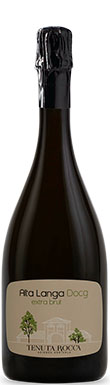
Very attractive aromas of apple pie crust, dried apricot and a distinctive saltiness. Dry, firm and linear, it demonstrates a lovely lightness of touch, a...
2021
Tenuta RoccaAlta Langa
Colombo, Blanc de Blancs, Alta Langa, Piedmont, Italy, Piedmont 2021
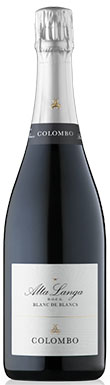
Fresh and expressive on the nose, with aromas of sweet red fruit and toasted bread crust. The creamy volume on the palate is refreshed by...
2021
ColomboAlta Langa
Rizzi, Pas Dosé, Alta Langa, Piedmont, Italy, 2021
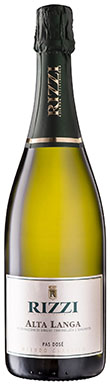
Intense, fresh and yeasty, with up-front aromas of green pear and herbs. The palate impact is bone-dry and grippy, followed by concentrated flavour, a very...
2021
RizziAlta Langa
Ettore Germano, Blanc de Blanc Pas Dosé, Alta Langa, Piedmont 2017
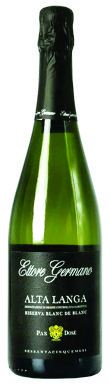
Aromatic freshness of white blossom and pear and apple fruit, but also hints of maturity in the toasted bread crust aromas at the back. On...
2017
Ettore GermanoAlta Langa
Cocchi, Totocorde, Alta Langa, Piedmont, Italy 2019
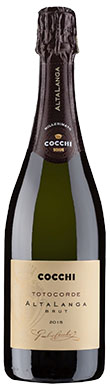
Broad and open, showing maturity through bread crust, apricot and ripe tropical fruit aromas. A fleshy mid-palate with a slightly herby character leads to a...
2019
CocchiAlta Langa
Ferraris Agricola, Tenuta Santa Chiara, Alta Langa, Piedmont 2021
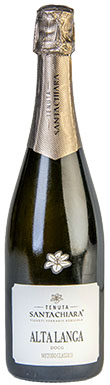
This has a bright buttercup shade and an intense nose of ripe yellow apple with toasted hazelnut and a hint of butteriness. Full-flavoured, its rich,...
2021
Ferraris AgricolaAlta Langa
