The identity of old vines – can time be tasted?
Producers, sommeliers and critics put their palate and minds to work at this year’s edition of Barcelona Wine Week to discuss why old vines are important and whether the wines they produce are indeed different.


Is older better? ‘Not if you’re human,’ according to Doug Frost MW MS. On the other hand, the multisuffixed expert suggested that vines benefit from some age to deliver the best wines and a better express terroir.
Frost was leading a tasting titled ‘Is older better?’, one of multiple sessions held during this year’s edition of Barcelona Wine Week to explore the meaning and importance of old vines, both from a symbolic and winemaking point of view. Other masterclasses included ‘Old Vines – Beyond Beauty’, moderated by Fernando Mora MW and ‘Pre-phylloxera vines, the indelible heritage’, moderated by Ruth Troyano.
Living narrative
The common thread and foremost conclusion, across sessions, was that beyond the impact on taste (more on that below), the attention paid to old vines is fundamentally about social, economic and cultural sustainability.
The fact that so many vineyards were, throughout the 20th century, replaced by higher-yielding varieties has had a deep impact on the potential of commercial differentiation and the climate resilience of many regions. Ironically, and with an almost tragic lack of strategic foresight, decisions made with volume and commercial aggressiveness in mind have limited the potential for singularity and competitive market placement.
As part of the panel discussing pre-phylloxera plantings, Elisa Ludeña, winemaker at Canary Island’s winery El Grifo, described the study of old vines as an ‘archaeology of wine’, unveiling social and economic information, as much as viticultural. And Ludeña pointed out that by looking at the past, and understanding the viticultural lineage of a place, winemakers and regions are better placed to face the challenges of the future. ‘For me this is true resistance,’ concluded Ludeña, asserting heritage-focused viticulture as a rebellious act.

Climate resilience
This was echoed by star winemaker Raúl Pérez at the ‘Beyond beauty session’: ‘Wines used to be produced to be enjoyed; now they’re made to be tasted and scored. We’re losing our identity.’ He went on to stress that the value of old vines is the preservation of wines with a sense of place and inherent drinkability. ‘Old vines allow us to harvest earlier with enough maturity,’ he explained. ‘So you actually have wines with natural freshness and lower alcohol.’
In this context, old vines emerge as a tool in the face of changes in both climate and consumer demand. Winemakers at all sessions stressed how older vines have the ability – albeit at the expense of higher yields – to self-regulate and withstand drought and extreme heat. All while delivering fruit with more concentration and finer acid. ‘It’s all about the root system.’ explained Pérez, suggesting that a more established root network allows the plants to retrieve water and nutrients deeper and process them more efficiently.
Natural selection
Another recurrent comment was that old vines, per se, are not a valuable asset. They only become truly special in the context of a suitable place and if tended to correctly; the idea of the perfect terroir therefore emerges as a complex web of natural and human factors that shape the perfect (old) vines throughout time. And hence their value is also, and perhaps above all, that they are a living, evolving narrative. As many of the panelists pointed out, there is a reason why some vineyards, in some places, live to be old; if they indeed withstand the test of time – not least in the face of the aforementioned commercial pressures – there must be something that makes them inherently different and worthy.
Longevity in turn underscores another important capital of old vines: the preservation of genetic diversity. Along with the ubiquitous planting of international varieties came the hegemony of specific clones chosen with yields and specific aromatic traits in mind, at the cost of complexity and resilience.

The truth in the bottle
Arguably then, the defence of old vines is more about sustainability and heritage than it is about the wines they produce. The latter however, also seem to justify their preservation.
According to Frost there seems to be a breadth of palate and textural complexity that only older plants can deliver consistently. He justifies this with the many physiological aspects touched upon during the different sessions: lower yields; greater concentration; higher resistance to drought.
But can origin, viticulture and winemaking skill trump the expressiveness of an old vine? The answer is complex: origin and viticulture are ultimately part of what shapes that expressiveness; (good) winemaking, on the other hand, can merely embrace the responsibility of leveraging it. As Mora put it, it’s worth keep making ‘wines that are not mere products but rather objects of intellectual sublimation’.
The taste of old vines – eight Spanish wines to try:
All wines tasted at Barcelona Wine Week, between 3 and 5 February 2025.
Wines grouped by style and ordered by score, in descending order.
Related articles
- Baudains: Are old vines important?
- In praise of Rioja’s old vines
- Viña Moraima: Act of sabotage destroys centuries-old vines
Bodegas Gerardo Méndez, Do Ferreiro Cepas Vellas, Rías Baixas, Galicia, Spain, 2021
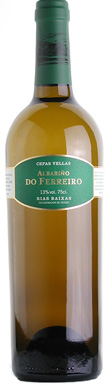

Great definition of citrus and white orchard fruit flavours, underpinned by a vibrant sour streak in this Albariño produced from old, pre-hyloxeric vines. Wet stone freshness lines the juicy citrus core. Long finish, topped with lemon and lime zest.
2021
Bodegas Gerardo MéndezRías Baixas

Javier Sanz, Finca Saltamontes, Rueda, Northern Spain, Spain, 2018
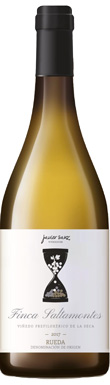
A very distinct expression of Verdejo, with a broad unctuosity and luscious mid-palate weight. Subtly savoury, with a fine layer of aniseed and coriander seed cloaking the lemon, pear and quince fruit. Rich yet precise, with assertive acid driving the long finish. The fruit hails from the 2.27-hectare Pago de Saltamontes, registered in 1863 and a survivor of the phylloxera plight.
2018
Javier SanzRueda
Envínate, Benje Blanco, Ycoden-Daute-Isora, Tenerife, Spain, 2023
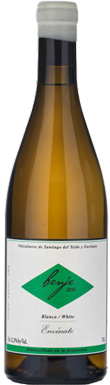
The beautiful salinity and flinty detail of Envínate's take on Listán Blanco, with its trademark fleshy fruit, briny savouriness and textural minerality. Crispy Asian pear, quince and white peach are cloaked with a veil of delicious smokiness.
2023
EnvínateYcoden-Daute-Isora
Raúl Pérez, Ultreia Villegas, Bierzo, Northern Spain, Spain, 2022
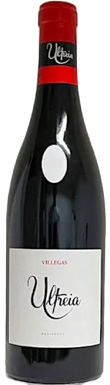
Deep yet lifted, with broody savoury notes in perfect counterpoint to the bright cherry and plum fruit. Earthy (petrichor) and herbal (black olive, tarragon, curry leaf, macerated sage and mint) nuances build intensity and complexity. Long finish with delicious tomato leaf.
2022
Raúl PérezBierzo
Bodegas Cerrón, Stratum Wines Matas Altas, Jumilla, Jumilla, Spain, 2023
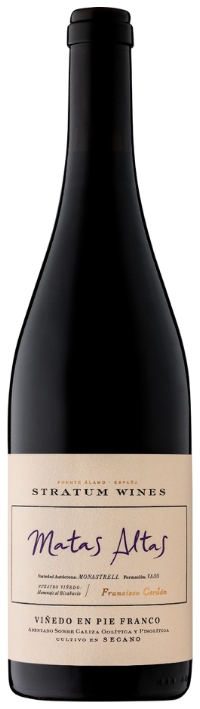
With a beautiful tannic structure and a strong acid backbone, this Monastrell makes the best of old, ungrafted vines by showcasing their potential for youthful, bright expressiveness. With a zesty grip outlining the pomegranate, cranberry and plum fruit, a streak of blood orange runs through the wine to give it vivacious depth. Long finish, with a refreshing grip.
2023
Bodegas CerrónJumilla
López de Heredía, Viña Tondonia Reserva, Rioja, Northern Spain, Spain, 2012
All you can expect from a classical Viña Tondonia with its focused intensity and muscular yet very elegant tannins. At once assertive and silky, with juicy red and blue fruit gliding through the palate while being pleasantly pulled back by an energetic, iodine verve. Subtle, hovering, brooding notes of tobacco, mocha and wet forest floor. 70% Tempranillo, 20% Garnacha and 10% Graciano and Mazuelo, bottled in January 2022 having matured in 225-litre American oak barrels for six years.
2012
López de HeredíaRioja
Bodegas Frontonio, Supersónico, Vinos de España, Spain, 2022
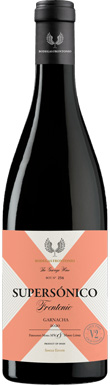
Lovely precision and energy in this smart, transparent Garnacha with a touch of Macabeo. Chiseled tannins outline the crunchy red fruit (pomegranate, cherry, cranberry), blood orange and red apple, with definition and verve. Great fluidity throughout, underpinned by soft acidity.
2022
Bodegas Frontonio
Bodega Numanthia, Numanthia, Toro, Northern Spain, Spain, 2019

Numanthia's hallmark intensity and broody depth with tobacco leaves and forest floor creating an earthy bed for the dark plum, cherry and black olive meaty flavours. Spicy, savoury tannins lined with nutmeg, white pepper and cardamom bringing out a sweet liveliness.
2019
Bodega NumanthiaToro
