
The nomads: Winemakers who wander
Wandering winemakers are on the rise. We explain why you should follow these nomadic creators around the world.


We like to think of winemakers as people rooted in their terroir – often from families who’ve farmed the same land for generations.
But does that idea still make sense in the international, ever-in-flux world of today? A growing group of winemakers think not.
Sometimes called ‘nomadic’ – other times ‘flying’ – winemakers, this troupe of mavericks eschews the idea of being permanently wedded to a particular vineyard or set of vineyards.
Instead, they travel around the world making wine in different places by partnering with local grape-growers and wineries. It’s not so surprising that more winemakers are adopting this footloose approach when you consider the high land prices and general set-up costs they face today.
Many young people are more than used to the idea of constantly renting, never owning, as that’s what they face their personal lives. Perhaps this is just another manifestation of Generation Rent.
Yet for many of these winemakers, a nomadic lifestyle isn’t just a necessity – it’s a life choice. The lifestyle clearly has broader appeal.
In 2020, a travel club that allows anyone to become a flying winemaker was launched. Members of The Vines travel around the world, working with top producers such as Drappier in Champagne to create their own wines – sometimes even labelling them under their own name.
But why should we, as drinkers, care? Surely someone who has parachuted into Chablis from Croydon can’t make a better Chardonnay than the locals?
Rami Bassil El-Sabban

Some winemakers rove around the world; others, like Rami Bassil El-Sabban, find enough variety within just one country.
A former sommelier, El-Sabban now travels around Lebanon, borrowing space from wineries to make his wines.
‘I’ve always been a nomad at heart,’ he explains. ‘I grew up in Beirut then lived in Sri Lanka, London, Miami and Montreal, before moving back to Lebanon to make wine. I want to learn as much as I can before settling in one place. It’s a bit like the call of the wild.’
His nomadic lifestyle means El-Sabban is able to experience the full spread of the country’s climates, from coastal to continental and even alpine.
‘I try to do something that is different to the style of wine they [the host winery] are making,’ he says.
In one region, which has an extremely hot climate, the local winemaker tends towards plusher, richer wines – so instead, El-Sabban used Pinot Noir, putting it through semicarbonic maceration to create a lighter style than the local temperatures would normally allow for.
This year, he’s making wine in another region using an indigenous Lebanese grape that he’s ageing in terracotta in an oxidative style.
‘What makes nomadic winemaking special is its transience,’ El-Sabban says. ‘Time away from one vineyard is spent immersed in other regions, varieties and techniques, constantly learning, tasting and refining. Those experiences are poured back into the wines of the next vintage, cross-pollinating ideas that can’t be replicated by staying in one place.
'For a drinker, that means every bottle tells not just the story of a place, but also the journey of a single person, layered with influences from across the wine world.’
‘What makes nomadic winemaking special is its transience’
Rami Bassil El-Sabban
Alex Brogan, Not Yet Named Wine Co.

If you thought making wine in a different place (with a new partner winery) each year was a logistical nightmare, try doing it when dozens of your customers are also voting on key decisions to do with how the wine is made.
But that’s exactly the concept of Alex Brogan’s wine club. He’s done two vintages each year since starting – one in each hemisphere. Members of his club pay for the wine before it’s made but then get to vote on decisions such as which grape variety he’ll be using, what kind of vessel the wine is matured in, and what its name will be.
His portfolio so far includes a Rhône-blend red from Colchagua, Chile, a Pinot Noir from California and a Malvazija from Slovenia.
‘Wherever I put out a choice to members, I make sure I’m happy with the options we’re offering and the local winery we’ve partnered with is happy, too,’ Brogan explains.
‘They’re technically the producer. Neither of us wants to make a faulty wine, so the choices are always about style – never quality.
‘Our customers love learning about how wine is made in different places and feeling like part of the process,’ he adds.
He also organises ‘school trips’ for members to the partner wineries, so they can learn more.
‘So far, we’ve done Portugal, California and Slovenia. We sometimes arrange it around blending time so our members can create blends themselves. We make a shortlist of the best and members vote on which will be the final blend. I’m desperate to do a vintage in London so they could visit every week.’
‘The choices are always about style – never quality’
Alex Brogan
Brogan, a former PwC management consultant, came up with the idea while studying at Plumpton College in East Sussex.
‘It was always going to be a roving project because the members need something different each time,’ he says. ‘It would be boring if you were making the same decisions each year.’
Once the latest wine is ready, Brogan organises pick-up parties. ‘Most of the members are in London so it’s a good opportunity for them to meet. Two people who met at the first pick-up party have carried on dating since,’ he says.
The benefits, for him, are that he is not tied to any particular place or attached to any specific style, so he can easily adapt to changing trends.
‘On a personal level, I knew I wanted to make wine but didn’t want the rural lifestyle. Now I can make wine and still have my London lifestyle.’
But the vagabond set-up isn’t for everyone. ‘I had a co-founder at the beginning,’ Brogan says. ‘He’s a home boy at heart and realised he didn’t like the nomadic life. He’s from Portugal and has now set up a winery there with his dad.’
Eddie McDougall, The Flying Winemaker

Following ‘the call of the wild’ doesn’t mean you can’t be commercial about it.
Australian Eddie McDougall, who was born in Hong Kong and spent his early years there, has spent the best part of two decades travelling around the world making wines and turned his ‘flying winemaker’ status into an entire brand.
He even presented a TV show that appeared on Netflix called The Flying Winemaker, in which he travelled to emerging wine regions around Asia, from Bali to Vietnam, to learn about how wine was being made there.
Initially, he and his team roamed far and wide to make their wines – from China to Italy and France. Nowadays, they focus on their core regions, producing in two different locations in Australia and three more in New Zealand every harvest.
McDougall also now has a separate brand (EJ McDougall), for which he makes fine wines in three locations across Australia. Only one of these (McLaren Vale) overlaps with where he makes wine for the Flying Winemaker brand, so McDougall will soon be managing harvests across seven different locations each year.
He and his team buy grapes from local growers and pay wineries to use their space, and at its peak the business was producing almost a million bottles per year.
However, tariffs between Australia and China had a significant impact and it’s now regularly producing about 200,000 bottles, although McDougall says he is working with ‘new and revived distribution partners’ to quickly rebuild a market presence in mainland China.
‘The benefit for the consumer with nomadic wines is that they’re reliable’
Eddie McDougall
Are nomadic wines the best regional expression of a grape variety? Probably not, McDougall concedes. ‘But the benefit for the consumer with nomadic wines is that they’re reliable,’ he says.
‘That comes down to the quality of the relationships. You can taste the world with one winemaker’s hand or expression – you can see a signature style that comes through across different regions.’
McDougall describes his own wines as ‘energetic and perfume-driven rather than fruit-driven’.
He adds that not having to be at a permanent winery all year means he can spend more time in the market to keep up with changing consumer tastes.
Maintaining quality control across all of those locations does come with a personal cost, however.
‘It’s a lot of travelling across time zones, being on planes, and a huge amount of driving. It does take its toll,’ he admits. Would he change a thing?
‘Absolutely not. We love what we do and love introducing our customers to new regions.’
Darren Smith, The Finest Wines Available to Humanity

Darren Smith tasting his Georgian wine in the winery of Baia Abuladze in 2022.
Every year since 2018, Darren Smith has visited a different country (in some years, two – one in each hemisphere) to make wine. ‘I like an underdog,’ he explains, and so each of his projects focuses on a lesser-known wine region or grape variety.
Smith’s travels have taken him from making pét-nat in western Georgia to making País (a ‘Cinderella grape’ as he describes it) in southern Chile.
Either he decides on the region or grape variety with which he wants to work and then seeks out a partner winery, or he might meet a maker whose wines he loves and ask if they will consider working with him.
He usually spends three or four weeks at the partner winery for harvest and winemaking, often popping back several times throughout the year that follows to check on the wine’s progress.
A trained journalist, Smith discovered a love of wine and, through writing about it professionally, gradually started to formulate the idea for his company.
‘It was always going to be a nomadic project,’ he says. ‘It was a way for me to learn on the job and I wanted to learn from as wide a group of winemakers as possible.’
Smith believes that his nomadic approach could help people discover lesser-known regions and grape varieties. If they find a winemaker whose style they know and wines they trust, they could be more open to trying new things.
‘What I’ve learned from selling my wines over market stalls is that people are interested in new stuff and, if they’ve got someone there to give them reassurance before they spend their money, that really helps,’ he says.
And unlike winemakers tied to their wineries, he can be there in person to speak to potential customers and explain the concept.
‘I’m like a flagbearer – an entry point. Then people can go off and explore these new wines, new territories. If someone sees my wines and then their attention is turned to the winemakers I’ve worked with – that’s success.’
Wines from nomadic winemakers
Related articles

Lebanon’s new wave: Top estates and 10 fascinating wines to try

Nomad winemaker: Why I make wine in Spain

Baudains: Career-change winemakers
The Finest Wines Available to Humanity, TFWATH Palomino 2022, Jerez, Spain, 2022
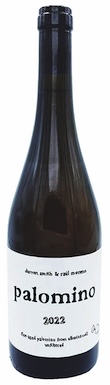

Jerez’s signature Sherry grape Palomino gets a new lease of life as this savoury, spicy orange wine. Cidery, cooked apple aromas, with a hint of...
2022
The Finest Wines Available to Humanity

Not Yet Named Wine Co, Edition #3, Gruner Veltliner, 2023, California, USA, 2023
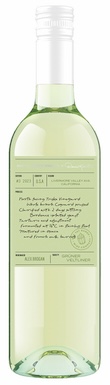
Each year Brogan makes one 'democratic' wine, where his customers vote on key decisions, and one 'dictator' wine, where he makes all the decisions. For...
2023
Not Yet Named Wine Co
E.J. McDougall, Old Vine Shiraz, McLaren Vale, Blewitt Springs, South Australia, Australia, 2023
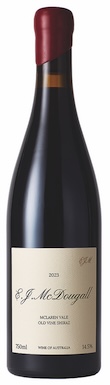
On the nose, this wine gives rich dark plum, ground peppercorns and a whiff of the smoky herbaceousness of black tea leaves. On the palate,...
2023
E.J. McDougallMcLaren Vale
Rami Bassil El-Sabban, UWAR, Lebanon, 2024
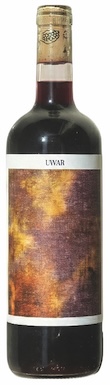
This wine is made with 100% Sabbaghieh, a native Lebanese grape that's one of the few 'teinturier' varieties, with red flesh as well as dark-coloured...
2024
Rami Bassil El-Sabban
The Finest Wines Available to Humanity, TFWATH Palomino 2022, Jerez, Spain, 2022
Jerez’s signature Sherry grape Palomino gets a new lease of life as this savoury, spicy orange wine. Cidery, cooked apple aromas, with a hint of...
2022
The Finest Wines Available to Humanity
Not Yet Named Wine Co, Edition #3, Gruner Veltliner, 2023, California, USA, 2023
Each year Brogan makes one 'democratic' wine, where his customers vote on key decisions, and one 'dictator' wine, where he makes all the decisions. For...
2023
Not Yet Named Wine Co
E.J. McDougall, Old Vine Shiraz, McLaren Vale, Blewitt Springs, South Australia, Australia, 2023
On the nose, this wine gives rich dark plum, ground peppercorns and a whiff of the smoky herbaceousness of black tea leaves. On the palate,...
2023
E.J. McDougallMcLaren Vale
Rami Bassil El-Sabban, UWAR, Lebanon, 2024
This wine is made with 100% Sabbaghieh, a native Lebanese grape that's one of the few 'teinturier' varieties, with red flesh as well as dark-coloured...
2024
Rami Bassil El-Sabban
