
Why California's Mediterranean varieties are about to have their moment in the sun
California’s wine story goes beyond a few well-known grape varieties. Sonoma correspondent Ana Carolina Quintela unearths these unique wines being made throughout the state.


There’s a ‘holy trinity’ of California wine – Chardonnay, Pinot Noir and Cabernet Sauvignon.
They dominate restaurant lists, anchor most tasting rooms, and take up more retail shelf space than most wines combined.
‘If you really zoom out, it’s actually kind of absurd that we’ve built our entire reputation on Burgundian varieties and a Bordeaux variety,' says Morgan Twain-Peterson, winemaker at Bedrock Wine Co. in Sonoma.
'From a strictly climate standpoint, Mediterranean varieties are the grapes we should be growing in our Mediterranean climate.’
Curious consumers
It’s not a new idea. Before Prohibition, California vineyards were full of Carignan, Alicante Bouschet, Mourvèdre, Petite Sirah and Cinsault.
A lot has happened since Prohibition, including a recent and noticeable slowdown in sales – particularly of Cabernet Sauvignon, Chardonnay and Pinot Noir.
‘People can’t sell them,’ says Twain-Peterson. ‘They’re either ripping vineyards out or thinking about what else they can grow.’
The timing aligns with a generation of consumers looking for something different.
People are drinking less, but when they do drink, they want authenticity, curiosity, value – wines that feel like discovery, not a status symbol.
‘People are more and more willing to try new grapes,’ says Jason Haas, proprietor of Tablas Creek Vineyard in Paso Robles, whose estate has been built entirely around all the wide traditional varieties of Châteauneuf-du-Pape for nearly four decades.
‘It’s never been easier than it is now.’
And the range of what consumers are discovering in California goes well beyond Grenache and Syrah.
‘The first wines to sell at Bedrock last year were the weird stuff,’ says Twain-Peterson. In a market built on name recognition, under-the-radar has become a selling point.
Many of those once-obscure grapes are finding their own expression and a new audience in California.
'Picpoul has great acidity, but the California expression is more tropical and a little more luscious than what people are used to from the south of France,' says Haas. 'It’s a grape that is capable of more than it’s usually allowed to show in France.'
Carignan tells a similar story. 'Old-vine Carignan is the most underrated thing in California,' says Twain-Peterson – 'affordable, endlessly expressive, capable of everything from crunchy and bright to rich and structured, depending on where it’s grown.'
The right place
The appeal goes beyond what’s in the glass. According to growers and producers, these varieties are better suited to the areas where they are grown.
‘If we’re talking about what’s still going to get ripe in a cool year, but also withstand a furnace blast of 110 degrees for six days straight like we got in 2022 – those varieties are far better candidates to deal with heat,’ says Twain-Peterson.
Not coincidentally, many of California’s oldest vines – the ones that have survived a century of heat, drought and frost – are mostly Mediterranean varieties.
‘Planting something that’s happier in a hot, sunny, dry climate should mean it’ll live longer,’ says Haas. ‘That’s got to be a good thing – both from a cost standpoint and from a pure sustainability standpoint.’
There is a direct line between what belongs in the ground and what ends up in the bottle in its purest state.
‘When you have the right variety in the right place, the wine becomes transparent to the terroir,’ says John Hamel, winemaker at Hamel Family Wines in the Moon Mountain District of Sonoma Valley, who has been grafting Grenache over from Cabernet and planting Mourvèdre on his estate.
‘The wines have been a real revelation,’ he adds.
A freedom of expression
Freed from the stylistic expectations of established varietals in California, producers find themselves more creative with winemaking choices, and consumers benefit from having no canon to defer to, no benchmark to be wrong about.
‘When there isn’t this backlog of every style of that wine,’ says Hamel, ‘people are interested in that.’
That diversity of expression is precisely what makes these wines feel less intimidating to a new generation of drinkers.
In the end, what drives all of this is a genuine belief that California has more to offer than most people think.
‘I hope they will find grapes that show the place in which they’re grown in a beautiful way, where none of us is trying to copy the Old World,’ says Haas.
‘We’re trying to find grapes that are well suited for their spots in California – that will show the soils, show the weather, show complexity and freshness and balance, without having to be manipulated to do so.’
A selection of California's Mediterranean wines from Ana Carolina Quintela:
Related articles

How Thacher Winery & Vineyard uncovered a lighter side to Paso Robles

How Tablas Creek went on a quest to bottle Châteauneuf-du-Pape’s hidden grapes

Rhône ranging: The evolution of Australia’s red Rhône varieties
Stonestreet, White Blend, Sonoma County, Alexander Valley, California, USA, 2024
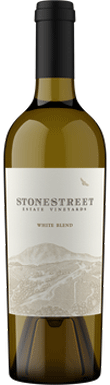

In its second vintage, this Assyrtiko is already delicious. It’s the only planting of the variety I’m aware of in Sonoma County, high up on...
2024
StonestreetSonoma County

Tablas Creek Vineyard, Picardan, Paso Robles, Adelaida District, California, USA, 2021
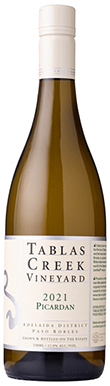
Picardan might be the rarest variety I’ve tasted so far. Today, there’s just over an acre planted in France and about half an acre in...
2021
Tablas Creek VineyardPaso Robles
Cadre, Sea Queen Albariño, Central Coast, Edna Valley, California, USA, 2024
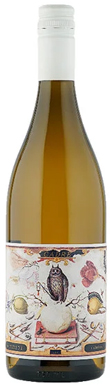
This is a confident domestic Albariño - saline, freshly aromatic, light but softly textured. The cuttings for this wine trace back to the Morgadio Estate...
2024
CadreCentral Coast
Marimar Estate, Don Miguel Vineyard Godello, Sonoma County, Russian River Valley, California, USA, 2023
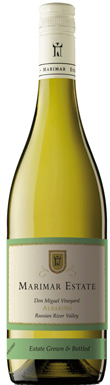
While Godello doesn't have the same fame as its compatriot Albariño in California (both varieties from Galicia), it is slowly getting recognition on this side...
2023
Marimar EstateSonoma County
Raft Wines, Claypool Vineyard Counoise, Lodi, California, USA, 2023
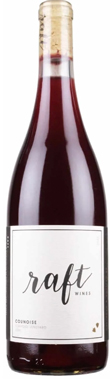
Counoise is a rare grape, not only in California but even in France. It's one of the many varietals in Châteauneuf-du-Pape, mostly blended, but lately...
2023
Raft WinesLodi
Centennial Mountain, Nerello Mascalese, Sonoma County, California, USA, 2022
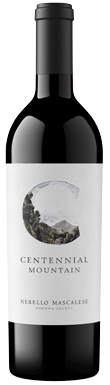
Sourced from the first plantings of Nerello Mascalese in California, this wine is a fresh, savoury standout. Aromatically vibrant, it offers notes of red berries,...
2022
Centennial MountainSonoma County
Bedrock, Carignan Evangelho Vineyard, San Francisco Bay, Contra Costa County, California, USA, 2024
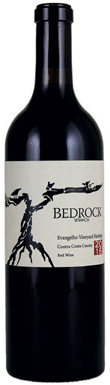
Carignan is a late-ripening grape that naturally thrives across California, but especially in Contra Costa County, and Evangelho Vineyard is as good as it gets...
2024
BedrockSan Francisco Bay
Birdhorse, Valdiguié, Solano County, Suisun Valley, California, USA, 2023
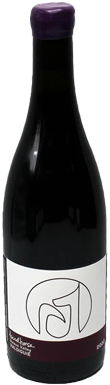
Valdigué has a complicated history. Originally from southwest France, it nearly disappeared there due to "high-yielding, bad quality," then arrived in the US under the...
2023
BirdhorseSolano County
Sandlands, Cinsault, Lodi, California, USA, 2023
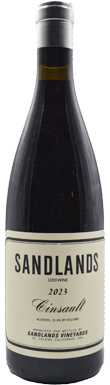
Sandlands is a small, personal project by Tegan Passalacqua, centered on championing varieties from sites that have remained outliers in California viticulture. This Cinsault comes...
2023
SandlandsLodi
Saintsbury, Mencia Alder Springs Vineyard, Mendocino County, California, USA, 2024
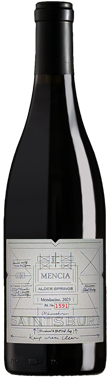
Mencía is still a rarity in the U.S. The Saintsbury wine is made with fruit from a small parcel (about 2,5 acres) at Alder Springs...
2024
SaintsburyMendocino County
Source & Sink, Alicante Bouschet, Sonoma County, Sonoma Valley, California, USA, 2019
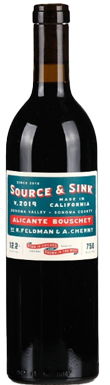
Source & Sink is a small project focused on older plantings in Sonoma. This 2019 Alicante Bouschet comes from two vineyards in Sonoma County, both...
2019
Source & SinkSonoma County
