
Mirabeau rosé wines represent the fruition of a long-held winemaking dream and a shared loved of Provence rosé for British couple Stephen and Jeany Cronk.
With no previous experience of making wine, the couple took the plunge in 2009 by moving with their children from London life to the picturesque rolling hills and blue skies of southern France.
‘We were absolute devotees to Provence rosé,’ says Jeany Cronk. ‘It was one of the things we always agreed on, we just loved it and it wasn’t even particularly fashionable in those days.’
Celebrating their tenth anniversary last year, the acclaimed Mirabeau range now includes a sparkling rosé and eight still wines – one in a can – and can be found in more than 50 markets around the world. It also makes a gin.
Scroll down for Mirabeau’s wine tasting notes and scores
‘It’s a very tough business’
Stephen and Jeany have established a highly successful négociant business model, building their range by sourcing fruit from elsewhere rather than taking the more traditional route of making wine solely from their own estates.
‘The reality is, it’s a very tough business,’ said Stephen. ‘It’s very capital intensive so we decided to set up a model using other people’s vineyards as a négociant, taking the finished base wines and blending them to particular profiles.’
They scoured the region for the best vineyards and growers to work with, and employed an experienced winemaking team led by Beaujolais-born winemaker Nathalie Longefay.
Mirabeau’s ‘Classic’ gave the team its big break, landing a contract with UK supermarket Waitrose and kick-starting growth in the USA, Canada, Holland and Germany. It is now an ‘entry point’ into the range.
The Pure and Etoile wines followed, in 2014 and 2017 respectively, forming the main focus of the brand.
Mirabeau Factfile
Business established: 2009
First vintage: ‘Classic’, 2010
Owners: Stephen and Jeany Cronk
Winemaker: Nathalie Longefay
Model: Négociant with estate wine expected
Range includes: Classic, Pure, Etoile, La Folie sparkling, Azure, Belle Année, Forever Summer, X and Prêt-à-Porter Rosé to Go!
Estate: 20 hectares (ha), with 14ha under vine and planted to Grenache, Cinsault and Rolle, located in Notre Dame des Anges.
How Classic, Pure and Etoile wines are made
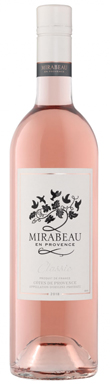
Stephen Cronk describes Classic as ‘a really good representation of a Provence rosé’.
It’s made from a non-prescriptive blend of Grenache, Syrah and Cinsault and is dominated by red fruits. There is less than 1g of residual sugar, as in all three of these wines, but there is an impression of sweetness balanced by acidity and a round palate.
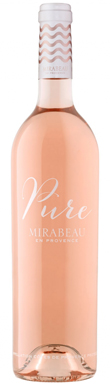
Pure has a different profile. ‘It’s more citrussy with grapefruit flavours and a mineral quality,’ says Stephen. ‘The structure makes it a slightly more serious wine and for people who are used to drinking Provence rosés. It’s more linear with backbone on the palate.’
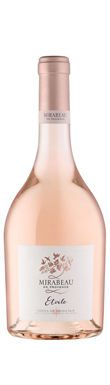
Etoile is made in smaller quantities from grapes grown at high altitudes in the Mont Ste-Victoire appellation just south of Aix-en-Provence.
It is always 90% Grenache and 10% Cinsault, with a profile that Stephen describes as ‘stone fruits on the nose, peach and apricot, with a minerality and concentration that makes it more of a gastronomic wine’.
Sourcing the right base wines
Apart from Etoile, Mirabeau wines are made to a certain ‘taste and quality profile’ as opposed to a particular blend, according to the team. It sources the base wines that have the required flavour profiles.
‘Our approach is to taste as widely as possible’ says Jeany. The team believes its efforts to establish and nurture strong relationships with the region’s growers have helped in this regard.
‘We have an enormous panel of wines to buy from, which is a huge advantage,’ says Jeany. ‘Because Nathalie has the style of each of our three core wines effectively in her head as a profile, we progressively select what will go into the final blend.
‘Even in times of extreme shortage we’ve been privileged enough to get some great wines to work with.’
Consistency between vintages
This access to quality grapes from the 2,000ha of prime Côtes de Provence vineyards also allows Mirabeau to more easily blend-out vintage variation.
‘The négociant model really allows us to pick the best wines from the best sellers to create that consistent style our consumers recognise.
‘We know consumers who like Pure and want it to be the same every year and we acknowledge that. We work all year long to have those relationships with growers and become their key partner – it’s a transparent and symbiotic model.’
Once selected, the base wines will be blended and bottled throughout the year. It’s almost a bottled-to-order system, with the couple ‘drawing the wines down as and when they need them’.
They have found that this offers more flexibility, particularly given the demands of labelling and marketing wines in different countries and for different customers, from exclusive supermarket labels to Hebrew back labels.
Other wines in the range
Several new wines have been launched on top of the core range, some as fun experiments and others in a nod to consumer preferences and environmental considerations.
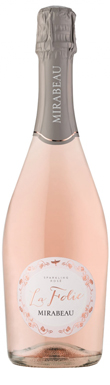
For example, there is a sparkling rose called La Folie, comprised this year of Cinsault, Syrah, Grenache and Collombard.
It was launched four years ago and is made using the Charmat Method – the process commonly found in Prosecco – to deliver freshness, fruit flavours and sparkle at an affordable price.
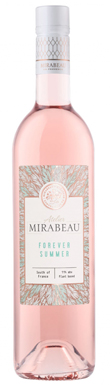
Forever Summer was born with the trend for lower alcohol wines in mind.
Reverse osmosis has reduced the alcohol level from 13% to 11% abv. The original goal was somewhere nearer to 9%, but the couple found that cutting abv by more than 2% had too much impact on the wine’s structure.
This bottling, available exclusively at UK supermarket Sainsburys as of two years ago, is also labelled as ‘plant based’, because it is sourced from growers who use vegan winemaking techniques.
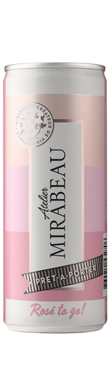
The range also includes Mirabeau’s ‘Prêt-à-Porter Canettes Rosé to Go!’; rosé in a can that Jeany describes as having ‘so many positives’, not least at picnics and festivals.
It started as a special project with Whole Foods in the US, labelled as a Vin de France made from Grenache, Cinsault and Syrah. However, amid the rising popularity of both canned wine and rosé, the wine is now widely stocked.
‘It just talked to me as a consumer, but we didn’t want to fall into the trap of not putting nice wine in there,’ Jeany says.
Rosé Gin
Not content solely with wine production, there’s even a Mirabeau Rosé gin.
It uses 100% neutral grape spirit, from the alcohol extracted during the creation of Forever Summer, and a host of local botanicals. Alongside juniper berries, these include coriander seeds, orris and angelica root, Citron de Menton peel and zest, rosemary, thyme, bay leaves, lavender, Rose de Mai petals and jasmine.
Domaine wine on the horizon
Based in Notre-Dame des Anges, which became the fifth official sub-region of Côte de Provence last year, the Mirabeau team now has the creation of their own ‘domaine‘ wine in mind.
They will begin experimenting for the first time later this year, using Mirabeau’s 14 hectares of vineyards. It comprises principally Grenache, Cinsault and Rolle, which is also known as Vermentino.
‘We’ve got a broad range and all our products need our attention, so we’re not going to bring a new wine out for the sake of it,’ say the couple.
‘We don’t know when we’ll have a wine that’s good enough because it’ll have to be different. We want to take our time and experiment technically and find something that’s really small batch.’
Promoting biodiversity
The pair said they were committed to environmentally-responsible viticulture and wanted to intervene as little as possible in the vineyard.
‘It’s a survival essential,’ says Stephen, who believes strongly in the idea of regenerative farming; this involves encouraging biodiversity that will then renourish the soil and help build resilience to erosion and drought. It is hoped that limited ploughing will encourage vines to store more CO2 in the soil.
Inspired by Oregon winemaker, botanist and ecologist Mimi Casteel, Stephen aims to ‘take organic to the next level’ and to ‘see whether we can move away from a mono-culture to a biodiverse vineyard and still make good wine’.
He adds, ‘Where we can move the dial on an environmental front, we do.’ Like many among a new generation of winemakers, as well as long-time opponents of pesticides and herbicides, he says that years of using sprays and treating across the wine world was ‘all completely wrong’.
The Mirabeau estate doesn’t use any harmful pesticides, preferring natural compost and manure on the vines.
The pair have also set an ambitious goal to reduce their carbon footprint by aiming to become plastic-free, and minimise the use of energy, water and raw materials.
See Mirabeau’s wine tasting notes and scores
You may also like
15 great value rosé choicesTaste like a pro: 12 classic French wines to test your skillsThe red behind Moët & Chandon rosé
Mirabeau, La Folie, Vin de France, France
89
A delicate, very pale pink sparkling made in the Charmat Method (the same as Prosecco) to retain a beautiful fresh flavour of strawberries and raspberries alongside zesty lemon and lime. Made from Cinsault, Syrah, Grenache and Colombard grown in northern Provence and the Luberon, it has crisp acidity and a satisfyingly long finish. A great aperitif wine.
MirabeauVin de France
Mirabeau, Pure, Côtes de Provence, Provence, France, 2019
91
A wonderful floral nose bursting with elderflower, peach and citrus. On the palate it’s juicy and full of summer berries with hints of grapefruit and underlying minerality. A blend of 60% Grenache and 40% Syrah, it's structured with a lovely soft texture, mouthwatering liveliness and is very Provençal in style. Easy to drink and easy to recommend. Vegan.
2019
MirabeauCôtes de Provence
Mirabeau, Etoile, Côtes de Provence, Provence, France, 2019
91
A fruit-forward nose with soft, green apple and pear notes coming through alongside lemon and ripe apricot. It’s definitely a different style to the Pure and Classic wines in Mirabeu's range, with a tangy acidity giving freshness and energy, plus a focus on stone fruit and crunchy citrus flavours. This limited-edition bottling was designed to be more of a gastronomic wine with a dominance of 90% Grenache and 10% Syrah – the same blend each year. From grapes grown in the higher altitde vineyards around Montagne Ste-Victoire, southeast of Aix-en-Provence.
2019
MirabeauCôtes de Provence
Mirabeau, Classic, Côtes de Provence, Provence, France, 2019
90
An expressive nose of berry notes that, on the palate, transforms into succulent and juicy red cherries, raspberries and strawberries. The palate offers a light creaminess and silky texture with a round, crisp finish. Made from 60% Grenache, 25% Syrah and 15% Cinsault, it has complexity and drive, delivering great quality and value.
2019
MirabeauCôtes de Provence
Mirabeau, Forever Summer, Méditerranée IGP, France, 2019
89
This is aptly named, tasting like a summer dessert, full of succulent strawberries and delicate cream flavours. It’s refreshing and highly drinkable with hints of citrus on the palate and a subtle spicy edge on the finish. Forever Summer is the first lower alcohol wine in Mirabeau's range, having had the alcohol content reduced by 2% from 13% to 11% abv using reverse osmosis. It’s comprised of 50% Grenache, 30% Syrah, 15% Carignan and 5% Caladoc, which is a cross between Grenache and Malbec that has a lower alcohol content than Grenache, but has a similar flavour profile found in Provençal rosés. Suitable for vegans.
2019
MirabeauMéditerranée IGP
Mirabeau, Prêt-à-Porter Canettes Rosé to Go!, Méditerranée IGP, Southwest France, France
88
Quite deep in colour for a Provence rosé, this blend of 60% Grenache and 40% Syrah offers a generosity of strawberry and peach fruit. It's a dry wine (less than 1g/L residual sugar), but it has a sweetness of fruit to it and good acidity to keep it fresh. A crowd-pleasing style.
MirabeauMéditerranée IGP