Canadian wine finds a silver lining in the strained relationship with ‘America first’
Tumultuous cross-border relations have pushed Canadian consumers to rally for homegrown vintners. Canada’s still-blooming wine region is receiving a major boost on the back of American boycotts, Toronto-based Kate Dingwall reports for Decanter.

To the average Canadian wine consumer – the ones who are tasked with simply drinking and enjoying wine – local wine is still a cottage industry. It’s cute.
Wineries in Niagara, Prince Edward County and Vancouver Island are vacation destinations. Their bottles are gifts for visiting friends.
Winemakers and sommeliers will argue otherwise – Canada makes incredible cool-climate Chardonnay, Pinot Noir, and Merlot, though it’s taken some hard work and hand-selling to convince consumers.
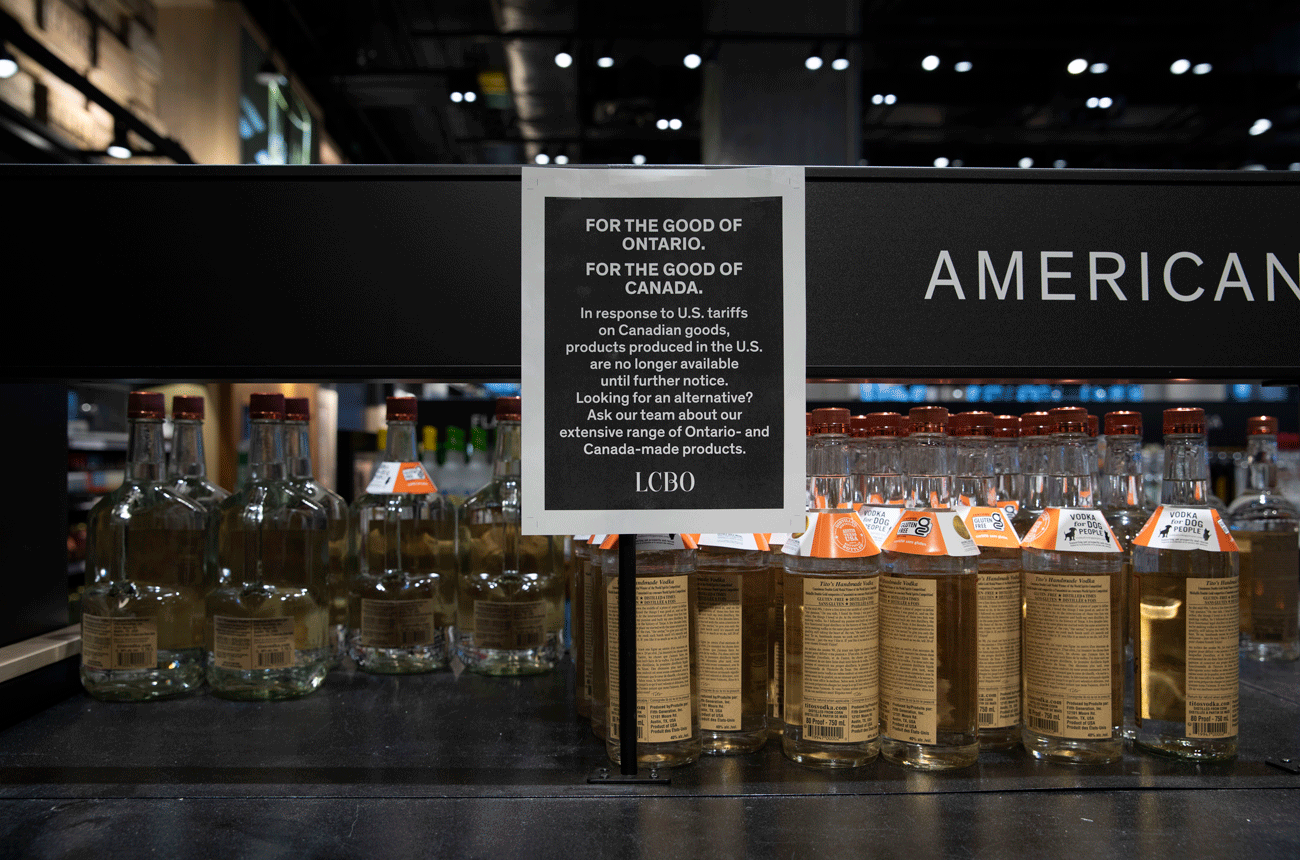
That’s changing, and rather unexpectedly. Last March, Canadian provinces and territories removed and disallowed the further sale of California Cabernet, bourbon, and other all-American products as a protest against President Trump’s tariffs.
While this started as a patriotism-fueled pivot, it’s become a major moment for the budding and now blooming Canadian wine industry.
Filling the American gap
A big part of the sales jump is necessity. Up until 2025, Canada was the largest market for American wine. Losing American wine has left gaps in both volume and style.
Last December, Taylor Emerson released a pallet of his 2022 Black Bank Hill Cabernet Sauvignon. ‘It certainly proved the pent-up demand for the varietal. We’ve had record sales, and went through 64% of the inventory in two weeks,’ he said.
‘There’s been a huge increase in our Chardonnay and Pinot Noir sales because we are aligned with what California does,’ finds Thomas Pennachetti of Cave Spring Winery in Niagara. ‘We were seeing increases prior to this, but this moment really turbocharged it.’
Ilya and Nadia Senchuk, owners of Niagara’s Leaning Post, went from selling 380 cases a year in Ontario stores to 3,000. ‘We saw everyone from local restaurants to hotel chains – people who had American Chardonnay locked in on their menu – say, oh my god, I need an oaked Chardonnay,’ Nadia says. ‘We have one.’
These sales weren’t without trying. When boycotts came into effect, Nadia personally visited 175 LCBOs. ‘I got listed in near every single one of them,’ she says. ‘When this once-in-a-lifetime opportunity hits, you take it.’
These sentiments are even coming from outside the borders. Leaning Post was picked up by American distributors.
‘Our importer said, this is the best time – Americans have never heard the word Canada more than they have in the last few months,’ says Nadia. Most of the wine sold out on pre-order.
Team Canada
The rest of the demand was driven by an urgent sense of patriotism.
Movements like ‘Canada Strong’ and ‘Elbows Up’ (a hockey term, naturally) have become rallying cries for Canadians. Choosing Ontario Chardonnay over Oregon, and the Okanagan over California, has become an act of resistance, of patriotism.
‘Every time Trump puts an American flag on Canada, it hinders California wine sales here,’ says Henry of Pelham’s Paul Speck.
‘Every time the US government attacks Canada, we get more bookings, either from Europeans who want to support Canada or locals who don’t go to the US anymore,’ says sommelier David McBean.
He’s always had an all-Canadian list at Watermark Beach Resort in the Okanagan. It’s never been so appreciated. ‘We’ve had people who come in and buy cases as a way to stick it to the US,’ he says. ‘
Matthew Jacobson, head sommelier at Vancouver’s Fairmont Pacific Rim, removed American wine by the glass when tariffs went into place. ‘I doubled down and went heavier into my Canadian programme.’
‘It’s not just us making lists and forcing Canadian wines down people’s throats – we have people coming up from the States and apologising, pour me something Canadian.’
That said, he does have bottles of Napa Cabernet tucked away for guests with cravings – he is in the hospitality business.
‘But those are people who only drink what they know – it’s the same kind of person who goes to France and only eats at McDonald’s,’ he jokes.
Shaking off prior stigmas
It’s not that Canadian wine didn’t sell prior to the tariffs. It did, but it was just considered secondary to international imports – a sweet idea, but not serious.
‘Even for Canadians, BC wine has been stigmatised,’ says Jacobson. ‘People would come up from Washington and say – You make wine here?’
Jonathan Bauer, owner of Bar Allegro and Bar Pompette in Toronto, has always had Canadian wine on the menu. But prior to 2025, guests rarely ordered locally.
‘It was always a hard sell,’ says Bauer. ‘If it was ordered, it was by people from outside the country – European customers who want to try wine from Canada.’
‘People used to say, oh I don’t drink Canadian wine,’ says Christian Hamel, beverage director at the glitzy Toronto steakhouse Harbour Sixty. ‘It’s still a hand sell, but people are more receptive.’ To help him sell, he’s had Canadian producers open up their cellars, offering back vintages and rare bottles to fill the Cali gap.
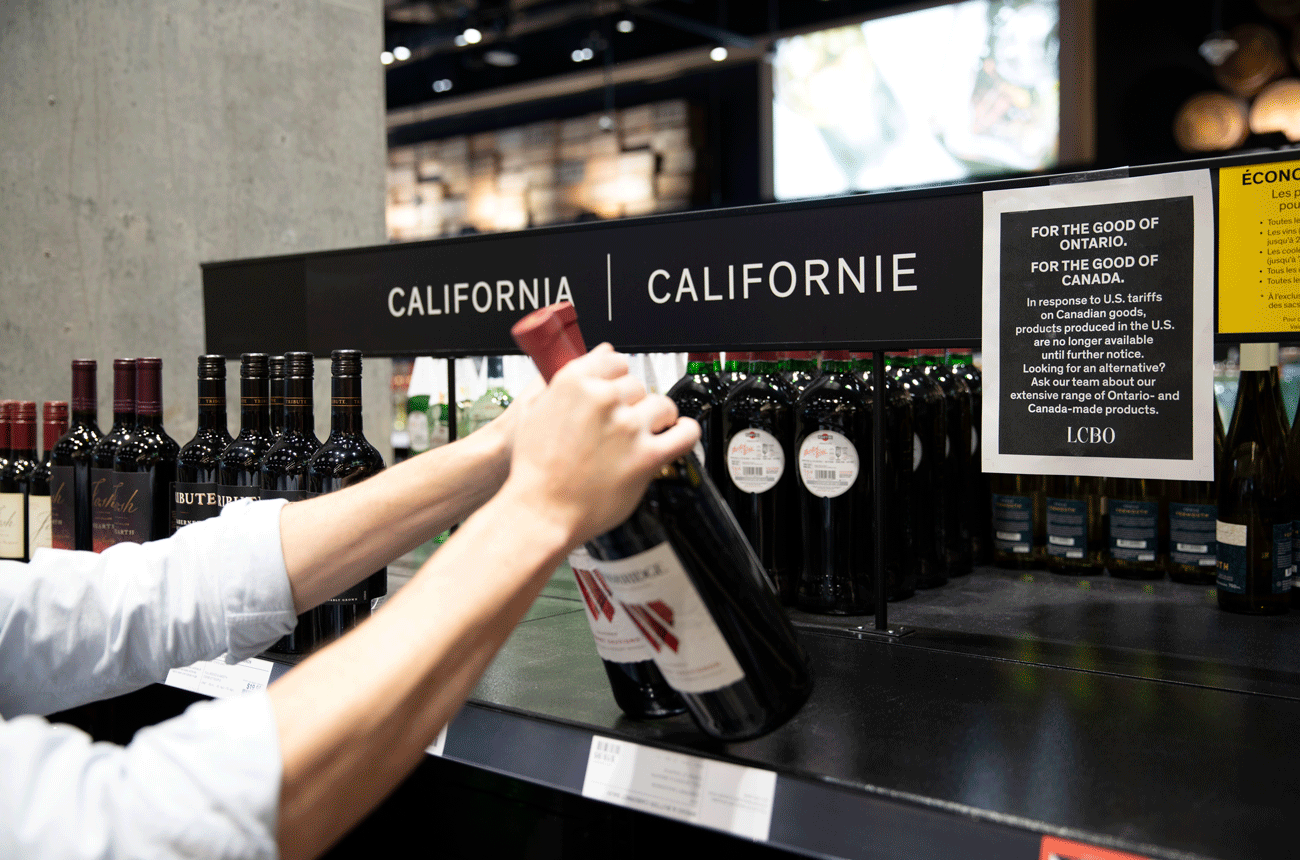
A clerk removes California wines off the shelf in Ontario.
Indoctrinating new drinkers
So Canadian wine has been selling. More drinkers than ever are choosing Canadian wines. The industry is booming even as global wine sales have slumped.
‘It’s a phenomenal opportunity,’ says Speck. ‘Vineyards are being planted. Wineries are investing in their business with capital equipment. We’re hiring. We’re helping growers plant so we can keep up with demand.’
But American wines will return eventually. What will happen to Canada’s newfound momentum?
Firstly, Canadians need to sort out some internal struggles. Canada’s tiered, heavily regulated, and archaic distribution system doesn’t allow wine to flow freely across the country.
In Ontario, it’s difficult and costly to purchase wines from British Columbia and vice versa. Canadian wines crossing state lines are taxed as international imports.
‘It’s harder to buy wine from Quebec or British Columbia than it is from France or Spain,’ says Bauer. ‘It’s a really strong opportunity to change that.’
But the groundwork is there. Canadian wines, from coast to coast, have only ascended in quality over the last few years. Regions have formed strong identities—producers aren’t trying to make facsimiles of other wines, they’re trying to showcase the terroir of Niagara, Prince Edward County, Okanagan, Nova Scotia, and Victoria. Drinkers are getting it now.
‘With the reduced availability of US wines, Canadian regions are stepping into the spotlight and sparking deeper conversations around site, seasonal challenges, and the influence of climate change, which is driving boldness and renewed elegance,’ says Henri Phrabawa, head sommelier at Riley’s in Toronto.
While Ontario Pinot Noir is different from Oregon, ‘I think people’s palates are changing to embrace that,’ Pennachetti says. ‘If it wasn’t for this nationalist curve, I’m not sure that would’ve happened, at least not as quickly.’
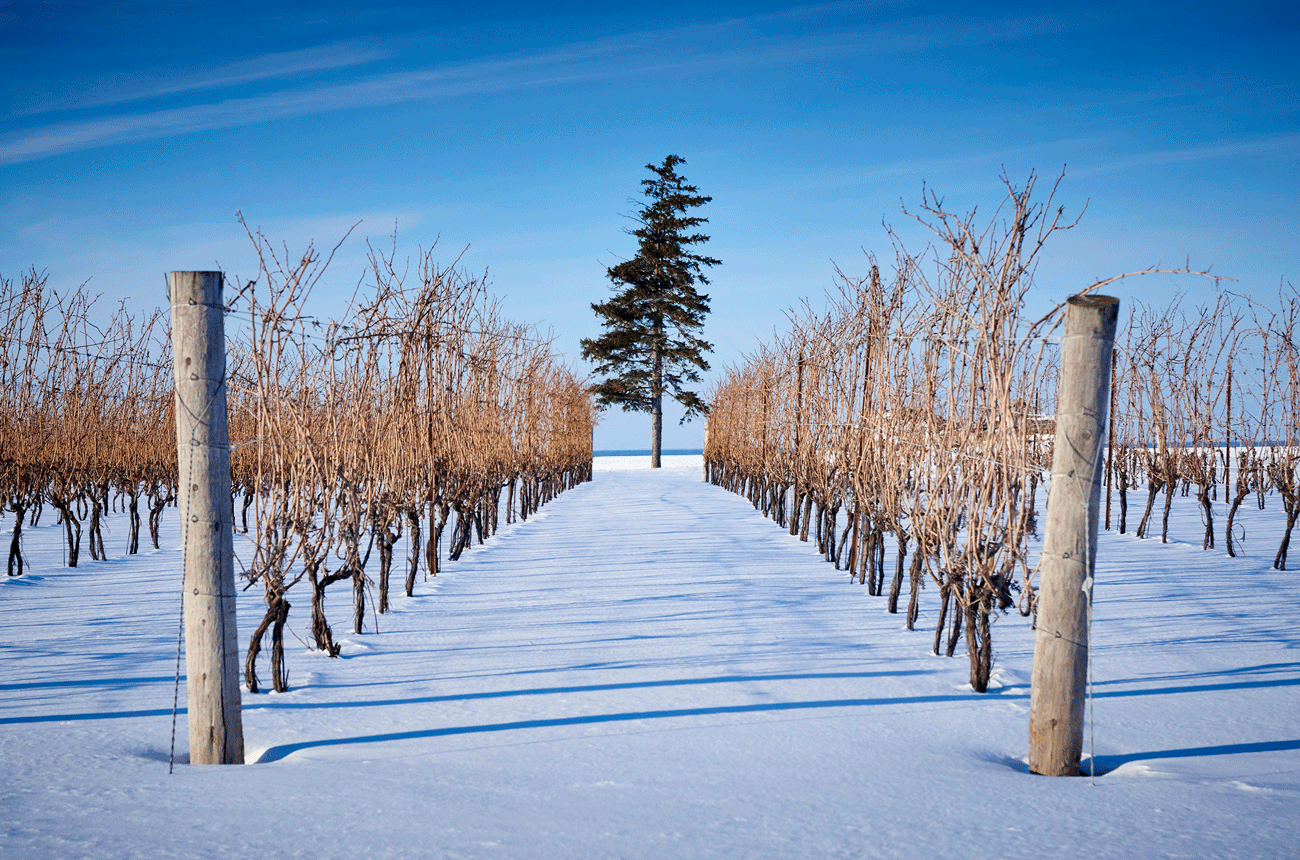
Will Canadian wine keep its momentum when Napa, Washington, and Oregon return?
‘We don’t know what will change when American wines come back,’ says Speck. He’s been training tasting room staff to match California drinkers’ tastes with their wines. ‘What we do know is that Henry of Pelham is in the shopping baskets of a whole lot more people who didn’t drink them before.’
‘Our sales are still growing at a crazy rate,’ he continues. ‘I feel like we’re getting to a tipping point for Canadian wine.’
‘It won’t go back to what it was,’ says Ilya Senchuk. ‘American producers are going to have to win back Canadian consumers. If it had only been a couple of months and it was all pantomime, it would be different. But it’s been a year.’
‘We believe the long-term shift is real,’ says VJ Gandhi, a California exporter of Canadian wines. She expected even her sales to drop, but they remain strong.
‘There has historically been a stigma that Canadian wine could not compete with California or Europe. That perception is finally changing. Once people taste these wines, they realise how expressive, balanced, and world-class they are; they keep buying them.’
Related articles

Which is the best American cool-climate Pinot Noir – Oregon or the Sonoma Coast?
Hybrids in Canada: Adapting to a warming world

Ontario: The evolution of Riesling on the shores of the Great Lakes
