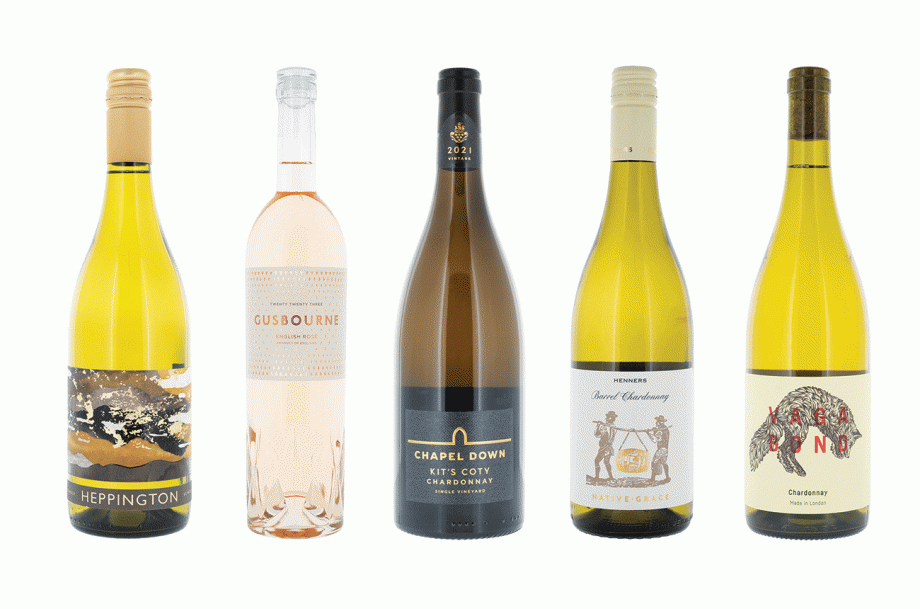
English still wines – any good? The ultimate guide to choosing your first bottle
Our English wine experts share their top tips on grapes, regions and vintages when choosing your first bottle of English still wine.


When speaking of wines from England, vibrant and increasingly sophisticated sparkling wines may spring to mind first. But what about English still wines?
In recent years, partly benefiting from a warming climate, English still wines have shown clear potential. As a previous Decanter Panel Tasting demonstrated, 30 out of 64 wines tasted achieved 90 points or above.
With many producers reporting a splendid 2025 vintage, the timing couldn’t be better to explore English still wines. What should you look for when picking your first bottle?
We’ve asked our experts for their top tips – find a quick cheat sheet below, and read on for further explanation.
The cheat sheet: choosing your first English still wine
Go-to region: Crouch Valley (Essex)
Go-to grapes: Chardonnay (reliable quality), Pinot Noir (best from top regions and producers) and Bacchus (many easy-drinking options)
Top recent vintages: 2025, 2023, 2022, 2021, 2018
Price points: £15+ (easy entry), £30+ (for a more impressive bottle)
Producers to look out for (click to visit their official sites):
- Crouch Valley (Essex): Danbury Ridge, Marbury Wines (Jackson Family Wines), Riverview Crouch Valley, Missing Gate, The Heretics
- Kent: Chapel Down, Simpsons’ Wine Estate, Gusbourne, Balfour Winery, Yotes Court, Heppington
- Sussex: Sugrue South Downs, Henners
- Norfolk: Burn Valley Vineyard, Winbirri Vineyard
- Cornwall: Camel Valley
- Shropshire: Hencote
- Winemakers to watch: Blackbook Winery, Renegade, Vagabond, Litmus Wines, Gutter & Stars
Discovery options:
Grapes: Albariño, Ortega, Solaris and Gamay (rosé)
Natural wine avant-gardists: Offbeat Wines, Sophie Evans
The quality and value verdict… for now
‘We’ve been in business for seven years now, and for all that time, around two-thirds of our range has been still English wines. We wouldn’t have survived if they weren’t good,’ says Matt Hodgson, founder of English and Welsh wine specialist merchant Grape Britannia.
And more consumers are drinking them. As Dror Nativ MW, senior wine buyer at Marks & Spencer, puts it: ‘We have six still wines from England, and it’s quite a fast-growing category in terms of volume.’
But just how good are they – especially when value and global benchmarks are taken into account?
‘If you try to get English wines to compete with Grand Cru Burgundy, that’s not going to work,’ says wine writer and broadcaster Susie Barrie MW, who chaired Decanter Panel Tastings on English and Welsh wines for three consecutive years. ‘If you try to go to entry level, that’s not the sweet spot either.’
‘I think the sweet spot is right in the middle – where they’re competing with high-end New Zealand or Australian still wines.’

(From left to right) Dror Nativ MW, Susie Barrie MW and Matt Hodgson in the Decanter tasting suite for the 'NV sparkling wines from the UK' panel tasting, upcoming in the June 2026 issue.
The stellar grapes
The experts point to £15 and above as the ‘entry-level’ price for English still wines – and if you enjoy a fresh, aromatic New World Sauvignon Blanc, Bacchus is usually an affordable, easy-drinking option.
‘Our bestselling white is Bacchus,’ says Nativ, highlighting a Bacchus from Lyme Bay in Devon (£15, M&S). ‘We do have other varieties, but it seems the Sauvignon Blanc-like aroma, acidity and character really appeal to customers.’
But for a bottle that truly impresses, ‘you’ve got to be paying about £30 to really get the best from England,’ notes Barrie.
From both a value and reliability standpoint, Chardonnay is the grape of choice, according to our experts.
‘On average, the quality of English Chardonnay is really high across the board and moving into the territory of good value,’ says Hodgson.
For Pinot Noir, results are more mixed, largely due to the climatic challenges of disease pressure and achieving perfect ripeness, according to Charlie Holland, winemaker of Jackson Family Wines’ Marbury Wines project in Crouch Valley, Essex and former CEO of Kentish estate Gusbourne.
‘It’s a difficult grape to grow in England, but if you get it right, it’s amazing.’
Crouch Valley on the rise
Crouch Valley, located in south-east Essex along the River Crouch estuary, is one of the places where value and quality meet for English still wines, says Barrie.
'Among the warmest and driest parts of England, the region’s signature London clay soils retain water in dry spells and become less permeable in wet conditions, Holland explains.'
Lower disease pressure, combined with low yields (around 1-2 tonnes per acre, or 18-35hl/ha), means vineyards can regularly pick healthy, concentrated and fully ripe grapes, many destined for quality still wines.
'That was the case even in 2024 – when many other English regions reported difficult growing conditions,' adds the winemaker.

Jackson Family Wines’ vineyard for the Marbury Wines project in Crouch Valley, Essex.
Does vintage matter?
The short answer is yes – and more so for still wines than sparkling wines in England, says Hodgson.
‘Typically, you want the hotter vintages. But counterintuitively, with Bacchus, over the past few years we’ve found a lot of quite green and unappetising examples in a warm vintage such as 2022, whereas the 2021 and 2023 vintages are actually much fresher.’
This may be because Bacchus drops its acidity very quickly, he adds. ‘As a result, many producers picked early to preserve freshness, but the wines didn’t always achieve full phenolic ripeness.’
Yields have an impact, too, says Barrie.
‘Take 2018 – the yields were actually too high. It worked for sparkling, which can handle higher yields, but many of the still wines from that year ended up a little thin.’
An ideal vintage for still wine would be ‘a warm vintage that’s also relatively small’, she explains, and it depends on the variety: ‘Bacchus doesn’t really want a very warm year, whereas Chardonnay and, especially, Pinot Noir benefit from a bit more warmth.’
With the soon-to-be-released 2025 vintage widely tipped as outstanding, it’s one to watch, said the experts.

Gusbourne produces a single-vineyard still Chardonnay from its Boot Hill vineyard in Kent.
It’s only the beginning
However, it’s still early days to define a signature grape or style, agree the experts.
‘The English still wine industry is still in its infancy, even more so than the sparkling wine sector. It’s only in the last decade that it has started to find its feet, and Pinot Noir and Chardonnay were obvious candidates,’ says Hodgson.
‘Producers are still experimenting and discovering which other varieties might work in the UK. It’s far too early to say that the future is just about Chardonnay and Pinot Noir.’
Experimental bottlings are already being made from Albariño, Sauvignon Blanc, Ortega, Solaris and Gamay, alongside a new wave of PIWI grapes (fungus-resistant hybrids), many of which show genuine promise.
Part of this innovative drive, powered by a younger generation of winemakers and fewer regulatory constraints compared to classic regions, has also given rise to distinctive styles such as white Pinot Noir and Dermot Sugrue’s ‘Bonkers’ – a flor-aged, multi-vintage Chardonnay blend, the experts add.
'Still rosé is another area of potential growth,' says Barrie.
‘I don’t think the UK has quite cracked rosé yet, but there’s no reason why it can’t. Interestingly, one of the top rosés last year at the WineGB Awards was made from Gamay – a slightly oaked, more premium example – which shows the potential of the style.’
Consistency remains the key issue, but the market is already there, she adds.
‘It’s clearly an area still to be developed, but with so many producers already making rosé as part of their cellar door offering, there’s every reason to think it will improve.’
Any final tips?
‘Don’t penny-pinch,’ is Barrie’s final tip for wine lovers embarking on a journey into the English still wine category. ‘Go for a £30 bottle and choose Chardonnay – treat yourself and go for a name you’ve been recommended.’
Nativ shares the sentiment: ‘There’s a virtuous cycle – the more people buy English still wine, the better the wines will become, as winemakers have the incentive to improve.’
Visiting English vineyards and tasting wines at the cellar door also adds an extra dimension to the experience, adds the MW.
As Hodgson puts it, ‘once you’ve bought and enjoyed that first bottle, there are endless avenues to explore.’
Related articles