Loire vs Marlborough Sauvignon Blanc: Can you tell the difference?
Is it possible to tell where Sauvignon Blanc comes from without looking at the label? A Loire vs Marlborough Sauvignon Blanc blind tasting provided the opportunity to test the tastebuds...


A recent Loire vs Marlborough Sauvignon Blanc masterclass, hosted by Rebecca Gibb MW and Jamie Goode, set out to discover the differences between the two key Sauvignon-producing regions at opposite ends of the world.
Jointly organised by Sopexa, Central Loire Valley Wines, Loire Valley Wines (yes, two different trade bodies represent the Loire!) and New Zealand Wines, the blind tasting of 12 Sauvignon Blancs pitted one Loire and one Marlborough wine against each other in each of the six pairs.
It was a fairly tough tasting, with styles ranging from green and crisp to creamy and oaky, but the wines in five of the pairs were distinct enough to enable correct identification – which will surely be a relief to the terroirists out there.
How to tell the difference
Loire Sauvignon Blanc occupies the green fruit spectrum (think apple, gooseberry and cut grass), and can be floral, steely, zingy, flinty or even slightly peachy, depending on which appellation it comes from.
Marlborough Sauvignon Blanc tends to be more pungent and intensely flavoured, still with green fruit at its core but filled out with riper, tropical fruit flavours.
About Loire Sauvignon
There are around 123,000ha of Sauvignon Blanc planted throughout the world, of which around 10,000ha are in the Loire and 20,600ha in Marlborough.
The Central Loire, where 50% of all Loire Sauvignon Blanc is produced, is mostly composed of chalky marl capped by Portlandian limestone, although Touraine sits on part of the so-called Paris Basin, which is a limestone over clay-flint composition.
Touraine’s reputation for producing lower-priced wines has meant that land has remained attractively cheap, and it is now benefitting from a new wave of young winemakers keen to make names for themselves. Keep an eye on this appellation if you like Sauvignon.
About Marlborough Sauvignon
Marlborough’s free-draining soils are mostly sandy loam over deep gravel. The region experiences more maritime influence than the Sauvignon-producing areas of the Loire, benefitting from cooling sea breezes.
However, the ozone layer is thin over New Zealand, contributing to 40% more UV radiation than is typical at that latitude. This intensity of light, combined with the free-draining soils, requires irrigation in many cases.
Sauvignon Blanc differences – wine by wine:
The wines were blind-tasted in pairs, in the order they appear below.
You may also like:
New Zealand whites: 2018 vintage report
Greywacke: Ten years on
Best Bordeaux dry whites of 2018
Villa Maria, Private Bin Sauvignon Blanc, Marlborough, New Zealand, 2018
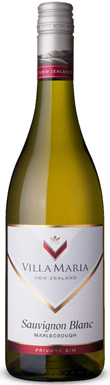

This is quite obviously a Marlborough example: its grassy, green citrussy tones are accompanied by some banana-like notes, tropical hints and a soft, easygoing mouthfeel. It's slightly stony and spritzy, and it turns out to be from one of the most popular brands in the UK.
2018
Villa Maria

Domaine de Renaudie, Sauvignon Blanc, Touraine, Loire, France, 2018
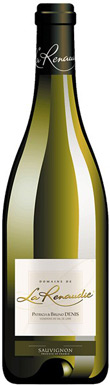
The lean, green saline aromas place this in the Loire. It's a bit reduced with some sweet-edged green fruit on the palate. There's nothing too complex here, which to me reflects what Touraine is all about.
2018
Domaine de RenaudieTouraine
McElhinney, Cause & Effect Barrique Fermented Sauvignon Blanc, Marlborough, New Zealand, 2017
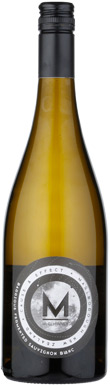
The aromas of this wine display reduced struck-match, smoky, sulphurous scents with some soft tangerine beneath. It has a mineral touch on the dry finish, which is fairly long. It's so atypical of Sauvignon Blanc, completely dominated by the oak, but for fans of big, smoky wines this may be worth a try.
2017
McElhinney
Domaine Benjamin Delobel, Exponentielle Sauvignon Blanc, Touraine, Loire, France, 2017
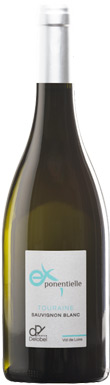
The soft mango scents and peachy, astringent palate with vanilla seeping out on the finish seem so exotic that I thought this was from Marlborough. I was wrong. This is a lovely Touraine, with barrel fermentation lending additional richness without completely masking the Sauvignon's character.
2017
Domaine Benjamin DelobelTouraine
Domaine Denis Jamain, Les Fossiles, Reuilly, Loire, France, 2018
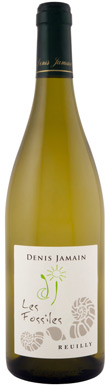
This wine's appley nose with a touch of creamy peach and some steely, tangy dryness alongside a touch of juiciness on the palate is not a million miles away in style from Sancerre or Menetou-Salon - which is precisely what I thought this could be. Correct region at least. This Reuilly punches above its weight.
2018
Domaine Denis JamainReuilly
Brancott Estate, Chosen Rows Sauvignon Blanc, Marlborough, New Zealand, 2010
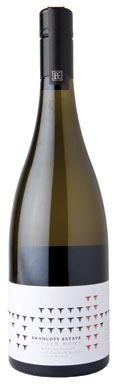
A savoury nose with feijoa and lime aromas and slight trace of mineral. The palate is buttery, with a good weight and a racy acidity that cleans everything. A crisp finish for a wine that will improve with time.
2010
Brancott Estate
Clos Henri, Sauvignon Blanc, Wairau Valley, Marlborough, New Zealand, 2016
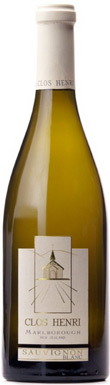
This pairing was a close call, and the room was divided, but the slightly fuller character of intense baked apple and fresh, tangy green apple with a lemon and lime zestiness puts this in the Marlborough camp. It was a surprise to find out that this is from the New Zealand operation of Loire domaine Henri Bourgeois, whose own Sancerre was pitched against it. This is a nice wine but the Sancerre has just a bit more definition, length and purpose.
2016
Clos HenriWairau Valley
Domaine Joel Delaunay, Sauvignon Blanc, Touraine, Loire, France, 2018
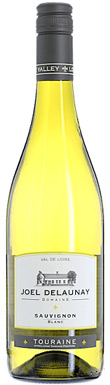
A floral style of Sauvignon, this has a pink grapefruit, lemon and apple character with a touch of soapy bitterness. The lack of exotics and the lean palate place this decent summer-drinking white in the Loire camp.
2018
Domaine Joel DelaunayTouraine
Greywacke, Wild Sauvignon Blanc, Marlborough, New Zealand, 2016
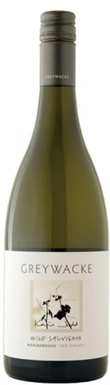
Greywacke (pronounced ‘Greywacky’) is the Marlborough label of Kevin Judd, one of the region’s pioneer winemakers after having directed the first 25 vintages at Cloudy Bay as their founding winemaker. Judd established Greywacke in 2009, named after the greywacke river stones found in the vineyards of much of the Wairau Valley, from which his fruit is sourced. This wine is made via a spontaneous indigenous yeast fermentation in mostly old French oak barrels, with occasional lees stirring. It was transferred out of oak just prior to the following harvest and then left on the lees for a further six months. Rebecca Gibb MW: A highly floral expression on the nose, exuding talc and rose petals, with a more delicate expression on the palate, remaining fine and focused throughout. Very pretty indeed. Roger Jones: A bright, zesty nose welcomes an elegant, seamless palate with restrained fruit, while at the same time offering complex notes of wet stone and guava. Gentle, yet tastes expensive. Phil Tuck MW: Lifted and concentrated with impressive depth, showing a delightful balance between a grassy varietal purity and a subtle oaky complexity. Really well done.
2016
Greywacke
Domaine du Pré Baron, Vieilles Vignes Sauvignon Blanc, Touraine, Loire, France, 2017
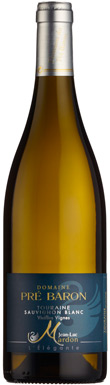
Yet another Touraine, but this time a really exotic example. Dried mango and apricot aromas are followed by a very intense, sweet and floral palate with more dried mango and apricot alongside cream and spices. Although delicious, its straightforward simplicity contrasted with the alcoholic warmth and flavour intensity of Te Mata's Cape Crest to single this out as the Loire example in this pairing.
2017
Domaine du Pré BaronTouraine
Te Mata, Cape Crest Sauvignon Blanc, Hawke's Bay, New Zealand, 2018
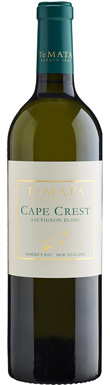
Gently aromatic, soft and supple, offering herbal, honeyed toast and mineral nuances sustained by nicely evened acidity.
2018
Te Mata
