What does America's harsh winter mean for its vineyards?
An intense winter across large parts of the eastern United States has brought renewed focus to one of viticulture’s most unpredictable threats: extreme cold. Gemma Boucher spoke with growers and winemakers throughout the country's eastern wine regions, from Virginia to the Finger Lakes.

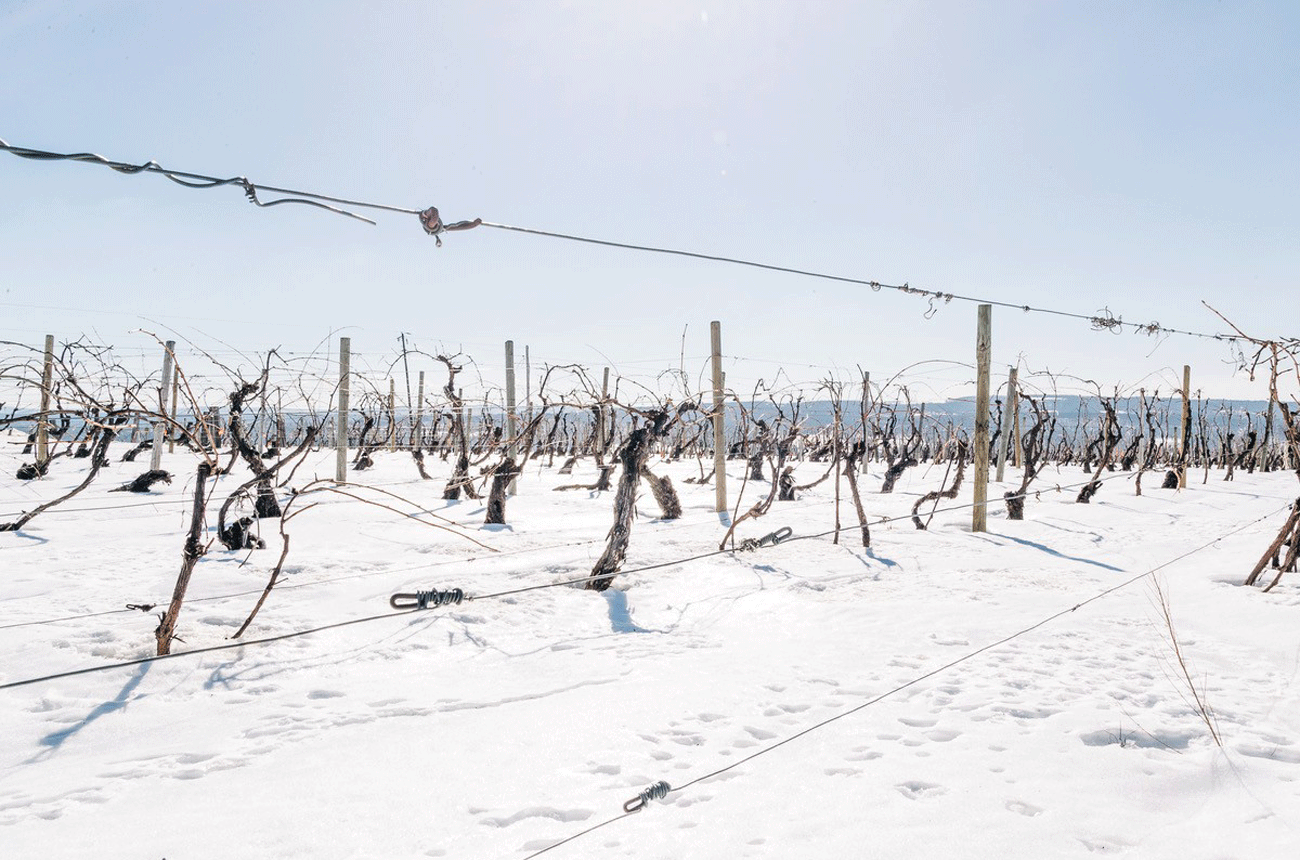
While vineyards from Virginia to the Finger Lakes are no strangers to sub-zero temperatures, recent deep freezes have highlighted both the vulnerability of vines and the increasingly sophisticated strategies growers use to protect them.
Temperatures below -15°C to -20°C can pose serious risks, including bark damage, bud mortality and, in severe cases, vine death. Deep freezes can rupture plant cells, weaken trunks and canes, leaving vines vulnerable to disease such as crown gall.
Dormancy: the vine’s first line of defence
For many growers, the saving grace this winter has been the gradual onset of cold, allowing vines to acclimatise fully before the most severe temperatures arrived.
‘As we entered the winter season in late 2025, we had a gradual decrease in temperature, allowing the grapevines to enter dormancy with ease,’ says Ria D’Aversa, co-owner and vineyard manager at Ria’s Wines in the Finger Lakes, who also lectures in viticulture at Cornell University. ‘Now that we are in mid-February, our vines are deep into dormancy, which helps protect them from the intense freeze that we just went through.’
Dormancy significantly increases a vine’s cold hardiness.
When temperatures fall suddenly before vines have acclimatised, damage can be severe; when the cold arrives gradually, vines are often able to withstand surprisingly low temperatures.
Jim Law, founder of Linden Vineyards in Virginia, has seen this dynamic play out over decades. ‘It has been cold for some time, and the vines are at maximum cold hardiness,’ he says. ‘If this happened in early March, we would be in trouble. Temperature fluctuations are the real problem, especially with young vines.’
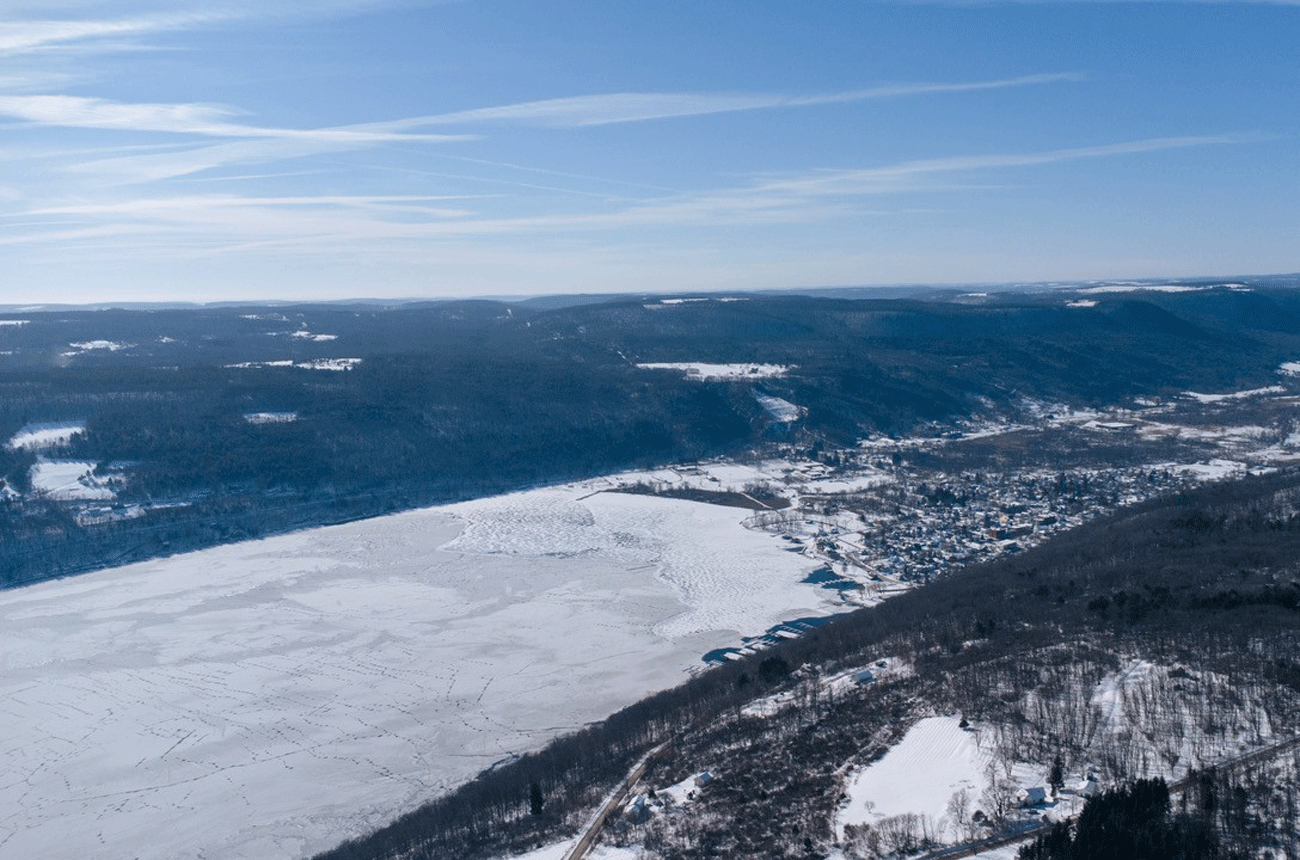
A rare sight, in February 2026, Keuka Lake fully frozen.
Bud mortality and the importance of assessment
Even when vines survive, growers may face significant bud loss, reducing yields or forcing changes in pruning.
‘We have had -5°F (-20°C) reading, here at our vineyard,’ says Richard Rainey, managing partner at Forge Cellars in New York State. ‘Generally at -10°F (-23°C) we get concerned and can experience bud mortality, which differs upon site.’
Bud analysis is now a routine response to extreme cold.
Growers dissect dormant buds to determine how many remain viable and adjust pruning accordingly. Rainey explains that his team typically leaves an extra ‘insurance cane’ during pruning, which can compensate for bud loss. Once budbreak begins, the surplus wood is removed.
At Buttonwood Grove and Six Eighty Cellars in the Finger Lakes, owner Dave Pittard is preparing for a similar scenario. ‘I would expect to see some bud damage, hopefully only in the 20–30% range. That should allow us to adjust our pruning practices and allow for typical production planning,’ he says. ‘Any colder at all and we would expect to see things like split trunks and death.’
Fortunately, grapevines possess a natural safeguard. ‘Often, the primary buds can be damaged,’ says D’Aversa, ‘but grapevines have a security blanket of compound buds. If the primary bud dies, secondary and tertiary buds can still push shoots and grow grape clusters.’
Freeze injury and long-term risks
While bud loss is often manageable, structural damage to trunks and canes can have longer-term consequences.
‘During deep freezes, there is a risk for cane and trunk cracking,’ says D’Aversa. ‘When a crack occurs, it allows possible entry of pathogens like Agrobacterium, which can cause crown gall.’
To mitigate this risk, many growers in cold regions rely on the practice known as ‘hilling up,’ covering the graft union with soil to insulate this vulnerable point.
‘This was a technique adapted by Dr Konstantin Frank many years ago and is still widely used,’ says Rainey. ‘In the spring we ‘hill down’. It also has the added benefit of helping with weed control.’
Some vineyards add further protection by burying young vines with compost or straw, or by selecting more cold-hardy hybrid varieties for exposed sites.
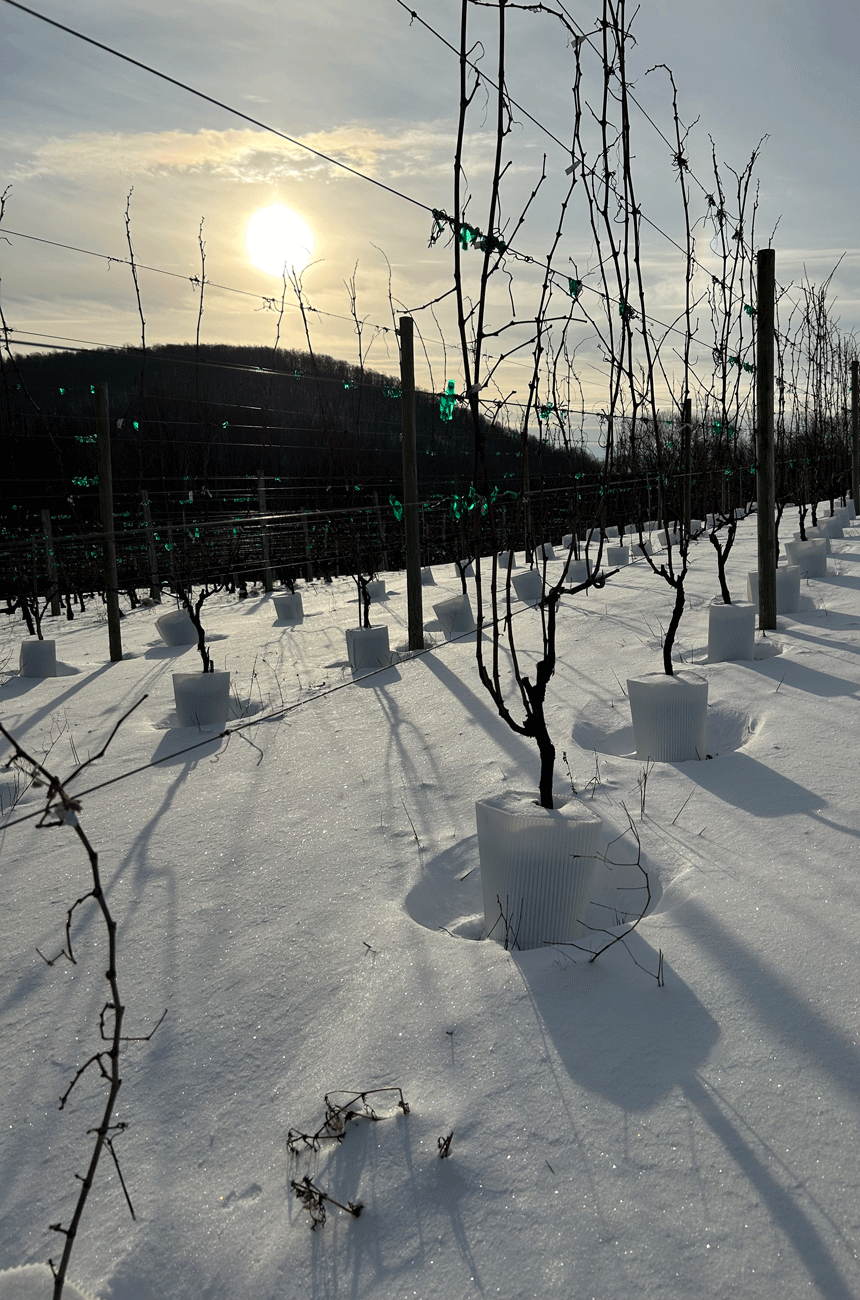
‘Hilled-up’ vines at Linden Vineyards in Virginia, February 2026.
Snow: adversary or ally?
Heavy, wet snow can pose its own challenges, particularly in regions where trellised vines may suffer structural damage. Yet in many eastern vineyards, snowfall has been largely beneficial this winter.
‘We prefer a covering of snow to add extra insulation,’ says D’Aversa. ‘Snow can act as a natural blanket, protecting soils and root systems from deeper freezes.’
Pittard agrees. ‘When we have snow that is deep enough to cover any exposed portion of the graft union, we certainly see a benefit in protection,’ he says.
Snowmelt also plays an important role in replenishing soil moisture ahead of spring, a crucial factor in regions where summer droughts are becoming more frequent.
A shifting perspective on delayed budbreak
One of the more surprising effects of a cold winter is that delayed budbreak can sometimes be welcome.
‘Severe cold can delay budbreak, compressing the growing season,’ says Law, ‘but we welcome a delay for two reasons: avoidance of late spring frost damage and a potentially later harvest.’
This reflects a broader shift in eastern US viticulture. As growing seasons warm and harvest arrives earlier, some producers now welcome later picking dates, allowing grapes to ripen in cooler autumn conditions rather than the heat of late summer.
‘With climate change, our harvests are becoming too early,’ Law adds. ‘Ripening in hot, humid August is not desirable if one wants to make wines with finesse, complexity, longevity and verve.’
Pittard echoes this view, noting that a later budbreak may reduce the risk of damaging spring frosts, which can be more destructive than winter cold.
Data, research and adaptation
Growers increasingly rely on scientific research to guide decisions. Tools developed by Cornell University allow vineyard managers to estimate cold tolerance and predict bud mortality based on temperature data and grape variety.
Such resources are part of a wider trend towards more data-driven vineyard management, enabling growers to respond quickly to extreme weather events.
Despite careful preparation, the true impact of winter cold often remains uncertain until spring.
‘The first thing we will do is assess bud mortality by collecting plant material from each variety,’ says D’Aversa. ‘We hope that there is no damage, but the results will guide how we prune and manage the vines for the coming season.’
For now, growers across the eastern United States wait in measured trepidation, balancing concern with the knowledge that vineyards in these regions have long been shaped by cold winters and resilience.
Related articles

Classified St-Emilion estate begins earliest ever harvest today

Chablis wineries see ‘crazy’ climate and small 2024 harvest

Tickets on sale! Decanter Fine Wine Encounter New York returns to the top of Manhattan
