
Amarone: a buyer’s guide


Opening a bottle of Amarone is always a treat, but it can be hard to know what you’re getting when you buy. Michael Garner explains what lies behind the varied styles on offer, and picks his favourite wines of the moment...
Amarone: a buyer’s guide
It’s rather like indulging a guilty pleasure: that velvety mouthfeel, the head-spinning alcohol, those beguiling sensations of sweetness. Few wines are quite so hedonistic, but that only partly explains a massive surge in popularity recently: Amarone has surprisingly broad appeal. Look below the surface and great examples show uncommon, indeed exquisite, balance and tone beyond the exhilarating aromas and flavours.
‘It’s far easier to make Amarone that’s all about exuberance and power than to aim for elegance and finesse,’ claims Paolo Castagnedi, winemaker at Tenuta Sant’Antonio.Keeping so many balls in the air without losing sight of two key elements – freshness and drinkability – is a remarkable juggling act. In fact, Amarone comes in a wide range of styles: to understand them better, various factors should be examined.
Management of the appassimento process is crucial. The length of drying time is built into the production discipline (the grapes cannot be pressed before 1 December without dispensation from the growers’ consortium), but many producers prefer to wait longer – even well into the new year – when the must is richer in sugars and extract. Others set their sights on making less imposing wines by staying closer to regulation guidelines.
Most Amarone makes use of so-called ‘assisted’ appassimento – often using communal facilities where giant fans and dehumidifiers maintain ideal conditions. Meanwhile the dedicated hillside fruttaio or ‘drying loft’, relies more on the simple expedient of opening and closing large windows to manage air circulation. The cooler temperatures and greater ventilation higher up the slopes are natural advantages and the technical aids remain in the background as emergency back-up.
In both cases, humidity is the arch enemy: the risk of infection by grey rot can put the entire crop at risk. However, a carefully restricted, and rigorously monitored, presence of the pathogen fungus can, a few winemakers argue, play a positive role; its nascent form as muffa nobile (noble rot) brings subtle nuances of aroma and flavour.
‘It’s there in the grapes and we don’t actively discourage it,’ maintains Tiziano Accordini, whose winery, Stefano Accordini, lies high on the western slopes of the Fumane Valley. ‘It gives particular shadings to our Amarone which we rather like.’ The family run Marion estate in Marcellise has a similar point of view, but the issue remains contentious and the vast majority of wineries (Allegrini, for example) take the less ambiguous stance of eliminating any sign of rot, opting for a deeper-coloured, fresher and more structured (less oxidative) style.

Grapes and vines
The quality of the raw materials is paramount, and the choice of training system fundamental. Approximately 80% of vineyards in Valpolicella are planted to the traditional pergola system. This relatively low-density form of training is enjoying a revival in fortunes. Advocates single out two particular benefits. As climate change ushers in warmer and drier growing conditions, the overhanging leaf canopy helps to prevent the ripening fruit from scorching in the often fierce temperatures of recent midsummers. Secondly, the slower ripening process is better suited to conserving the higher acid levels a wine needs for medium-to long-term ageing. The Guyot camp, on the other hand, champions the higher sugar levels and increased concentration of the higher density planting method.
Choice of variety is a simpler issue. The aromas and flavours of Amarone are determined invariably by Corvina – and to a lesser extent Corvinone. Elegance and perfume (especially a telltale note of freshly ground black pepper) are hallmarks of the former, while Corvinone has deeper colour, more tannins and tobacco-like aromas. Some growers talk up the current favourite Oseleta despite the low ratio of solid-to-liquid (skins and pips to must), which makes the variety a less suitable candidate for appassimento. Nonetheless a small proportion introduces deeper shadings and more tannins. Croatina and Teroldego, which are similarly rich in anthocyanins, are sometimes included in small proportions but the effects of all three in terms of smell and taste are minimal.

Site specifics
Location of the vineyard is a defining element. Each of the three geographical zones has its own identity. In broad strokes: Amarone from Classico tends to be the most elegant and aromatic, versions from the Valpantena are generally lighter and fruitier, while the so-called ‘extended’ zone (beyond Classico and Valpantena, bordering on the Soave) tends to produce richer, more muscular wines with a higher alcohol level.
The differences are mainly determined by both geography and topography. To the west, close to Lake Garda, temperatures are cooler but may rise by as much as 4°C towards the area’s eastern limits. The length and steepness of the valleys (which in turn affect microclimate) must also be taken into account as in the case of the long and narrow Valpantena Valley. However, the soil structure throughout the entire Valpolicella area is fairly homogenous and – occasional patches of volcanic terrain aside – based on a mixture of limestones from different periods of the geological timescale mixed with degraded sandstone and clay.
Considerations of microclimate and altitude take on far greater significance as a result. The relevance of the increasingly cooler and fresher growing conditions at higher altitudes (between about 150m and 500m) cannot be overstated: as a rule of thumb, the higher the vineyard, the leaner, more aromatic and structured the wine. Below 150m the wines tend to be fleshier, softer and more approachable: while ultimately perhaps less rewarding, the best examples can be irresistibly opulent and luscious.
My own view of the ‘style according to area’ debate also follows general guidelines including the influence of altitude, microclimate and topography; as ever, the exception proves the rule. For logistical reasons, Amarone is often blended from different vineyard locations as a ‘generic’ wine offering value for money (Masi’s Costasera and Tedeschi, for example); though most of today’s finest examples of Amarone reflect the continuing trend towards site-specific bottlings.
Regional style
In Classico, the wines of Sant’Ambrogio (the western limits) are ripe and sweetly perfumed in the lower-lying vineyards close to the village (Nicolis, Masi’s Vaio Armaron); while in the higher reaches they tend to have more in common with the spicy, aromatic and leaner wines from the western side of the Fumane Valley, where the hillsides are often very steep (Accordini, Scriani, Tedeschi’s La Fabriseria). The gentler slopes of the eastern side of Fumane give balanced, approachable wines that age well (Cà dei Maghi, Speri).
The Marano Valley wines provide some classic examples which show real finesse (Ca’ La Bionda, Novaia, Terre di Leone, Tommasi’s Ca’ Florian). To the east again, the Negrar Valley’s broad range of styles spans the intense and more structured wines from the upper reaches (Masi’s Mazzano, SalvaTerra, Viviani) to softer and fleshier ones further down (Bussola, Guerrieri Rizzardi, Mazzi).
The final municipality borders on Classico’s other four. San Pietro in Cariano is at best the source of excellent, rich and powerful Amarone from lower-lying sites (Begali, Brigaldara, Monte Dall’Ora). Heading east, examples from Valpantena are less demanding and more immediately approachable (Bertani, Cantina Valpantena, La Collina dei Ciliegi, Tezza). Two valleys in particular in eastern Valpolicella show tremendous potential. Wines from Mezzane di Sotto (Corte Sant’Alda, Massimago, Roccolo Grassi, San Cassiano) and the Val d’Illasi (I Campi, Pieropan, Romano Dal Forno) can rival those from Classico and offer an intense, structured character which promises longevity. The area has a recent history of fine wine so other valleys such as Marcellise should not be underestimated.

Oak use
The final piece in the jigsaw is of course what happens in the cellar. Fermentation policies are on the whole governed by the lower temperatures of the winter and spring months (which help to maintain Amarone’s impressively expansive spectrum of aromas and flavours), and two key factors help to define individual house styles. Amarone spends a minimum of two years in wood, though can remain there for up to nine or 10 in rare cases (Quintarelli, Zyme). Barrels vary from French and Slavonian oak through to chestnut, cherry and even acacia. Newer, smaller barrels, usually oak, are commonly used and have a distinct effect on both aroma and texture (mouthfeel) in particular, though there seems to be a return to the more subtle and seasoned notes promoted by larger and older wood. ‘We favour a non-intrusive approach,’ insists Paolo Galli of Le Ragose. ‘Newer, smaller barrels add aroma and flavour; the traditonal botte is relatively neutral.’ Cherry and chestnut barrels are making a comeback but still play a minor role.
Residual sugar is a much more contentious issue – the law allows a wincingly high maximum of 16g/l at 17.5% abv. While no doubt helping to make Amarone more popular recently, higher sugar levels have a negative effect when it comes to matching the wine with food. As a result, numerous wineries are looking to a drier style with less than 5-6g/l for more food-friendly wines. Current annual production figures of some 18m bottles probably require that Amarone finds a place at table: its historical and traditional role as a ‘meditation wine’ was more easily sustainable when production levels were far lower.
Amarone has only commonly been labelled as such since World War II and has come of age over the last 50 years. During this time a hierarchy has emerged. In the UK, which buys around 10%, wineries such as Allegrini, Bertani, Masi, Quintarelli and Romano Dal Forno are standard-bearers. Speri and Tedeschi should be added to that list, but otherwise, my recommendations focus on names which have recently come to the fore.
Best food friendly Amarones to seek out:
Michael Garner is a DWWA Regional co-Chair for Italy and author of Amarone and the Fine Wines of Verona.
Villa Spinosa, Guglielmi di Jago, Amarone della Valpolicella, Classico, Veneto, Italy, 2007
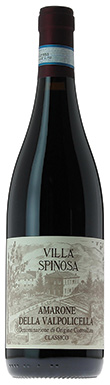

Classic, traditionally styled Amarone that reveals ethereal perfumes of dried fruits and developing tertiary notes, even a hint of incense. Fleshy and earthy on the...
2007
Villa SpinosaAmarone della Valpolicella

Rubinelli Vajol, Amarone della Valpolicella, Classico, Veneto, Italy, 2011
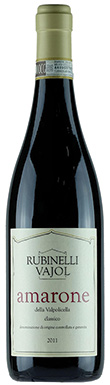
Sleek, stylish and balanced Amarone; scented with great freshness and succulent fruit characters. From southfacing slopes surrounding the winery in San Pietro in Cariano and...
2011
Rubinelli VajolAmarone della Valpolicella
Monte dall'Ora, Stropa, Amarone della Valpolicella, Veneto, Italy, 2009
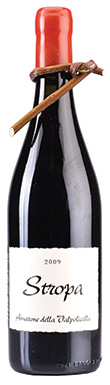
Developed nose of cedar, quinine, black pepper and charred spice. Big, full and luscious palate with Christmas pudding-like flavours. Wonderfully taut acidity leaves the palate...
2009
Monte dall'OraAmarone della Valpolicella
Scriani, Amarone della Valpolicella, Classico, Veneto, Italy, 2013
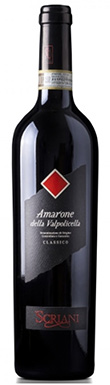
Intense nose of ripe plum, aromatic herbs and tobacco. Fleshy and juicy but reined in by good structure. Beautifully clean and long. Tremendous potential. From...
2013
ScrianiAmarone della Valpolicella
Secondo Marco, Amarone della Valpolicella, Classico, Veneto, Italy, 2011
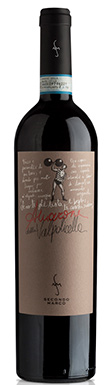
Round and ripe with seasoned oak notes; juicy and balanced, and brimming over with hedgerow fruits. Exceptionally clean and precise; notes of aniseed and tobacco...
2011
Secondo MarcoAmarone della Valpolicella
Viviani, Amarone della Valpolicella, Classico, Veneto, Italy, 2012
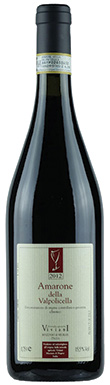
92
Closed as yet, with woody notes over intense, spice-toned fruit aromas. Plush and yet tight still, with understated structure. Tremendous freshness, balance and length with developing candied fruit aromas to finish. A classic example from the higher vineyards of Negrar.
2012
VivianiAmarone della Valpolicella
Ca' La Bionda, Vigneti di Ravazzòl, Amarone della Valpolicella, Classico, Veneto, Italy, 2012
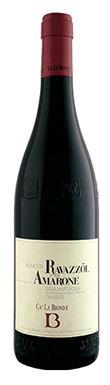
Spicy, earthy nose with a hint of sweet liqourice. Figs and molasses, a perfumed finish of loganberries and black pepper. Excellent example of the balanced,...
2012
Ca' La BiondaAmarone della Valpolicella
Corte Sant'Alda, Valmezzane, Amarone della Valpolicella, Veneto, Italy, 2012
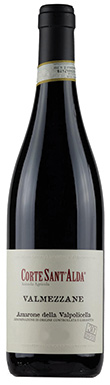
Spicy nose with dried fruit aromas. Lean but deeply flavoured palate with tobacco and black pepper, showing excellent freshness. This is a great food wine...
2012
Corte Sant'AldaAmarone della Valpolicella
Speri, Vigneto Monte Sant'Urbano, Amarone della Valpolicella, Classico, Veneto, Italy, 2012
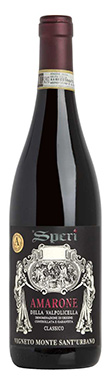
A youthful nose of blackberry, damson and plum fruit, then a fleshy palate with lightly smoky and woody notes; leading to a long, clean, peppery...
2012
SperiAmarone della Valpolicella
Tedeschi, Amarone della Valpolicella, Veneto, Italy, 2013
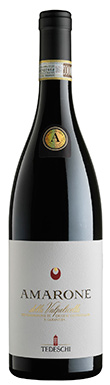
Broad, aromatic and peppery. Intense and fragrant blue and black fruit characters, beautifully balanced with a positive, peppery finish. A fine example of the potential...
2013
TedeschiAmarone della Valpolicella
Tenuta Sant'Antonio, Selezione Antonio Castagnedi, Amarone della Valpolicella, Veneto, Italy, 2012
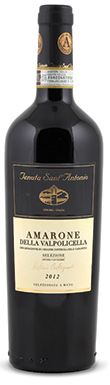
Broad and ripe with notes of molasses, fig, tobacco and pepper. Ripe tannins and fresh acidity rounded out with clever use of oak and residual...
2012
Tenuta Sant'AntonioAmarone della Valpolicella
