
100 years of Pinotage: South Africa’s homegrown grape comes good
Once a maligned grape it was fashionable to scorn, Pinotage today often has its former detractors reaching for another glass.


Anyone tracking the story of South African wine is aware of the winemaking revolution that has swept the Cape over the last decade or more.
After a period when the anticipated ‘breakout’ moment looked like it would never happen, the dam has now well and truly broken.
South Africa’s winemaking scene is one that has been transformed. It is exciting. And it is vibrant.
And caught up in that – though not to much fanfare – has been a grape that celebrated its centenary this year – Pinotage.
Scroll down for seven (mostly South African) Pinotage to try
Obscure beginnings
Pinotage is a man-made crossing of two Vitis vinifera, Pinot Noir and Cinsault. Cinsault was known in South Africa as ‘Hermitage’ – a nod to its southern French roots – creating the portmanteau name ‘Pino-tage’.
The man who brought these two varieties together in 1924 was Abraham Isak Perold, a professor at the University of Stellenbosch.
Taking up a new post, Perold left his new crossings growing in the university garden where they were later rescued by a colleague.
Gradually, the plants were grafted to rootstocks and propagated, with the first vineyard being planted in Myrtle Grove near Sir Lowry’s Pass.
The famous Kanonkop estate had its first Pinotage plantings by 1941, but it is the Lanzerac estate that claims the first commercial bottling of Pinotage – with the grape’s name on the label – in 1959.
Nature vs nurture
Initial outsider reactions to Pinotage were not very positive and subsequent incarnations didn’t do much to help it make friends.
Like all children, Pinotage inherited as many bad traits from its parents as it did good. For example, it is vigorous and likes the heat, but can quickly become too ripe in sugar before it’s physiologically ripe if there are no cooling influences, or if there is no guiding hand to curb this tendency.
It’s a relatively low maintenance variety in the vineyard but very high maintenance in the winery, with an aptitude to develop paint-like aromas and volatile acidity very easily if not properly handled.
But nurture also played its part in Pinotage’s dismal international debut. The late 1990s and early 2000s was the age of big reds, of long hang times, maximum ripeness, maximum extraction and lashings of new oak.
With thick skins, Pinotage was capable of giving a lot of colour and tannins through extraction. Full of sugar, it could achieve very high alcohol.
But if it was picked before it reached full phenolic ripeness, then its tannins and flavours would be green and underripe.
Flabby, alcoholic, overly-tannic, with rampant green flavours, volatile acidity and South Africa’s old problem of smokey, rubbery aromas in red wine arising from virused vine material, made a lot of early Pinotage a potent witch’s brew.
The lost varieties
Pinotage is the classic example of an ‘after-thought grape’, planted in the wrong places, vinified in the wrong way and demonised as a result.
Grenache, Gamay, Bobál, País, Carmenère, are among a host of fellow grape varieties sacrificed on stylistic altars that rendered them cheap, dull and nasty.
Even a grape as hallowed as Chardonnay spent time in the wilderness as a by-word for kitsch, vanilla-flavoured naffness.
But, while these grapes have all been successfully rehabilitated, finding renewed success and acclaim thanks to more sensitive winemaking, Pinotage continues to carry its stigma among many critics.
Reinvention and redemption
There is no denying that criticism of Pinotage was once warranted. But continued criticism is increasingly out of step with the reality of the state of the grape today.
Recent years have seen a complete transformation in how Pinotage is approached from vine to bottle. Old bush vines help to curb its overripeness, and more careful extraction avoids excessive, bitter tannins.
It should be a surprise to no-one that approaching Pinotage more sympathetically, and playing to what it does well, has done wonders for its qualitative output.
And there is a wide spectrum of styles to be explored too. Pinotage can be plummy, structured and full-bodied, and capable of ageing – as a 1994 KWV Pinotage I once tried amply showed.
Many of the classic Cape estates of Stellenbosch, Franschhoek and Paarl lean towards this style; Kanonkop being a prime example.
On the other hand Pinotage can also be bright and succulent, with the kind of sappy, crunchy red fruits and lissom, gouléyant silkiness that all the cool kids yearn for – look out for the likes of Natte Vallej, Scions of Sinai, David & Nadia Sadie etc.
And in-between there’s a growing array of medium to full-bodied that are well made, very drinkable and priced very well. The sort of wines you’d sit alongside your ‘casual’ or ‘BBQ’ choices such as Malbec or Shiraz.
The House of Pinotage
There’s no argument that Pinotage didn’t deserve the early criticism. There are still poor examples being made (as with every grape), though most, I would argue, are just dull or lazily made rather than truly faulty.
And it’s probably not a variety that will ever quite hit the upper levels of refinement and sophistication of the truly noble grape houses. Pinotage is very much a minor cadet of the House of Pinot.
But the notion that it is inherently bad is simply false. Those who’ve taken the time to watch Pinotage’s evolution have been banging this drum for a while as per this Decanter article from 2016.
And it’s telling that, far from being relegated to the realm of a ‘supermarket’ wine, Pinotage from the very best producers are an increasingly common sight in trendy independent merchants and even, on occasion, smart fine wine merchants too.
It may have taken a century or so to get there but Pinotage is coming good.
A Ukrainian anomaly
It would probably be true to say that 99% (and a smidge more) of Pinotage plantings are in South Africa.
Aside from a smattering of vineyards hither and yon around the world, few countries have taken to the variety with any gusto. And after its initial introduction to the world stage, this isn’t particularly surprising.
But it does occasionally crop up in surprising places – and one of those is Ukraine. The Beykush Winery on the shores of the Black Sea has planted some and, honestly, has given it a good crack.
I liked the bright, juicy red berry fruit. It was plump and smoothly pulled together, with fine tannins and good acidity, with perhaps just a touch of bitter astringency on the finish. It even won a Bronze at this year’s Decanter World Wine Awards.
One to watch.
Seven Pinotage to try
Related articles
- Kanonkop’s Abrie Beeslaar: What’s next?
- South African Pinotage: panel tasting results
- Decanter Award-winning Pinotage
Kanonkop, Estate Pinotage, Stellenbosch, South Africa, 2021
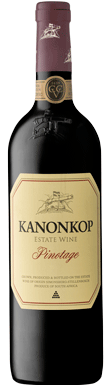

The full whack of rich, dark fruit, dark chocolate – high cocoa content – leather, char and vanilla. Big dollops of black fruit, some warming...
2021
Kanonkop

Chamonix, Greywacke Pinotage, Franschhoek, South Africa, 2020
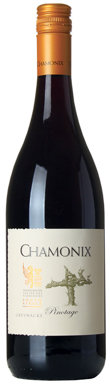
A certain red cherry cola quality on the nose, a mix of fresh and dried fruit on the palate; blackberry, plum and raspberry. A little...
2020
Chamonix
Bruce Jack, Off the Charts Pinotage, Breedekloof, South Africa, 2021
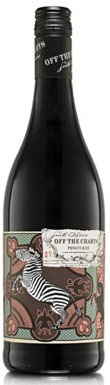
Raspberry, red plum, cherry and a sweet spice note on the nose. On the palate, lovely round, black fruits with a dash of dark sweet...
2021
Bruce Jack
Mhudi, Pinotage, Coastal Region, South Africa, 2020
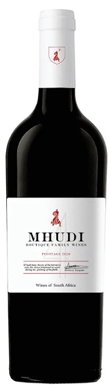
Bright fruit flavours, plum and raspberry, some dark cocoa powder. A real rush of fresh berry fruit on the palate, red velvet cake texture, with...
2020
Mhudi
Angus Paul, Transient Lands, Western Cape, South Africa, 2022
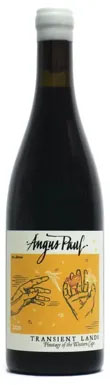
A whiff of red plum and cherry, there's a core of berry compote. A little hint of Band Aid. A medium body with pleasant red...
2022
Angus Paul
Beykush Winery, Odessa, Ukraine, 2023
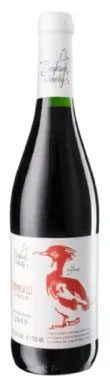
Bright red candy fruit, strawberry and raspberry, with a slightly green/stalky undercurrant. It's jammy but fresh. Knits together nicely on the palate, with a juicy...
2023
Beykush Winery
Warwick Estate, The First Lady Pinotage, Western Cape, South Africa, 2022
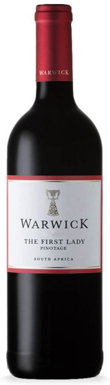
Fresh red fruit on the nose, clean and modern, a little floral. Perfectly well made, very little Pinotage funk, good clean winemaking in the round....
2022
Warwick Estate
