
What’s hot in Adelaide Hills: New styles and wines to try


How changing conditions are allowing producers to develop fresh styles and character in this idyllic corner of South Australia.
The modern Adelaide Hills wine industry began in 1976 when Brian Croser planted Petaluma’s first vines in the Piccadilly Valley, where he still lives and makes wine under the Tapanappa brand.
For a region which is really only 40 years old, the Hills has caught up quickly. Now considered one of Australia’s highest quality wine regions, it’s a beautiful place to visit – richly supplied with quality restaurants, leisure activities and picturesque villages, and just a half-hour drive from Adelaide’s centre.
In the highest, coolest places it resembles a snatch of hilly English countryside, green all year round with grand English trees and lush gardens and hedges. In the lower, warmer parts it is much more Australian, with scrubby land supporting sparser eucalypts and casuarinas.
Scroll down for Hooke’s top 10 wines from the Adelaide Hills, plus producers to know
But it’s the wine not the scenery that increasingly draws visitors here, the Hills specialising in the grape varieties and wine styles that today’s wine drinkers crave.
With a minimum altitude of 300m, peaking at about 500m, it is much cooler and wetter than the long-standing regions to its north and south, such as the Barossa Valley and McLaren Vale.
The cooler conditions mean later harvest dates and more delicate wine styles, suiting cool-climate grapes such as Chardonnay and Pinot Noir (for both table wines and sparkling wines), Sauvignon Blanc, Riesling, Gruner Veltliner and a style of Shiraz which is lighter-bodied and more spicy than, say, the Barossa.
As global warming kicks in, Shiraz – as well as Cabernet Sauvignon, Merlot, Nebbiolo and Tempranillo – can more consistently attain full ripeness here.
The highest and coldest parts of the region, such as the Piccadilly Valley, Ashton, Carey Gully, Lenswood and Lobethal, yield the most delicate, intense Chardonnay and Pinot Noir.
Meanwhile the lower and warmer parts such as Macclesfield and Kersbrook can deliver quite full-bodied reds.
Traditional-method fizz
There are estimated to be 25-30 producers making a traditional-method sparkling wine in the Hills today, a significant increase: the Adelaide Hills Wine Show had 45 sparkling entries in 2017, up from 25 in 2011 and just two in 2005. In 2018 the show will have two sparkling classes for the first time.
These figures reflect the widespread excitement about Hills bubbly. Kate Laurie of Deviation Road says demand for sparkling rosé is especially brisk. She currently sells just 2,500 cases a year across four labels, but is presently increasing her tirage stock.
Laurie’s diminutive operation is dwarfed by the biggie, Petaluma, which produces 70,000 cases a year of its bread-and-butter Croser NV. Its sales were growing at 10% a year until they were forced to cap production to ensure fruit quality and time on lees.
With the focus for high-level bubbly having shifted to Tasmania in recent years, the Hills has found a niche for itself as one of very few mainland places which can produce sparkling wine with finesse. The Hills produces less than 5% of all Australian sparkling wine (across all methods), but is an important contributor at the high-quality end.
Xavier Bizot is a member of the family that owns Bollinger. Together with his wife, Lucy Croser, he runs Terre à Terre, producing Daosa sparkling wines.
He says: ‘Adelaide Hills is one of the very few wine regions in Australia blessed with microclimates ideally suited for the production of quality sparkling wines – made, of course, following the traditional method.’
Fizz biz was begun in 1976 when Brian Croser established Petaluma, identifying the Hills – and specifically the highest, coldest and wettest parts – as being suitable for Chardonnay and Pinot Noir sparkling wine. He persuaded Champagne Bollinger to become involved, and renovated the Bridgewater Mill as a dedicated sparkling wine maturation and disgorging facility, the first Bridgewater Brut being released in 1986.
Time on lees varies from short periods (six to 12 months for Croser NV) to five or six years for the older vintage releases. The oldest is Petaluma’s Croser Late Disgorged, which receives 13 years – the current release is 2004.
Names to know:
- Ashton Hills
- Bird in Hand
- Daosa
- Deviation Road
- Petaluma’s Croser
- Sidewood
- The Lane.
Gruner Veltliner
The Adelaide Hills is the Gruner capital of Australia, with 26 producers. It’s all happened in a flash: the first vines were planted in 2008 and the first wine was Hahndorf Hill Winery’s 2010. There are now at least 17ha of vines spread throughout the region.
The best wines compare well with the drier styles from Austria. They’re not complex, but appetising and fresh, suiting a wide range of foods. In a tasting of Gruners from six non- Austrian countries by an Austrian magazine, two Adelaide Hills wines finished in the top five: Hahndorf Hill’s 2012 in first place and Geoff Hardy’s K1 2012 in fourth.
This gave their confidence a big boost. Cooperation is a critical part of the success formula. The vignerons talk to each other and exchange ideas and experiences, and have established the Gruner Growers Group.
‘On an exploratory trip to Lower Austria, we met with many of the local producers,’ explains Hahndorf Hill’s Larry Jacobs. ‘Each time, I made a point of asking them what the required ingredients were for producing a top-quality Gruner.
Invariably the answer was that one needed the magical combination of warm to hot days and cool nights [ie, a significant diurnal variation during the critical growing/ripening months].
‘That excited me, because Adelaide Hills has this in spades… We’re cool climate not because we have particularly cool days in summer, but because of our cold nights. Plus our soil profiles are remarkably similar.’
Jacobs says Adelaide Hills has by far the biggest area of Gruner of any Australian region; indeed, its hectarage is greater than the rest of the country combined. Pepper, lemon, almond and tobacco aromas are typical of the wines.
Names to know:
- Artwine
- Bird in Hand
- Catlin
- CRFT Wines
- Deviation Road
- Geoff Hardy
- Hahndorf Hill
- Longview
- Nepenthe
- The Pawn
Chardonnay
Grown throughout the Hills, the finest, most complex and most age-worthy Chardonnays come from the coolest, highest places. These include Ashton, Lenswood, Lobethal, Piccadilly, Summertown and Uraidla.
Many of the earliest vineyards in these areas were planted under the aegis of Petaluma, with grapes being used for both table and sparkling wine. Founder Brian Croser kept the jewel in the crown, the Tiers Vineyard, when he exited Petaluma and established Tapanappa.
He now makes three Piccadilly Valley Chardonnays, two of which are sourced entirely from the Tiers Vineyard, the new addition being a wine made from vines close-planted at 1.5m apart in an entirely replanted section of the vineyard. The Tapanappa Tiers Vineyard 2016 was joint winner of the Chardonnay Best in Show award at the 2018 Decanter World Wine Awards.
Shaw & Smith purchased an established Lenswood vineyard in 2012 – which at 500m altitude formerly supplied sparkling wine grapes – and modified the viticulture for table wine. Lenswood Vineyard Chardonnay (first vintage 2014) was an instant success.
Sidewood produces two excellent Chardonnays from its Oakbank vineyard: Mappinga and the Signature Collection Owen’s. The Mappinga 2016 has to date won nine gold medals, mainly at international wine competitions, and three Australian capital city shows. It is a modern Adelaide Hills Chardonnay with a very modest 12.2% alcohol – in the recent past 14%-14.5% was more usual for Australian Chardonnays.
The current trend in the Hills, as elsewhere in Australia, is for cooler vineyard sites, producing grapes with tremendous flavour at lower sugar levels. The wines consequently have less alcohol and good natural acidity, which is often reinforced by blocking the malolactic. These features are neatly coupled with less oak influence, the result of using fewer new barrels and an increasing preference for using larger barrels – commonly puncheons instead of barriques. The Hills is epecially well suited to this refreshing Chardonnay style.
Names to know:
- Bird in Hand
- Geoff Weaver
- Michael Hall
- Murdoch Hill
- Petaluma
- Pike & Joyce
- Shaw & Smith
- Sidewood
- Tapanappa
- The Lane
A number of producers located outside the region source grapes from the Hills and make superb Chardonnay. Key among them: Grosset, Henschke, Mr Riggs, Penfolds, Thistledown, Wirra Wirra, Wolf Blass and Yalumba.
Shiraz/Syrah
Australia offers a wider range of Shiraz styles than any other country. The signature full-bodied style from traditional regions such as the Barossa and Hunter Valleys and McLaren Vale has been augmented since the turn of the century by lighter-weight, finerboned, spicier renditions from cooler regions.
The Hills is one of these regions. The warmer, lower-altitude sections such as Balhannah (such as Shaw & Smith) and Macclesfield (such as Longview) are ideal for growing wines that combine the highly desirable spicy, sometimes slightly peppery aromas and flavours with satisfying richness, body weight and tannin structure. These are sometimes labelled as ‘Syrah’ to differentiate them from the aforementioned heftier styles.
Hand in hand with the rise of Adelaide Hills Shiraz/Syrah is the nationwide trend towards lower alcohol and concomitant higher natural acidity, less tendency to add tannin, and more subtle use of oak. In other words, more natural wines. Whereas in the distant past it may have been difficult to ripen Shiraz adequately every year in some sites, those same sites are now yielding deliciously lush, ripe, medium- to full-bodied Shiraz with personality.
It is telling that Shaw & Smith has replaced Pinot Noir vines from around its winery at Balhannah with Shiraz, the resultant wine now a single-vineyard bottling and one of its best and highest-priced offerings.
Stephen Pannell’s SC Pannell Adelaide Hills Syrah (from an Echunga vineyard at 410m) won him the country’s most lauded wine show trophy, the Jimmy Watson, in 2014. The granitic soils in this locality also help, Shiraz having a well-known affinity for granite. The 2016 vintage of this wine is a harbinger: it included 30% whole bunches in the fermentation, and the wine was mostly matured in large, old French oak vats – not spanking new barriques, as might have been the norm in bygone years. These modern Adelaide Hills Shirazes allow the grape and site to speak more clearly through the wine.
Names to know:
- Bird in Hand
- Geoff Hardy
- Longview
- Murdoch Hill
- Petaluma
- Riposte
- SC Pannell
- Shaw & Smith
- Sidewood
- The Lane
Natural wines in the Basket Range
So-called natural wine is a significant trend in Australia, and the Adelaide Hills has its own pocket of winemakers, some trained, some not, pursuing this passion: to make wine from sustainably grown vines, vinified without intervention, save for a minimal dose of sulphur dioxide – and some not even that.
The back-lane wine bars of Sydney and Melbourne, with wine lists directed by bearded, tattooed or body-pierced sommeliers, promote these wines with fervour. They may be produced in tiny volumes and their sales may be minor economically, but culturally they are one of the biggest trends so far this century, and they appeal to the youngest wine drinkers. The best of them are very good, the worst of them seriously faulty and unappealing.
A community of like-minded alternative winemakers has gathered in a tiny enclave of Adelaide HIlls called the Basket Range. They buy most of their grapes from other growers, as they have few vines of their own. These are generally not wealthy people: their wealth is in their passion and their commitment to the environment and to sustainability.
Some are highly trained: Taras Ochota (Ochota Barrels) and Anton Van Klopper (Lucy Margaux) are university educated in wine; Alex Schulkin (The Other Right) is a scientist at the Australian Wine Research Institute. Gareth Belton (Gentle Folk) and James Erskine (Jauma) have also achieved academically. Their wines are sold very young because they can’t afford to age them – but they’re designed to be delicious young. They are mostly produced in tiny volumes and are not widely distributed. You need to seek them out.
Names to know:
- BK Wines
- Commune of Buttons
- Gentle Folk
- Jauma
- Lucy Margaux
- Ochota Barrels
Ten Adelaide Hills wines to try:
You might also like:
Australian Shiraz: Panel tasting results
Australian Riesling: Panel tasting results
Under the radar: Alternative Australian white wines to try
Daosa, Blanc de Blancs, Piccadilly Valley, Adelaide Hills, South Australia, Australia, 2012
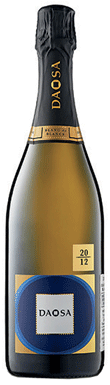

A powerful, oak-tinged wine which has spent five years on lees following fermentation and ageing in seasoned foudre. Coconutty, toasty Chardonnay fruit aromas with creamy...
2012
DaosaPiccadilly Valley

Deviation Road, Loftia Vintage Brut, Adelaide Hills, South Australia, Australia, 2015
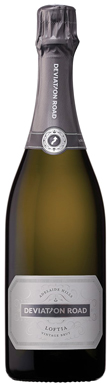
A blend of 60% Pinot Noir and 40% Chardonnay. The colour is light rose-gold and it has aromas of toffee apple, meringue and smoky vanilla....
2015
Deviation Road
Tapanappa, Tiers Vineyard Chardonnay, Adelaide Hills, South Australia, Australia, 2016
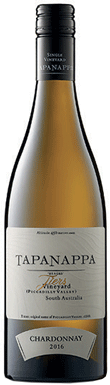
Bright nougat, toasted almond and cashew aromas. The palate is intense and refreshingly crisp, with concentrated lemon and citrus fruit, plus tremendous refinement. This has...
2016
Tapanappa
Murdoch Hill, Artisan Series The Tilbury Chardonnay, Adelaide Hills, South Australia, Australia, 2016
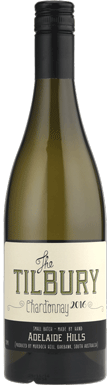
Smoky, lightly reductive bouquet with underlying peach and other stone-fruit aromas, mixed spices and a dash of honey. Intense and full-bodied palate, rich and yet...
2016
Murdoch Hill
Sidewood Estate, Mappinga Chardonnay, Adelaide Hills, South Australia, Australia, 2016
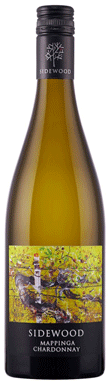
A fresh, refined and quietly intense bouquet that is restrained but complex. It doesn’t rely on oak or artifact but has plenty of detail. Subtle...
2016
Sidewood Estate
Geoff Hardy, K1 Gruner Veltliner, Adelaide Hills, South Australia, Australia, 2017
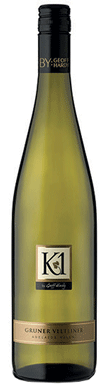
The aromas of pepper and green herbs are attractive and authentically Gruner. White pepper sprinkled on cucumber. Tangy and fresh, crisp and alive on the...
2017
Geoff Hardy
Hahndorf Hill, Gru Gruner Veltliner, Adelaide Hills, South Australia, Australia, 2017
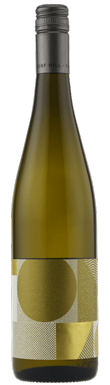
With its light greenish yellow colour and fresh, lifted but discreet aroma evoking fresh herbs with lemon and floral notes, this is full of character...
2017
Hahndorf Hill
Longview Vineyard, The Piece Shiraz, Adelaide Hills, South Australia, Australia, 2015
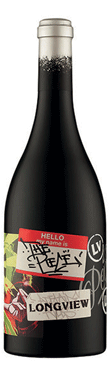
With its intense, earthy, dry spice aromas, this wine is sweet-fruited and lush. A voluminous, almost opulent Shiraz, with a sweet fruit core and appealing...
2015
Longview Vineyard
Ochota Barrels, I Am The Owl Syrah, Adelaide Hills, South Australia, Australia, 2015
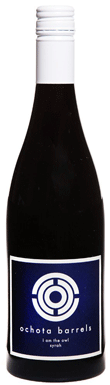
The dusty earth, nutty oak and dry spice aromas are rich and meaty, embracing obvious but well-managed whole-bunch influences. The palate is bright and fresh,...
2015
Ochota Barrels
Shaw & Smith, Shiraz, Adelaide Hills, South Australia, Australia, 2015
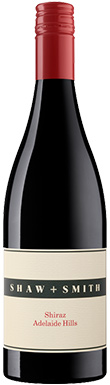
Bouquet loaded with blood plum, raspberry and black cherry aromas, and high notes of pepper and spice. Excellent flavour intensity, seamless texture and smooth, gentle...
2015
Shaw & Smith
