
Anson: Do ungrafted vines change the taste of wine?
Jane Anson reports from a tasting led by pioneering winemakers from around the world, exploring how grafted and ungrafted vines affect the character of wine and revisiting received wisdom about the spread of phylloxera.


The list of winemakers in the room was already pretty special, comprising;
- François Chidaine, Loire Chenin Blanc specialist
- Louis-Benjamin Dagueneau, Loire Sauvignon Blanc specialist
- Maxime Graillot, Northern Rhône Syrah specialist
- Jacky Rigaux, Burgundy
- Francesco Marone Cinzano of Erasmo, Chile
- Tenuta della Terre Nere; Etna, Italy
- Tenuta San Francesco; Amalfi Coast, Italy
- Domaine Philippe Charlopin; Gevrey Chambertin, France
- Weinguït JJ Prüm; Mosel, Germany
- Artemis Karamolegos; Santorini, Greece
- Adega Viuva Gomes; Colares, Portugal
- Bodega Juan Matias Torres; La Palma, Canaries
- La Tour Melas, Achinos; Greece
- Champagne Chartogne-Taillet; Champagne, France
Each estate had brought a few precious bottles of invariably low-yield, low-production wines to Bordeaux for two days of comparing the impact of grafted against ungrafted vines.
The tasting, the inaugural ‘Rencontre des Francs‘ was organised by Loïc Pasquet of Liber Pater, a winemaker who has done a pretty good job of drawing attention to ungrafted vines by charging €30,000 a bottle for the privilege of tasting them.
Scroll down to see Jane Anson’s ungrafted wine tasting notes and scores
Things kicked off with French writer and researcher Jacky Rigaux recalling Henri Jayer’s tastings through the 1980s and 1990s that led to the Réveils des Terroirs movement.
These now legendary meetings discussed how to take winemaking back to simple good sense, where everything starts with the vine.
They are known to have influenced producers such as Dominique Lafon and Jean-Nicolas Méo in Burgundy plus Chris Howell at Cain in Napa Valley – not to mention many of the winemakers in the room with us in Pasquet’s tiny upstairs room in Podensac.
‘They were an important moment for awakening the movement towards terroir-driven wines,’ Rigaux said.
‘They helped draw attention to the fact that, if we continue using chemicals in viticulture, we will lose the ability to discern terroir entirely.
‘What we are questioning now is whether ungrafted vines are a better way to transmit the taste of a place. We don’t know the answers yet, and the hope of this first meeting is to simply work out an accurate methodology for tasting the wines, and to see if we can identify any differences.’
‘Grafting was a glorious idea but also a tragedy’
Marc-André Selosse, biologist and professor of natural science, talked us briefly through how we got here.
‘Grafting was a glorious idea,’ he said. ‘There were many dozens of species of vitis grapevines in 19th century America, and only one dominant in Europe – vinifera – which is why the phylloxera infestation was so devastating to our unprotected vineyards.
‘We had the option of fighting it with chemicals, or flooding, or by creating hybrid grapes, or by grafting American rootstock onto European vitis vinifera vines.
‘Grafting was the only method that worked while still allowing the possibility of continuing viticulture as we knew it.
‘But it was also a tragedy for a number of reasons,’ Selosse said, adding, ‘Grafting is almost certainly why we saw such a concentration of certain grape varieties across France after phylloxera, because they were the ones that adapted best to the grafting techniques.
‘And over the longer-term grafting has undoubtedly made vines weaker; perhaps a key reason that we have seen such a growth in trunk diseases such as ESCA.’
What does grafting do to wine quality?
The most pressing question for those of us in this room, however, was both simpler and more immediate; was there an impact from grafting on wine quality?
Selosse was more careful in his answer to this question. ‘We know some molecules migrate from one plant to the other during the grafting process. We have tracked how grafting modifies gene expression in, for example, apple trees. But we can’t say if the impact is positive or negative. It’s hard to pinpoint – that is one of the reasons that we are here.’
One after another the winemakers shared their experiences. There were no hard and fast rules, and much of what we learnt went against received wisdom.
There were winemakers from areas where phylloxera had never touched – the brilliant Artemis Karamolegos on Santorini, for example, or Erasmo in Chile – but equally those from areas where most neighbouring vines continue to be grafted onto American rootstock.
These are places where the threat of the phylloxera insect is constant, but the ungrafted vines continue to produce grapes.
Benjamin Dageneau, who has taken over the legendary Loire estate from his father Didier, told us that his cuvée Astéroïde is from a tiny plot of 1880s vines where phylloxera is ‘present, but not fatal’.
The same is true for JJ Prüm in the Mosel, and its viticulturalist, Marvin Bauer, said, ‘Phylloxera is everywhere, but not active, or not destructively so. But it is impossible to say that it is not active.
‘Our Riesling in the ungrafted plots have roots up to 10 metres deep, and represent 90% of our vine stock. The vineyard is set out across different areas, something that has caused issues with our neighbours who have in the past resisted the idea of us having ungrafted vines.
‘But we keep them in good health by meticulous viticulture and replanting where necessary. And we feel the taste difference in the wine is worth the work involved.’
Chile is the only country where phylloxera has not been recorded, ‘We’ve been waiting,’ said Cinzano.
‘We’ve seen it arrive in other South American countries around us, but it has still not reached us. We are not sure why, although there are many theories.’
Cinzano – who is Italian and has been in Chile for 20 years – suggested that perhaps the presence of ‘an antagonist’, in the shape of another predatory but non-fatal insect, has protected the vine. It’s an intriguing theory, but not one that has been proven.
Sandy soils stop phylloxera: Fact or myth?
At the same time, our understanding of which soil types guard against phylloxera – notably sandy soils – was called into question.
We tasted wine from Viuva Gomes Colares in Portugal, where the vines are directly above the ocean. Vines are ingrafted when grown on sand, but grafted when grown on clay; following the received wisdom perfectly.
But in the room, we also had wines from ungrafted vines planted on volcanic soils from Etna and Santorini, plus those from blue and grey slate and schist in Germany.
In Bordeaux we had three producers – Clos Manou in the Médoc, Liber Pater in Graves and Château l’Evêché in St-Emilion – all making wine from ungrafted vines in a region where 99% of vines are grafted.
All three lie in geographically diverse parts of the region, on soils that range from sand-dominant to loam, sandy-clay and gravel.
So why do certain soils resist phylloxera? And what would happen if the amount of ungrafted vines dips below a certain threshold? Would we see results similar to the destruction wrought by anti-vaxxers, that cause the general levels of resistance in a population to drop below a critical level, resulting in mass infections?
In other words, are vineyards like JJ Prüm only able to maintain their ungrafted vines because their neighbours play by the rules?
‘We don’t know,’ said Selosse. ‘The ecology of soils perhaps [makes a difference], but many sites don’t hold up to the assumptions. Some vitis vinifera on sandy sites resist, and others don’t. You need a reservoir of good DNA undoubtedly, and typically wild vitis vinifera are shown to have higher resistance.’
What did the tasting show?
The tasting itself was fascinating but again far from definitive.
What we found in the main was that the ungrafted vines seemed to be lighter in colour and often lower in alcohol. Dageneau finds a full one percentage difference between grafted and ungrafted vines of Sauvignon Blanc in neigbouring plots, and this seems typical across the estates.
Acidity was frequently higher in the ungrafted vines, and the concentration came across in higher levels of energy and a richer texture.
Invariably there seemed a higher degree of salinity, which may have helped create the feeling of energy.
But every time I thought I had nailed the difference, I called it wrong when trying to identify blind the next pair of grafted against ungrafted vines. I could tell the two samples were different, but not necessarily which was which. And I was definitely not alone.
‘We don’t have the right criteria to judge by,’ is how Pasquet puts it, ‘because we taste so few ungrafted vines. So we end up looking for the wrong things as indicators of quality.’
Rigaux believes that taste is more important than aromatics when judging terroir wines, and that we need to be looking at mouthfeel, sapidity and the ‘fabric’ of the wine in the glass.
What was clear was that we had many exceptional wines in front of us, and the question of whether ungrafted vines can bring us closer to their vineyard expression is perhaps overdue, 130 years after American rootstocks took over the European vineyard.
So what now? The next Rencontre des Francs will be held on 21 and 22 January 2021.
In the meantime, Pasquet and Rigaux are compiling a database of ungrafted vines across France and beyond. Based on this tasting alone, some of the most exciting and compelling examples came from Greece, Italy and Chile, as well as of places where conditions might be hospitable to experimenting with the technique.
As Rigaux says, ‘We want to encourage and support winemakers who want to try this, and hope that this is just the first step towards understanding the impact of grafting on the true expression of our vines.’
See Jane Anson’s ungrafted wine tasting notes and scores
More recent columns from Jane Anson:
Remembering Harold Olmo: the Indiana Jones of viticulture
Tasting two decades of Château d’issas
Artemis Karamolegos, Pyritis, Santorini, Aegean Islands, Greece, 2016
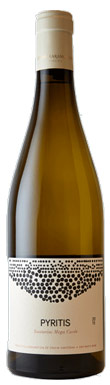

100% Assyrtiko, from three blocks across two different villages on the higher part of the island, so later maturing. Stone fruits, citrus rind and crushed...
2016
Artemis KaramolegosSantorini

Weingut Joh. Jos. Prüm, Auslese Graacher Himmelreich, Mosel, Germany, 2018
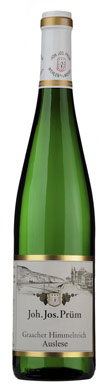
Right at the beginning of the year, before the shutdown of any large gatherings, I went to a fascinating symposium of ungrafted grapes that saw...
2018
Weingut Joh. Jos. Prüm
Erasmo, Late Harvest Torontel, Maule Valley, Chile, 2014
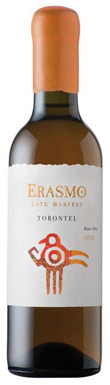
Torontel is a native grape to Chile, believed to be a natural hybrid although no DNA study has been done. This is skin contact wine,...
2014
Erasmo
La Tour Melas, Palies Rizes, Floiountas, Central Greece, Greece, 2013
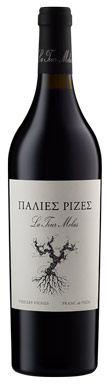
Expressive and ripe on the nose with vanilla and sweet spice, summer fruits and cherry blossom backed by good acidity on the palate, providing a...
2013
La Tour MelasFloiountas
