
From the archive: Stellenbosch: home of Cape Cabernet
Offering a ‘bridging’ style between the structured clarets of the Médoc and the fruity wines of Napa, South Africa’s premier Cabernet Sauvignon region should be world renowned. So why isn’t it? Christian Eedes investigates, and recommends 12 to try...

Just a 50km drive from Cape Town, and with the natural beauty, food, people and cellar doors to rival any wine tourism region on earth, Stellenbosch is the biggest drawcard for wine lovers visiting South Africa. And if the district has a trump card in its varietal deck, then it’s undoubtedly Cabernet Sauvignon. But while Bordeaux, Napa, Margaret River and Coonawarra are synonymous with this noble grape, can the same be said for Stellenbosch?
Scroll down for Christian Eedes’ top 12 Stellenbosch Cabernet Sauvignons to try
For one thing, the region hasn’t been making benchmark Cabernet Sauvignon for that long. Kevin Arnold, cellarmaster of Waterford Estate, situated on the Helderberg, one of Stellenbosch’s most significant mountains, says the 1960s and ’70s were a pivotal time in the variety’s rise to prominence as a premium grape. until then the workhorse grape Cinsault had held sway with the big merchants, being used for everything from rosé and reds, to sweet and fortified wines.
Since then, however, many of South Africa’s most revered wines have been Cabernet Sauvignons or at least Cabernet-driven blends. Kanonkop, considered by many as the closest thing that South Africa has to a first growth, released a 100% Cabernet for first time in 1973 and then followed with the famous Bordeaux-style red blend Paul Sauer in 1981. The highly esteemed Meerlust bottled its maiden Cabernet in 1975 before launching its Bordeaux red blend Rubicon in 1980.
It is interesting to note that today many of Stellenbosch’s most ambitious producers offer both a single-varietal Cabernet Sauvignon and a Cabernet-dominant blend, the latter usually positioned as the flagship in the range but the former not far behind.
‘Bordeaux has had nearly 200 years to figure out the impact of terroir while our history with Cabernet Sauvignon is much shorter’ André Van Rensburg, Vergelegen
Finding its place
There’s a wealth of history behind Stellenbosch Cabernet, but does it excite global wine drinkers in the same way that Swartland Syrah currently does, for instance? There is an acknowledgement among producers that Cabernet often makes for a pinnacle wine, which might allow South Africa to take its place next to Bordeaux, Napa, Coonawarra and Margaret River, but bringing any sort of brand message to life has been poor in recent times.
Mark le Roux, winemaker at Waterford, thinks Swartland’s success has only been positive for Stellenbosch. ‘We move a lot slower here when it comes to wine styles; that’s just the way it is,’ he explains. ‘But there are many Stellenbosch properties with long track records that need to be respected. What Swartland has taught us is the benefits of talking to each other and standing together when it comes to marketing Stellenbosch as a whole.’
Johan Jordaan, senior winemaker for red wines at Stellenbosch’s large-scale, multi- award-winning estate Spier, agrees: ‘We’re too shy about promoting our achievements. The focus on Stellenbosch Cabernet is long overdue.’ And in that vein, there finally seem to be more efforts to position Stellenbosch as one of the world’s great Cabernet Sauvignon regions, with the slogan ‘Kingdom of Cabernet’ apparently set to stick.
It is impossible to have a conversation about Stellenbosch Cabernet Sauvignon without bringing up the issue of ‘green’ flavours. In the mid-1990s, many wines were thin and weedy; then an over-correction in some quarters followed, with many producers opting to go super-ripe. There is now an appreciation that while overt eucalyptus and mint characters aren’t ideal, a certain amount of herbaceousness is part of Stellenbosch Cabernet’s inherent flavour profile, providing the wine with aromatic lift and refreshment.
‘You want ripeness without jamminess; wines that are alive not dead. Vitculturally, we’ve come a long way,’ says Morné Vrey of Delaire Graff, the Banghoek property owned by jewellery magnate Laurence Graff. The best wines, therefore, tend to show luscious fruit and textual generosity without sacrificing freshness. ‘It’s a bit of a cliché,’ says Jordaan of Spier, ‘but you can view Stellenbosch Cabernet as a bridging wine between the Old and the New World – they give you the structure of the former and the fruit of the latter.’
Key Cabernet Sauvignon producers
Alto, Delaire Graff, De Trafford, Edgebaston, Eikendal, Ernie Els, Jordan, Kanonkop, Kleine Zalze, Le Riche, Meerlust, Niel Ellis, Oldenburg, Rustenberg, Rust en Vrede, Spier, Stark-Condé, Thelema, Tokara, Vergelegen, Vergenoegd, Warwick, Waterford, Webersburg
Distinctive terroirs
Looking at terroir, producers insist that the different parts of the Stellenbosch region (some of them official wards and others not) give the resulting wines distinctive characters. ‘Helderberg wines are classic in style – drier with more grainy tannins – while Simonsberg wine are fruitier and sweeter,’ says Arnold of Waterford. ‘They are different communes, if you will. I would compare Helderberg with Pauillac, St-Estèphe and St-Julien, and Simonsberg with Margaux.’
Taste a dozen or more Stellenbosch wines blind, however, and it’s difficult to say from where each originates – at least with any confidence. Soil types can vary dramatically over just a few hectares, while the mountains themselves are nothing if not undulating, meaning that one property can have various different aspects.
Cabernet’s Cape crusade
It is uncertain when Cabernet Sauvignon was introduced to the Cape although the variety is known to have been grown with some seriousness at Groot Constantia in the last decades of the 19th century.
During the first half of the 20th century it began to gain prestige, even though it is largely a matter of speculation how much of the variety that wines labelled as Cabernet Sauvignon actually contained (prior to the Wine of Origin legislation of 1973, controls over varietal naming were very loose).
Plantings remained limited for a long while; in 1990, the variety still constituted less than 4% of the national vineyard. But post-Apartheid things changed dramatically and by 2005 (the peak of plantings) it made up 13.4%.
While plantings have dropped significantly over the past decade, Cabernet Sauvignon remains South Africa’s third most widely planted variety and the most planted red, with 11.3% of the vineyard area (11,170ha). Stellenbosch continues to have the most Cabernet Sauvignon of all wine-growing regions with 28.4% of total plantings.
Together, this makes the impact of landscape more difficult to measure than might be the case in Bordeaux, for example. And factor in an estate or winemaker’s individual style, as well as differing vineyard and cellar techniques between neighbouring estates and terroir is further obscured.
‘Bordeaux has had nearly 200 years to figure out the impact of terroir, while our history with Cabernet Sauvignon is much shorter than that,’ explains André van Rensburg of Vergelegen. ‘Only now are we discovering what rootstocks and planting densities work best. And of course, planting material is getting better and better.’
To some extent, Stellenbosch finds itself trapped between two very strong Cabernet paradigms: one being that represented by Left Bank claret and the other by Napa Valley. Some consumers prefer the tension and detail of Bordeaux, others the density and power of California – who to please?
Going forward, the challenge is surely for producers to be less derivative and to collectively speak of the unique qualities of Stellenbosch Cabernet. Individual wine style does seem to trump terroir for now, but as winemakers learn to do less rather than more in the cellar, it is hoped they will come to reflect their respective sites better.
‘We’re open and adaptive and have made quantum leaps in quality in recent times,’ asserts Jordaan of Spier. ‘It’s clear that Cabernet Sauvignon is Stellenbosch’s calling card and I think the variety has got a great future here.’
Christian Eedes is co-owner and editor of Winemag.co.uk
See Christian Eedes’ 12 Stellenbosch Cabernet Sauvignons to try
You may also like
Expert’s Choice: Old Vine South Africa10 top South African wines worth seeking outElgin wine region: Names to know and wines to tryCape Town: Top restaurants and wine bars
Delaire Graff, Reserve, Stellenbosch, South Africa, 2013
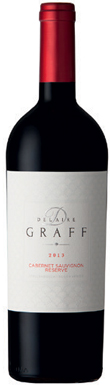

A classic nose of red and black fruit, fresh herbs, violets and graphite. Medium bodied yet full flavoured, with striking fruit purity, balance and length....
2013
Delaire Graff

Rust en Vrede, Single Vineyard, Stellenbosch, South Africa, 2013
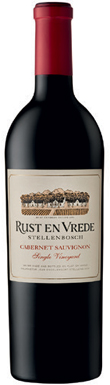
Cassis, leafiness as well as prominent but attractive oak, including notes of pencil shavings, cigar box and spice. Big but balanced with a good core...
2013
Rust en Vrede
Spier, 21 Gables, Stellenbosch, South Africa, 2013
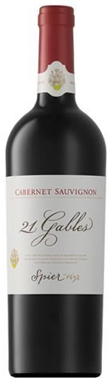
Black cherry and cassis, oyster shell, vanilla and toast. Full bodied and opulent with concentrated fruit and bright acidity before a savoury finish. With 26...
2013
Spier
Vergelegen, V, Stellenbosch, South Africa, 2012
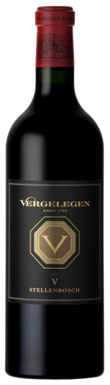
Red and black fruit, a certain green olive quality and an attractive oak-derived character. Medium bodied with fresh acidity and a savoury finish. Quite old...
2012
Vergelegen
Warwick Estate, Blue Lady, Simonsberg, Stellenbosch, South Africa, 2013
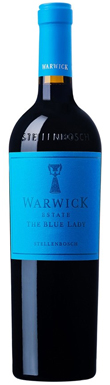
Red and black fruit, a subtle herbal quality and vanilla oak on the nose. Pure fruit, tangy acidity and fine tannins. Rich and creamy in...
2013
Warwick EstateSimonsberg
Boekenhoutskloof, Cabernet Sauvignon, Stellenbosch, South Africa, 2014
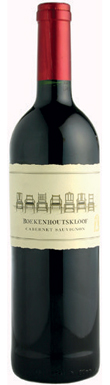
Violets and fresh herbs on the nose ahead of red and black berries and attractive oak. Medium-bodied palate with sweet, upfront fruit but the finish...
2014
Boekenhoutskloof
Kleine Zalze, Family Reserve, Stellenbosch, South Africa, 2012
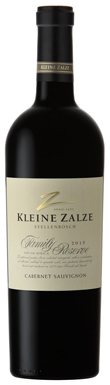
A complex nose of red and black fruit, violets, a hint of mint, liquorice, vanilla and tar. Plenty of sweet fruit on the palate which...
2012
Kleine Zalze
Thelema Mountain Vineyards, Cabernet Sauvignon, Stellenbosch, South Africa, 2012
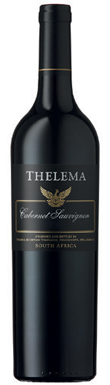
Cassis, a hint of mint plus chocolate and a little earthiness. The palate is full yet unshowy with fresh acidity and firm but fine tannins...
2012
Thelema Mountain Vineyards
Waterford Estate, Cabernet Sauvignon, Stellenbosch, South Africa, 2014
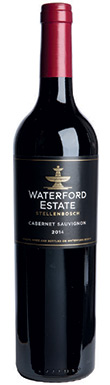
Cranberry and cassis plus violets and fresh herb aromas. Medium-bodied with lovely pure fruit, fresh acidity and fine tannins before a long, dry finish. Classic...
2014
Waterford Estate
De Trafford, Cabernet Sauvignon, Stellenbosch, South Africa, 2011
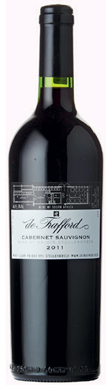
An intriguing nose of red and black fruit, attractive herbal characters and also touches of forest floor and farmyard. The palate is medium bodied with...
2011
De Trafford
Ernie Els, Proprietor's, Stellenbosch, South Africa, 2013
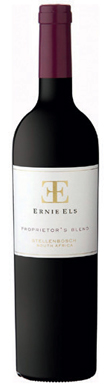
A floral top note before black and blueberries plus some toasty oak. A big, bold wine with plenty of ripe fruit and a smooth texture....
2013
Ernie Els
Le Riche, Reserve, Stellenbosch, South Africa, 2013
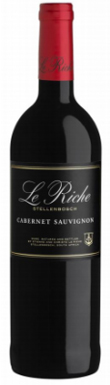
Still primary with aromas of red and black fruit, attractive herbal characters plus vanilla and spice. Full bodied but lovely composure – pure fruit, fresh...
2013
Le Riche