Australian fizz: Bubbling under
Australia has seen its sparkling wine exports struggle in recent years, muscled out by the more commercial and quality local alternatives. But the standard from the country’s top vineyard sites and world-class producers has never been better, argues Susie Barrie MW, who selects 10 of the very best examples…


Disappointed. That’s how Dr Andrew Pirie, one of Australia’s leading sparkling winemakers, felt after a recent visit to London. Sitting on a sunlit terrace at his winemaking base in northern Tasmania, Pirie tells me how he was offered either Perrier-Jouët or English sparkling wine when he asked for a glass of Champagne.
Scroll down for Susie Barrie’s pick: 10 top sparkling wines from Australia
‘That’s where we’ve got to be,’ he stated. ‘We need to be seen as an alternative to Champagne – but England’s snapping up that position.’

Most wine lovers would agree that Australia has never made finer wine, in more diverse styles, than now. It’s a golden age – sparkling wine included. Never before has such a range of wine styles been produced, ranging from pét-nat to prosecco, sparkling Shiraz to world-class traditional-method wines.
Australian producers, too, seem to be increasingly confident in their ability to make top-notch fizz from the best sites, and their ambition and dedication is being rewarded with a growing number of international awards. Only last year, Ed Carr – group head winemaker for Accolade Wines and another of Australia’s top sparkling winemakers – received the Lifetime Achievement Award at the Champagne & Sparkling Wine World Championships in London, the only non-champenois to do so.

As Carr states when asked about the evolution of the Australian sparkling wine industry: ‘In the last 40 years there’s been a real maturity of styles, guys have learned how to make sparkling wine and locked in on a house style, which is really important.’ Carr’s long-aged, complex and savoury House of Arras wines are superb, and the string of awards they have won in recent years is testament to a man who knows exactly what he’s doing when it comes to making top-quality traditional-method sparkling wine.
Tough market
This is all at a time when sparkling wine in general is having a moment. It has been the world’s fastest growing wine category over the last 25 years and, at almost 270 million cases, now accounts for close to 10% of global wine sales.
The UK, along with the US, imports more sparkling wine than any other country. And growth continues (even if some categories have shown signs of slowing), with increases predicted to continue through to 2022. It seems our thirst for bubbles knows no bounds.
Though not, apparently, our thirst for Australian bubbles. The UK’s largest supermarket chain, Tesco, doesn’t stock a single bottle in its stores. According to The Wine Society’s buyer Sarah Knowles MW, it’s at best a ‘niche’ category. Only sparkling red Shiraz, which Knowles describes as ‘the mainstay of Australian sparkling’ has gained enough recognition with Society members and created a small but strong-enough foothold to retain a consistent listing over the past couple of decades, albeit of just one wine.
Australian sparkling: the facts
- Globally 270m cases of sparkling wine are produced annually (10% of total wine production) and sales are in growth
- Australia produces 7m cases of sparkling wine per annum
- Sparkling wine accounts for less than 1% of total Australian wine exports
- Australian sparkling wine exports have declined over the last decade and exports to the UK fell by 43% in the year to September 2018
- New Zealand is the largest importer of Australian sparkling white wine; New Zealand and Canada are the biggest markets for Australian sparkling rosé, and mainland China for its sparkling red
- Australian sparkling wine sales are flat in the domestic market, with Prosecco the fastest growing category in the off-trade nationally Figures as of 2017.
Sources: IWSR, Wine Australia, IRI MarketEdge
A quick glance at the figures shows sales in the UK of Australian sparkling fell dramatically in the year to September 2018. This could, of course, be attributed to our love of Italian Prosecco at the cheaper end of the market, and our increasing fondness for English sparkling wine when we’re looking for an alternative to Champagne. No one, and certainly not me, would argue against either of these categories. But surely there’s also room for more of the best Australia has to offer?
David Gleave MW, managing director of Australian specialist Liberty Wines, believes it’s not a case of English sparkling wine pushing other countries out – quite the opposite. ‘English wines have opened up the sparkling category, they’ve unlocked the Champagne stronghold and people now think it’s okay to have other sparkling wines,’ he says. ‘People have become so much more open-minded about sparkling wine.’ Perhaps partly as a result of this, Gleave began listing the House of Arras wines a couple of years ago as a high-end offering from Australia.
Mixed messages
A recent visit confirmed to me the diversity and exceptional quality in the sector. As if mirroring the trend within the Australian still category towards wines that are lighter, fresher, more characterful and exciting to drink, within the sparkling category too there is a move towards higher quality and individuality across a range of styles.
But perhaps it’s that very diversity and individuality that is at issue. As consumers, we have a fairly clear idea of what to expect when buying Champagne, Prosecco, English sparkling wine, Cava, even crémant. By contrast, the sheer variety of sparkling styles coming out of Australia makes it almost impossible for the phrase ‘Australian sparkling wine’ to have any real meaning. In order to want to buy these wines, we need to understand them better and appreciate what each bottle will bring to the table.
The history of Australian sparkling wine goes back to the mid-19th century, not long after the British established a penal colony in Botany Bay. The early wines were made from non-classic varieties grown in warm inland regions unsuited to fine sparkling winemaking. It’s worth remembering that Australia had virtually no plantings of Chardonnay or Pinot Noir in the early 1970s and although various sizeable sparkling wine projects were begun in the 19th and 20th centuries in Victoria, South Australia and Tasmania, it wasn’t until the 1970s and ’80s that the real evolution to cool-climate sparkling winemaking began.
In 1973, Pirie established Piper’s Brook Vineyard in northern Tasmania; in 1985, Champagne house Louis Roederer began a joint-venture with Tasmania’s Heemskerk (resulting in the now world-renowned Jansz label); in 1986, Clover Hill was established in Piper’s River and, in the same year, Domaine Chandon in the Yarra Valley, Victoria; and in 1995 the House of Arras label was created, again in Tasmania. Together, these projects heralded a new dawn in the evolution of Australian sparkling wine.
Today, the key regions for sparkling wine include King Valley and various other parts of Victoria, as well as Adelaide Hills in South Australia, and Tasmania. King Valley, in the northeast of Victoria and one of its higher, cooler sub-regions, is increasingly building a reputation as a little prosecco hub with some exciting examples from the likes of Dal Zotto and Pizzini.

Italian influence
Using the term prosecco to describe Australian wines is, however, currently being contested by the EU. Italian producers officially changed the name of the prosecco grape variety to Glera a decade ago, at the same time registering the region of production as Prosecco DOC and claiming prosecco was a geographical name. Prosecco grapes have been grown and the varietal name used in Australia for 20 years, but it’s likely that some form of compromise will need to be found and one of the current suggestions is the use of the term ‘Australian prosecco’. Whatever the outcome, it’s a style that’s proving hugely popular with Australian consumers.
It is unlikely, however, we’re going to see much Australian prosecco in the UK due to the cost. As Gleave says: ‘I think there are some things that work well in the Australian market, but by the time you get them over here I’m not sure they would rival what you can do with [Italian] Prosecco.’ The Wine Society’s Knowles also looked at listing an Australian prosecco-style wine, but found that ultimately, ‘the wines didn’t offer quite the same value as other tank-method wines we could source from across Europe’. What you are most likely to find in the UK are the high-end, beautifully artisanal style Australian proseccos stocked by smaller independent merchants.
Beyond prosecco, sparkling Shiraz and pét-nat are styles with their own niche following. The former was first produced in the late 19th century and has become a firm favourite with its loyal followers, often as a refreshing but robust summer barbecue wine. By contrast, pétillant naturel wines are the new kids on the block, largely the creation of young, hipster winemakers seeking a more natural approach. These wines are made by temporarily stopping the fermentation, bottling the wine, and then allowing the fermentation to complete. The result is a dry, cloudy and gently sparkling wine that has bags of character.
Quality hotspots
But the wines really worth seeking out are the traditional-method sparkling wines made from Chardonnay, Pinot Noir and occasionally Pinot Meunier that can offer superb value for money given their premium quality. The finest come from Adelaide Hills, pockets of Victoria and Tasmania, with the latter being the name most often on people’s lips when it comes to sourcing high-end Australian fizz.
Tasmania lies at 41° to 43° latitude and the grapes grown here benefit from a very long, slow growing season. When comparing Tasmanian sparkling wine to Champagne, Natalie Fryer of Bellebonne sees the distinguishing point as: ‘The fruit power, though not simple primary fruit: you will see pristine fruit in Tasmanian wine that you won’t generally see anywhere else.’ Fryer set her heart on becoming a winemaker at the tender age of 12, and it was while working at Seppelts Great Western in Victoria that she ‘just fell in love with sparkling wine’. Following a stint at Jansz in Tasmania, she recently began her own project, Bellebonne, in Piper’s River, and her early releases suggest this is a name that is well worth remembering.

It is, however, still early days for the modern Tasmanian industry, which is less than 50 years old. Although Piper’s River in the north, with its maritime influence and relative humidity, has to date been the leading name and is favoured by both Pirie and Fryer, there are sub-regions from north to south producing exceptional fruit. Ed Carr increasingly sources fruit from the island’s south for his House of Arras wines, and the likes of Stefano Lubiana are already showing the potential of this part of the island.
Within my recommendations I have aimed to include as broad a range of styles and sub-regions as possible, but they are very much a starting point. I have suggested wines that I believe are some of the finest Australia currently has to offer, along with more esoteric, new wines. What they all have in common is that they are top-quality examples of Australian sparkling wines that are superb by anyone’s standards and well worth seeking out. None will leave you disappointed.
See Susie Barrie’s pick: 10 top sparkling wines from Australia
You may also like
Organic Champagnes to try in 2019Lambrusco: Back on the menu plus top wines worth tryingBest Cava sparkling wines from top producersProsecco: Aiming high
House of Arras, EJ Carr Late Disgorged, Tasmania, Australia, 2004
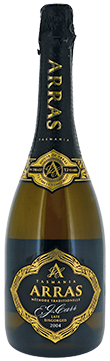

It is fitting that such an exceptional cuvée be named after sparkling wine maestro and Arras's Head Winemaker Ed Carr. The wine's unique character is down to an extended period on the lees, a total of 12 years in fact. RS: Complex and rich nose of toasted brioche and nuts with deep mango and peach fruit. Melted butter on warm toast. Big palate but structured with balanced acidity. BW: Smells a bit like home for me with attractive eucalyptus notes along with lime and lychee. Palate is rich with ripe fruit but well balanced acidity. Showing just a hint of evolution but incredibly fresh for 16 years. Very refreshing finish, a touch of white pepper and spice. AH: Great complexity on the nose and palate. Intriguing. peapod characters on the palate. hints of oyster shell, a saline influence combined with some bright stoned fruits, great precision on the palate with fine-boned acidity and a long, lingering aftertaste. Has great development of smoky, umami character on the palate, all kept in check by laser-like acidity and opurity to finish. Very fine.
2004
House of Arras

House of Arras, Grand Vintage, Tasmania, Australia, 2008
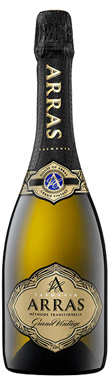
A compellingly rich, savoury, sumptuous fizz with a fine mousse, yeasty autolysis and saline minerality. A touch of oak adds a wonderfully taut note and some dry-roasted nut flavours to the palate, while the finish is long and elegant.
2008
House of Arras
Apogee, Deluxe Vintage Rosé, Tasmania, Australia, 2015
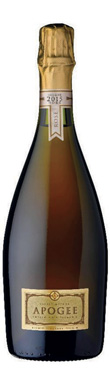
Apogee was established in 2007 by Dr Andrew Pirie with the aim of making terroir-driven wines grown in Piper’s River on a high-altitude, 2ha single vineyard. This is a Pinot Noir-dominant blend that shows bold flavours of bruised red apple, spice, bread and honey. Still young but with enormous potential.
2015
Apogee
Pirie, Sparkling Vintage, Tasmania, Australia, 2011
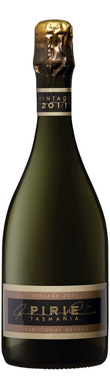
Beautifully stylish and accomplished wine hailing from the cool Tamar Valley. Exudes aromas of cream, butter and spice, with palate notes of toasted hazelnut from the barrel-aged base wine. If you can’t get hold of this one, the NV is a decent alternative.
2011
Pirie
Stefano Lubiana, Grande Vintage, Tasmania, Australia, 2008
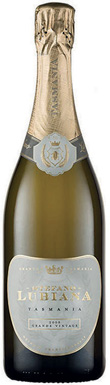
Located in the Derwent Valley to the south of Tasmania, the Lubiana estate is farmed on biodynamic principles. With seven years on lees and more than two on cork, this Chardonnay dominant blend is rich, intense and bready, with a soft mousse and a long, dry finish.
2008
Stefano Lubiana
Bellebonne, Vintage Cuvée, Tasmania, Australia, 2015
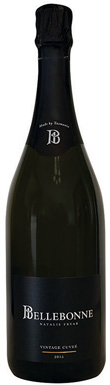
Natalie Fryer claims that her wines are ‘always about elegance’, and this first vintage of her Bellebonne Cuvée from Piper’s River is exactly that. From its pale straw colour to its fine mousse and subtle orchard fruit flavours, it is delicate and refined with a fresh, ethereal finish.
2015
Bellebonne
De Salis, Blanc de Blanc, Orange, New South Wales, Australia, 2014
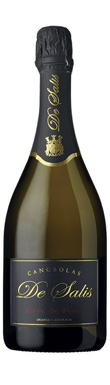
Charlie Svenson makes both sparkling and still wines at his high-altitude, small family winery in cool-climate Orange. His approach is unashamedly minimalist and his wines have incredible energy and character as a result. The Blanc de Blanc is the star of a superb range; deep lemon/gold in colour with aromas of baked apple, truffle and honey. It is dry and beautifully poised, boasting a fine lively mousse and a long mineral finish.
2014
De SalisOrange
Blackwood Hill, Spark Blanc de Blanc Brut, Yarra Valley, Victoria, Australia
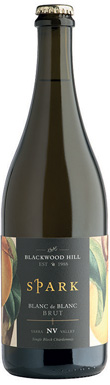
The Calder family describe themselves as producers of ‘classic natural wines’ and this is a fizz guaranteed to stop you in your tracks. Made from whole bunch pressed Chardonnay, without fining, and packed with rustic, caramelised apple fruit, it is the ultimate summer picnic wine and one that I personally adore.
Blackwood HillYarra Valley
Dal Zotto, Pucino Col Fondo, King Valley, Victoria, Australia, 2017
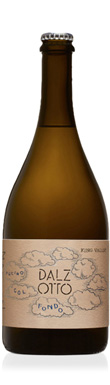
Col fondo is a traditional way of making Prosecco in which the second fermentation happens in bottle and there’s no disgorging of the lees at the end of the process. The result is a cloudy, slightly funky and dry style of fizz, which in this case has some juicy baked red pear fruit too.
2017
Dal ZottoKing Valley
