
Back roads of Burgundy, part 1: the Côte de Beaune
Burgundy might command eye-watering prices, prohibitive for most wine lovers, but there is still value to be found for those willing to go beyond the better-known villages. In his two-part report, Charles Curtis MW explores the back roads of the Côte de Beaune and highlights the lesser-known wines and producers.

The common lament that Burgundy wine is overpriced is far from universally true. Those with imagination, determination and a good GPS can still find their way to a profusion of estates in the Côte d’Or where ‘value-priced, high-quality Burgundy’ is not a contradiction in terms.
The only thing required is a trip down the back roads of Burgundy, where you can find top-quality wines at a fraction of the price of the better-known villages and lovely everyday wines that still sell for a song. We tasted so many that this will be a two-part article.
Scroll down for scores and tasting notes for Charles Curtis MW’s 20 must-try Côte de Beaune wines
The first instalment explores the back roads of the Côte de Beaune.
The Côte de Beaune is the southern portion of the Côte d’Or, where the limestone slopes turn to face slightly south. The division begins at Ladoix-Serrigny, the northernmost village of the Côte de Beaune. The hill of Corton, with its grand crus Corton and Corton-Charlemagne, is the focal point here. The slopes of Corton are followed by the majestic hills behind the town of Beaune.
South of Beaune lie the well-known red wine villages of Pommard and Volnay and the famous white wine villages: Meursault, Puligny-Montrachet, and Chassagne-Montrachet.
For many, this is as far as they get in their exploration of the Côte de Beaune.
This overview, however, is only the beginning.
This article explores:
- The Hautes-Côtes
- Monthélie and Auxey-Duresses
- Above Meursault and St-Romain
- Blagny
- St-Aubin
- Santenay
- Maranges
The Hautes-Côtes
A little road leads north and west out of Ladoix and quickly climbs to the Hautes Côtes de Beaune region, beginning with the village of Magny-lès-Villers. As the name implies, the Hautes-Côtes are at a higher elevation than the main section of the Côte d’Or.
Magny-lès-Villers marks the border between the Hautes-Côtes de Nuit and the Hautes-Côtes de Beaune. The appellation Bourgogne Hautes-Côtes de Beaune includes sixteen villages at these higher elevations as well as the upper slopes of the thirteen more well-known villages of the proper Côte de Beaune. The terroir is cooler at these higher altitudes.
Before global warming, the Hautes-Côtes ripened grapes with difficulty and was better known for the production of blackcurrants for the region’s Kir Royales than for wine.
Today there are 835 hectares planted to grapes here, according to the Bourgogne Wine Board (BIVB). Just over 80% of this is Pinot Noir, but Chardonnay is also becoming increasingly popular.
This series of villages runs parallel to the central part of the Côte de Beaune, just out of sight to the west.

Monthélie and Auxey-Duresses
Travellers along the Route Nationale 74 head directly from Volnay to Meursault, and many overlook both Monthélie and Auxey-Duresses. However, the Route de Beaune lies closer to the slope and passes through both villages before heading into the Hautes-Côtes.
These two villages are nestled in the valleys of the small streams that break up the Côte as they flow down from the slopes. Monthélie borders Volnay to the west and produces both red and white wine. The best vineyards of the village are found in two locations.
The first set is essentially a continuation of the Volnay premier cru Clos de Chênes. The other important site, in Monthélie, is the steep slope rising from the Route de Beaune to face directly east, where the premier crus Les Duresses and Les Clous are located.
The vineyard of Les Duresses continues into Auxey-Duresses, where it lends its name to the village. The majority of the vines rest along the north bank of the stream, called the Ruisseau des Cloux, facing south.
Their location in the valley leading to the Hautes Côtes is a cooler terroir, and the grapes don’t always ripen well. Reds can be tannic, and whites very crisp. Here, all of the premier crus rest where the hill turns slightly toward the east as it bends towards Monthélie. Vineyards continue for some distance into the valley, towards another small hamlet called Petit Auxey, itself surrounded by vines. There are also more vineyards on the border with Saint-Romain near a tiny village called Melin.
Above Meursault and St-Romain
In addition to these vines in the valley (combe), there are vineyards on the slopes above Meursault. These face north and are most appropriate for growing Chardonnay. They are essentially a continuation of the climats of Meursault, including Les Vireuils, Les Luchets, and Les Meix Chavaux.
Perhaps the best-known terroir on the Auxey side of the divide is Les Hautés. These whites are lively and fresh but lack the rich, buttery character of Meursault.
Continuing west in the direction of the Hautes-Côtes, the valley opens up again in the dramatically beautiful Saint-Romain with its sharp cliffs that are among the most often instagrammed sights in Burgundy, according to the local paper.
The region has a long history, but the wines have not always stood in high esteem.
In his landmark book ‘Côte d’Or – A celebration of the great wines of Burgundy’, Clive Coates remarks that ‘Saint-Romain is really part of the Hautes-Côtes, but has enjoyed full village Appellation Contrôlée status since 1947.’
Before 1947, St-Romain was classified with the Hautes-Côtes because of the high elevation (350 – 400 metres). The majority of the vineyards, however, are arranged in a sun-capturing amphitheater.
Two large lieux-dits, Sous Roche and Combe Bazin, face southwest and are mainly devoted to red wines; on the opposite side, Sous la Velle and Sous le Château face east and are more often dedicated to whites.
Connoisseurs once felt that St-Romain was much better for whites than for reds, but today producers are making increasingly successful versions of both. The limestone cliffs nourish the grapes with calcium, delivering pronounced mineral flavours. The south-facing slopes can ripen Pinot Noir very well, and although tannins can be firm, close attention to the harvest date can help to ensure optimal ripeness.

Blagny
Blagny is another interesting corner of Burgundy, tucked away and hidden from view along the southern edge of Meursault.
This tiny village sits at the top of the slope between Meursault and Puligny-Montrachet at elevations above 350 metres. The Blagny AOC is only for red wines, making it a bit of a paradox, a corner of Pinot Noir high on the slope in the heart of white wine country. However, until recent years, red wines from this part of the Côte de Beaune were in the majority.
Today, although they have their own appellation, Blagny rouges are very rare. According to the BIVB, there are only 4.46 hectares in production. White wine is also produced in Blagny, but it must be labeled either Meursault premier cru or Puligny-Montrachet premier cru.
Chardonnay vines outnumber Pinot Noir ten-to-one, and these wines can be outstanding. Writing in 1855, Dr. Lavalle proclaimed that ‘Blagny-Blanc’ was equal in quality to Bâtard-Montrachet.
St-Aubin
Near the border between Puligny-Montrachet and Chassagne-Montrachet lies the path of the former Route Nationale 6 that links Chablis to Lyon. To the north of this road lies Mont Rachet, the hill where the legendary vineyard of Montrachet is found.
The higher sections of this hill are in the appellation of St-Aubin, and the premiers crus, particularly Les Murgers des Dents du Chien and En Remilly at the mouth of this valley, can produce extraordinary wine although they face southwest rather than due south.
Continuing along the Route Nationale, past the village of Gamay, one finds another set of premier crus facing east, including Les Frionnes. Located further into the valley, these are cooler sites.
St-Aubin once produced a much more significant proportion of red wine. This is true of the whole of the southern Côte de Beaune.
Santenay
This tradition continues in Santenay, south of Chassagne-Montrachet, on the opposite side of the hill from the St-Aubin vineyards. Here the large premier crus La Comme, Clos de Tavannes, Les Gravières and Beauregard share many similarities with the Morgeot section of Chassagne.
There is another section of premier crus above the central part of the village that includes Beaurepaire and La Maladière, as well as another segment that borders Maranges.
Red and white wines are both produced, but the former outnumber the latter by a factor of five to one.
With Santenay we come to the border of the Côte d’Or département. However, there are three villages in the Saône-et-Loire that are included in the Côte de Beaune: Cheilly-lès-Maranges, Sampigny-lès-Maranges, and Dezize-lès-Maranges.
Maranges
The three villages were combined in 1988 to form the single appellation of Maranges. Geologically, this is a part of the Côte d’Or as it is a continuation of the terroir of Santenay.
Cheilly-lès-Maranges is located on the border with Santenay, where the vines face southeast. Further along the Valley of La Cosanne, in Sampigny (at the base of the slope), and Dezize (slightly higher up), the vineyards face directly south. It is here that one finds the notable premier cru La Fussière. This is some of the most beautiful, bucolic countryside in Burgundy, and there is some surprisingly delicious, and affordable, wine being produced here.
A trip down the backroads of the Côte de Beaune will certainly pay vinous dividends.
Charles Curtis MW’s 20 must-try Côte de Beaune wines
Related content
Burgundy: a complete guide to Corton
Get to know white Burgundy: Good, better, best
Domaine Jean-Claude Bachelet, St-Aubin, 1er Cru Les Murgers des Dents de Chien, Burgundy, France, 2018
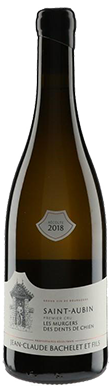

Bachelet owns just under a quarter-hectare on the plateau above the vines in Premier Cru En Remilly. This is an ideal placement for a hot...
2018
Domaine Jean-Claude BacheletSt-Aubin

Domaine d’Auvenay, Les Clous, Auxey-Duresses, Burgundy, France, 2004
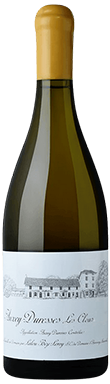
A treat from collector friends, this bottle of 2004 Auxey-Duresses ´Les Clous´ from the Domaine d’Auvenay still shows well despite the advancing years. Surprisingly youthful...
2004
Domaine d’AuvenayAuxey-Duresses
Domaine Jean-Claude Bachelet, St-Aubin, 1er Cru En Remilly, Burgundy, France, 2018
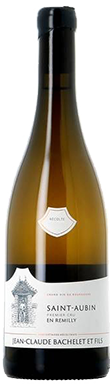
The Bachelet brothers work two parcels in En Remilly, very close to Montrachet. This magnificent south-facing vineyard has very thin white marl soils (30...
2018
Domaine Jean-Claude BacheletSt-Aubin
Domaine Henri & Gilles Buisson, Sous la Velle, St-Romain, Burgundy, France, 2019
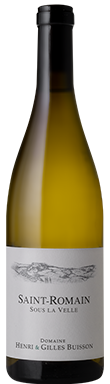
Produced from vines aged 60 to 90 years, planted in marly soils at 375 metres on the east-facing site below the village. The wine has...
2019
Domaine Henri & Gilles BuissonSt-Romain
Domaine Comtesse de Cherisey, Puligny-Montrachet, 1er Cru Hameau de Blagny, Burgundy, France, 2018
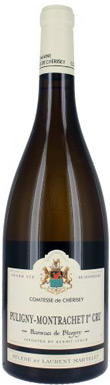
<p>This high-altitude 1.7ha site at 300 metres used to be planted with Gamay after the war, but is now a white wine vineyard. Aged in...
2018
Domaine Comtesse de CheriseyPuligny-Montrachet
Domaine Agnès Paquet, Auxey-Duresses, Burgundy, France, 2019
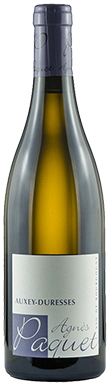
Produced from the 90-year-old vines that her family has owned since the 1950s, this is a superb example of the appellation. The vines come from...
2019
Domaine Agnès PaquetAuxey-Duresses
Benjamin Leroux, Blagny, 1er Cru La Pièce Sous Le Bois, Burgundy, France, 2018
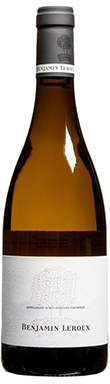
Leroux farms 0.44 hectares in the white marl soils high above Meursault. This terroir is perfectly suited to the conditions in 2018, giving freshness despite...
2018
Benjamin LerouxBlagny
Pascal Clément, St-Aubin, 1er Cru Charmois, Burgundy, France, 2018
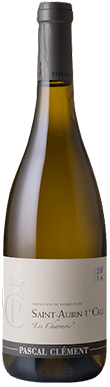
This native of Savigny-lès-Beaune who apprenticed at Coche-Dury launched his micro-négoce in 2012. Here he has sourced fruit from the east-facing vineyards at the top...
2018
Pascal ClémentSt-Aubin
Pierre-Yves Colin-Morey, Au Bout du Monde, Hautes-Côtes de Beaune, Burgundy, France, 2020
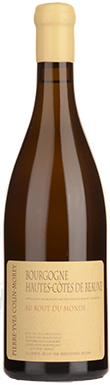
Pierre-Yves Colin purchased three parcels in the Hautes Côtes in 2014 with Benoît Riffault and Emilie Sauzet, which he collectively refers to as ‘Au Bout...
2020
Pierre-Yves Colin-MoreyHautes-Côtes de Beaune
Domaine Monthelie-Douhairet-Porcheret, Cuvée Miss Armande, Monthélie, Burgundy, France, 2019
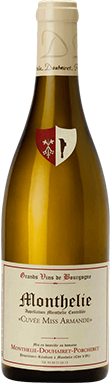
Named in honour of Armande Duhairet, this wine is produced from nearly a hectare in the south-facing parcels of Les Darnées and La Combe Danay,...
2019
Domaine Monthelie-Douhairet-PorcheretMonthélie
Domaine Jean Chartron, Vieilles Vignes, Hautes-Côtes de Beaune, Burgundy, France, 2020
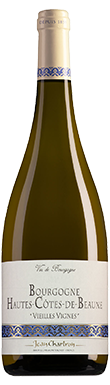
Sourced from Nantoux above Pommard in the lieux-dits ´Sous la Roche´ and ´En le Bois Guillemain´, this is partly tank-fermented and partly fermented in one...
2020
Domaine Jean ChartronHautes-Côtes de Beaune
Domaine Lucien Jacob, Les Larrets Blancs, Hautes-Côtes de Beaune, Burgundy, France, 2020
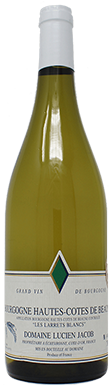
The lieu-dit ´Les Larrets Blancs´ is a south-facing slope with white marl soils at between 400-450 metres elevation, that has produced surprisingly ripe fruit with...
2020
Domaine Lucien JacobHautes-Côtes de Beaune
Domaine Bachelet-Monnot, Maranges, 1er Cru La Fussière, Burgundy, France, 2019
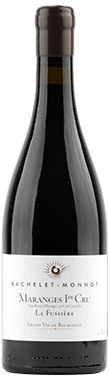
The Bachelet brothers have 6.5 hectares in total on the south-facing slopes of premier cru La Fussière. There is about a hectare of recently replanted...
2019
Domaine Bachelet-MonnotMaranges
Domaine Comte Armand, Auxey-Duresses, 1er Cru, Burgundy, France, 2019
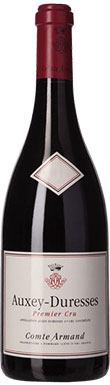
An assemblage of the premiers crus, Les Bréterins and Bas des Duresses, the former has thin soils right on the limestone, while the latter has...
2019
Domaine Comte ArmandAuxey-Duresses
Domaine Anne-Marie & Jean-Marc Vincent, Santenay, 1er Cru Passetemps, Burgundy, France, 2015
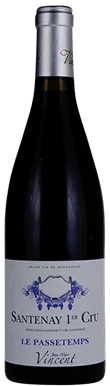
‘Passetemps’ is the Premier Cru just south of Gravières, planted in white marl with limestone pebbles, resembling its more well know neighbour. Vincent relates that...
2015
Domaine Anne-Marie & Jean-Marc VincentSantenay
Bruno Colin, Vieilles Vignes, Santenay, Burgundy, France, 2019
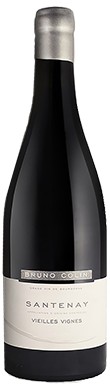
Colin produces an exuberant, dense version of Santenay from his 0.71-hectare parcel of 50-year-old vines in Pralons Dessus, located just below the Premier Cru ‘Clos...
2019
Bruno ColinSantenay
Domaine Elodie Roy, Hautes-Côtes de Beaune, Burgundy, France, 2019
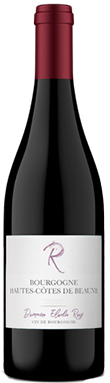
This Maranges-native trained with Anne Gros before taking over her family’s vineyards in Maranges in 2018. This delicious wine from a modest appellation shows the...
2019
Domaine Elodie RoyHautes-Côtes de Beaune
Domaine Eric de Suremain, Château de Monthélie, Monthélie, 1er Cru Le Clou des Chênes, Burgundy, France, 2018
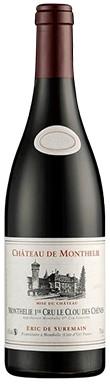
Near Volnay, Clou des Chênes sits high on the slope in calcium-rich marl soils. This parcel delivers a wine of inky dark concentration with lovely...
2018
Domaine Eric de SuremainMonthélie
Domaine Henri & Gilles Buisson, Combe Bazin, St-Romain, Burgundy, France, 2019
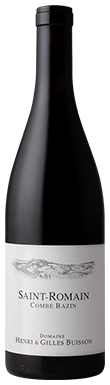
The grapes are from a parcel of fairly young vines facing southwest at 350 metres elevation. The wine is fermented in tank with a small...
2019
Domaine Henri & Gilles BuissonSt-Romain
Domaine Lafouge, Auxey-Duresses, Burgundy, France, 2016
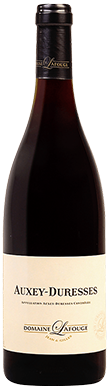
The Villages Auxey from Lafouge is wonderful value. Blended from plots scattered throughout the village, the grapes are partly destemmed and given a cold soak...
2016
Domaine LafougeAuxey-Duresses