The town of Barbaresco
Credit: Consorzio Albeisa
(Image credit: Consorzio Albeisa)

Defined as ‘the harvest of the dust’, 2017 was remembered as an impressively dry vintage.

‘Harvesting took place around 20 days early in Monferrato, with very low yields, and around ten days early in the Langhe, with below-average but satisfactory yields for Barolo and Langhe Nebbiolo, and a little poorer for Barbaresco’ reported winemaker Stefano Chiarlo.

Early picking and naturally lower yields due to the drought were among the main factors that made 2017 so challenging. The tannins are quite often a bit rustic and dry but most producers didn’t make the mistake of waiting for full phenolic ripeness.

‘In order to ensure elegance, freshness and avoid excessive alcohol content, we started harvesting ten days before the usual date [20-27 September]’ added Stefano Chiarlo. Indeed, the 2017s are in general quite fresh and enjoyable, rarely jammy or over-extracted.

The question is: does it make sense to produce a Riserva in such a year? The samples of Barbaresco Riserva 2017 presented at Nebbiolo Prima were few and far between – which starts to answer the question. For those producers who manage the best plots – old vines, proper canopy management, and more moderate east- or southeast-facing sites – the Riserva category deserves attention.

Some producers have tried to mask the angular tannins of the 2017 vintage under a veil of oak and the prestige of the ‘Riserva’ label, however the best wines show concentration and refinement – although they’re not for long ageing.


Aldo’s pick of Barbaresco Riserva 2017 wines:


Barbaresco 2019 vintage report: 40 wines to try

Barbaresco Riserva 2016 vintage report plus top-scoring wines

Top value Barolo 2018: 13 great picks

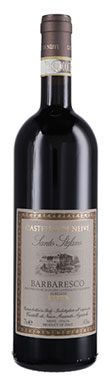
Castello di Neive, Albesani Vigna Santo Stefano Riserva, Barbaresco, Neive, Piedmont, Italy, 2017
My wines
Locked score

One should think that the south-southwest exposure of Santo Stefano within the Albesani MGA would exacerbate the dry character of the vintage, and from an aromatic point of view this is also true. However, the lower position of Castello di Neive's vines and the soil here - rich in clay - performed quite well in 2017. Old-fashioned on the nose with dried violets, forest floor, fresh prunes and tar, camphor and moreover its typical balsamic tones flow to the palate, with crunchy tannins and refreshing acidity covered by a pulp of dark, voluminous fruit. Needs time.

2017

PiedmontItaly

Castello di NeiveBarbaresco

Decanter Premium logo

Join Decanter Premium to unlock all our wines tastings and notes

Join Now

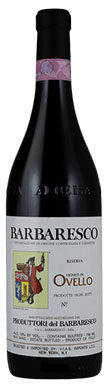
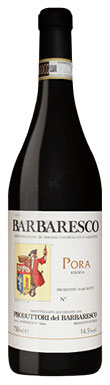
Produttori del Barbaresco, Ovello Riserva, Barbaresco, Piedmont, Italy, 2017

My wines
Locked score

The profile of this 2017 Riserva is completely different from the more graceful and balanced 2019. Nevertheless, the Ovello of Cantina Produttori del Barbaresco is a fiercely rustic yet good example. Restrained if not reductive, it opens up to reveal tobacco and dried cherry aromas with a lot of minty minerality. Austere and dark, it features crisp acidity and muscular tannins with a slightly rustic finish. Traditionally a great price-quality ratio.

2017

PiedmontItaly

Produttori del BarbarescoBarbaresco

Decanter Premium logo

Join Decanter Premium to unlock all our wines tastings and notes

Join Now

Battaglio Briccogrilli, Serragrilli Riserva, Barbaresco, Neive, Piedmont, Italy, 2017
My wines
Locked score

Classic on the nose with smoky woodland, a great definition of pomegranate fruit, and camphor and balsamic notes, the delicacy of Barbaresco is here with elegant, light tannins and tense acidity. Strawberry and cola flavours lead to a muscular finish. A very well handled wine but with a briefer finish than expected.

2017

PiedmontItaly

Battaglio BriccogrilliBarbaresco

Decanter Premium logo

Join Decanter Premium to unlock all our wines tastings and notes

Join Now

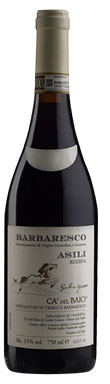
Ca' del Baio, Asili Riserva, Barbaresco, Barbaresco, Piedmont, Italy, 2017

My wines
Locked score

This prestigious Asili Riserva comes from vines planted between 1967 and 1999. The grapes are not destemmed for 10% of the mass, and the must ferments in stainless steel at moderate temperature. The submerged cap method of maceration continues for approximately 45 days. The wine matures for 30 months in second- and third-fill barriques. The graceful nose is focused on rose and violet, with subdued dark fruits. There is great concentration on the palate with a ripe dark cherry flavour, although it's at the expense of finesse. It doesn't come across as over-extracted, but the tannins are slightly rustic. In the end, old vines and Asili's elegance seem to counterbalance the heavy character of the vintage.

2017

PiedmontItaly

Ca' del BaioBarbaresco

Decanter Premium logo

Join Decanter Premium to unlock all our wines tastings and notes

Join Now

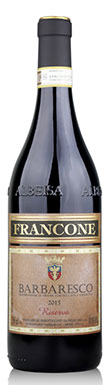
Francone, Riserva, Barbaresco, Neive, Piedmont, Italy, 2017

My wines
Locked score

This Riserva shines for its fresh nose of violet, pomegranate, cola jelly and deep, vibrant cherry fruit. The attack is vibrant as well, with refined tannins, good sucrosity and firm acidity. The tarry finish is a bit warming but the overall balance not bad at all. Here, old vines of more than 40 years played an important role in the maturity of the grapes from the dry 2017 vintage.

2017

PiedmontItaly

FranconeBarbaresco

Decanter Premium logo

Join Decanter Premium to unlock all our wines tastings and notes

Join Now

Musso, Pora Riserva, Barbaresco, Barbaresco, Piedmont, Italy, 2017

My wines
Locked score

Dense garnet in the glass, this Pora from Musso is more perfumed than powerful. The extraction of the dry 2017 grapes was moderate and here the producer avoid the submerged cap technique in favour of pumping over, with 20 days of maceration. After that the wine is aged in 50- and 20-hectolitre botti for 36 months. Over camphor and balsamic notes, a dried cherry fruit aroma and flavour emerges, clear and complex, with a liquorice and straw finish. It lacks a bit of meatiness but the tannins are quite ripe and good yet dusty, sustained by fresh acidity. Great balance for this vintage, not without potential for ageing.

2017

PiedmontItaly

MussoBarbaresco

Decanter Premium logo

Join Decanter Premium to unlock all our wines tastings and notes

Join Now

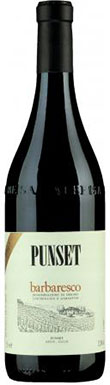
Punset, Riserva, Barbaresco, Neive, Piedmont, Italy, 2017

My wines
Locked score

An organic estate energetically managed by Marina Marcarino. Here, the fermentation is spontaneous with indigenous yeast and the maceration long; even more than four weeks. Then, classically, the wine ages in large oak vessels for at least 24 months with additional time in bottle. The wine seems to be rickety on the nose at first, before revealing instead a multifaceted and fresh character. Blackberry fruit introduces a crunchy style, maybe a bit empty in the middle but lively, refreshing and very tasty. A blend from different MGAs intended for ageing.

2017

PiedmontItaly

PunsetBarbaresco

Decanter Premium logo

Join Decanter Premium to unlock all our wines tastings and notes

Join Now

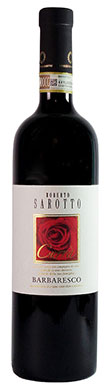
Roberto Sarotto, Currà Riserva, Barbaresco, Neive, Piedmont, Italy, 2017

My wines
Locked score

The evidence of small oak seems to be underlined by the warm character of 2017. If the darker colour and refined tannins are good from a modern, approachable point of view, at this moment it's too extracted in terms of aromatics. Wild strawberry and dried cherry in depth mark the Nebbiolo grape which is otherwise dominated by cola, graphite and liquorice. The crisp acidity tries to balance the finish, which is quite warming.

2017

PiedmontItaly

Roberto SarottoBarbaresco

Decanter Premium logo

Join Decanter Premium to unlock all our wines tastings and notes

Join Now

Abellonio Roberto Cascina Piccaluga, Casot Riserva, Barbaresco, Treiso, Piedmont, Italy, 2017

My wines
Locked score

The cooler profile of Treiso is not disregarded here in the Casot MGA at 350 metres above sea level. This Riserva is tantalising for its fresh style with red currants and black pepper aromas. The palate is dominated by a light extraction: red berries enhanced by a floral touch. The tannins are dusty yet ripe, with refreshing acidity. It lacks layers despite the use of small oak - but this was a cask sample.

2017

PiedmontItaly

Abellonio Roberto Cascina PiccalugaBarbaresco

Decanter Premium logo

Join Decanter Premium to unlock all our wines tastings and notes

Join Now

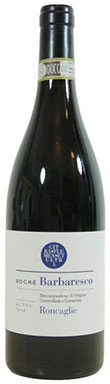
Socré, Roncaglie Riserva, Barbaresco, Barbaresco, Piedmont, Italy, 2017

My wines
Locked score

A graceful Barbaresco focused on a floral bouquet combining rosebud and violet aromas, not without vibrancy of strawberry fruit and dried cherry. The tannins are softened by small oak (225 Litres) where the wine ages for at least 18 months before further ageing in concrete vats. The velvety tannins are supported by good fruit concentration, refreshing acidity and savoury, slightly warming finish. The three hectares of the estate in Barbaresco are all below the estate, one kilometre from Tre Stelle village within the Roncaglie MGA.

2017

PiedmontItaly

SocréBarbaresco

Decanter Premium logo

Join Decanter Premium to unlock all our wines tastings and notes

Join Now
Aldo Fiordelli
Decanter Magazine, Italian Expert and DWWA Judge

Aldo Fiordelli is an Italian wine critic, journalist and wine writer.  He has published four books about food, wine and art and is a regular Decanter contributor.

In Italy he is an editorial board member of L’Espresso restaurant and wine guide (one of Italy’s most prominent) since 2004.  He also writes for Corriere della sera in Florence, as well as Civiltà del Bere (Italy’s oldest Italian wine magazine).

A certified sommelier since 2003, he is currently a 2nd stage student at the Institute of the Masters of Wine.

In 2017 he was named Chevalier de l’Ordre des Coteaux de Champagne.

Aldo joined DWWA for the first time as a judge in 2019.