
The Bardolino makeover plus 12 of the best worth seeking out


This attractive lakeside region of Italy has for many years struggled to make its voice heard above the clamour over its better-known Veneto neighbour. However a new focus on specific terroir zones and clarity over wine styles is giving a boost to Bardolino, as Michaela Morris discovers...
Bardolino is sitting pretty. On the southeastern shores of Lake Garda, this picturesque wine region is ideally situated to slake the thirst of pleasure-seeking travellers relaxing on the waterfront. But not all is rosy in fair Bardolino…
Scroll down for Morris’ top 12 Bardolino wines
The popularity of this tourist playground has skewed wine production towards high volume, cheapening the naturally cheerful disposition of its wines. The other monkey on Bardolino’s back is Valpolicella. This mighty region to the east casts a long shadow, with its ripasso and Amarone styles upstaging Bardolino’s fine-boned charms. Fed up of this belittlement, however, Bardolino has recently staged a double-barrelled comeback, which involves a sub-zonation for its reds and a refashioning of its rosés.
A tale of two regions
Separated by the Adige river, the division between Bardolino and Valpolicella is well defined. Created by a series of glaciations, Bardolino’s poor, stony, moraine soil is key to its lithe wines. Just a few kilometres away in Valpolicella, the same grapes – Corvina, Rondinella and Molinara – grow on limestone- rich calcareous soil, which lends more grip.
Bardolino’s proximity to Lake Garda is equally significant. The deep waters of the lake have a profound moderating effect, creating a Mediterranean climate within an otherwise Alpine pocket. In these mild conditions, Corvina reaches sufficient ripeness – albeit at refreshingly moderate alcohol. Consequently, Bardolino does not have the deeply embedded tradition of drying grapes as in Valpolicella.

Within Bardolino there are subtle variations across its gently undulating sites. In fact, a study conducted from 2002 to 2005 in collaboration with the University of Milan’s Professor Attilio Scienza identified more than 60 different soil types. Furthermore, historical documents dating back to 1825 reference three distinct climatic areas. These provided the framework for Bardolino’s newly launched official sub-zones of La Rocca, Montebaldo and Sommacampagna. It is too early to pronounce definitive traits for each, however a sampling from the 15 or so producers who are declaring sub-zones suggests some family resemblances.
New sub-zones
La Rocca takes its name from the cliff that sits above the town of Garda and corresponds largely with Bardolino’s classico zone. It hugs the lakeshore, hence vineyards here receive the most solar radiation. As for the soils, they are alluvial, ‘although of glacial origin’, as producer Giovanna Tantini explains. ‘One of the characteristics that always remains is the minerality,’ she asserts. Along with Tantini, newcomer Poggio delle Grazie is a name to watch. Both craft wines that epitomise Bardolino’s brightness, energy and succulence.
Inland, and in the northern half of Bardolino, Montebaldo reaches the highest altitudes and boasts the most pronounced differences between day- and night-time temperatures. ‘Cool breezes from the Adige valley mean that harvest is later than other areas by up to 15 days,’ adds Tenuta La Presa’s Fabio dei Micheli. The soil is also heavier, with a greater presence of stones. Montebaldo’s wines are the most uniformly distinct of the three new sub-zones, allying freshness with darker fruit and a sturdier structure. Le Fraghe’s single-vineyard Brol Grande bottling is thrillingly vertical and demonstrates the modest ageability of Bardolino’s best reds. Gentili and Villa Cordevigo’s organic label are also worth seeking out.
To the south, Sommacampagna’s low hills overlap with the white wine appellation of Custoza. This zone registers the highest rainfall but also the highest temperatures, giving slightly richer, softer wines. Albino Piona and Corte Gardoni offer delicious examples revealing an understated seductiveness.

Bigger picture
Differences, however, aren’t purely linked to sub-zone. ‘It is also the style of the winemaker,’ emphasises Silvio Piona at Albino Piona. Furthermore, as Bardolino isn’t limited to a single grape variety, comparisons within sub-zones are complicated by variations in the blend. Grapes such as Merlot and Cabernet Sauvignon are allowed up to 10% and, when included, make a noticeable mark.

While this isn’t about to change, permitted percentages of Bardolino’s main grapes are. An increase from its current 80% maximum to 95% will give a greater voice to Corvina. ‘This is the variety best adapted to translate Bardolino’s individual production areas,’ maintains Franco Cristoforetti, president of the Bardolino consorzio and co-owner of Vigneti Villabella. Conversely, the new regulations reduce the required minimum of Rondinella from 10% to 5%. Growers in cooler zones, where Rondinella struggles to ripen, may use this to their advantage.

The big question is how these changes will affect quality. Producers such as Elisabetta Panetto of Poggio delle Grazie believe the sub-zonation is an opportunity to elevate Bardolino’s reputation. ‘It is making us refocus on the terroir,’ she comments. Of particular significance, Bardolino’s sub-zones encompass the entire region, rather than exalting specific areas only. This contrasts with the crus of Beaujolais, for instance, from which the project also drew inspiration.
Nevertheless, permitted yields for wines designated as a sub-zone are lower than those allowed for straight Bardolino DOC (10,000kg/ ha as opposed to 12,000kg/ha). ‘It means that the big-volume wineries will need to change the way they are working,’ states Panetto.
Rosé reborn
Concurrent with Bardolino’s red reformation, its pink counterpart is also undergoing its own transformation. The region has a long history of making rosé, or rosato, which is locally called chiaretto (pronounced ‘key-ah- RET-toh’). Coming from the word chiaro, which means pale, chiaretto can be interpreted as ‘a lighter shade of pale’. But many contemporary offerings were more shocking pink or fuchsia in colour due to extended skin contact. They were often made using the saignée technique – bleeding juice off the skins during maceration to concentrate the red wines.
‘This darker, heavier style [of rosé] oxidised within a year,’ says consultant Angelo Peretti. Collaborating with the Bardolino consorzio since 2008, Peretti helped spearhead the project to tone down Bardolino’s rosatos. At the time, only a handful of producers were making a pale style of rosé. Giovanna Tantini was among these and believes it to be the natural expression of Corvina. ‘The skins leave little colour,’ she explains. ‘It is the maximum extraction of Corvina.’

Widespread change demanded a challenging cultural shift, and Bardolino’s Rosé Revolution didn’t start in earnest until the notoriously wet 2014 vintage. After solid rain for the entire month of June, producers were anxious. This was Cristoforetti’s first year as consorzio president. ‘He proposed changing everything, arguing that we weren’t risking anything,’ recalls Peretti. That year, 85% of chiaretto production was pale pink in hue. ‘The weather in 2014 was the key to chiaretto,’ quips Peretti.
Chiaretto’s evolution coincides auspiciously with the rising popularity of Provence’s ‘barely there’ delicately coloured rosés. Production has increased and in 2018 upwards of 9.5 million bottles of chiaretto were guzzled with gusto. This represents more than one third of Bardolino’s total production.
While chiaretto includes small quantities of fully sparkling and lightly effervescent pink, most examples are still, dry and indeed pale. These clean, fresh, delicately floral quaffers evoke the exquisite pastel sunsets over Lake Garda and will please many a palate.
Drinking pleasure
Yet chiaretto is not quite as light, nor quite as discreet as its French cousin. Many producers are striving for this extreme, though Italy’s bolder personality sometimes pokes through with faint herbal notes or a snap of pepper. This isn’t necessarily a bad thing.
In truth, the most intriguing chiarettos are those that have gained character and texture by ageing on the lees or maturing in cement or even oak rather than just stainless steel. And there are still a handful of producers who aren’t afraid of colour, even though wines that are deemed too dark may be rejected from the Chiaretto di Bardolino DOC. One notably tasty example is Villa Calicantus’ Chiar’otto, which looks more like a light red than the trendy pale rosés of today. This wine may be niche in its appeal but it lends welcome nuance to the sea of pale pink.
Revamping an established wine region is no easy feat. It takes cooperation, persistence and vision. Bardolino has emerged with a modern new look. The rosés have lightened up and the reds are striving towards enhanced terroir expression. In either case, Bardolino’s greatest success is the pure drinking pleasure achieved when producers take the wines seriously.
See Morris’ top 12 Bardolino wines
You may also like
Lugana: Lake Garda’s dry white wine secret
Soave revival: Producers to know
Decanter travel guide: Coastal Campania
A wine lover’s guide to Sardinia
Villa Calicantus, Bardolino, Veneto, Italy, 2017
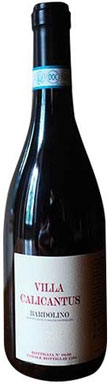

Aged five months in used barriques, this deeply coloured and weighty rosato behaves more like a light red than a rosé. Full of freshly picked,...
2017
Villa CalicantusBardolino

Le Fraghe, Ròdon, Chiaretto di Bardolino, Veneto, Italy, 2018
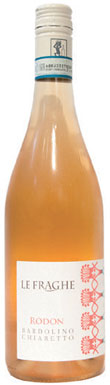
93
Delicate blush. Slightly leafy, floral aromas on the nose. A restrained but intense, mineral palate with a lightly tannic quality and a concentrated, bone-dry finish.
2018
Le FragheChiaretto di Bardolino
Poggio delle Grazie, Chiaretto di Bardolino, Veneto, Italy, 2018
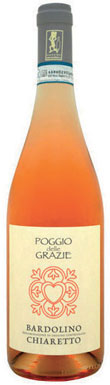
Brothers Massimo and Stefano Brutti started making wine from their family’s 15ha property in 2014. The chiaretto is delicate and limpid but not fragile. Think...
2018
Poggio delle GrazieChiaretto di Bardolino
Giovanna Tantini, Chiaretto di Bardolino, Veneto, Italy, 2018
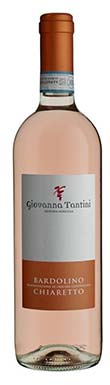
93
Pale blush; white-fruit and citrus notes on the nose. An intense, juicy, very moreish palate featuring a delicate fruit-salad character and firm underlying structure. Benchmark style.
2018
Giovanna TantiniChiaretto di Bardolino
Cantina di Custoza, Chiaretto di Bardolino, Veneto, Italy, 2018
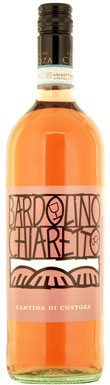
While predominantly focused on whites under the Custoza denomination, this 200- member cooperative recently launched a limited-production organic chiaretto. Quite fleshy in style, it remains...
2018
Cantina di CustozaChiaretto di Bardolino
Guerrieri Rizzardi, Chiaretto di Bardolino, Veneto, Italy, 2018
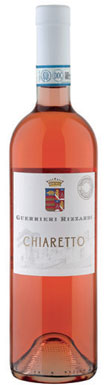
Sangiovese rounds out the classic Corvina, Rondinella, Molinara blend and the grapes are given 12 hours of maceration. Orange peel and tarragon add character to...
2018
Guerrieri RizzardiChiaretto di Bardolino
Le Fraghe, Brol Grande, Bardolino, Classico, Veneto, Italy, 2016
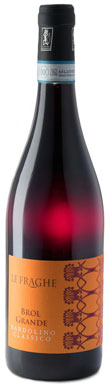
From a single vineyard planted in 2000, Brol Grande is sturdy enough for ageing in large wooden vats and typically reveals itself slowly yet gracefully....
2016
Le FragheBardolino
Albino Piona, Bardolino, Veneto, Italy, 2017
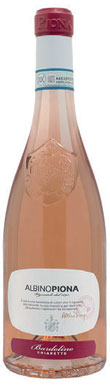
Piona favours spontaneous fermentations with indigenous yeast and a gentle extraction to achieve elegance. Despite the hot vintage, this remains crunchy and bright with nuances...
2017
Albino PionaBardolino
Villa Cordevigo, Bardolino, Veneto, Italy, 2016
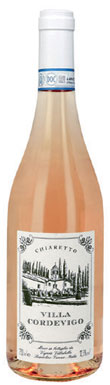
The second vintage of Vigneti Villabella’s organic label. It exhibits the darker, blackberry fruit associated with the Montebaldo sub-zone along with a lifted freshness of...
2016
Villa CordevigoBardolino
Bigagnoli, Bardolino, Classico, Veneto, Italy, 2017
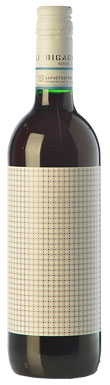
Car mechanic by day, Alessio Bigagnoli started making wine from his family’s vineyards in the sub-zone of La Rocca in 2012. A lightweight yet punchy...
2017
BigagnoliBardolino
Le Vigne di San Pietro, Bardolino, Veneto, Italy, 2015
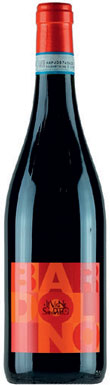
From a 10ha property in Sommacampagna, this Bardolino is fleshed out by a healthy dollop of Merlot. Mouth-cleansing enough to wash down salumi and finishes...
2015
Le Vigne di San PietroBardolino
Monte del Frà, Bardolino, Veneto, Italy, 2017
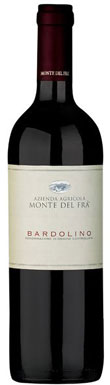
Exclusively from the southeastern sub-zone of Sommacampagna though not declared as such. Displaying pepper and sweet baking spice atop sumptuous summer berries, this round, soft...
2017
Monte del FràBardolino
