
Barolo 2006: Panel tasting results
Sufficient time has now passed for the quality of the top wines to shine through – the best 2006 Barolos offer both maturity and freshness, and many will continue to age well.


Stephen Brook, Nicholas Clerc MS and Aldo Fiordelli tasted 29, rating six outstanding and 16 highly recommended.
With only 29 wines to be tasted, our judges agreed it was impossible to draw any broad conclusions as to which of the Barolo communes performed the best. But in fact, the top 10 featured at least one wine from each of the major Barolo communes, with six wines in all awarded an Outstanding score.
Covering cross-communal blends, single-vineyard (Menzioni Geografiche Aggiuntive, or MGA) bottlings and Barolo Riservas, our judges were faced with a diverse line-up. Nicolas Clerc MS said he was ‘pleasantly surprised’ by the wines, adding that, ‘although it’s not a vintage I have come across often, I have heard about it a lot – it’s a kind of controversial vintage’.
Quick link: See all 29 Barolo 2006 tasting notes & scores
By the mid-2000s, the disputes within the region among the proponents of ‘traditionalist’ and ‘modernist’ winemaking philosophies had in the end become a catalyst for stylistic change. Aldo Fiordelli explained: ‘The region’s tradition was originally for very extractive styles, but today we have arrived at a less extractive and more balanced style of wine overall. Barolo 2006 was a bit in the middle, with some examples which are still quite extractive and powerful compared to other wines which show more freshness and balance.’
Stephen Brook added: ‘I’ve noticed before that, with age – these wines are now 14 years old – what comes through is the quality of the fruit, the quality of the winemaking and the quality of the terroir; not whether the vats were this size or that size… In the old days they would have been fermenting at extremely high temperatures – they would have been punishing those grapes. They don’t do that any more and it makes a huge difference.’
The performance of the Barolo Riservas sparked a discussion between our judges with respect to producers’ motives in extended ageing. ‘I found the Riservas a bit more difficult to assess, despite the fact that some of them were among the best wines,’ asserted Clerc. ‘I have to question why they are Riserva, though – sometimes the standard length of ageing is enough.’
Brook agreed, stating that there were ‘two or three Riservas which had a power and tension that set them apart from the non-Riservas’, but he was ‘not sure why the majority of this category are labelled as Riservas’.
These 2006 Barolos are ready to drink now, our judges agreed, although they emphasised that the best wines will easily age for another decade. Fiordelli outlined: ‘We don’t expect too much evolution from these wines yet, because Nebbiolo is one of the world’s most ageable varieties, so you would expect freshness alongside a little evolution at this point. And we have this, I think, in the best examples.’
Brook stressed that ‘the best wines have a lot of freshness as well as staying power. But the strong secondary characters in evidence may not please those people who want fruit above all.’
Summing up, Clerc concluded: ‘I think what we had today was quite excellent. The levels of maturity and evolution were there, and I mostly rewarded the wines which were showing a slower evolution, which has always for me been a sign of great wine. The best wines here have retained acidity, precision and gastronomic tannins. Some of them still have the potential to age even longer – I think most of them actually!’
Discussion copy by James Button.
The scores
29 wines tasted
Exceptional 0
Outstanding 6
Highly Recommended 16
Recommended 6
Commended 1
Fair 0
Poor 0
Faulty 0
See all 29 tasting notes here
About Barolo 2006
By Stephen Brook
Like so many vintages in this complex corner of Piedmont, 2006 had a mixed reception on release. The growing season was complicated. After a cold, wet winter came a hot and dry May, with good weather into early summer. Temperatures cooled in August, but it remained mostly dry until mid-September when there was considerable rainfall. Cooler nights preserved acidity and tannin while most growers waited for drier conditions before harvesting.
Initial assessments varied. Some acclaimed the wines from Serralunga; others detected greenness in some examples. Monforte and Castiglione Falletto were considered to have been successful, but some found La Morra relatively disappointing. Most agreed, however, that this was a tannic vintage, with wines that were austere from the outset. Crowd-pleasers they were not, but it was clear they had the potential to age well.
Turning point
The 2006 vintage took place at a transitional moment for Barolo. The much-discussed battle between ‘traditionalists’, who favoured large neutral casks, and ‘modernists’, who preferred shorter macerations followed by ageing in barriques, was beginning to calm down – at least in the sense that the distinction between the two styles was becoming blurred. There were still partisans on both sides, but many producers were becoming more flexible and pragmatic when it came to vinification and ageing.
The young wines had not been easy to taste, but they were less punishing than in some previous vintages, when extraction had been pushed much further, and tannins could overwhelm the palate.Tannin management seems to be the name of the game in 2006, with the top winemakers succeeding in fashioning wines with polish and integrated tannins. Those who were less successful produced overly firm, tannic examples, which in some cases were quite drying. The Riservas were not necessarily superior: although three of the top six wines of this tasting were indeed Riservas, there were also four among the less admired.
2006 is a classic vintage for Barolo. It is less charming than 2004, less fruit-driven than 2007, less intense than 2010, but with rich colours and an appealing and complex sturdiness and structure. Many wines are now mature, in the sense that secondary aromas (wet leaves, bacon, tar) are developing, although many of the best wines still have beguiling red-fruit aromas and a marked floral character. Some do need to be drunk soon, but in this tasting these were in the minority. Most wines will cruise on for many years to come.
Given the limited number of wines poured in this tasting, each had to be assessed on its own merits, and the best examples demonstrated freshness and precision with integrated tannins.
Barolo: the facts
DOCG from 1980
Area under vine 2,150ha (100% Nebbiolo)
Production About 14 million bottles per annum
Production zone Principally the communes of Barolo, Castiglione Falletto, La Morra, Monforte and Serralunga d’Alba, plus parts of Cherasco, Diano d’Alba, Grinzane Cavour, Novello, Roddi and Verduno
Ageing rules At least 18 months in wood, with a total ageing of 38 months for Barolo and 62 for Barolo Riserva
Barolo: know your vintages
2016 4.5/5 – Not yet released. Very warm weather in early September and October fully ripened the grapes, which remained healthy. Potentially excellent. Keep.
2015 5.5 – Torrid July but cooler, moister August and September brought the grapes to ripeness, especially in Barbaresco. Small crop, charming wines. Keep.
2014 4/5 – After a stormy summer, a fine September saved the vintage, although hail did much damage. Yet top growers produced fine, elegant wines. Better in Barbaresco. Keep.
2013 4.5/5 – A cool summer but an abundant crop that needed to be thinned to achieve full ripeness. Fragrant, elegant wines now gaining in structure. Keep.
2012 3/5 – Hail and sunburn were among 2012’s problems, and growers had to respond adroitly in the vineyards. Some fine wines, but others are soft and forward. Drink or keep.
2011 4.5/5 – Hot, humid conditions led to wines that are ripe and sumptuous, but already beginning to drink well. Excellent in Barbaresco. Drink or keep.
2010 5/5 – Superb weather in late summer and September, giving slow ripening. Wines are vibrant and structured, with admirable tension and ageability. Marginally less successful in Barbaresco. Keep.
Barolo 2006: The top scorers
See all 29 tasting notes here
The Judges
Stephen Brook
Brook is a Decanter contributing editor and the DWWA Regional Chair for Piedmont. The author of almost 40 books in all, he has won several awards for his work in wine. He fully revised the last two editions of Hugh Johnson’s Wine Companion, and his definitive study The Complete Bordeaux is now in its third edition.
Nicolas Clerc MS
Clerc is a wine buyer for Armit Wines. A Master Sommelier since 2010, he is the current president of the sommelier arm of the UK Academy of Food & Wine Service, and a board member at the Court of Master Sommeliers Europe. He won UK Sommelier of the Year in 2007.
Aldo Fiordelli
A certified sommelier since 2003, Fiordelli is a widely published Italian journalist, wine writer and author, and a DWWA judge. Editor of the L’Espresso restaurant and wine guide, he also writes for Civiltà del Bere, Italy’s oldest Italian wine magazine. In 2017 he was named Chevalier de l’Ordre des Coteaux de Champagne.
You may also like:
How terroir makes a difference in Barbaresco
Gaja Barbaresco – A taste of the greats
Cornas, Côte-Rôtie & Hermitage 2010: Panel tasting results
Castello di Verduno, Monvigliero Riserva, Barolo, Piedmont, Italy, 2006
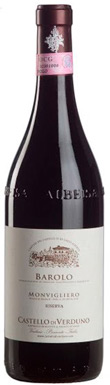

Nebbiolo was first produced at Castello di Verduno in 1838. In the early 20th century, the Burlotto family bought the property, opening a hotel and...
2006
Castello di VerdunoBarolo

Marcarini, Brunate, Barolo, Piedmont, Italy, 2006
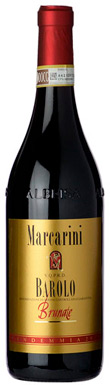
The Marcarini family has been producing wine in Piedmont for six generations and owns much of the Brunate vineyard area where the grapes for this...
2006
MarcariniBarolo
Ceretto, Bricco Rocche, Barolo, Piedmont, Italy, 2006
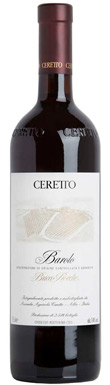
The Ceretto winery was established in the 1930s; however, it was a trip to Burgundy in the 1960s that inspired brothers Bruno and Marcello Ceretto...
2006
CerettoBarolo
Monti, Bussia, Barolo, Piedmont, Italy, 2006
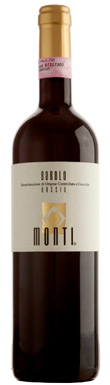
In 1996, 30-year-old Paolo Monti purchased this historic estate in Monforte d'Alba and with his friend Roberto Gerbino started producing a range of varieties from...
2006
MontiBarolo
Giovanni Sordo, Perno Castiglione Falletto Riserva, Barolo, Piedmont, Italy, 2006
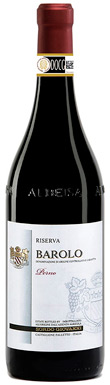
The Giovanni Sordo estate was founded in 1912 and, with a total of 53ha of vineyards, is the only producer to vinify eight different Barolo...
2006
Giovanni SordoBarolo
Parusso, Bussia Riserva, Barolo, Piedmont, Italy, 2006
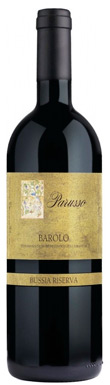
Gaspare Parusso acquired his first vineyard in 1901, though it wasn’t until the 1980s that the family started producing wine on a commercial basis. Today,...
2006
ParussoBarolo
Boroli, Villero Riserva, Barolo, Piedmont, Italy, 2006
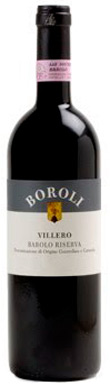
A finesse of bright fruit and floral notes flow through the firm, velvety tannins, robust structure and subtle elegant length.
2006
BoroliBarolo
Elvio Cogno, Ravera, Barolo, Piedmont, Italy, 2006
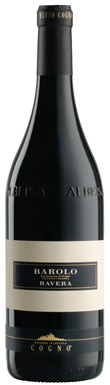
Ripe, fleshy damsons layered with liquorice, cigar box, tar and truffle; firm, ripe and persistent with a long, mocha finish.
2006
Elvio CognoBarolo
Brezza, Sarmassa, Barolo, Piedmont, Italy, 2006
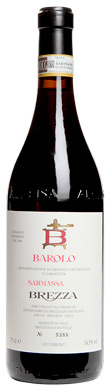
The essence of aged Nebbiolo: charming rose petal and red fruit elegance with ample acidity and exquisite tannins melting together.
2006
BrezzaBarolo
Rivetto, Serralunga, Barolo, Piedmont, Italy, 2006
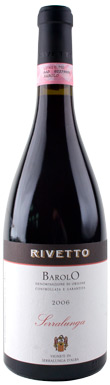
Fantastic purity of terroir displaying a cured meat, truffle, mineral savouriness with a delicate, precise structure and firm, elegant tannins.
2006
RivettoBarolo
