
Barolo: Entering a new era, plus 12 of the best worth seeking out


War is over. After years of controversy and division, Barolo’s new faces have established peace between modernism and tradition, and their focus is now in the vineyard, not the winery. By Tiziano Gaia...
A group of young rebels spark a revolution in a backwater town leading to violent clashes between the local Conservative and Liberal parties. The story in Gabriel García Márquez’s novel One Hundred Years of Solitude centres on a fictional town in Colombia in the early 1900s – but in the 1990s and 2000s, there was another ideological tussle occurring in Piedmont’s Langhe hills.
Scroll down for Tiziano Gaia’s pick of the best 12 Barolos
The so-called Barolo Wars pitched the modernists – interpreters of smooth, round wines – against traditionalists, faithful to a vision of the ‘king of wines’ as austere and firm. The former preached thinning of Nebbiolo bunches and brandished barriques to produce a rock-n-roll Barolo, while the diehards vigorously defended their lengthy macerations and refused to give up the blues of big barrels. As if in a kind of oenological parliament, producers were accused of either progressivism or conservatism.Tensions have eased in recent years as prosperity and compromise have prevailed. ‘Now the climate is definitely more relaxed, but our bellies are also full,’ says Silvia Altare. Her father, Elio, was a visionary moderniser who brought Barolo to the world’s attention from a small hamlet prophetically called Annunziata (‘the one who received the Annunciation’). He introduced small oak barrels and encouraged young growers to estate-bottle their wines rather than sell fruit.Three decades later, Silvia reflects the aspirations and anxieties of the next generation, one that owes much to the entrepreneurial spirit and charisma of its fathers, but at the same time is looking for its own way forward and identity. She is not interested in overturning the foundations of the family business, however. ‘It wouldn’t make sense – unlike our parents, young people are inheriting a successful winemaking model. I’ve kept the super-fast macerations that Elio introduced – just four or five days – but I tend to use a lower percentage of small new wood for ageing. Of course, when I present my wines, the first question I hear is, “What does your father think of them?”.’The wines of Barolo are not the same as they were just 10 or 15 years ago, and that’s a reflection of lessons learned through experience. Beppe Caviola – one of the region’s leading winemaking since Altare first persuaded him to bottle his wines in 1991– provides incisive insight. ‘All I can say is that I wouldn’t do a 100% new barrique Barolo again,’ he admits. ‘It’s not about rejecting the revolution, just adjusting the sights a little to align Barolo with new sensibilities.’
For Caviola, there is no single Barolo ideal. What exists today is an idea of contemporary Barolo: lengthy maceration and delicate extractions that fully respect the integrity of the grapeskin; controlled fermentations, medium or large wooden barrels for ageing, and the relatively new addition of concrete for post-fermentation maturation.
Return to the land
In the male-dominant Langhe landscape, Chiara Boschis believes that in recent years there has been too much emphasis on winemaking technique in Barolo, ignoring the economic and social improvements that Nebbiolo’s global success has brought to the region. ‘I’m thinking about the return of many young people to the land. Unless you were born here, you cannot understand what the Langhe was like before the wine renaissance in the 1990s. We’ve moved from the malora [a dialect term for absolute poverty], forcing people to flee the countryside, to the recognition of our vineyards as a UNESCO World Heritage site.’
The way forward now is not to focus on oak or maceration time, but on the sustainability of the prized vineyards and protecting the environment. Chemicals are on their way out, with Boschis leading the charge in the celebrated Cannubi sub-zone. She encouraged its producers to adopt a vineyard protocol entitled CannuBio. ‘While we lacked a common direction, everyone moved towards natural working methods,’ she says.
What’s more, wineries are increasingly investing in a specialised workforce that is replacing machinery, while also reducing chemical inputs. Though less mechanisation leads to increased costs, most wineries have been able to deal with it thanks to rising sales triggering a virtuous cycle: the increase in demand encourages improvements along every step of the production process, generating higher quality, which in turn leads to further demand.
Travelling around the 11 communes that make up the Barolo area is thrilling. The landscape that so enchanted UNESCO offers a spectacular archipelago of vineyards. As he admires the panorama from his winery’s terrace at La Morra, Pietro Ratti says: ‘Each parcel has its own soul, its own character. The future of our wines lies in exalting the crus.’
There is no better person than Ratti to talk on the subject. In his role as chair of the local winemakers’ consortium, he presided over the comprehensive mapping of the Barolo vineyards, continuing the legacy of his father Renato. The roots of the current 181 crus – the Menzioni Geografiche Aggiuntive – can be found in Renato’s 1970s Carta del Barolo, which classified sub-zones based on quality.
‘We have to complete the circle, through their designation in terms of greater or lesser value,’ says Ratti. Forward-looking producers hope that Barolo will become the first DOCG to create such a cru system, recognising the quality of its vineyards in a similar way to Burgundy’s Côte d’Or. Discussions are ongoing.
Enlightened view
Raising one’s gaze from the map to the endless expanse of vines, stretching seamlessly from the Langhe of Barolo out to Barbaresco, the complexities of such a designation are apparent. In comparison, modern and traditional were relatively simple concepts that reflected the spirit of a simpler time. But these days, defining Barolo with just one adjective would be a tricky task. The reaction to certain winemaking extravagances of the early 2000s resulted in the rehabilitation of historic norms; traditional and modern became fused and, more generally, there was a palpable domination of reason over emotion. It could be argued that Barolo is entering its own neoclassical era.
‘That’s all very well, but ultimately I believe that what’s important is producing a good Barolo, and trying to sell it,’ says Miroslav Lekeš in response to the theory. Originally from the Czech Republic, he is the owner of Réva, a winery with a restaurant, hotel and golf course in Monforte d’Alba. His pragmatic approach, which rises above the debates and old rifts, is not unique to the Barolo area.
The district has recently been attracting investors, from Italy and overseas, with little or no experience of the wine industry. They come to the Langhe not only for financial reasons. Underpinning the phenomenon is a love for the landscape, its history and the slow rhythms of the hillside towns. ‘After seeing the film Under the Tuscan Sun, I decided to buy an estate in Italy, and my research led me here,’ continues Lekeš. When he talks of his vinous inspiration, he cites with equal enthusiasm both La Spinetta and Giacomo Conterno – the equivalent of night and day when it comes to interpreting Nebbiolo.
The locals roll their eyes, considering his approach naïve. For them, wine is a serious matter. And yet new entrants breathe new life into the Piedmont air. Take Réva’s youthful employees, for example, or Milanese lawyer Gregorio Gitti, who, attracted by its illustrious past, bought the elegant Castello di Perno with the intention of turning it back into the artistic and literary hub it once was, as well as a site for wine production. The much-talked- about acquisition of the Vietti brand by American entrepreneur Kyle Krause further increased the already high value of the area’s vineyards. And who knows what we can expect from new wineries owned by Italians with no prior experience in wine, such as Garesio in Serralunga and ForteMasso in Monforte?
Looking ahead
The Langhe of the 2020s will be more multicultural and multilingual than ever, but those fearing a loss of character can rest easy. The new wineries are being entrusted to local experts. Krause has handed the management of Vietti to its former owner Luca Currado to ensure continuity, while Réva and Castello di Perno have turned to Gianluca Colombo, who perfectly represents the link between advancing innovation and tradition. The identity of the local area is not in question.
In the end, none of this is surprising: historically Barolo has always been subject to outside influences. In the 19th century, it was the Savoy monarchs who developed and promoted the wine, and for much of the 20th century its prime ambassadors were notaries, pharmacists and merchants.
Despite efforts to portray the area as an isolationist rural idyll, Barolo has the world in its DNA – and the wine world now has Barolo in its blood.
A freelance writer and editor, Tiziano Gaia first worked on Slow Food Editore’s wine publications in 2000. He was co-director of the 2014 movie The Barolo Boys: The Story of a Revolution.
See Tiziano Gaia’s pick of the best 12 Barolos
You may also like
Top Barolo 2008 wines: Panel tasting resultsFrom the archive: Barolo 2009 panel tasting resultsFrom the archive: Barolo 2010 panel tasting resultsTop Barolo Riserva 2012 winesBarolo 2014: Vintage report and tasting notes
Elio Altare, Vigna Bricco Cerretta, Riserva, Barolo, Serralunga d’Alba, Piedmont, Italy, 2012
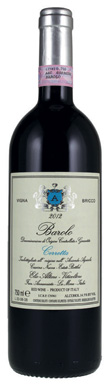

Altare magnificently interprets the Serralunga cru in this modern classic, which spent 24 months in barrique, 20% new. There is exhilarating progression in this wine...
2012
Elio AltareBarolo

Vietti, Lazzarito, Barolo, Serralunga d’Alba, Piedmont, Italy, 2014
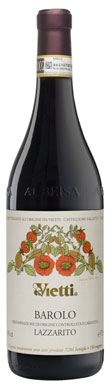
Lazzarito is a majestic cru in Serralunga, and this sees 30 months in barriques and large barrels, offering unmistakable personality in a ‘third way’ Barolo,...
2014
ViettiBarolo
E Pira & Figli, Mosconi, Barolo, Monforte d’Alba, Piedmont, Italy, 2014
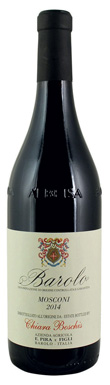
Chiara Boschis’ take on Monforte’s Wagnerian terroir translates it into a minerally, fruit-driven symphony with refined tannins and graceful flavour. This is a brilliant compromise...
2014
E Pira & FigliBarolo
Damilano, Cannubi, Barolo, Barolo, Piedmont, Italy, 2014
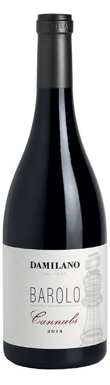
Cannubi’s superb terroir, coupled with more than a century of winemaking experience, enabled Damilano to negotiate the challenges of the complex 2014 vintage. This has...
2014
DamilanoBarolo
GD Vajra, Bricco delle Viole, Barolo, Barolo, Piedmont, Italy, 2014
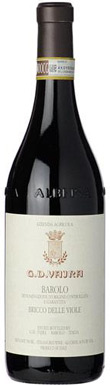
50 days of maceration and 30 months in large barrels sculpt a floral, sapid and caressing Barolo of rare nobility. Full, with round tannins. A...
2014
GD VajraBarolo
Réva, Ravera, Barolo, Novello, Piedmont, Italy, 2013
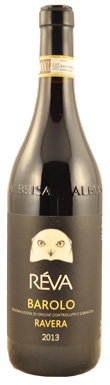
A kaleidoscope of spices and forest-floor aromas, vibrant acidity and silky tannins. Superb structure and a finish marked by the return of cigar box and...
2013
RévaBarolo
Cascina Fontana, Barolo, Piedmont, Italy, 2013
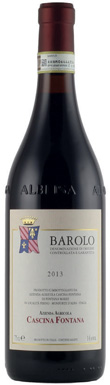
Mario Fontana blends grapes from Castiglione Falletto and La Morra, the former bringing power, the latter softness. The wine spends three years in large barrels...
2013
Cascina FontanaBarolo
Fratelli Alessandria, Barolo, Piedmont, Italy, 2014
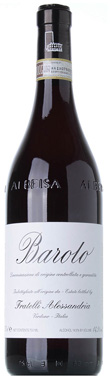
Vittore Alessandria merges tradition, blending crus and using large barrels, with modernity – stainless steel tanks and medium to short fermentations. The result is splendid:...
2014
Fratelli AlessandriaBarolo
Renato Ratti, Marcenasco, Barolo, Piedmont, Italy, 2015
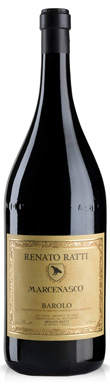
In 1965, Renato Ratti created the ‘Marcenasco style’, now skilfully being continued by his son Pietro. The cherry scents, cedar, liquorice and sinuous palate faithfully...
2015
Renato RattiBarolo
Borgogno, Riserva, Barolo, Piedmont, Italy, 2011
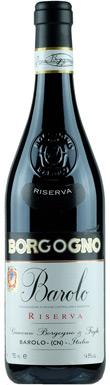
2011 was particularly hot from mid-August through September, leading to an early harvest. Farinetti's second year in charge, he increased the maceration period from 30...
2011
BorgognoBarolo
Ca’ Viola, Sottocastello di Novello, Barolo, Novello, Piedmont, Italy, 2013
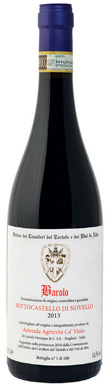
Beppe Caviola aims for elegance and drinkability and hits the target thanks to the careful use of large barrels and post-ageing concrete. Harmonious and velvety,...
2013
Ca’ ViolaBarolo
Giulia Negri, Serradenari, Barolo, La Morra, Piedmont, Italy, 2015
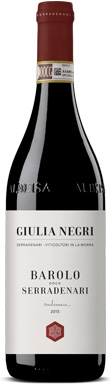
A high, cool microclimate and the blue marl at the top of La Morra give wild strawberry notes and fortifying acidity. Already refined, though the...
2015
Giulia NegriBarolo
