
Baudains: How a little Piedmontese village saved its vines
Richard Baudains visits the village of Carema in Piedmont and finds ‘a sense of momentum’ and a bright future for its Nebbiolo wines.


The village of Carema lies in a natural amphitheatre of terraced vineyards on the west side of the Dora Baltea valley, on the Piedmontese side of the regional border with the Val d’Aosta.
Below is the motorway which climbs up the valley to the Mont Blanc tunnel; above are the first high peaks of the Alps.
But recent years have seen a rejuvenation of the village, and so I visited the area to meet some of the producers bringing winemaking back to life.
Eight Nebbiolo from Carema listed below
Carema is made from a biotype of Nebbiolo known locally as Picotendre (the name reveals the influence of the French-speaking Val d’Aosta) or alternatively as Picotener or Picotendro.
If the wines of the Langhe are all about power and depth, Carema shows the more subtle, refined face of Nebbiolo. The combination of sandy soils and sub-Alpine climate bring out the complex aromas of the variety in wines with the classic pale shades of the variety, along with fine-knit tannins, vibrant energy, and alcohol levels hovering between 13-13.5%.
The wines of Carema tend to drink earlier than those of Barolo or Barbaresco, and one suspects they have the prerequisites to age – although the scarcity of older bottles makes that hard to confirm.
Carema’s terraces
The remarkable terraced vineyards of Carema are the epitome of heroic mountain viticulture. Supported by drystone walls which follow the contours of the hillside, they rise from around 300 metres above sea level to over 600 metres, with stamina-sapping gradients.
The terraces are completely covered by a roof of vines trained on an ingenious pergola system. Every three metres, a chestnut beam reaches from the back wall of the terrace to the wall of the one in front, where it is supported by a stone pillar.
Smaller lateral beams cross from left to right, forming a grid over which the vines extend in a tangle of vegetation above head height.
In the past, the system served to optimise space by allowing for the planting of vegetables under the pergolas – but it also has viticultural functions.
The rigid structures protect the vines from the fierce winds which blow down the valley, and the stones of the walls and pillars absorb heat during the day and release it during the night and early morning, protecting against frost.
Dying art
Pergola training also has an important influence on the character of the wines. Local enologist and producer, Vittorio Garda says that compared to wire-trained systems, pergola-grown wines have slightly lower alcohol and slightly higher acidity, which in times of ongoing climate change is a significant advantage.
There are, however, disincentives. Yields are low (an average of 40 quintals/ha) and the cost of maintaining the pergolas is high. Pruning the canopy is also a highly specialised task, which as the Cantina Produttori Nebbiolo di Carema cooperative’s agronomist, Alessio Maneglia, explains risks becoming a dying art.
For these reasons, many of the new growers are experimenting with guyot training and the simpler Veronese pergola of Soave and Valpolicella. Some of the older producers I spoke to find the trend disturbing, and they fear for the loss of Carema’s unique identity if the pergolas disappear.
The debate is destined to intensify in the coming years, as tradition and innovation inevitably come into stark contrast.
Rejuvenation
In 1967, the year Carema obtained DOC status, there were apparently 40 hectares in production in the village, and eight producers. By 2012, official data shows that the surface area was down to just 12ha and there were only two producers left: the admirable Cantina Produttori, which continues to play a vital role in sustaining production, and one independent bottler.
The reversal of this trend came in subsequent 12 years, with the arrival of six new winemakers, all of whom are now bottling wines.
‘In 10 years, we have managed to double the area under vine, from 12 hectares to 25 hectares, with at least another five hectares to come into production,’ says Gianmarco Viano, recent past president of the Giovanni Viticoltori Canavese association.
Many of the association’s members are among the new investors in Carema.
Thanks to the influx, production has gradually increased over the past four years to the equivalent of just under 80,000 bottles in 2022, and is destined to continue to grow.
Rosier future
The challenges new producers face are not insignificant. Finding vineyard to rent or buy to create a viable property is arduous in a context of highly fragmented ownership.
Many of the members of the Cantina Produttori cooperative, who could potentially supply the market, work less than a hectare of vines each.
Access to most of the terraces is solely on foot – mechanisation is a non-starter – and the logistics of winemaking are complicated in the cramped cellar spaces of the traditional stone-built houses in the village, and few have the opportunity to build new.
Despite these difficulties, I found enthusiasm and a palpable sense of momentum in the village. It is unlikely that production will ever return to the levels of 40 years ago, but there is no doubt that Carema has a future again.
And to judge by the exciting, hand-crafted wines coming out now, it will be a rosy one.
Carema: Eight wines to know
Related content
Alta Langa wines: 18 top Piedmontese sparklings to try
Piedmont’s up-and-comers plus the 10 bottles to seek out
What is Carema? Ask Decanter
Monte Maletto, Sole e Roccia, Carema, Piedmont, Italy, 2020
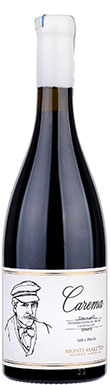

The nose of the 2020 is initially a little closed, but opens in an ever increasingly complex array of aromas which go from fig leaf...
2020
Monte MalettoCarema

Cantina Produttori Nebbiolo di Carema, Carema, Riserva, Piedmont, Italy, 2019
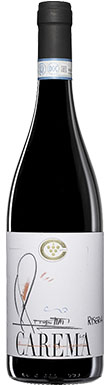
The 2019 is not immediately expressive on the nose but emerges with the damson fruit character of the variety to the fore, supported by notes...
2019
Cantina Produttori Nebbiolo di CaremaCarema
Muraje, Sumié, Carema, Piedmont, Italy, 2021
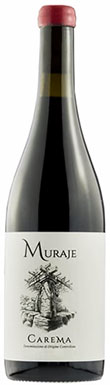
The fresh and vibrant 2021 displays aromas of red cherry, violets and a hint of sage, and on the palate it has great intensity, with...
2021
MurajeCarema
Cantina Produttori Nebbiolo di Carema, Carema, Piedmont, Italy, 2020
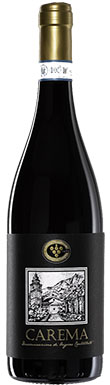
The fresh tobacco and laurel aromas are the hallmarks of a classic, which develops on the palate from a deceptively soft entry to a firm...
2020
Cantina Produttori Nebbiolo di CaremaCarema
Ferrando, Carema, Piedmont, Italy, 2020
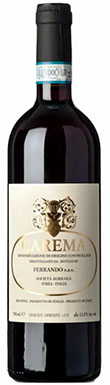
The nose shows off the full array of Nebbiolo's floral aromas, from rose petal to violets and camomile, with ripe red fruit in the background....
2020
FerrandoCarema
Cantina Togliana, L'Arsin, Carema, Piedmont, Italy, 2021
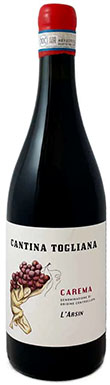
The typical pale brick-red shade with orange borders announces an equally classic nose of rose petal, sweet spice and laurel. It begins firm and dry...
2021
Cantina ToglianaCarema
SorPasso, Carema, Piedmont, Italy, 2021
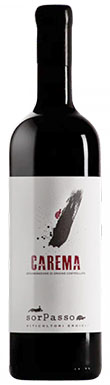
The 2021 is a very finely etched interpretation of the terroir, with delicate aromas of kirsch and a hint of resin on the nose, and...
2021
SorPassoCarema
Cantina Togliana, Carema, Riserva, Piedmont, Italy, 2018
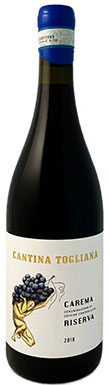
This single-plot Riserva is crushed by foot and is only partially destemmed, creating a wine with a very earthy character and a complex set of...
2018
Cantina ToglianaCarema
