
Behind the label: Château Palmer 2011 release
Fresh stocks of Château Palmer’s 2011 will be released from the estate's cellars this month, so we caught up with director Thomas Duroux about the new vintage release strategy and latest happenings at this biodynamic third growth estate in Margaux.

Château Palmer 2011 will be the second vintage to see a September release as part of the Margaux third growth estate’s new policy.
As of 2020, Palmer has started releasing a 10-year-old grand vin direct from its cellars on last Thursday of September each year. Fresh stocks of Palmer 2011 are expected from 23 September.
‘We really want to give wine lovers two opportunities to buy the wines,’ says winemaker and estate director Thomas Duroux.
Scroll down to see our updated Château Palmer 2011 tasting note
‘The traditional ones, who have cellars and like to age the wines themselves can buy en primeur and that’s an option to secure an allocation at the best price,’ he says.
‘And others who like to buy wine when it’s starting to be ready to drink or don’t have cellar to age the wines themselves, they can buy them 10 years later.’
Since 2010, Palmer has sold roughly half of each vintage’s production via the en primeur system while keeping the other half at the Château.
An average crop of Palmer’s grand vin produces 10,000 cases, so in general around 5,000 cases are sold en primeur while 2,500-3,000 are released 10 years later. The rest is kept for the special occasions and limited restaurant and private sales.
The Bordeaux 2011 growing season
‘2011 was quite a strange vintage’ says Duroux. A very warm and dry spring led to flowering that was three, almost four, weeks in advance compared to average. At the time, this prompted fears of an early harvest.
But on 4 June a hailstorm affected 90% of Palmer’s vineyards, which reduced the crop ‘tremendously’, Duroux remembers.
The last weekend of June also saw extremely high temperatures, reaching 38.8ºC in the shade in Margaux, and part of the crop suffered from sunburn. By early July, the potential harvest size was ‘very small’.
July and August saw milder weather, which relieved some pressure, and grape picking began on 6 and 7 of September.
‘It was the smallest crop since 1961,’ says Duroux, reporting a yield of 20hl per hectare (ha). ‘The result of that was an incredible concentration in the fruit,’ he adds.
It’s a ‘powerful wine but one with a classic profile in terms of aromatics’, he adds.
Part of the charm of 2011 for Duroux is that the vintage followed the widely acclaimed 2009 and 2010 vintages. He feels it has been ‘somewhat swept under the carpet’ but should represent ‘a fabulous surprise for people who have the chance to taste it now’.
He adds, ‘Bordeaux is full of these. We have Palmer 1971 which nobody knows – everybody knows 1970 but Palmer 1971 is an extraordinary wine. [The] 1991 is another example, the vintage of frost. It came after 1989 and 1990 [and] nobody remembers 1991. But there are some fantastic wines from 1991, not a lot but some of them are really great.’
Another facet of the 2011 vintage is the absence of Petit Verdot in the Palmer blend. The grape comprises 6% of overall plantings at the estate and is usually added to impart both aroma and structure to the finished wine.
‘There is no Petit Verdot because the blend was so powerful without it that we wondered whether it would be too much,’ says Duroux.
He says that, in his personal view, the 2011 is ‘still a very young wine but 10 years on for a Palmer is the first step where you can drink the wine, and then of course the potential evolution is much longer’.
He adds, ‘Our goal here is to put a place in the glass, to produce wines that have an extremely clear personality, wines that cannot be reproduced elsewhere, and that’s the feeling I have tasting 2011.’
Palmer today: A new ageing technique
Since 2017, Duroux has been developing and experimenting with a new ageing process at Palmer.
From November after harvest to the following July, wine is aged in barrels ‘because they have more impact on the wine in terms of oak and oxygen’, Duroux says. But the wine is then ‘refined’ in 29-hectolitre wooden vats, or ‘foudres’, during a second stage, running from from July to the following July – or at least for part of this period.
‘In French that would be élevage for the first year and affinage for the second – first to raise the wine and then to finesse,’ Duroux says.
‘I’m not a big fan of oak in wines,’ he adds. ‘We’ve experimented with different solutions to reduce the impact and this seems to be efficient.
‘We still have the long ageing process but the tannins are more respected. It has changed the perception of the wine and so we buy more foudres and I think in three or four years most of the crop will be treated like this.’
On the 2018, 2019, 2020 trilogy…
There has been talk in Bordeaux and beyond of the 2020, 2019 and 2018 vintages representing a trilogy of good years.
‘We were lucky to have three very interesting vintages in a row,’ says Duroux, but he described them as ‘three very different vintages’, too.
‘The 2018 for us was something strange, it was a tiny crop because of mildew and a wine that was just different from anything else we’ve produced at this property.’
Palmer 2019 was bottled two weeks ago. Duroux said the the key word for him was purity. ‘[It’s] really a Bordeaux beauty, not very concentrated but extremely well designed.’
He adds, ‘2020 was a kind of mix – there is a beautiful definition but a bit more flesh than 2019.’
Of the prospects for 2021, Duroux says the wine will not be ‘deep and structured’ given the spring frosts and heavy rainfall earlier this year, but hopes are resting on a warm and dry end to the growing season before harvest takes place.
Tasting note ahead of the new Château Palmer 2011 release
Related Articles
Tasting September fine wine releases via the Bordeaux Place
Three decades of Château Palmer wines tasted
Bordeaux 2020 wines: Our final verdict
Château Palmer, Margaux, 3ème Cru Classé, Bordeaux, France, 2011
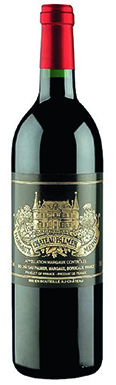

A multi-faceted wine with no Petit Verdot in the blend given the concentration of the Merlot (55%), which is unusually dominant, and Cabernet Sauvignon (45%)...
2011
Château PalmerMargaux
