
Berlucchi: Producer profile plus six Franciacortas tasted
This estate, founded in 1955, pioneered the Italian sparkling wine we know today as Franciacorta, read about its history and see the tasting notes and scores for a horizontal of six Berlucchi '61 wines...


At the beginning of the 1960s, Franciacorta was just a twinkle in the eye of Italian producers looking on at Champagne’s enduring success. Sixty years later, it has arguably become the most successful metodo classico appellation in Italy and is slowly gaining an international audience.
Scroll down for six Berlucchi Franciacorta tasting notes and scores
Success for Franciacorta should be measured differently to success for Prosecco – which is by far Italy’s most popular sparkling wine. Production of the former is tiny in comparison; approximately 18 million bottles compared to 600 million bottles annually, although Franciacorta is in fact far ahead of other metodo classico wines such as Trento DOC and Oltrepo Pavese.
Vanguard
In 1955, Guido Berlucchi approached oenologist Franco Ziliani to help improve the quality of his ‘Pinot del Castello’. A still Pinot Noir firmly in the mould of the region at the time that was becoming hazy when bottled. Ziliani soon addressed this issue but, intrigued by the prospect of making a metodo classico wine to rival Champagne, proposed a drastic change of direction Berlucchi, who subsequently agreed.
After the initial experimental vintages, in parnership with Giorgio Lanciani, the first consumer-ready Franciacorta was released by Berlucchi in 1961: 3,000 bottles labelled as ‘Pinot di Franciacorta’.
The team followed this up in 1962 with a rosé, again made in the traditional method. Demand increased and the estate was soon producing over 100,000 bottles per vintage just a few years later.
Pinot di Franciacorta was re-named Cuvée Imperiale, and vintage-dated wines were added to the range.
Other producers followed in Berlucchi’s footsteps and the quality of these wines were formally recognised when the Franciacorta DOC was established in 1967. In 1995, the DOC was elevated to DOCG for the region’s metodo classico sparkling wines.
When Guido Berlucchi passed away in 2000, Franco Ziliani oversaw the estate’s direction in the first years of the millennium. Today, Berlucchi produces approximately five million bottles annually, with the second generation – Cristina, Arturo and Paolo Ziliani – at the helm.
Berlucchi farms over 500 hectares of vineyards. Its viticultural ethos revolves around organic farming (all 500+ hectares are being converted to organic), high-density planting, spurred-cordon training, cover-cropping, and crop thinning.
The result is high-quality fruit used in a variety of different wines, from the Cuvée Imperiale Brut (90% Chardonnay and 10% Pinot Noir) to the Palazzo Lana Extreme (100% Pinot Noir from vines near the winery, matured for nine years sur lie).
But perhaps the most recognisable range in the Berlucchi portfolio is the ’61. Comprising several different expressions of the territory from some of the estate’s best fruit, these wines showcase handsome Chardonnay and elegant Pinot Noir in NV, vintage, rosé, Satèn, Brut and Brut Nature styles.
What’s next?
One of Franciacorta’s strengths is its diversity of styles, particularly the deliciously soft Satèn which represents a point of difference to many other sparkling wines. The Berlucchi examples do a great job of showcasing the appellation’s variety and quality to superb effect, yet Giacomo Berlucchi’s legacy seems somewhat incomplete – only a relatively small number of international wine lovers have so far discovered these wines.
Availability outside Italy is patchy at best and the premium positioning of these wines (in quality and in price) is unfortunately sometimes overlooked by consumers. Let’s hope that the next phase of Berlucchi’s history is accessible to a larger international audience ready to embrace these excellent wines.
See the tasting notes and scores for six Berlucchi ’61 wines:
You may also like:
Traditional Method Italian sparkling wines: Panel tasting results
What is Satèn wine? – ask Decanter
Understanding Prosecco Conegliano-Valdobbiadene Superiore
Berlucchi, '61, Franciacorta, Lombardy, Italy
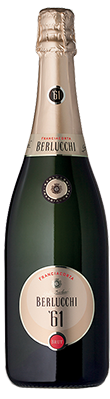

Aromas of green apple, pear and lemon zest lead to a creamy palate with sweet spices, apple, brioche and subtle tropical fruits. There's a lemony...
BerlucchiFranciacorta

Berlucchi, '61, Franciacorta, Satèn, Lombardy, Italy
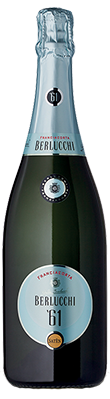
Matured in bottle sur lie for at least 24 months, this Satèn style (lower pressure) is gentle and appley on the nose, with touches of...
BerlucchiFranciacorta
Berlucchi, '61 Rosé, Franciacorta, Lombardy, Italy, 2013
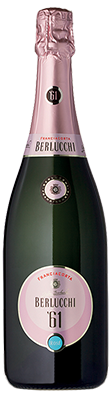
A full nose of red berries and soft spice leads to a decadent mouthful of crushed red and black berries with cream and spice woven...
2013
BerlucchiFranciacorta
Berlucchi, '61 Nature, Franciacorta, Lombardy, Italy, 2013
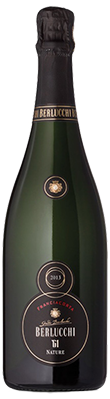
A blend of 70% Chardonnay and 30% Pinot Noir from the estate vineyards of Arzelle, Rovere, San Carlo, and Ragnoli. The finest lots of base...
2013
BerlucchiFranciacorta
Berlucchi, '61 Nature Blanc de Blancs, Franciacorta, Lombardy, Italy, 2013
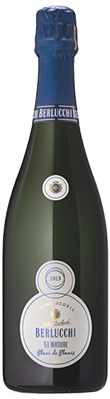
100% Chardonnay from the Arzelle estate vineyard. The finest lots of base wine are matured in oak, on the lees, for six months, followed by...
2013
BerlucchiFranciacorta
Berlucchi, '61 Nature Rosé, Franciacorta, Lombardy, Italy, 2013
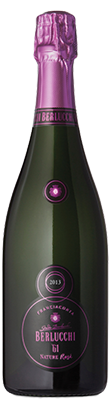
2013 was a long, tricky season but resulted in some excellent wines. From the estate vineyards of Ragnoli, Quindicipiò, and Gaspa, this 100% Pinot Noir...
2013
BerlucchiFranciacorta
