Bolgheri at 25: A retrospective
As this tiny but powerful DOC toasts its first quarter-century, the region’s winemakers are fully embracing the adventurous legacy of the SuperTuscan and continuing to build upon it. Richard Baudains reflects on this Tuscan crown jewel and what lies ahead for its producers, plus his top ten wines from the 2016 vintage...


Bolgheri, in Tuscan terms, is not big. From north to south by road, the DOC zone stretches a mere 13km, and it is easy to miss the rather insignificant-looking turning between Livorno and Grosseto that takes you through the avenue of cypress trees to the village of Bolgheri, or into the country lane that flanks its most famous estates. The soils are basically deep sand-clay, but extremely diverse. Recent studies identify nine macro-areas and no fewer than 27 different soil profiles. The climate is slightly cooler than in neighbouring Maremma and is significantly drier than in the central hills: a great asset in wet vintages.
Bolgheri means fundamentally Bordeaux blends, although the production norms also allow for monovarietals. Cabernet Sauvignon and Merlot account for 60% of the 1,370ha of vineyard, followed by Cabernet Franc, Syrah and the complementary variety Petit Verdot. Bolgheri Superiore is at the pointy end of the production pyramid, representing a rigidly selected 15% of the total annual bottling, alongside which there are also a limited number of IGTs of the ‘SuperTuscan’ ilk. The younger, early-drinking Bolgheri Rosso represents the second wine for most estates.
Making a name
In August 2019, Bolgheri celebrated the 25th anniversary of the founding of its wine producers’ consorzio. It was an occasion for ‘who are we, where are we coming from, where are we going’ type reflections.
Federico Zileri, owner of the Castello di Bolgheri estate and former president of the consorzio, divides the modern history of wine in Bolgheri into three phases. In the beginning was Sassicaia, the wine that Marchese Mario Incisa della Rocchetta originally made for his own family’s consumption, which was to become one of Italy’s truly iconic wines, with an inimitable style and consistency that sets it apart from any general discussion of the wines of Bolgheri. It was the Marchese’s nephew, Piero Antinori, who persuaded him to begin commercial bottling. Antinori lent the Marchese his oenologist, Giacomo Tachis, to oversee the operation. The first official vintages caught the attention of the influential Italian critic Gino Veronelli, but mainly went unheeded on the international scene until 1978, when Sassicaia trounced the competition and came out on top in a tasting of international Cabernets in London (conducted by Decanter, as it happens).
In the same period that Sassicaia was gaining recognition, the Antinori family divided the extensive Belvedere property, part remaining with Piero, who created the Guado al Tasso estate, and part going to his brother Lodovico, who founded Ornellaia. Piermario Meletti Cavallari started production at Podere Grattamacco; Eugenio Campolmi founded Le Macchiole; and Michele Satta, after consulting on the planting of the first vineyards at Ornellaia, set up his own estate and winery. This was the era of the SuperTuscan. Since the anachronistic DOC of the time allowed only for white and rosé production, the trendsetting, super-premium reds were obliged to be categorised simply as vino da tavola – table wine.
‘In 2015, Bolgheri really began to take off, and there was another a big leap forward in 2019’ – Federico Zileri, Castello di Bolgheri
The anomaly was rectified with the creation of the DOC for red wines in 1994, which heralded the second phase of the region’s development by opening the floodgates to investment in Bolgheri on the part of foreign buyers and major Italian producers from Tuscany and other regions. The German mining company Knauf came to Bolgheri to look for gypsum and stayed on to make wine very successfully at Campo alla Sughera; the Allegrini family founded Poggio al Tesoro; Guido Berlucchi, Caccia al Piano; Folonari, Campo al Mare; and Gaja, Ca’ Marcanda. In the 10 years following 1994, the area under vine shot up from 190ha to more than 1,000ha.
Coming of age
If the first phase gave the impulse and the second laid the foundations of the current wine industry, the third phase poses the challenge of taking Bolgheri up to the next level in terms of quality and recognition. Zileri identifies the 2015 vintage as a landmark in this development: ‘In 2015, Bolgheri really began to take off. The vintages that followed were also very good, and there was another a big leap forward in 2019.’
With the exception of some doubts about the drought-stressed 2017, it is hard to disagree. Perhaps even more than 2015, the currently available 2016 (see recommendations below) lends weight to Zileri’s case. It is a thrilling vintage to taste: great definition of fruit, fine natural tannins, breadth but also elegance.
Bolgheri is on a roll. A number of factors are contributing to this, but perhaps the most important has been the progressive ageing of the vines. Half of Bolgheri’s vineyards were planted betweeen 2000 and 2009, which means that they are now approaching maturity. The benefit this brings to the quality of the fruit supply is reflected in the significant increase in the production of Bolgheri Superiore, which has almost doubled since 2015, going from a little more than 600,000 bottles to nearly 1.2 million in 2018.
Recent vintages have also seen a perceptible evolution in the style of Bolgheri Superiore. The wines of the 1990s and early 2000s were typically big on mouthfeel, muscular, concentrated, rather unsubtle interpretations of the Bordeaux varieties. Tasting through the vintages prior to 2010, you also have the uncomfortable impression that many have not aged particularly gracefully. The benchmark wines of Bolgheri today reflect what producers themselves are saying about their stylistic aims. Bolgheri Superiore remains a powerful wine, but from 2015 onwards you find more agility, brighter fruit definition and more freshness than you did in the wines of the past.
‘More elegance’ is the way Friedrich Knauf from Campo alla Sughera puts it. Niccolò Marzichi Lenzi, from boutique winery Le Crocine, describes his style as ‘big but supple drinking wines with crisp acidity, low on oak’. Cinzia Merli from Le Macchiole says that, since 2015, the winery has looked for ‘a lighter style with more fruit and aroma, and with less toast in the oak’. This refocusing of style is also driving changes in the vineyard. Axel Heinz, estate director at Ornellaia, cites the ‘fad’ of the 1990s for hyper-dense planting aimed at maximising concentration, a practice that producers are now backing away from.
‘2016 Bolgheri is a thrilling vintage to taste: great definition of fruit, fine natural tannins, breadth but also elegance’
The approach to pruning is also coming under scrutiny. At Ornellaia, Heinz says his team is ‘returning to some of the ideas of the past’, which, decoded, means pruning canes a little longer, with less emphasis on the concentration of the grapes and more on the balance of the vine.
Next chapter
I ask Albiera Antinori, newly elected president of the producers’ consortium, if Bolgheri is a brand or a terroir. ‘It is both,’ she replies. Herein lies the challenge for the future of Bolgheri: on the one hand, to establish a collective identity; on the other, to give expression to a range of diverse terroirs. The common denominator is, without a doubt, Cabernet Sauvignon, which produces results unrivalled in the rest of Italy. By contrast, Merlot is extremely terroir-specific, as the famous clay plot at Masseto demonstrates. So is Cabernet Franc, which, in the right soils, makes world-class monovarietal wines and brings refined elegance to Bordeaux blends.
Satta says with great conviction that Bolgheri is terroir. He underlines the view by pointing to the vineyard where he produces a great Viognier, and another, a stone’s throw away, from which he sources a unique Sangiovese. As one of Bolgheri’s earliest independent producers and a founding member of the consorzio, Satta has followed the development of winemaking on this stretch of the coast from the days of the SuperTuscan vino da tavola, through the period of exponential expansion, when external consultants made wines for absentee owners according to theoretical models, to the present day. For Satta, the future lies in the Bolgheri of the vigneron, driven by the second generation producers who have grown up among its vines and have assimilated the messages of its terroir.
Merli, whose estate was another founding member of the consorzio, says: ‘Where we have been determines where we are now.’
As an area with no history of winemaking, Bolgheri has had to invent itself, but it has had the freedom to experiment and to find its own direction. And on that count, Merli says: ‘We are just at the beginning.’
Bolgheri Superiore 2016: Baudains’ top 10
See also:
SuperTuscan evolution: Comparing Tignanello and Solaia
Top SuperTuscan wines
A taste of Bolgheri: Ornellaia wine 1990-2016
Tenuta San Guido, Sassicaia, Bolgheri, Sassicaia, Tuscany, Italy, 2016
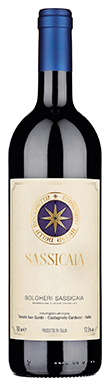

One of the secret of Bolgheri’s mediterranean and windy climate is to turn pyrazines from the Cabernets into extra-dimensional scents of citron and leafy aromas. Sassicaia has been producing Cabernet-based wines here since 1968, which are typically marked by this fresh character on the nose. There's a note of kiwi peel that's particularly intense in this 2016, along with some cedar. In this vintage, its character is - if possible - more restrained than usual and definitely more so than the exceptional 2015. Small dark fruits lurk in the depth of the super-youthful nose, while on the palate the wine is not completely ready to drink - despite the good integration of oak, the tannins are still crunchy, perfectly ripe yet chewy, pushed by a lively acidity. An extremely elegant Sassicaia with a refined finish, this is built for the long haul and is possibly the best of this decade.
2016
Tenuta San GuidoBolgheri

I Luoghi, Campo Al Fico, Bolgheri, Superiore, Tuscany, Italy, 2016
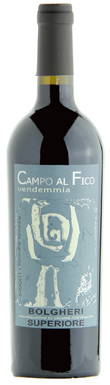
A vibrant example of the region. Very attractive creamy texture, almost like milk chocolate, velvety and sweet. On the palate there is a wild, garrigue type character with oregano and spice, and a leathery, tobacco finish.
2016
I LuoghiBolgheri
Castello di Bolgheri, Bolgheri, Superiore, Tuscany, Italy, 2016
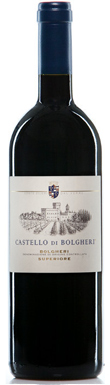
The vineyards of this estate face the sea with a westerly exposure, an incredibly beautiful view from the Bolgherese road on a quite calcareous soil. The style here is pretty classic, sometimes more austere as in 2006, yet balanced in this vintage. Crimson in colour, it has a restrained nose of pencil lead, pepper and chocolate over brambly fruit flavours, supported by a firm palate with structured tannins and a chalky finish.
2016
Castello di BolgheriBolgheri
Donna Olimpia 1898, Millepassi, Bolgheri, Superiore, Tuscany, Italy, 2016
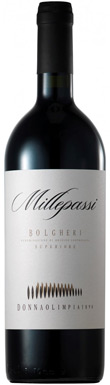
Millepassi reflects the elegance of Guido Folonari and his estate, producing low profile, precise wines of great potential. In particular, his 2016 is focussed on elegance rather than power. It has a restrained and leafy nose with a touch of bell pepper, which will develop an extra dimension with further bottle ageing. Brambly fruits are precise and chewy on the palate, supported by a firm frame of grainy yet ripe tannins with a chocolatey finish. Unlike some others, it doesn’t show any warming alcohol at the end. This is a delicious food-friendly wine. True elegance is to pass almost unnoticed.
2016
Donna Olimpia 1898Bolgheri
Le Macchiole, Paleo, Bolgheri, Superiore, Tuscany, Italy, 2016
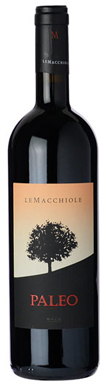
Paleo Rosso is the leading 100% Cabernet Franc wine in Bolgheri. Its elegance in vintages such as 2001, 2006 and 2013 has enhanced the reputation of this grape in this Mediterranean climate, however for different reasons 2014 and 2015 seem less precise. The 2016 Paleo Rosso shows great complexity of citrus notes, graphite depth and chinotto finish, well integrated with assertive 100% new French oak aromas and creamy, velvety tannins. It shows a touch of oxidative character, possibly the result of a less than perfect sample.
2016
Le MacchioleBolgheri
Michele Satta, Marianova, Bolgheri, Superiore, Tuscany, Italy, 2016
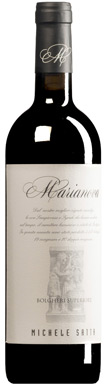
Marianova is the first Bolgheri Superiore to be made without any Bordeaux varietals. Instead it's a 50/50 blend of Syrah and Sangiovese, the idea of Michele Satta’s son Giacomo, first produced in 2015. Ruby red and restrained, it's focussed on vibrant raspberry and cherry aromas layered with indian spice notes and a touch of leathery character. It shows a firm yet ripe tannic structure with chewy acidity and a great savoury finish of toasted notes and prunes.
2016
Michele SattaBolgheri
Grattamacco, L’Alberello, Bolgheri, Superiore, Tuscany, Italy, 2016
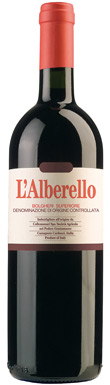
Alberello is the Italian name for bush vines, one of the most undervalued training systems in Tuscany. Employed by Grattamacco for austere varieties such as Cabernet Sauvignon, Cabernet Franc and Petit Verdot, the result is often outstanding. Cassis, cherry kernel and leafy aromas come before a hint of minerality. On the palate it shows firm, grainy tannins without any dryness at the end, where instead it opens up to reveal sweet toasted tobacco and straw notes. This will last well thanks to its layered profile and great balance.
2016
GrattamaccoBolgheri
Tenuta Argentiera, Bolgheri, Superiore, Tuscany, Italy, 2016
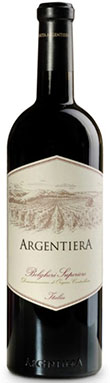
Blackberry jam, a touch of potpourri and a hint of vanilla on the nose, followed by a bright, mouthwatering berry-fruit palate with silky refined tannins and a long, juicy finish. The oak is still a little evident here, but the wine has the power to absorb it.
2016
Tenuta ArgentieraBolgheri
Guado al Tasso, Bolgheri, Superiore, Tuscany, Italy, 2016
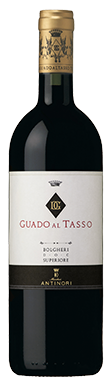
From alluvial soil of mostly clay and sand, Guado al Tasso is Antinori's top Bolgheri wine. It's a classic Bordeaux blend this year without any Petit Verdot - less bold and rich in style than the 2015 but otherwise extremely elegant and drinkable. It's dark and concentrated, opening to aromas of restrained cassis, clean leather and a hint of earthy minerality. The firm yet ripe palate develops flavours of dense, supple brambly fruit and chocolate. It’s a bit warming on the finish but is otherwise extremely well balanced.
2016
Guado al TassoBolgheri
