
Bordeaux: The five first growths
Just five properties, on the gravel and clays of Bordeaux’s Left Bank sweep of vineyards, are revered around the world as benchmarks of the highest quality possible in wine. But what is it that sets these producers apart from the rest? Jane Anson has made a close study of the five first growths and their wines over many years, and here she sums up their histories, personalities and strengths, recommending two wines from each that are good to open now


There are five châteaux in Bordeaux that truly need no introduction. Known as the first growths, or the premier cru classés, they are Haut-Brion, Lafite Rothschild, Mouton Rothschild, Latour and Margaux.
Lafite takes the title of largest of the five, at 110ha, with Haut-Brion the smallest at 53ha. All five are family owned, although by extremely well-heeled dynasties that tend to have powerhouse businesses behind them – so Prince Robert of Luxembourg at Haut-Brion, two branches of the Rothschilds at Lafite and Mouton, François Pinault of luxury group Kering at Latour, and Corinne Mentzelopoulos at Margaux. Their global fame can be traced back, give or take a few decades, to the mid-to-late 17th century, and picking apart the puzzle of what puts them at the top is a game that can keep you occupied for a lifetime…
Château Haut-Brion, Pessac-Léognan
Planted area 50ha red wine, 3ha white
Planted to Reds 45.4% Merlot, 43.9% Cabernet Sauvignon, 9.7% Cabernet Franc, 1% Petit Verdot
Second wine Le Clarence de Haut-Brion
Established Vines likely on this spot under the Romans
Owner Dillon family since 1935, headed up by Prince Robert of Luxembourg.
Estate director, Jean-Philippe Delmas (no outside consultant)
Commercial strategy En primeur
Château Haut-Brion has a fair claim to being the father of the first growths. It was here that the ‘New French Claret’ style was born, where winemaking techniques from barrel ageing to the burning of sulphur candles established a longer-living, more concentrated and rich style that elevated Bordeaux’s reputation globally. Haut-Brion still has its own cooperage on site.
In the cellar, Haut-Brion continued to set standards in the 20th century, being among the very first properties in the region to introduce stainless steel vats for winemaking – using an innovative two-tier design that was first envisaged by Jean-Bernard Delmas, the late father of Jean-Philippe Delmas, the current estate director. New cellars are currently under construction.
Located on warm soils, meaning its grapes ripen well every year, it’s among the earliest estates in Bordeaux to harvest. Haut-Brion is a wine that takes time to come around, but displays incredible aromatic complexity as it ages, easily rivalling Margaux in that respect. Part of the secret of its complexity comes from its array of terroir, ranging from limestone to large gravels to deep clays, all within a few rows of each other. This is also why it has more Merlot in the blend than the other four (in most vintages close to 50%), which translates into richness and depth of fruit in the glass.
Given all of this, and the fact that it has a prince at the helm (Prince Robert is the fourth generation of the American Dillon family; his mother Joan Dillon married Prince Charles of Luxembourg), it’s always a little surprising that on the secondary market, Haut-Brion tends to be the best value of the first growths, usually fetching between £300 and £3,500 per bottle in the UK market depending on vintage. Its stock has risen highly over the past decade though, as has that of its sister estate La Mission Haut-Brion.

Château Lafite Rothschild, Pauillac
Planted area 110ha, red wine only
Planted to 70% Cabernet Sauvignon, 25% Merlot, 3% Cabernet Franc, 2% Petit Verdot
Second wine Carruades de Lafite
Established 13th century
Owner Domaines Barons de Rothschild (Lafite) since 1868. Saskia de Rothschild took over from her father Baron Eric in 2018.
Technical director, Eric Kohler; MD, Jean-Guillaume Prats; consultant, Eric Boissenot
Commercial strategy En primeur
Château Lafite was already a highly prized possession before Baron James de Rothschild arrived in 1868, 13 years after it was named a first growth in the 1855 classification, but it’s fair to say that the Rothschild family has safely steered it to the very top of global wine luxury.
Which means it can be something of a surprise when you open a bottle to realise that the wine itself never likes to shout its arrival, or try too hard to impress. I can’t think of another property in Bordeaux that you can cellar with greater confidence – and I mean not just for decades but for a century or more, fully expecting that it will still be fragrant and mouthwatering when you finally get round to drinking it. Lafite tends not to have the inky depths of some Pauillacs when young, certainly not compared to Mouton or Latour, and it goes for complexity and nuance, for mouthwatering brilliance that steals up on you and takes you by surprise.
It has the oldest château building of the Five Firsts, with a cellar that holds wines dating back to 1797, and a nature reserve alongside that promotes biodiversity and protects a rare species of cattle. The wine production takes place across a series of cellars that hold an array of wood, stainless steel and cement vats, all chosen to carry out specific tasks – in the main area, rows of large wooden casks date back to the 1980s and are replaced as needed, usually just a few per year.
Its global reach, and its dizzying reputation, have meant prices for Lafite have seen some of the biggest rises and the biggest falls over the past few years. Liv-ex described it as ‘the poster child for the Asian-led bull market that ran from 2006 to 2011’, and when the market corrected, so did the price of Lafite. But prices are recovering slowly, and today you can find bottles from an average of £300 to £4,000 in the UK market, depending on vintage.
Château Mouton Rothschild, Pauillac
Planted area 83ha red, 5ha white
Planted to Reds 81% Cabernet Sauvignon, 15% Merlot, 3% Cabernet Franc, 1% Petit Verdot
Second wine Le Petit Mouton
Established 15th century
Owners Philippe Sereys de Rothschild, Julien de Beaumarchais de Rothschild, Camille Sereys de Rothschild (fifth generation since Nathaniel de Rothschild bought the estate in 1853).
Director, Philippe Dhalluin; technical director, Jean- Emmanuel Danjoy; consultant, Eric Boissenot
Commercial strategy En Primeur
The Grand Plateau de Mouton (the shared outcrop that effortlessly turns into the Grand Plateau de Lafite) is an incredible 98% gravel and 2% clay at its heart. On it, Château Mouton Rothschild has some of the largest numbers of century-old vines in Bordeaux, a full 5ha on a plot named La Baronne Philippine after the current generation’s legendary mother. The oldest vines here are 120 years old, an attestation to the perfect harmony between vine and soil at this site.
Harmony is also a key word when you visit this estate – graceful gardens, stunning château, gorgeous cellars that opened in 2013 and feature gravity-fed oak and stainless-steel vats in a 70m-long room. Glamour and grace extend to the wine too – this is the first growth that you can always rely on to impress at any gathering. Its luscious fruit profile, aged in 100% new oak (as are all the first growths), is wrapped up with notes of chocolate, liquorice and grilled almonds, with an emphasis on silky texture and caressing tannins.
Mouton is the flagship of a family business that, like its cousin Lafite, spans a number of wine enterprises, including two other Pauillac châteaux, plus properties in Limoux, Chile, Napa, and branded wines including Mouton Cadet. And it’s a commercial success also – the fact that it was promoted to first-growth status in 1973, rather than being anointed in 1855, makes no difference today. You can expect to find Mouton vintages for similar prices to Latour, so about £400 to £3,500, depending on vintage, in the UK market. Research released in December 2019 by Eleanor Wine showed second wine Le Petit Mouton 2012 generating the best return of any wine in the region, with a 283% increase since release.
Château Latour, Pauillac
Planted area 92ha, red wine only
Planted to 76% Cabernet Sauvignon, 22% Merlot, 2% split between Petit Verdot and Cabernet Franc
Second wine Les Forts de Latour; third wine Pauillac de Latour
Established 14th century
Owner Artémis Domaines, owned by François Pinault and his son François-Henri Pinault.
CEO & president, Frédéric Engerer; technical director, Hélène Génin; consultants, Vincent Masson for biodynamics, Eric Boissenot for winemaking
Commercial strategy No en primeur after the 2011 vintage, but sells mature wine through the Place de Bordeaux
If I tell you that Château Latour hand-wraps each of its bottles in silk paper, you’ll get some idea of how attention to detail is key around here. And yet at the same time, Latour is also the first growth where you are most likely to see horses pulling ploughs through the vineyard, and grass, daisies and tiny white camomile flowers growing between the vines.
Certified organic since 2018 across the entire vineyard and cellar, Latour now also farms entirely biodynamically within the famous 47ha walled L’Enclos that forms the heart of the historic estate.
It’s inspiring to watch a first growth genuinely question what is the best way to bring out the nuance and character in a wine that has regularly heard nothing but praise and plaudits over centuries. But that’s what they’ve done here. Where the team used to rack the wine between barrels every three to four months (as is typical across Bordeaux during the ageing process), they have now brought that down to every six months, depending on taste and monitoring.
Precision is the watchword across the winemaking process – everything is fermented entirely in stainless steel, and all press wine is kept in individual barrels to track its progress as carefully as possible.
In the glass you get the most textured, powerful and ripped of the first growths – Latour can be monumental, invariably with more than 90% Cabernet Sauvignon in the first wine, mainly because the soils here are gravel over sticky clay, giving power and soaring freshness. Probably the most consistent terroir of all the five 1855 first growths, and a wine that remains consistent in its pricing also, found in the UK market at about £400 to £3,500 depending on vintage.
Only now, in 2020, will we see the release of the first wine since the new no-en primeur policy was applied (since the 2012 vintage), so the next 12 months will reveal a lot about whether this strategy has paid off.

Château Margaux, Margaux
Planted area 82ha red, 12ha white
Planted to Reds 75% Cabernet Sauvingon, 20% Merlot, 5% split between Petit Verdot and Cabernet Franc
Second wine Pavillon Rouge
Established 16th century
Owner Corinne Mentzelopoulos and her daughter Alexandra, second and third generation; family in place since 1977.
Director, Philippe Bascaules; technical director, Sébastien Verne; consultant, Eric Boissenot
Commercial strategy En primeur
The only one of the Five Firsts to have no sister properties elsewhere, no wine merchant business and no other projects to take the focus from this stunning château, whose iconic columns are a landmark of Bordeaux wine.
With some of the poorest gravel soils in the appellation, it’s no surprise that Château Margaux is a Cabernet-dominated wine (at least 80% of the blend in most vintages), and yet it feels so light, graceful and nuanced that it is often called the Musigny of Bordeaux, famed for its perfume that is only rivalled by that of Haut-Brion. You can also find that Margaux excels in vintages in which its Pauillac siblings do not – notably the 1983 – due to its location further south on the Médoc peninsula.
As with Lafite and Haut-Brion, Margaux has its own cooperage, with a full-time barrel maker producing about one-third of annual requirements. A new cellar opened in 2015, the first addition to the estate since the original château was built back in 1812. The wine is made in a mix of traditional oak casks and stainless-steel vats, with space set aside for extensive research and development facilities – a micro-vinification area with vats that go down to 25hl. In the vineyards, organic farming has been in place since 2012, with a flock of sheep as an alternative to traditional weeding. Price-wise, you can expect to spend between £350 and £3,000 per bottle in the UK market, depending on vintage.
Taste profiles
Château Lafite: Complex, elegant, extremely long-living.
Château Haut-Brion: Aromatic complexity, richness, depth of fruit
Château Mouton Rothschild: Silky texture, caressing tannins, gourmet
Château Latour: Textured, powerful, concentrated
Château Margaux: Graceful, nuanced, perfumed
Anson’s pick of the Bordeaux first growth wines for drinking now:
Château Haut-Brion, Pessac-Léognan, 1er Cru Classé, Bordeaux, France, 2000
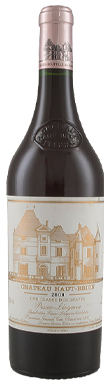

Superb and already immensely delicious, yet decidedly youthful and only beginning its evolution. The colour is dark, and the ripe plummy fruit resounds with notes...
2000
Château Haut-BrionPessac-Léognan

Château Haut-Brion, Pessac-Léognan, 1er Cru Classé, Bordeaux, France, 2001
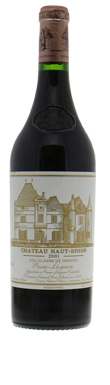
This charming wine was unfortunately overshadowed by the epic vintage just prior, yet the dark ruby colour and complex, savoury nose show a wine of...
2001
Château Haut-BrionPessac-Léognan
Château Lafite Rothschild, Pauillac, 1er Cru Classé, Bordeaux, France, 1986
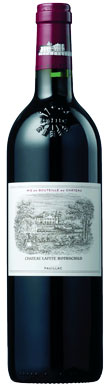
The wine seems fully mature, more so than the '89 (or the '82, tasted recently, but not for this vertical). The aromas were savoury roast...
1986
Château Lafite RothschildPauillac
Château Lafite Rothschild, Pauillac, 1er Cru Classé, Bordeaux, France, 1999
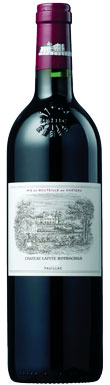
At this stage, there is sweet fruit and spice on the nose and a texture that seems silky, supple, and soft initially but shows a...
1999
Château Lafite RothschildPauillac
Château Mouton Rothschild, Pauillac, 1er Cru Classé, Bordeaux, France, 1986
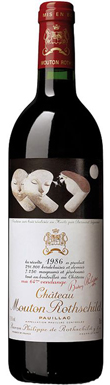
Wonderful, concentrated and still astonishingly young, this has brushes of violet aromatics rising above the tight cassis fruits and rich black truffle, and the classic...
1986
Château Mouton RothschildPauillac
Château Mouton Rothschild, Pauillac, 1er Cru Classé, Bordeaux, France, 2008
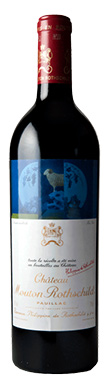
Starting to really come into its own, this is packed full of savoury blackberry, redcurrant and blueberry fruit with layers of liquorice, black chocolate, grilled...
2008
Château Mouton RothschildPauillac
Château Latour, Pauillac, 1er Cru Classé, Bordeaux, France, 1982
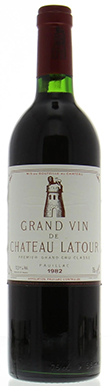
A sublime wine, unbelievably youthful and vibrant still and one that holds attention from the first sip. Beautiful aromatic complexity on the nose; floral notes,...
1982
Château LatourPauillac
Château Latour, Pauillac, 1er Cru Classé, Bordeaux, France, 2006
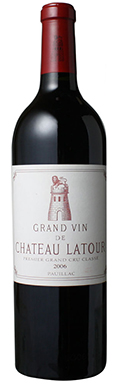
The 2006 Latour stood out even amidst a surprisingly good field of wines from 2006 with pronounced aromas of blackcurrant, cedar, smoke, and a hint...
2006
Château LatourPauillac
Château Margaux, Margaux, 1er Cru Classé, Bordeaux, France, 1982
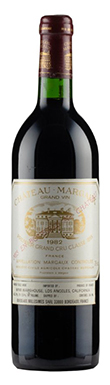
Vibrant, elegant and characterful – a complex nose full of floral scents, baked blackcurrants and cherries, totally beguiling yet delicate and graceful. A smoky palate...
1982
Château MargauxMargaux
Château Margaux, Margaux, 1er Cru Classé, Bordeaux, France, 2008
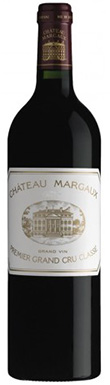
This stood out immediately among the five first growth wines for its floral hit right off the first nose. The epitome of elegance, as I...
2008
Château MargauxMargaux
