
Bordeaux’s wild side: Top biodynamic and organic producers to look for
As they endeavour to maximise vineyard expression, an increasing number of Bordeaux producers are eschewing chemicals and adopting biodynamic practices, finds Simon Woolf…
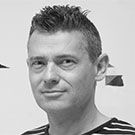

‘Modern viticulture has probably suppressed bad wine, but it has totally erased greatness,’ laments Jean-Michel Comme, director at Château Pontet-Canet. ‘I aim for greatness, even if I sometimes only achieve “very good”.’ So runs his concise argument for biodynamics and minimal intervention, a statement he distils towards the end of an intense four-hour interview.
Esoteric and deeply philosophical, biodynamic viticulture often overlaps with natural wine and a ‘back-to-the-roots’ ethic. Blue-chip Bordeaux isn’t its obvious spiritual home. Burgundy or Alsace are more likely candidates, where many top producers work with biodynamics – Zind-Humbrecht, Ostertag, Domaine Leflaive, Domaine de la Romanée-Conti to name a few. Beaujolais or the Loire could also make persuasive cases.
Scroll down for Simon Woolf’s top 12 wine picks from Bordeaux converts
But Bordeaux? The world’s most famous wine region has struggled to be part of the 21st-century ecology conversation. Instead, it has made multiple headlines for overuse of pesticides, in some cases causing schools to evacuate pupils and vineyard workers to sue employers. Then there’s the love affair with rich Asian customers, the consolidation and the buyouts that make it feel more akin to a giant boardroom than a viticultural area.
New York Times wine critic Eric Asimov took a barometer reading in 2016: ‘Nobody wants to talk about Bordeaux much these days, except for people in the Bordeaux trade who spend a lot of time discussing why nobody is talking about it.’ Has Bordeaux lost its way, as implied by Comme, and mutated from a beverage into a luxury product or a manipulated, homogeneous wine just made for millionaires?
It has certainly lagged behind other famed appellations as they steer increasingly towards organic and biodynamic viticulture. Their motivation? To seek maximum vineyard expression and to sustain the most precious asset of all: their soils.
Comparisons with Alsace are illustrative: both regions claim roughly the same number of biodynamic certified growers (about 50), yet Alsace has barely more than a tenth of the vineyard surface (15,600ha compared with Bordeaux’s 120,000ha) and only 970 producers compared with Bordeaux’s 6,000. About 7% of Bordeaux’s vineyards are certified organic and fewer than 1% are biodynamic. In Alsace, 16% are organic and almost 6% (880ha) are biodynamic.
Climate challenge
The Bordelais have often protested that their wet, humid climate makes it near impossible to implement organic or biodynamic practices – mildew is the bane of Bordeaux, and treating it effectively without recourse to synthetics is challenging. Yet as passionate organic and biodynamic wine-growers now thrive everywhere – from the mildly soggy Wales to the verdantly damp Vinho Verde – this assertion increasingly lacks integrity. Still, generalisations cannot do justice to the gargantuan Bordeaux. More environmentally sensitive vineyard practices may not have been the priority of the classed growths (at least until recently) but the hinterlands of the Right Bank reveal another side to the story.
Château Le Puy’s 100ha of vineyards used to be classified as Puisseguin St-Emilion, until the 1920s when they were demoted to Bordeaux Supérieur. The Amoreau family has farmed here for 400 years without ever using synthetic products. Jean-Pierre Amoreau (now 81) still presides, but his son Pascal runs day-to-day operations. ‘I was brought up with organic agriculture,’ Pascal explains, ‘so as we learned about biodynamics, we incorporated the ideas into what we were doing.’
The estate has been Demeter-certified since 2012, and since the 1990s has pioneered many now-fashionable practices: removing vines to ‘re-wild’ parts of the estate (currently 54ha are under vine and the remaining land is given over to trees and pasture), using horses for ploughing and reducing the amount of added sulphites to zero.
He’s found the reintroduction of horses particularly revelatory: ‘Ploughing with the horses, we discovered something that was lost – when you’re on the tractor all the work is happening behind you and you don’t see it very well. When you’re behind a horse you hear the ground being sliced under the blade of the plough, you experience the smell of the earth and there’s a wonderful harmony between you, the animal and the soil.’
Harold Langlais, business partner and commercial director at Château Le Puy, stops short of categorising Le Puy as natural wine, despite its cult success in natural wine circles. ‘We just try to make the most authentic and pure wine that we can, reflecting the place that it comes from,’ he says. ‘You like it, you don’t like it? It’s up to you. We make the wine that we like to drink.’ It sounds blasé, until he adds that sales have doubled over the past five years. ‘We sell everything we produce,’ he adds – and the prices would impress Médoc courtiers.
‘We just try to make the most authentic and pure wine that we can, reflecting the place that it comes from’ Harold Langlais
Le Puy doesn’t sell through La Place, Bordeaux’s omnipresent négociant system, and therefore doesn’t participate in en primeur tastings. ‘En primeur is just a competition to see who’s got the most oaky wine,’ Amoreau jokes; no new barrels are used at Le Puy. Coupled with modest alcohol levels (13% to 13.5% is typical), it lends the wines a timeless classicism – Bordeaux as it was in the 1950s, as Langlais remarks, not as it became under the influence of Parker points or Chinese buyers.
Trail blazers
Le Puy’s history is impressive, but it wasn’t the first to implement biodynamics in Bordeaux. Paul Barre, based in Fronsac, began converting his 7ha estate in the 1980s, achieving full Demeter certification in 1990. Château Meylet in St-Emilion followed a similar trajectory in the late 1980s. These estates have inspired many other Right Bank family operations.
Some of the more well-known include Château Falfas (certified by Biodyvin in 1995), Château Peybonhomme-Les-Tours (also biodynamic since 1995), Clos Puy Arnaud (run by Thierry Valette, ex-owner of Château Pavie) and Château de la Vieille Chapelle, where Frédéric Mallier is experimenting with ungrafted vines. Château La Fleur Garderose and Château Fonroque are biodynamic grand cru properties in St-Emilion, the latter originally owned and still managed by winemaker Alain Moueix.
The softly spoken Moueix cuts a modest figure given that his family property, Château Fonroque, became the first Bordeaux classed growth to achieve organic and biodynamic certification. Moueix’s inspiration came from a trip to New Zealand. On his return, as he explains: ‘I just didn’t feel in touch with what I was trying to do any more, so I started looking for alternatives to spraying chemicals.’
Feeling that lutte raisonée (a farming system to reduce chemical usage) didn’t go far enough and organics was too simplistic, he arrived at biodynamics as a more holistic solution for good vineyard work. The clinching moment was a 2002 visit to seminal Burgundy grower Anne-Claude Leflaive: ‘She had one block of Montrachet that had been farmed organically and another that was biodynamic. She vinified each in a different barrel, so we could taste them separately,’ he explains. ‘We tasted blind. Obviously everything was beautiful, but in the biodynamic block it was more crystalline, more vertical, with a little more energy. The wine was just better.’
Moueix reputedly had to endure hostility and ridicule from many of his neighbours in the mid-2000s, partly as biodynamic viticulture inevitably results in reduced yields. Over time, the quality and elegance of his wines proved the point. Today Mouiex is no longer regarded as an outcast, but rather a front-runner.
More recently, two high-profile châteaux have given biodynamics in Bordeaux a serious boost. Fifth growth Château Pontet-Canet converted its entire 81ha to biodynamic viticulture in 2005, after Comme instigated a trial on 14ha in 2004. Yet it would take the passionate Comme to the brink of despair. In 2007, after two successful years of conversion, the estate came perilously close to losing the entire crop to downy mildew – the curse of Bordeaux’s maritime climate. ‘My boss ordered me to spray pesticides to save the harvest,’ recalls Comme. ‘I cried a lot. It was a failure on my part – I felt like I’d gambled with someone else’s money.’
It was a sword of Damocles moment not just for Comme, but also for owner Alfred Tesseron (Comme’s boss), for whom the domaine is his only asset. No one, including Tesseron, felt good about spraying synthetics on the vineyard any more. After the harvest they decided to continue with biodynamics – and if anything, to pursue it even more rigorously.
‘I will never, ever spray pesticides on our vines again,’ Comme states with an intensity and depth of emotion that is shocking and disarming. He’s become one of the most ardent proponents of biodynamic farming in Bordeaux, a process that began in the early 2000s when converting his own family estate.
Like the Amoreau family at Le Puy, he has reintroduced horses, together with custom-designed ploughs and sprayers (for biodynamic preparations) that allow vineyard workers to be seated on the apparatus behind the horse. Comme is slowly trying to remove strong electrical currents from any area of the winery, as he believes this adversely affects the berries and the juice. He has redesigned sorting tables and de-stemmers to work without electric motors, and switched to 100 custom-designed amphorae to age up to 50% of the grand vin. His obsession has been vindicated, as Pontet- Canet’s critical ratings and prices have soared to unprecedented levels.
Corporate challenge
Unlike Pontet-Canet, which is owned by a single family, third-growth Château Palmer has about 100 shareholders from various prominent Bordeaux families. That its dynamic wine director Thomas Duroux managed to lead the property through experiments in biodynamics to a full conversion of its 66ha is close to a miracle.
Initial experiments to try to understand the ‘buried horns and strange preparations’ started to show results in 2011, recalls Duroux: ‘We produced probably the best wine out of a single vineyard that we’d ever made. We really felt this wine had precision, depth and a connection to the terroir that we’d not seen before.’ They decided to proceed with a full conversion of the estate. However, as with Pontet-Canet, troubled waters lay ahead.
Duroux’s moment of reckoning came in 2018, a year when downy mildew ran rife. The estate lost two-thirds of its harvest. Duroux doesn’t dwell on it, but there were clearly some challenging conversations in the boardroom. Perhaps as a consequence, his party line has changed. ‘We will consider spraying with a chemical if we have another situation like 2018,’ he says flatly. Not only would this mean sacrificing the Demeter certification, it also illustrates the uneasy relationship between corporate ownership and the all-encompassing philosophy of biodynamics.
Nonetheless, Palmer’s recent vintages show a fruit focus and classic ‘digestibility’ common to all the properties mentioned here. Many of the complaints about modern-day Bordeaux – too much alcohol, oak and manipulation – do not seem to apply in the biodynamic universe, which typically propels winemakers to ferment only with wild yeasts, and to drastically back off on the oak or added sulphites.
The issues of climate change and rising alcohol levels also appear more easily mitigated with biodynamically farmed vineyards, which better retain natural acidity. And as Valette notes, harvesting at supposed phenolic ripeness (often much too late in Bordeaux’s warming climate) is a problem of fashion rather than climate. ‘Most of the winemakers in St-Emilion would have told me this fruit wasn’t ripe,’ he says as we taste his Cuvée Bistrot – a fresh, fruity 13% alcohol Merlot that sings, due to its bright acidity, and shows no signs of greenness whatsoever.
Lovers of these truly classic Bordeaux traits – medium body, refreshing structure and restrained gravitas – no longer need to mourn their passing. A growing consort of conscious vignerons understand where the magic lies.
As Comme adds: ‘With machines, satellites, drones and industry you can achieve “very good”. But “great” is about emotion.’
Simon J Woolf is an award-winning freelance wine writer who also publishes www. themorningclaret.com
See Simon Woolf’s top 12 wine picks from Bordeaux converts
Château Peybonhomme-Les-Tours, Blaye Côtes de Bordeaux, Bordeaux, France, 2017
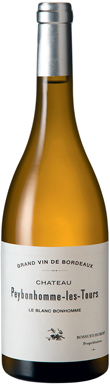

<p>Equal parts Sauvignon Blanc and Semillon. This 64ha estate has been biodynamically farmed since 1995. Exotic, floral aromas and tangy citrus. You’d hardly know 40%...
2017
Château Peybonhomme-Les-ToursBlaye Côtes de Bordeaux

Château Pontet-Canet, Pauillac, 5ème Cru Classé, Bordeaux, France, 2015
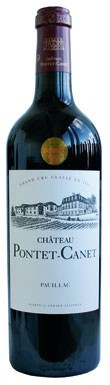
Deep, velvety texture on the palate and wild flowers on the nose; unctuous yet firm with pristine clarity. A great wine by any standards –...
2015
Château Pontet-CanetPauillac
Château Fonroque, St-Émilion, Grand Cru, Bordeaux, France, 2016
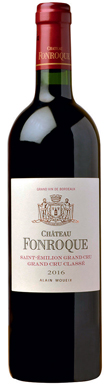
Power and structure in abundance, but it’s the spellbinding acidity that propels this stunning effort skyward. A shy nose of raspberries and sandalwood opens into...
2016
Château FonroqueSt-Émilion
Château Mazeyres, Pomerol, Bordeaux, France, 2014
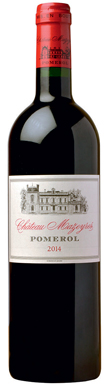
Like Fonroque, winemaking and viticulture is managed by Alain Moueix. Very expressive ripe berry aromas, pure fruit and crystalline tannins. A classical, nuanced vintage that...
2014
Château MazeyresPomerol
Château La Fleur Garderose, St-Émilion, Grand Cru, Bordeaux, France, 2014
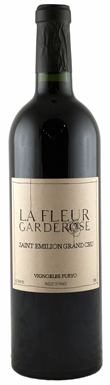
<p>Produced by the Pueyo family (Château Belregard-Figeac, Tellus Vinea). A charming and fresh vintage, brimming with berry compote plus a smidge of fresh earth and...
2014
Château La Fleur GarderoseSt-Émilion
Château Palmer, Margaux, 3ème Cru Classé, Bordeaux, France, 2017
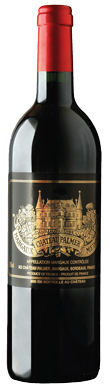
<p>The second vintage fermented completely with wild yeasts, this shows beautiful Margaux elegance: refined and soft textured yet with dark, plummy fruit on the nose...
2017
Château PalmerMargaux
Clos du Jaugueyron, Margaux, Bordeaux, France, 2015
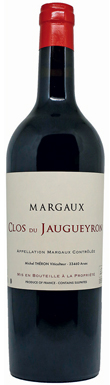
<p>Winemaker Michel Theron acquired this estate in 1993, and his wines are elegance personified. The 2015 was heavy on the Cabernet Sauvignon (70%) – it...
2015
Clos du JaugueyronMargaux
Château Tire Pé, Les Malbecs, Bordeaux, France, 2016
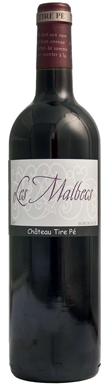
There’s a lovely floral freshness and verticality about this wine. It has a deep colour and aromatic spectrum that includes chalky, menthol, liquorice and floral...
2016
Château Tire Pé
Clos Puy Arnaud, La Cuvée Bistrot, Vin de France, Bordeaux, France, 2017
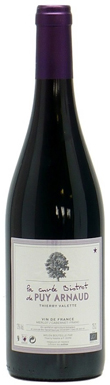
<p>Perfumed, unoaked, thrillingly vibrant 100% Merlot – a ‘vin de fruit’, as winemaker Thierry Valette says. Nose and palate effervesce with bilberry and raspberry, backed...
2017
Clos Puy ArnaudVin de France
Château de la Vieille Chapelle, Bouchalès Merlots, Vin de France, Bordeaux, France, 2018
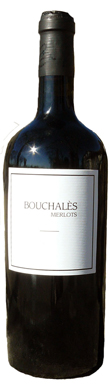
Bouchalès from 0.33ha of pre-phylloxera vines, with 25% Merlot and some Mancin, Castet, Peloursin, Baco and others. Wild berries and aniseed preside over a nervy,...
2018
Château de la Vieille ChapelleVin de France
Château le Puy, Emilien, Francs Côtes de Bordeaux, Bordeaux, France, 2016
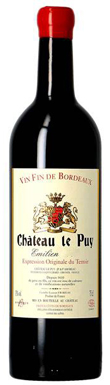
<p>Fermented in concrete tanks and bottled with minimal sulphites. Striking vitality: spiced raspberries and lovely earthiness dominate, with fine tannins and a joyful easygoing feel.</p>
2016
Château le PuyFrancs Côtes de Bordeaux
Domaine de Valmengaux, Bordeaux, France, 2015
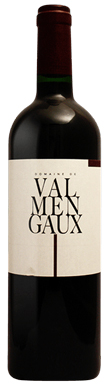
<p>Owned by a collective (Les Amis de Valmengaux) since 2017 and managed by David and Valérie Vallet. This quirky 2.5ha estate produced a tight, structured...
2015
Domaine de Valmengaux
