
Tasting Borgogno Barolo Riserva back to 1937


Michaela Morris gets a fascinating insight into the future plans of this historic winery and reports on a tasting of vintages going back to the 1930s...
‘We changed everything to change nothing,’ says winemaker Andrea Farinetti, revelling in the paradox.
Beneath the sleepy streets of the Barolo township, we are in Borgogno’s modest tasting room deep within the original cellars. To demonstrate his vision for the future, Farinetti takes me back into the past by opening up a vertical of Borgogno’s Barolo Riserva back to 1937.
Scroll down to see Michaela’s tasting notes & scores
Make-up of Borgogno Barolo Riserva
Until 2008, this wine was crafted from the year’s best vats, incorporating the following crus within the commune of Barolo:
- San Pietro delle Viole
- Cannubi San Lorenzo
- Cannubi
- Liste
- Fossati
Since 2008, the wine has been made from a blend of specific parcels within the last three sites exclusively.
‘The high component of sand and silt in Fossati imparts finesse and elegance, while Liste is very similar to the vineyards of Serralunga, giving structure and power,’ explains Farinetti. Cannubi has elements of both, while also providing flesh that animates the whole.
This tasting
For the more contemporary vintages, Farinetti wanted to compare hotter years to cooler ones, pairing 1997 and 1998 as well as 2003 and 2004.
While 1997 has the stuffing to last longer, I favoured the elegance from the warmer year of 1998. In the second pair, the cooler 2004 was superior, with lots of life left versus the excessively hot 2003, which has already peaked.
The only wine in the lineup made by 28-year-old Farinetti is the 2011. It represents a transition, because much of his modifications to the winemaking have occurred since then. The cellar was revamped two years ago and the vineyards have been in conversion to organic viticulture since 2015.
The star of the lineup was the 1982. While it won’t actually improve with further cellaring, this still has plenty of stamina.
The 1961 had the edge over 1978, having aged more harmoniously, but neither are in danger of falling apart imminently. My preference is to drink both now.
As for 1937, this riveting museum piece whispered profoundly of its past. These precious time capsules are for enthusiasts who truly enjoy well-aged wines.
Continue reading below
Borgogno history
One of the region’s most historic companies, Borgogno traces its roots back to 1761. The company grew in reputation under Cesare Borgogno, who assumed the mantle in 1920.
When Cesare passed away in 1968, he left the winery to his niece, Ida Boschis and her husband Franco. Their sons continued running the property until the Farinetti family, owners of the Eataly food empire, acquired it in 2008.
Oscar Farinetti’s son, Andrea, has been in charge since completing his winemaking studies at Alba’s Scuolo Enologica in 2010.
Winemaking
Having interned with the Boschis brothers until then, Andrea Farinetti tells me that ‘fundamentally our philosophy is the same – maintaining the real tradition of the Langhe.’
This is represented partially by continuing with long macerations and ageing in large Slavonian oak casks. However, Farinetti has also reintroduced spontaneous fermentations with wild yeasts and replaced the stainless steel with cement vats, one of which was restored from Cesare Borgogno’s tenure.
‘1982 was one of the last wines made in this manner,’ he asserts. ‘When I tried it, I fell in love and wanted to make a wine like that.’
Borgogno’s wines of the last century were notoriously hard to approach in their youth.
This doesn’t seem to be the direction of the future. Farnetti is working toward wines that are immediately harmonious and elegant. Whether they will be able to survive decades, only time will tell. What is evident is that under Farinetti, Borgogno has a dynamic new lease of life.
Borgogno: Fact file
Established: 1761
Purchased by the Farinetti family: 2008
Total production: 225,000 bottles
Total Barolo vineyard holdings: 10ha
Total Barolo production: 65,000 bottles
Total Barolo Riserva production: 10,000 bottles
Anticipated organic certification: 2019
Borgogno Barolo Riserva: tasted
You might also like:
Le Pergole Torte: One of Italy’s most consistent wines
‘Every collector needs one’: Produttori del Barbaresco Ovello Riserva
Piedmont new releases: Full report
Quick guide to Piedmont vintages: The headline ratings
Borgogno, Riserva, Barolo, Piedmont, Italy, 1937
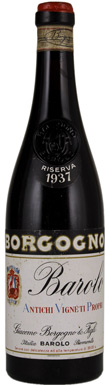

<p>Unlike the rest of the wines tasted, this 1937 did not hail from Borgogno's library - instead it was purchased from a vetted private Italian...
1937
BorgognoBarolo

Borgogno, Riserva, Barolo, Piedmont, Italy, 1961
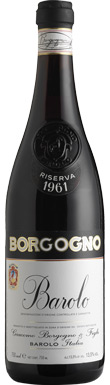
The 1961 and 1937 are the only wines in this vertical made during Cesare Borgogno's reign, with this 1961 being the oldest vintage in Borgogno's...
1961
BorgognoBarolo
Borgogno, Riserva, Barolo, Piedmont, Italy, 1978
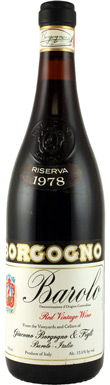
A significant vintage, 1978 is referenced as the last great year before Barolo's shift to more modern winemaking practices. Not necessarily straightforward, most of the...
1978
BorgognoBarolo
Borgogno, Riserva, Barolo, Piedmont, Italy, 1982
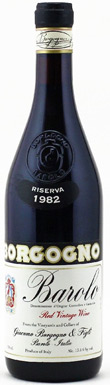
Farinetti cites this 1982 as his inspiration to reintroduce fermentation in cement with indigenous yeasts. Considered an excellent year, from summer through to harvest it...
1982
BorgognoBarolo
Borgogno, Riserva, Barolo, Piedmont, Italy, 1997
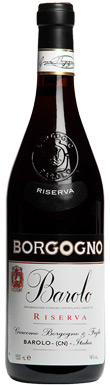
<p>Yields in 1997 were reduced due to some frost damage early in the season. The summer was very warm yet stormy, becoming more stable in...
1997
BorgognoBarolo
Borgogno, Riserva, Barolo, Piedmont, Italy, 1998
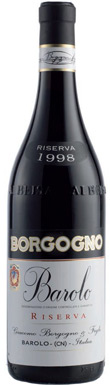
The hot, dry summer progressed into the ideal autumn where warm days were countered by cool nights. Harvest was fairly long, lasting from 28 September...
1998
BorgognoBarolo
Borgogno, Riserva, Barolo, Piedmont, Italy, 2003
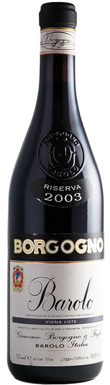
2003 was a torrid vintage which now serves as a comparison with 2017. Though more extreme in heat, it didn't suffer the same extent of...
2003
BorgognoBarolo
Borgogno, Riserva, Barolo, Piedmont, Italy, 2004
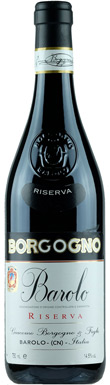
Summer was warm rather than hot, and harvest came very late - from 19-28 October at Borgogno - but it was extremely abundant. The 2004...
2004
BorgognoBarolo
