
From the archive: Brunello di Montalcino 2010 panel tasting results


Rated as one of the top all-time vintages in Montalcino, many unheralded producers did very well in this tasting and some of the wines are now coming into their drinking windows. See the in-depth report below...
Originally published in Decanter magazine's December 2015 issue and now available online in full, exclusively for Premium members.
This tasting: 99 Brunello di Montalcino 2010 wines submitted and tasted, with five rated outstanding
‘Many estates broke through this time around, producing some of the best wines they have ever been associated with,’ said our panel of Andrea Briccarello, Ian D’Agata and Michael Garner
Ian D’Agata, writing in the December 2015 issue of Decanter magazine, said that the uniform success of the Brunello di Montalcino 2010 vintage across this Tuscan DOCG presents an ideal opportunity to discover some impressive wines from less well-known names.
This tasting provided a very interesting set of results. On the one hand, the scores of 88 points or more for almost all the wines show that the vintage was a great one.
However, some estates did less well than expected. Wines that are notoriously difficult to taste young, such as Biondi Santi’s high-acid efforts, have previously clocked in at number one, so that estate’s poor result this time around is really puzzling.
Scroll down to see the top wines from the panel tasting
Canalicchio di Sopra, Il Marroneto and Baricci – who also make lovely, delicious and graceful Brunellos among the top 10 or 12 of the whole region – also scored less well than expected (though still quite well) and that is surprising, too.However, other politely styled, refined Brunellos from Montalcino’s northern sites (Altesino and Ridolfi come to mind) performed very well.Admittedly, our panel tends to score high-alcohol, unbalanced wines not very highly, but on this day, all styles of Brunello performed equally well, from bigger, full-bodied examples such as those from Cupano and Castelgiocondo to finer examples such as Costanti and Il Colle.
Quick link: View all 99 tasting notes & scores from the panel tasting
Many unheralded producers performed extremely well in 2010, confirming the impression that the vintage is a remarkably strong one at all price points. The 2010 vintage turned out so well that many estates broke through this time around, producing some of the best wines they have ever been associated with – if not the best.
This goes hand in hand with the observation that overall quality in Montalcino has increased by leaps and bounds over the last five years.
Nowhere is this fact more evident than when tasting through the Brunellos of previously unheralded producers, or everyone’s Rosso di Montalcino – Brunello’s little brother that had long been an afterthought, but that today is actually one of Italy’s better wine buys.
The 2010 Brunellos will all be ready to drink fairly soon and may not turn out to be the longest-lived wines in Montalcino memory, but I am confident most will survive 20 years easily.
The scores
99 wines tasted
Entry criteria: Producers and UK agents were invited to submit one wine per producer of Brunello di Montalcino 2010
Outstanding 5
Highly recommended 64
Recommended 30
Fair 0
Poor 0
Faulty 0
See all 99 wines from the panel tasting
The results
Ripeness and accessibility are the buzzwords for the 2010 Brunellos. While they may not be wines for the very long haul, our panel’s high ratings reflect an exceptional level of success, says John Stimpfig…
This was clearly a much-anticipated tasting by all three Decanter experts. ‘Primarily, because it was possibly the most hyped vintage ever in Montalcino,’ said Michael Garner. ‘So I wanted to see if all the lavish praise was justified. And having tasted nearly 100 wines, there’s no question that it’s more than worthy.’
Ian D’Agata was in no doubt: ‘On this evidence, I’d rate Brunello di Montalcino 2010 as one of the top three vintages of the last 50 years, along with 1999 and 2001.’
Andrea Briccarello was equally enthusiastic: ‘The fact that we gave five Outstanding scores serves to underline its greatness. There were so many good wines, and very few disappointments.’
D’Agata agreed: ‘In 1999 and 2001, there was a far higher number of less successful wines. By contrast, in 2010, there are very few poor wines.’
Montalcino experienced near-perfect conditions in 2010: not too hot or wet in the summer, with cold nights giving high acidity. The harvest was two weeks later than usual: ‘A huge advantage for the late-ripening Sangiovese,’ said Briccarello. Clearly, producers were blessed with excellent raw material. ‘So then it was just a case of how the fruit was handled.’
Garner concurred: ‘Yes, most got their oak regime absolutely right in that respect. What makes the vintage so attractive is that the wines are so well proportioned. The fruit intensity is very pure, the acidity is pretty much perfect and the tannins have reached full phenolic maturity.’
‘In my notes, the words I used most were “balance” and “elegance”,’ continued Briccarello. ‘Like Michael, I loved the fruit concentration and tannin ripeness. Remarkably, you can enjoy these wines now or cellar them. And from a sommelier’s point of view, these wines are wonderful for food pairing with game or beef.’
All agreed that the big and pleasant surprise of the tasting was how many of these wines are so full of early appeal. ‘They are very accessible, which is not what you expect from Brunello,’ said D’Agata. ‘Some are ready to drink now and most will be fine in the next few years. A key feature of this vintage is the combination of early accessibility and ageworthiness.’
Garner added that ‘most of the wines will go to about 2030 and perhaps beyond’. They won’t last for decades, he said, because: ‘The fruit is very ripe, warm and juicy. But I think there’s a good window of up to and over the next 15 to 20 years.’
Relatively high alcohol levels resulting from the warm vintage were not a concern for Garner: ‘I found very few wines where the alcohol was intrusive or noticeable – another measure of how well balanced this vintage is.’
But D’Agata was a bit more critical: ‘The less successful wines either had a problem with higher alcohols, and therefore a trace of warmth, or they had too much new oak. But the vast majority were beautifully balanced.’
The smiles on our experts’ faces said it all. ‘Sangiovese is a difficult grape to get right, but when you do it gives you an amazing array of flavours and colours,’ concluded Briccarello.
And D’Agata summed it all up: ‘This is a truly great vintage. Just look at the results, with nearly 70% as Highly Recommended or Outstanding. That speaks for itself.’
Our tasters each pick their top three wines from the tasting:
Andrea Briccarello
Briccarello was head sommelier at Galvin La Chapelle at the time of this tasting, and is now head sommelier and wine buyer for Galvin restaurants. He was previously group sommelier and wine buyer for Corrigan’s Mayfair, Bentley’s Oyster Bar & Grill and Lindsay House. He has also worked at Michelin-starred Umu. In 2009, he was named Sommelier of the Year by Taste of London, and was the winner of the Wines of Roussillon Dessert Trophy in 2010.
‘The anticipation for the 2010 was very high and I was really eager to taste the wines. I wasn’t disappointed: the wines were extremely good, full of personality and pure, charming flavours. The long ripening season resulted in wines packed with fruit for immediate enjoyment, but that are also very ageworthy.
‘All the wines we tasted displayed a true and distinctive Sangiovese character, exhibiting the classic sour cherry and ripe plum notes; the oak was very well used in all the wines, with plenty of room for imagination on the part of the winemaker.
‘For me, the best examples were those aged in large botti; in such great vintages, Slavonian oak is the ideal ageing vessel, allowing the soft character of the wine to shine through. The French oak gave more intensity and spiciness to the wines, increasing the ageing potential of those examples.
‘We can safely say that this vintage will be popular with collectors, but also with restaurants looking for early-drinking Brunellos. The results were outstanding and it was amazing to see the many different expressions that Sangiovese can offer.’
Briccarello’s top three wines:
Marchesato degli Aleramici, Brunello di Montalcino 2010
This was an outstanding wine that took my breath away; the meaty notes are intertwined with a generous amount of red forest fruits, making this wine really stand out from the rest of the field. It’s a textbook Sangiovese, showing huge complexity and structured layers of flavour, with cherries and spices. Oozing grace. 18.75/20 (95+/100) Drink 2017-2030
La Lecciaia, Brunello di Montalcino 2010
Scrumptious and intense on the nose, shows excellent fruit complexity and elegance. The tannins are firm but add a touch of rusticity to the wine; this is still a bit young, but should give its best in a few years. Elegance in a glass. 18 (93) Drink 2018-2030
Uccelliera, Brunello di Montalcino 2010
This incredible example of traditional winemaking showed some dark, deep animal core notes in the glass, with leather and cigar box undertones adding complexity to the savoury side of the wine. Amazing to drink now, but will age beautifully. Sophisticated and poised. 17 (90) Drink 2018-2035
Ian D’Agata
At the time of this tasting D’Agata was a DWWA Regional co-Chair for Italy and was named Italy’s best wine journalist 2012 by the Comitato Grandi Cru d’Italia. He is an award-winning author of The Ecco Guide to the Best Wines of Italy, and The Native Wine Grapes of Italy.
‘A lovely tasting, full of very good to outstanding wines. The 2010 vintage confirms itself to be a true ‘vintage of the century’, and not to have been overrated like many other vintages, such as 2004. In this light, 2010 is right up there with 1999 and 2001, and deserves to be placed in the ‘top 10’ all-time Brunello vintages.
‘If there is one caveat it’s that the wines are all fairly high in alcohol, and you can taste that, unfortunately. The aromas and flavours are those of super-ripe red fruit and sweet spices, and almost all come in a creamy, round, high pH style.
‘As is typical in warm years, identifying sub-regions is very hard in 2010, but the upside is that quality is very high. Even lesser producers, or bottlers who buy wine and then sell it with their own label, are offering great wines, and such wines are available at low prices, making them especially good buys.’
Ian D’Agata’s top three wines:
Salicutti, Piaggione Francesco, Brunello di Montalcino 2010
Leanza has made some of Montalcino’s best wines of the last 20 years, in a modern but graceful style. He has studied his vineyards closely and will at times produce two different cru Brunellos. 18.25/20 (94/100) Drink 2017-2026
Poggio di Sotto, Brunello di Montalcino 2010
Now owned by Claudio Tipa of Grattamacco fame, this estate confirmed Castelnuovo dell’Abate as the source of rich yet potentially extremely refined Brunellos. The 1999 Riserva and the 2001 were the best of those vintages, and this 2010 doesn’t lag far behind. 17.5 (91) Drink 2017-2030
Cupano, Brunello di Montalcino 2010
Situated in one of the warmest parts of Montalcino, Cupano makes remarkably rich Brunellos not shy in flavour or alcohol, yet always possessing impeccable balance. Owner Lionel Cousin is a disciple of Henri Jayer, and it shows. 17 (90) Drink 2017-2030
Michael Garner
Michael Garner has worked in the wine business for more than 30 years and has specialised in Italian wine for more than 25 of them. He is the co-author of Barolo: Tar and Roses, is a regular contributor to Decanter, and has taught for the Wine & Spirit Education Trust. He lives in rural Devon with his family and two large Briard dogs.
‘2010 is without doubt the most “talked-up” vintage ever for Brunello di Montalcino. Much of it was sold before the wine had even entered the bottle. The stellar reputation poses a very simple and straightforward question: does the vintage live up to all the hype?
‘Our tasting shows the answer to be “yes” (even if not a wholly unqualified affirmative). On the whole the wines showed exceptional balance: the fruit is concentrated, sweet, ripe and aromatic, the acidity levels almost unerring, the tannins gloriously ripe and finely grained. While the alcohol levels are high, they are not exaggerated.
‘With such excellent raw materials, the winemaking process should merely ensure the passage through to the finished product is conducted without any slip-ups. In the event there were a few examples of less-than-perfect use of (mainly smaller) oak, and where tannins were perhaps a little firmer than they needed to be (over-extraction), but thankfully these were in the vast minority.’
Col di Lamo, Brunello di Montalcino 2010
One of the real joys of such a reliable vintage is the freedom to experiment with new names. I had not heard of Col di Lamo before – apparently a small, determined one-woman band operation – but I loved the sheer exuberance of this wine. It’s built to last too. 18.5/20 (95/100) Drink 2017-2030
La Torre, Brunello di Montalcino 2010
This small and relatively unknown producer’s Rosso di Montalcino stood out at our panel tasting earlier this year, and the Brunello is equally exciting: impressive aromatic development and structure. 18.5 (95) Drink 2018-2030
San Polo, Brunello di Montalcino 2010
Another small producer with vineyards above Castelnuovo dell’Abate. While many of the more interesting wines were produced to a fairly traditional formula, this example shows how good the more modern versions of Brunello can be too: a full, rich and really stylish wine. 18.5 (95) Drink 2016-2032
About Brunello
Brunello di Montalcino is one of Italy’s most famous wines, highly sought after by wine lovers and collectors alike. Wine lovers appreciate its pure delivery of Sangiovese aromas and flavours – Brunello is 100% Sangiovese; notably, red cherry, redcurrant, liquorice, black tea leaf, violet, a hint of graphite.
With refreshing acidity and noteworthy refinement, Brunello has more structure and size than, say, Chianti Classico. Thanks to its vibrant acidity, it is also an ideal food wine.
But collectors seek out Brunello mainly because of its ageworthiness: its longevity is demonstrated by still-lively bottles dating back to 1898 and 1891 at the venerable Biondi-Santi estate, Montalcino’s – indeed one of Italy’s – most famous.
Easier to find may be the stellar wines of 1975, 1982, 1985, 1988 and 1990, all drinking wonderfully today but still relatively youthful, with plenty of life ahead (if stored correctly).
Though unquestionably one of the world’s great wines, Brunello di Montalcino has a relatively short history, emerging only in the latter half of the 19th century. In those days most Tuscan wines were blended, but Biondi-Santi pioneered the use of just one grape by which to make Brunello.
Evolution and regional styles
Not that there were many estates producing Brunello, at least until recently: at the 1933 Siena exhibition there were only four producers (one of whom didn’t even bottle the wine every year) presenting a wine. Back then there were less than 100ha (hectares) devoted to the production of Brunello.
Today, there are 200-plus estates making the wine and 2,000ha given over to its production; in the whole of Montalcino there are 2,500ha under vine, which means that a rather generous portion of the DOCG is permitted to make Brunello.
The Montalcino production zone is a hill which sees the pretty medieval town of Montalcino itself situated at its centre, at 564m above sea level. This allows the DOCG to be divided into four unofficial quadrants, and each produces a wine that is typical though not always easy to recognise as coming from a specific sub-zone. This is because many Montalcino estates own vines in more than one sector, and blend the grapes.
Otherwise, it is easiest to recognise the wines made in the southern sectors of the Montalcino hill; these are typically fleshy with an almost-sweet mouthfeel, and are very different to the finer, higher acid wines of the northern sectors.
The 2010 vintage – stellar, but characterised by very warm late-summer weather – blurs these distinctions somewhat, but for the most part these will be apparent to experienced tasters. Almost all the wines turned out well in 2010, a remarkable feat in an area where quality can be dismayingly up and down in the same vintage.
Brunello: the facts
Total area under vine in Montalcino 3,500ha (divided into Brunello di Montalcino, Rosso di Montalcino, Sant’Antimo, Moscadello di Montalcino and IGT wines)
Area under vine to Brunello 2,100ha
Number of Brunello producers 250
Number of estate-bottled wines 208
Annual production 9,000,000 bottles (65% of which exported)
Brunello: know your vintages
2012 The season began cool, but summer was very hot and dry. Some producers believe it to be a potentially outstanding vintage, but tannins of some (unfinished) wines seem drying.
2011 An extremely hot year, which makes for early accessibility, highish alcohol and ripe flavours.
2010 High acidity, silky tannins, gorgeous red fruit and sweet spice flavours: 2010 is certainly memorable. The only caveat is the slightly high alcohol levels in many wines.
2009 Underrated year, offering plenty of early appeal. The warm weather blurs some of Brunello’s distinctiveness and site-specificity.
2008 Another underrated year, typified by classic, high acid and somewhat austere wines.
2007 Overrated year (but nothing like 1997). Showy wines, but tannins and alcohol levels are questionable.
2006 Very powerful, tannic and high-acid wines that require patience.
Top scoring Brunello di Montalcino 2010 from the panel tasting:
You might also like:
Le Pergole Torte: One of Italy’s most consistent wines
Brunello di Montalcino 2013: Report and top wines
Brunello di Montalcino 2012 panel tasting results
La Togata, Brunello di Montalcino, Tuscany, Italy, 2010
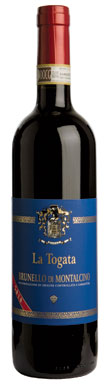

<p>Owned by a Rome-based lawyer, La Togata has always made solid wines that in 2010 seem better than ever. The estate is located next to...
2010
La TogataBrunello di Montalcino

Bottega, Il Vino dei Poeti, Brunello di Montalcino, Tuscany, Italy, 2010
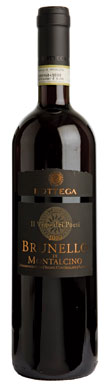
This Veneto-based distillery has been making wine for years now, and the acquisition of estates in Veneto (to make Amarone) and in Montalcino (for Brunello)...
2010
BottegaBrunello di Montalcino
Col di Lamo, Brunello di Montalcino, Tuscany, Italy, 2010
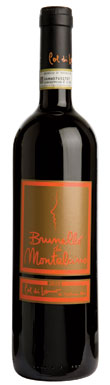
Owner Giovanna Neri has been making lovely wines for some years now. Her estate is located in Torrenieri, in the cooler northern sector, and spans...
2010
Col di LamoBrunello di Montalcino
Marchesato degli Aleramici, Brunello di Montalcino, Tuscany, Italy, 2010
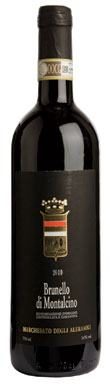
<p>Marchesato degli Aleramici is located in Camigliano, the winery falls within the confines of the Bogatto natural park and also offers bed-and-breakfast accommodation. The estate’s...
2010
Marchesato degli AleramiciBrunello di Montalcino
San Polo, Brunello di Montalcino, Tuscany, Italy, 2010
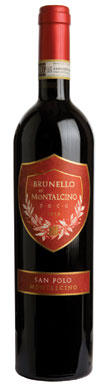
<p>A combination of the old and the new (fermentation in cement vats but ageing is 24 months in 700-litre tonneaux of new French oak) and...
2010
San PoloBrunello di Montalcino
Celestino Pecci, Brunello di Montalcino, Tuscany, Italy, 2010
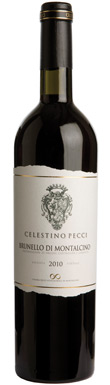
Very deep brooding nose of floral red cherry, macerated plum, minerals and sweet spices. A palate showing lots of personality yet is soft and mellow...
2010
Celestino PecciBrunello di Montalcino
Gianni Brunelli, Brunello di Montalcino, Tuscany, Italy, 2010
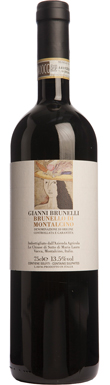
Fresh and easy-going, with sneaky concentration to the floral, cherry, gunflint, and sweet spice aromas and flavours. Undertones of mocha combine with chocolate and nuts...
2010
Gianni BrunelliBrunello di Montalcino
Piccini, Villa al Cortile, Brunello di Montalcino, Tuscany, Italy, 2010
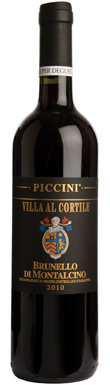
Flowers, marzipan, red cherry, sweet spices and a hint of earthy underbrush. Very pure, with a hint of blood orange and candied redcurrant emerging on...
2010
PicciniBrunello di Montalcino
Salicutti, Piaggione, Brunello di Montalcino, Tuscany, Italy, 2010
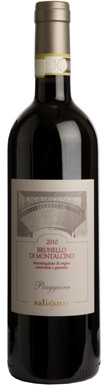
Clean leather and animal notes on the nose with hints of leather and balsamic. Suave, balanced palate with juicy bramble and loganberry fruit flavours. Already...
2010
SalicuttiBrunello di Montalcino
Altesino, Brunello di Montalcino, Tuscany, Italy, 2010
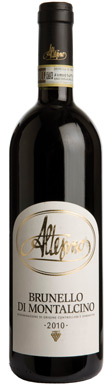
Clean and fresh if slightly austere aromas and flavours of red cherry, mint and minerals. Full and rich with fleshy fruit flavours developing cacao and...
2010
AltesinoBrunello di Montalcino
Brunelli, Brunello di Montalcino, Tuscany, Italy, 2010
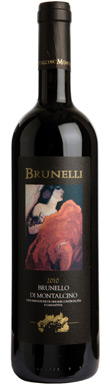
Clean, very pure and fragrant nose of pomegranate and plums with a hint of hay. Round and full with juicy and smoky fresh and dried...
2010
BrunelliBrunello di Montalcino
Il Palazzone, Brunello di Montalcino, Tuscany, Italy, 2010
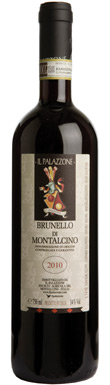
Good breadth of aroma: spicy and cedary black and berry fruits with a good concentration of cherry. Bright red forest fruits on the mid palate...
2010
Il PalazzoneBrunello di Montalcino
