
Brunello di Montalcino 2016: vintage report and top wines
After recently tasting almost 100 Brunello di Montalcino 2016 samples, Michaela Morris says it is a five-star vintage of modern classics with wines showing extraordinary depth, detail and balance.


Brunello di Montalcino 2016: vintage report
Vintage rating: 5/5
With this latest release of Brunello, it is finally Montalcino’s moment to bask in the glories of Tuscany’s 2016 vintage. ‘If we could control the weather by thermostat, 2016 is exactly how we would set it,’ declares Francesco Ripaccioli at Canalicchio di Sopra.
Scroll down for Michaela Morris’ 26 top-scoring Brunello di Montalcino 2016 tasting notes and scores
The 2016 vintage
The vintage came together with the ideal combination of rain, sun and temperatures. Winter was sufficiently cold for vines to recuperate, then a rainy spring encouraged healthy growth and bolstered water reserves. The summer was dry and warm, without significant heat spikes. ‘It wasn’t too hot; it wasn’t too dry – it was just right,’ says Riccardo Campinoti at Le Ragnaie.
The average precipitation during the growing season was 700mm. ‘We had a fair amount of rain but at the right moments,’ explains Tina Tassi at Tassi di Franci Franca.
Above all, August and September boasted substantial differences between day and nighttime temperatures. ‘You really felt this in the north,’ says Gianlorenzo Neri at Casanova di Neri, where he cites temperatures of 29°C in the day versus 14 to 15°C at night. ‘You had to go out with a sweater or a jacket in the evening,’ he recounts, adding that nights in the south were about 3°C warmer – still markedly cooler than its daytime temperatures.
This pronounced diurnal temperature range encouraged long, slow ripening. Harvest started mid-September in the warm southwest and finished up a month later in the coolest pockets at the highest elevations. ‘We were able to harvest each vineyard at the opportune moment,’ asserts Roberto Ruscito at Castiglion del Bosco.
Nevertheless, the year was not completely stress free.
While a wet June encouraged vine growth, it also increased the risk of vine disease. ‘Phytosanitary control kept us busy,’ acknowledges Sara Rossi at Padalletti. The rain also affected fruit-set according to Alessia Salvioni. However, this wasn’t serious enough to negatively impact yields, 2016 being in general not quite as abundant as 2015 but still fairly generous.
Mildew was a concern during rainy periods later in the season. ‘If you didn’t pay attention, Peronospora could destroy the bunches,’ explains Neri. Mercifully, drying winds from the north gave growers a helping hand.
In late-ripening areas, localised rain in mid-September prompted debates about whether to start harvesting. Producers who waited were rewarded by the return of good weather and brought in healthy, phenolically ripe grapes.
It is impossible not to size up 2016 against its highly touted, immediate predecessor, and it seems temperatures made the difference.
‘In 2015, there were about 10 days at 38°C during the phenolic ripening,’ says Ripaccioli. Conversely, in 2016 temperatures never exceeded 35°C. Yet 2016 was far from a cool vintage. Although it was less extreme in heat than the flanking vintages of 2015 and 2017, it follows the general warming trend in Montalcino.
Fighting the heat
Of note, as of 2016, vineyards above 600 metres – which were previously deemed unsuitable for ripening Sangiovese – have been admitted into the denomination. Mostly concentrated in the Passo del Lume Spento area, these currently represent a miniscule percentage of plantings.
Montalcino’s savviest growers have been adjusting to increasing temperatures over a number of years. Strategies include de-leafing later in the season; keeping ground cover in alternative rows; and – while it might sound counterintuitive to quality – cropping at slightly higher yields. ‘In vintages where we are looking for more freshness, we increase from 5,000kg (38hL/ha) to 7,000kg (48hL/ha),’ says Bernardino Sani, CEO of Argiano in Montalcino’s southwest.
In an effort to curb over-concentration Argiano, along with other estates, are also replanting at lower densities. As benevolent as Mother Nature was in 2016, the high quality achieved by many Montalcino estates is due in part to such efforts in the vineyard.
Enthusiasm for 2016 has been stewing for years among Montalcino’s producers. It was hard for them not to talk about 2016 when the 2015s were released last year. My expectations were also set high by promising barrel samples on previous visits.
View all the recent Brunello di Montalcino 2016 tasting notes, plus some 2015 late releases
Brunello 2016 character
Tasting the now bottled 2016s was an absolute pleasure. I tasted almost 100 wines between January and April at my home in Vancouver, Canada.
Overall, I love the vintage’s freshness of acidity. It makes the wines ring out as clear as a bell.
The tannins are formidable but not stern or foreboding. Alas, not every wine was great: a few were surprisingly lean and lacking while others were overly brawny and heady in alcohol. Nonetheless, there were many fantastic examples offering extraordinary depth, detail and balance.
I also noted several wines that performed better than ever – including Argiano, Pian delle Vigne, Sesta di Sopra and Silvio Nardi’s Manachiara.
Above all, the 2016 vintage demonstrated Montalcino’s varied terroir, with wines speaking clearly of its diverse sectors.
Not all sites are equal, but I didn’t feel that one particular zone fared better than any other. There were successes throughout the region, and quality disparities also came down to specific producers. Among my top wines were a number of ‘selections’ – bottlings from a single parcel, lot or selected grapes. However, these are not always better than the classic bottling and in some cases I preferred the latter.
The 2016s are modern classics. While they don’t have the immediate accessibility that characterised 2015, you don’t have to wait long to enjoy them. I wouldn’t turn down a glass of the Altesino or Ciacci Piccolomini in the near future. In the same breath, the 2016s possess the density of fruit, piercing acidity and emphatic tannins to age. They can be tucked away for a couple of decades, and in some cases even longer: I would bank on Fuligni, Il Marroneto’s Madonna delle Grazie, Il Poggione and Le Chiuse for the long haul.
In comparison to 2015, fewer Brunellos were prematurely evolved, though several barrique-aged wines demonstrated oxidative nuances. I questioned how long these would age despite their ample structure.
I also tried a small handful of late releases from 2015. Tasting them alongside the 2016s, the softness and generosity of 2015 was all the more apparent. Nevertheless, these are appealing wines and certainly Biondi-Santi’s example demonstrated a rare firmness for the vintage.
As I finished up my tastings at the beginning of April, Montalcino was battling one of its worst frosts in 20 years. While quality will depend on conditions in the coming months, quantities will surely be down. It is a stark reminder that few years are as painless as 2016.
When a vintage like this comes along, producers rightly revel in it. And with so many impressive wines, Brunello-lovers should absolutely buy up!
Standout Brunello producers in 2016:
Fuligni produced the top wine for me in 2016 – elegant in its power with great complexity and the vintage’s radiant acidity.
Il Marroneto continues to impress, not just with the Madonna delle Grazie selection but the estate bottling as well.
Le Ragnaie crafted four solid and distinct Brunello, skillfully demonstrating the region’s diverse territory.
San Polino’s conscientious vineyard practises surpass organic and biodynamic protocols, and the wines are expressively pure Sangiovese.
Casanova di Neri releases a trio of polished and pristine Brunello, with the 2015 standing proudly alongside the 2016.
Value picks
Il Poggione (95): With a production of 200,000 bottles, this is an excellent ambassador for the region and vintage.
Altesino (94): A delightful, drinkable yet durable Brunello.
Argiano (93): 2016 is the best estate bottling of Brunello from Argiano in recent memory.
Top Brunello di Montalcino 2016:
View all 93 Brunello 2016 tasting notes, plus some 2015 late releases
View all 93 Brunello 2016 tasting notes, plus some 2015 late releases
You may also like:
Rosso di Montalcino: Brunello’s charming little brother
Brunello di Montalcino 2004: a retrospective
Castello Banfi: producer profile plus 14 wines tasted
Fuligni, Brunello di Montalcino, Tuscany, Italy, 2016
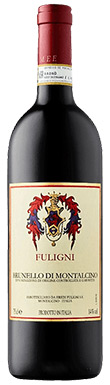

The Fuligni family moved from Maremma to Montalcino early in the 20th century, establishing the estate in 1923. Maria Flora has been at the helm...
2016
FuligniBrunello di Montalcino

Conti Costanti, Brunello di Montalcino, Tuscany, Italy, 2016
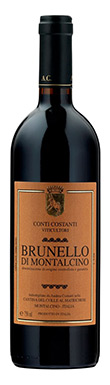
With a history stretching back to the mid-16th century, Conti Costanti is one of the founding estates of the Brunello di Montalcino denomination, run by...
2016
Conti CostantiBrunello di Montalcino
Il Marroneto, Madonna delle Grazie, Brunello di Montalcino, Tuscany, Italy, 2016
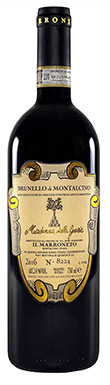
Trying Il Marroneto’s various lots from cask is a fascinating exercise. They are all similarly located at high altitude, on coarse sand of marine origin...
2016
Il MarronetoBrunello di Montalcino
Canalicchio di Sopra, La Casaccia, Brunello di Montalcino, Tuscany, Italy, 2016
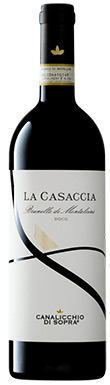
The second release of this single vineyard, La Casaccia was planted in 1990. At an average altitude of 300 metres, it sits on predominantly clay...
2016
Canalicchio di SopraBrunello di Montalcino
Casanova di Neri, Tenuta Nuova, Brunello di Montalcino, Tuscany, Italy, 2016
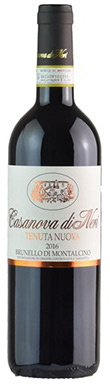
Tenuta Nuova is Casanova di Neri’s southern expression of Brunello. Vines were planted in 1989 and Gianlorenzo Neri says they are now hitting their stride,...
2016
Casanova di NeriBrunello di Montalcino
Le Chiuse, Brunello di Montalcino, Tuscany, Italy, 2016
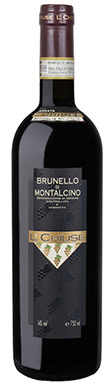
This striking 2016 is a suave yet dense package. It’s headily scented with violet, lilac and rose, eventually giving way to exotic spice and tobacco....
2016
Le ChiuseBrunello di Montalcino
Le Ragnaie, Vigna Vecchia, Brunello di Montalcino, Tuscany, Italy, 2016
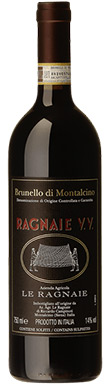
From a 50-year-old site at 600 metres, Le Ragnaie’s Vigna Vecchia is among the estate’s last to be harvested. In 2016, Riccardo Campinoti had to...
2016
Le RagnaieBrunello di Montalcino
Padelletti, Brunello di Montalcino, Tuscany, Italy, 2016
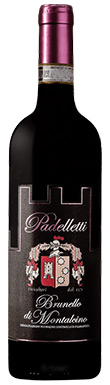
Sitting just below the town of Montalcino, Padelletti's six hectares are northeast-facing on clay soil rich in sandstone and limestone. The estate offers elegant yet...
2016
PadellettiBrunello di Montalcino
San Polino, Helichrysum, Brunello di Montalcino, Tuscany, Italy, 2016
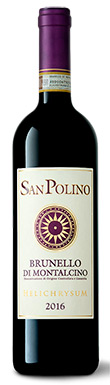
Helichrysum comes from the southeast, in the area of Podernovi where high altitudes counter the warmth. The vines are pruned closely to give low-yields of...
2016
San PolinoBrunello di Montalcino
Sesta di Sopra, Brunello di Montalcino, Tuscany, Italy, 2016
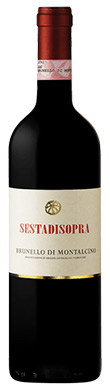
Ettore Spina and Enrica Bandirola purchased the Sesta di Sopra estate as a holiday home in the late 1980s. After restoring the farmhouse, they replanted...
2016
Sesta di SopraBrunello di Montalcino
Baricci, Montosoli, Brunello di Montalcino, Tuscany, Italy, 2016
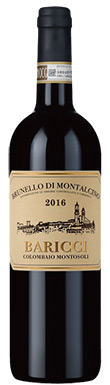
One of the few founding estates of the Brunello consorzio in 1967, Baricci is now in the hands of the third generation. If approaching this...
2016
BaricciBrunello di Montalcino
Poggio di Sotto, Brunello di Montalcino, Tuscany, Italy, 2016
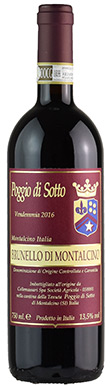
The early summer experienced variable and uneven weather, but a hot summer gave an early harvest of concentrated wines. The nose is truly stylish, with...
2016
Poggio di SottoBrunello di Montalcino
Silvio Nardi, Manachiara, Brunello di Montalcino, Tuscany, Italy, 2016
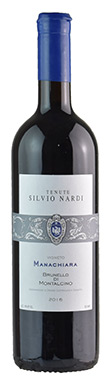
Truly the loveliest Manachiara I have tried and among my favourite wines of the vintage. Produced since 1995, it is crafted from Nardi’s vineyards near...
2016
Silvio NardiBrunello di Montalcino
Altesino, Montosoli, Brunello di Montalcino, Tuscany, Italy, 2016
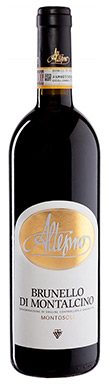
Altesino has been producing a separate bottling from the cru of Montosoli since 1975, though the vines were partially replanted in 2005 and 2016. If...
2016
AltesinoBrunello di Montalcino
Argiano, Vigna del Suolo, Brunello di Montalcino, Tuscany, Italy, 2016
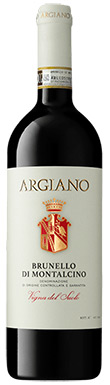
Argiano's oldest site, Vigna del Suolo boasts 65-year-old vines of very rare Sangiovese clones. Recent soil mapping with Chilean specialist Pedro Parra has also revealed...
2016
ArgianoBrunello di Montalcino
Casanova di Neri, Brunello di Montalcino, Tuscany, Italy, 2016
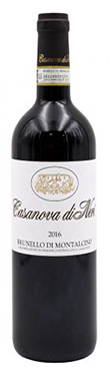
The 2016 vintage was marked by significant day and nighttime temperature differences. Gianlorenzo Neri says this was particularly pronounced in Montalcino’s northeast, where the vineyards...
2016
Casanova di NeriBrunello di Montalcino
Castello Romitorio, Filo di Seta, Brunello di Montalcino, Tuscany, Italy, 2016
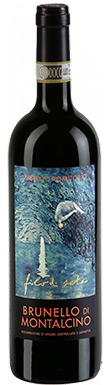
Filo di Seta sits at the foot of the Romitorio hill facing the revered Montosoli cru. A mix of Galestro, clay and limestone, the plot...
2016
Castello RomitorioBrunello di Montalcino
Il Marroneto, Brunello di Montalcino, Tuscany, Italy, 2016
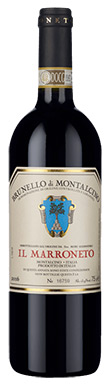
The 2016 is a fine rendition of the estate's Brunello in a fine year overall. It was 'a very easy vintage,' according to Alessandro, with...
2016
Il MarronetoBrunello di Montalcino
Il Poggione, Brunello di Montalcino, Tuscany, Italy, 2016
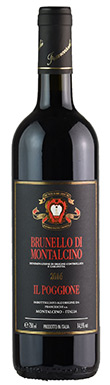
Among Montalcino's largest estates, Il Poggione continues to impress in 2016 under father and son winemaking duo, Fabrizio and Alessandro Bindocci. The wine wears its...
2016
Il PoggioneBrunello di Montalcino
La Magia, Brunello di Montalcino, Tuscany, Italy, 2016
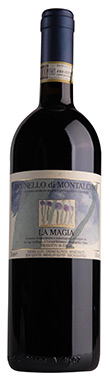
Winemaker and owner Fabian Schwartz favours 500L French oak tonneau for ageing, with the percentage of new wood increasing up through his range of Brunello....
2016
La MagiaBrunello di Montalcino
Le Ragnaie, Casanovina Montosoli, Brunello di Montalcino, Tuscany, Italy, 2016
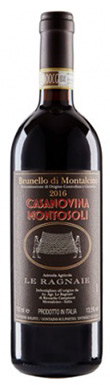
Le Ragnaie is among about 10 producers now making a separate Montosoli bottling. Riccardo Campinoti purchased a one-hectare plot on the lower part of this...
2016
Le RagnaieBrunello di Montalcino
Lisini, Brunello di Montalcino, Tuscany, Italy, 2016
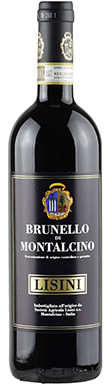
Lisini is one of Montalcino’s oldest estates and has been owned by the Lisini-Clementi family since the 16th century. Today, it is run by Ludovica...
2016
LisiniBrunello di Montalcino
Gaja, Pieve Santa Restituta Sugarille, Brunello di Montalcino, Tuscany, Italy, 2016
From a single, southwest-facing vineyard on clay and limestone soil rich in Galestro, the 2016 Sugarille is large-framed but poised. With a brooding character, it...
2016
GajaBrunello di Montalcino
San Polino, Brunello di Montalcino, Tuscany, Italy, 2016
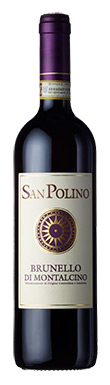
With an eye towards the Apennines, San Polino’s northerly vineyards are fully exposed to cool winter winds coming from Siberia. The vines are cropped a...
2016
San PolinoBrunello di Montalcino
Sesti, Brunello di Montalcino, Tuscany, Italy, 2016
In the southern reaches of Montalcino, just west of Sant’Angelo in Colle, Sesti is flanked by two valleys. To the east, Monte Amiata protects from...
2016
SestiBrunello di Montalcino
Tassi di Franci Franca, Giuseppe Tassi, Brunello di Montalcino, Tuscany, Italy, 2016
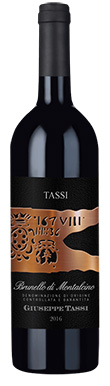
The most elegant and restrained yet structured and mighty of Tassi’s 2016s, Giuseppe Tassi is almost confounding – yet compellingly so. A selection of the...
2016
Tassi di Franci FrancaBrunello di Montalcino
