
Brunello di Montalcino 2017 vintage report and top-scoring wines
Producers had to make some difficult decisions for their Brunello di Montalcino 2017 wines but the results speak for themselves, as 'numerous wines demonstrate greater freshness than anticipated,' according to Michaela Morris who recently tasted and rated 80 samples.


Brunello di Montalcino 2017: 3.5
Extreme heat and drought conditions made even ripening a challenge. Overall, freshness is preserved, although dry tannins do poke through. Most wines will show their best over the next five to eight years.
Banfi’s sizeable artificial lake used for emergency irrigation was almost depleted. Harvest was already underway for Merlot and there were whispers that some estates had started picking Sangiovese as well.
One winemaker described the fermenting vats as jam.
Scroll down to see tasting notes and scores for the best Brunello di Montalcino 2017 wines
2017: The ‘desert’ vintage
‘From June until the end of August, there were almost 20 days above 35°C,’ says Francesco Ripaccioli at Canalicchio di Sopra.
More than the torrid heat, however, it is drought that characterises the 2017 vintage. ‘It didn’t rain for three months,’ recalls Katia Nussbaum at San Polino. ‘It was like a desert.’ Moreover, the scarcity of water wasn’t just limited to the summer months – lower-than-average rainfall was recorded from the start of the year.
Though arid conditions and soaring temperatures meant that mildew wasn’t an issue in 2017, water stress certainly was. More than ever, it was crucial to keep enough leaves on the vines to shade the grapes.
Fabian Schwartz at La Magia avoided thinning bunches so as not to over-concentrate the berries, and Bernardino Sani identified several changes Tenuta di Argiano has made since 2013 such as soil revitalisation, organic viticulture and less dense plantings. ‘This helped a lot in reducing the impact of drought on the grapes.’ Still, the estate produced 30% less than average.
Francesca Bindocci pointed to ‘the intelligent use of emergency irrigation,’ as Il Poggione is fortunate enough to have a few artificial lakes on its property.
Producers let out a collective sigh of relief when it finally rained at the beginning of September. There was another downpour mid-month. Significantly, precipitation was accompanied by a drop in temperatures, particularly at night, which served to slow down ripening. ‘This allowed us to arrive at harvest with good ripeness of grapes, polyphenols and seeds,’ shares Sara Rossi at Padelletti.
Ripaccioli refers to an evaluation called the Fregoni index, which measures the difference between day and nighttime temperatures in the 30 days leading up to harvest. ‘In 2017, the Fregoni index recorded the same values as in 2016,’ he says, explaining that significant diurnal differences helped preserve acidity.
Both Padelletti and Canalicchio di Sopra were among those who harvested mid- to late-September – essentially the same timing as in other recent vintages. Yet Montalcino’s vineyards vary in microclimate, altitude and exposition. ‘Not to say that one is better than another, but high and cool sites have an advantage in hot years,’ states Andrea Costanti, who started picking on 20 September.
Other estates couldn’t wait. ‘Leaving the grapes on the vine wouldn’t have made any difference. Instead, they would have started shrivelling,’ says Schwartz, who started picking a full three weeks early.

A balancing act
Situated in the southwest, Il Poggione kicked off harvest on 1 September. Likewise, Caparzo began the following day in its southernmost plot. Both admit that this meant sacrificing full phenolic ripeness and compensated by getting rid of unripe seeds from the fermentation vats. ‘Eliminating these was the biggest challenge in the winery but also the most important technical step that allowed us to obtain wine with less aggressive tannins,’ explains Caparzo’s Massimo Bracalente.
The vintage also demanded strict sorting to remove sunburnt or dried grapes that might lend astringency or bitterness. ‘We did a lot of pre-pick selection in the field,’ declares Laura Gray at Il Palazzone, ‘and our vibrating sorting table proved invaluable.’
Managing the vintage’s tricky tannins is definitely a leitmotif. Vinification saw many winemakers playing with shorter maceration times, cooler fermentation temperatures and gentler extractions. Exact combinations varied by estate.
‘We were able to keep the maceration up to one month, so rather than shorten the extraction, we preferred to make it softer,’ says Riccardo Fratton at San Polo. Conversely, Andrea Costanti describes doing ‘more extraction than usual and a long cold-maceration post fermentation.’
While cooler fermentation temperatures were often favoured to preserve freshness, Andrea Machetti at Mastrojanni was cautious not to let them get too cold. ‘The problem was getting the sugar to ferment to dryness,’ he explains.
The balancing act continued throughout maturation, with some estates curbing oxidative ageing through less time in wood and selecting larger barrels. Sani reduced ageing time in cask to the denomination’s minimum. ‘It was essential in this year to avoid adding tannin to an already less balanced wine and to preserve freshness on the nose,’ he states.

Differing approaches
Brunello di Montalcino requires 24 months in cask but 2017 called that into question – at least for Andrea Lonardi at Val di Suga. ‘In vintages like this, I would like to avoid going over 12 to 18 months,’ he admits.
The 2017 vintage also revealed diverging philosophies regarding estates’ ‘selection’ bottlings. Val di Suga usually comes out with three, highlighting different sectors of Montalcino. ‘2017 wasn’t a year to come out with a cru,’ declares Lonardi. ‘There wasn’t enough tension.’
At La Fiorita, it was a question of quantity and quality. ‘We only made two-thirds of our average production – no selection, no Riserva – and we even sold off some of our wine in bulk,’ says Luigi Peroni.
Conversely, Tommaso Cortonesi insisted on bottling the estate’s parcels in the southeast and north separately. ‘It is important that our wines have a strong connection to their vineyard, terrain and microclimate. And they must convey their life path of that vintage,’ he explains. At San Polo, the winery’s two single vineyards are side by side. ‘We thought it was worth producing our selections to show the potential of our vineyards, even in a difficult vintage,’ Fratton rationalises.
A number of these ‘selections’ are among my top picks. However, as in previous years, not all are necessarily better than a producer’s estate bottling. The issue in 2017 is that in some cases, bottling a selection seemed to impoverish the estate bottling.
See the score table featuring all 80 Brunello di Montalcino 2017 plus five 2016 late releases
Brunello di Montalcino 2017: Top 10 producers
Biondi-Santi
Biondi-Santi’s late releases of the 2016 Brunello and 2015 Riserva were born during the transition period between Franco Biondi-Santi’s death and new ownership, and are a testament to the excellent management by the incoming team. Also look out for the limited re-release of the bracing and tenacious 1985 Riserva.
Canalicchio di Sopra
A great showing from this dynamic property, with equally estimable estate and selection Brunellos as well as one of the best 2016 Riservas.
Castello Romitorio
Filippo Chia proposes an accomplished duo of 2017 Brunello, but it is the two 2016 Riserva that really shine amidst the estate’s new releases.
Conti Costanti
Andrea Costanti’s 2017 Brunello exudes confidence and a skilled reading of the vintage. The same can be said of his 2016 Riserva.
Gianni Brunelli
Pretty fragrances, freshness and deftly managed tannins are among the highlights of this estate’s 2017. As for the 2016 Riserva, it dials it up a notch from last year’s 2016 annata release.
Il Marroneto
Alessandro Mori’s Madonna delle Grazie is one of the top wines of the vintage and his estate bottling isn’t far behind. Both are a tribute to tireless work in the vineyard and faithfulness to his naturalista philosophy.
Le Chiuse
Lorenzo Magnelli has managed to coax the very best from the challenging 2017 vintage. He has also come out with a seductive yet sophisticated 2012 Riserva that more than holds its own next to the parade of stunning 2016s.
Le Ragnaie
Riccardo Campinoti’s Casanovina Montosoli is the finest of his solid 2017 lineup. Of note too, is the first Brunello release from his Passo del Lume Spento vineyard, which sits at over 600 metres.
Poggio di Sotto
Shorter macerations and less time in wood than usual were wise decisions here. The 2017 annata still captures Poggio di Sotto’s style and the 2016 Riserva is worthy of its category.
San Polo
Marilisa Allegrini’s Montalcino property has gone from strength to strength since the arrival of winemaker Riccardo Fratton in 2015, with the introduction of two single-vineyard bottlings the same year and organic certification as of 2017.
Brunello di Montalcino 2017: conclusions
Overall, heroic efforts in the vineyard and cellar are evident as numerous wines demonstrate greater freshness than anticipated. Although several are clumsily pushing 15% plus, alcohol levels are no more problematic than in 2015. Instead, the heat shows through in a macerated fruit quality. The vintage’s aridity is echoed in dry tannins, although these are more or less pronounced depending on picking times and extraction regimes. While the wines may lack the precision and intricate details of the best vintages, they are exuberant, immediate and upfront in their charms.
Wines from cooler sites stand out in 2017. These typically boast mitigating factors like higher altitudes, exposures oriented to the north or east, cooling breezes and/or surrounding woodlands. Top examples such as Il Marroneto’s Madonna delle Grazie and Le Potazzine almost belie the vintage with their grace. From the north, Le Chiuse, Canalicchio di Sopra and Conti Costanti are skillfully composed, while in Baricci and Le Ragnaie’s Casanovina bottling, the hallowed terroir of Montosoli shines through. Equally laudable offerings from more southerly locales include Gianni Brunelli and San Polo’s Podernovi. These make the 2017 vintage worth buying.
Alongside the 2017s, I tasted a few late-release 2016s, including excellent showings from Casanova di Neri’s Cerretalto, Mastrojanni’s Schiena d’Asino and Lisini’s Ugolaia. Above all, the shape of the wines is distinct in the two vintages. While 2016 stretches out expansively across the palate, 2017 is compressed and stubbier.
‘The ugly truth is that there was little you could do. You couldn’t have an elegant Brunello in 2017,’ declares Lorenzo Magnelli at Le Chiuse. Nevertheless, he identifies its sensibility. ‘The beauty of 2017 is that it’s very direct.’
Indeed, the wines wear the vintage candidly on their sleeves. They will also be best in the short term. When I tasted these in November, many still needed a bit more time in bottle for tannins to resolve, but by the time they are available for purchase, most should be ready to drink. You could tuck the best away for a year or two, but even these will give most of their pleasure early on. The 2017 vintage is ideal for anyone who doesn’t have the patience or means to store long-term.
Brunello di Montalcino 2017: top-scoring wines
See all 80 Brunello di Montalcino 2017 wines plus five 2016 late releases
See all 80 Brunello di Montalcino 2017 wines plus five 2016 late releases
View all Tuscany vintage reports
Il Marroneto, Madonna delle Grazie, Brunello di Montalcino, Tuscany, Italy, 2017
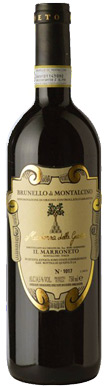

Il Marroneto's northern exposition and altitude, surrounded by cooling woodland, saved the day in the drought and heat of 2017. Balsamic black cherry, earthy red...
2017
Il MarronetoBrunello di Montalcino

Le Chiuse, Brunello di Montalcino, Tuscany, Italy, 2017
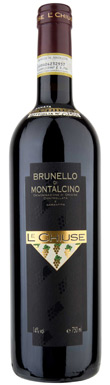
Lorenzo Magnelli opted to pick early to avoid opulence in 2017. Along with gentler punch-downs and fewer pump-overs, he aged the wine for less time...
2017
Le ChiuseBrunello di Montalcino
Canalicchio di Sopra, La Casaccia, Brunello di Montalcino, Tuscany, Italy, 2017
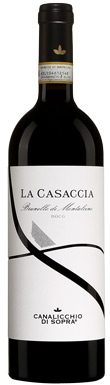
Within the Canalicchio area, the Casaccia vineyard boasts a high clay content, which helped curb water stress in 2017. As with all Canalicchio di Sopra’s...
2017
Canalicchio di SopraBrunello di Montalcino
Canalicchio di Sopra, Brunello di Montalcino, Tuscany, Italy, 2017
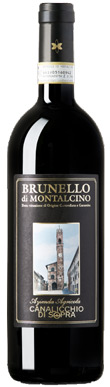
Canalicchio di Sopra began harvesting Brunello on 25 September - just one day earlier than in 2016. Francesco Ripaccioli credits the significant diurnal temperature differences...
2017
Canalicchio di SopraBrunello di Montalcino
Conti Costanti, Brunello di Montalcino, Tuscany, Italy, 2017
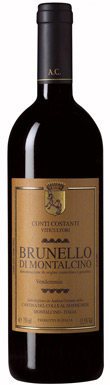
Andrea Costanti has crafted an appetising and characterful 2017, expressive without being over-exuberant or pushed. He reports doing more extraction than usual, with extended post-fermentation...
2017
Conti CostantiBrunello di Montalcino
Gianni Brunelli, Brunello di Montalcino, Tuscany, Italy, 2017
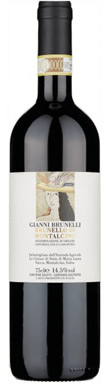
Proprietor Laura Vacca has crafted one of the top wines of the vintage from her high-altitude vineyards in the southeast- and northwest-facing plots just north...
2017
Gianni BrunelliBrunello di Montalcino
Le Potazzine, Brunello di Montalcino, Tuscany, Italy, 2017
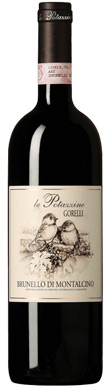
Le Potazzine is run by Gigliola Giannetti and her daughters Viola and Sofia. Viola started taking over winemaking responsibilities in 2017 at the age of...
2017
Le PotazzineBrunello di Montalcino
Le Ragnaie, Casanovina Montosoli, Brunello di Montalcino, Tuscany, Italy, 2017
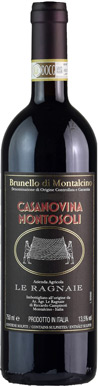
Located directly beside the cellar of the historic Baricci estate, Le Ragnaie’s Montosoli holding is a 1ha, east-facing plot at 300 metres above sea level....
2017
Le RagnaieBrunello di Montalcino
Lisini, Brunello di Montalcino, Tuscany, Italy, 2017
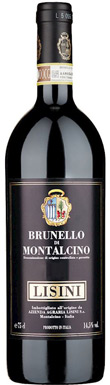
Located in the southern reaches of the Montalcino zone, near Sant’Angelo in Colle, Lisini is one of the last in the area to harvest. The...
2017
LisiniBrunello di Montalcino
Padelletti, Brunello di Montalcino, Tuscany, Italy, 2017
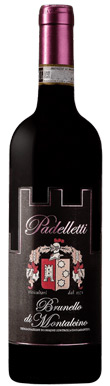
With vineyards in the Canalicchio zone just north of the town of Montalcino, Padelletti credits the calcareous clay soil for curbing water stress. Harvest dates...
2017
PadellettiBrunello di Montalcino
Poggio di Sotto, Brunello di Montalcino, Tuscany, Italy, 2017
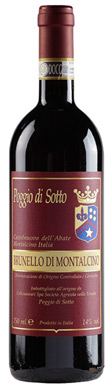
Poggio di Sotto made 50% less wine in 2017 and will not release a Riserva. Maceration times were shorter than usual – just 25 to...
2017
Poggio di SottoBrunello di Montalcino
San Polo, Podernovi, Brunello di Montalcino, Tuscany, Italy, 2017
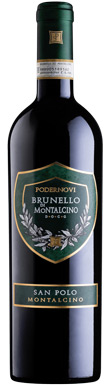
San Polo’s two single vineyards are literally separated by a road, yet even at a casual glance, the difference is obvious. Podernovi slopes very gently...
2017
San PoloBrunello di Montalcino
Il Marroneto, Madonna delle Grazie, Brunello di Montalcino, Tuscany, Italy, 2017
Il Marroneto's northern exposition and altitude, surrounded by cooling woodland, saved the day in the drought and heat of 2017. Balsamic black cherry, earthy red...
2017
Il MarronetoBrunello di Montalcino
Le Chiuse, Brunello di Montalcino, Tuscany, Italy, 2017
Lorenzo Magnelli opted to pick early to avoid opulence in 2017. Along with gentler punch-downs and fewer pump-overs, he aged the wine for less time...
2017
Le ChiuseBrunello di Montalcino
Canalicchio di Sopra, La Casaccia, Brunello di Montalcino, Tuscany, Italy, 2017
Within the Canalicchio area, the Casaccia vineyard boasts a high clay content, which helped curb water stress in 2017. As with all Canalicchio di Sopra’s...
2017
Canalicchio di SopraBrunello di Montalcino
Canalicchio di Sopra, Brunello di Montalcino, Tuscany, Italy, 2017
Canalicchio di Sopra began harvesting Brunello on 25 September - just one day earlier than in 2016. Francesco Ripaccioli credits the significant diurnal temperature differences...
2017
Canalicchio di SopraBrunello di Montalcino
Conti Costanti, Brunello di Montalcino, Tuscany, Italy, 2017
Andrea Costanti has crafted an appetising and characterful 2017, expressive without being over-exuberant or pushed. He reports doing more extraction than usual, with extended post-fermentation...
2017
Conti CostantiBrunello di Montalcino
Gianni Brunelli, Brunello di Montalcino, Tuscany, Italy, 2017
Proprietor Laura Vacca has crafted one of the top wines of the vintage from her high-altitude vineyards in the southeast- and northwest-facing plots just north...
2017
Gianni BrunelliBrunello di Montalcino
Le Potazzine, Brunello di Montalcino, Tuscany, Italy, 2017
Le Potazzine is run by Gigliola Giannetti and her daughters Viola and Sofia. Viola started taking over winemaking responsibilities in 2017 at the age of...
2017
Le PotazzineBrunello di Montalcino
Le Ragnaie, Casanovina Montosoli, Brunello di Montalcino, Tuscany, Italy, 2017
Located directly beside the cellar of the historic Baricci estate, Le Ragnaie’s Montosoli holding is a 1ha, east-facing plot at 300 metres above sea level....
2017
Le RagnaieBrunello di Montalcino
Lisini, Brunello di Montalcino, Tuscany, Italy, 2017
Located in the southern reaches of the Montalcino zone, near Sant’Angelo in Colle, Lisini is one of the last in the area to harvest. The...
2017
LisiniBrunello di Montalcino
Padelletti, Brunello di Montalcino, Tuscany, Italy, 2017
With vineyards in the Canalicchio zone just north of the town of Montalcino, Padelletti credits the calcareous clay soil for curbing water stress. Harvest dates...
2017
PadellettiBrunello di Montalcino
Poggio di Sotto, Brunello di Montalcino, Tuscany, Italy, 2017
Poggio di Sotto made 50% less wine in 2017 and will not release a Riserva. Maceration times were shorter than usual – just 25 to...
2017
Poggio di SottoBrunello di Montalcino
San Polo, Podernovi, Brunello di Montalcino, Tuscany, Italy, 2017
San Polo’s two single vineyards are literally separated by a road, yet even at a casual glance, the difference is obvious. Podernovi slopes very gently...
2017
San PoloBrunello di Montalcino
